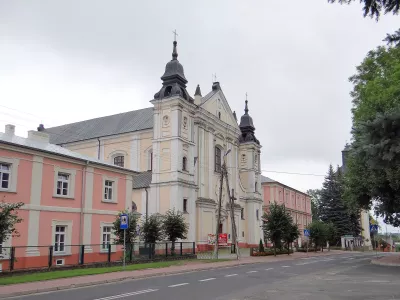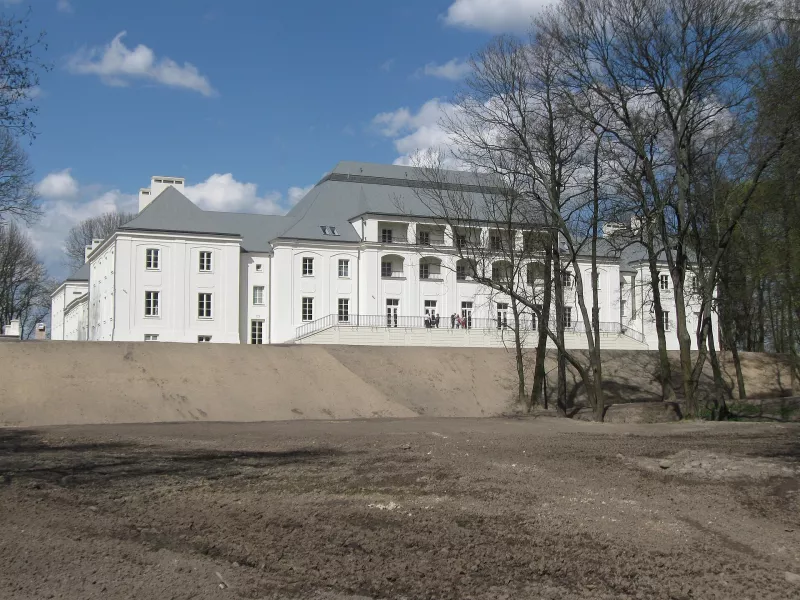
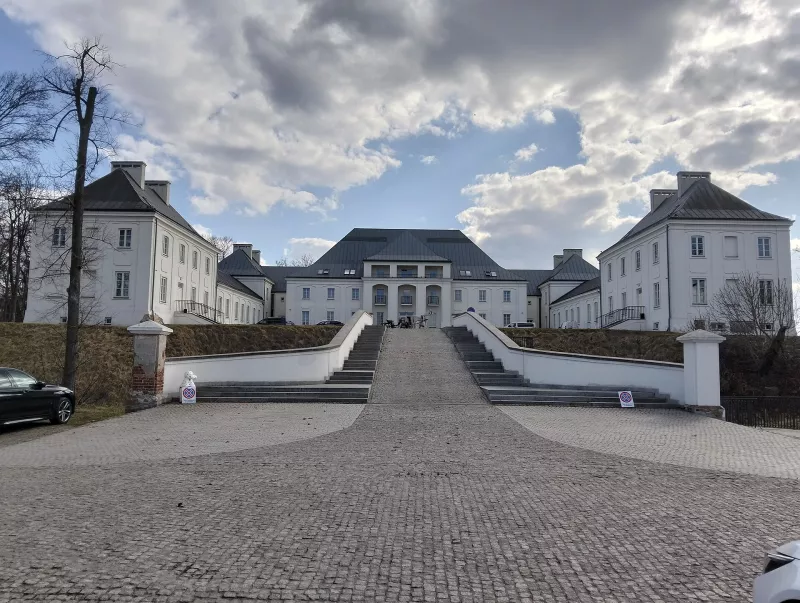
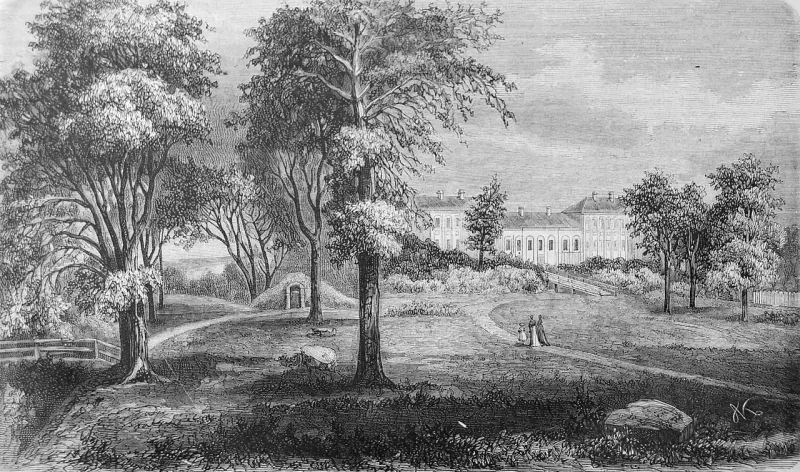
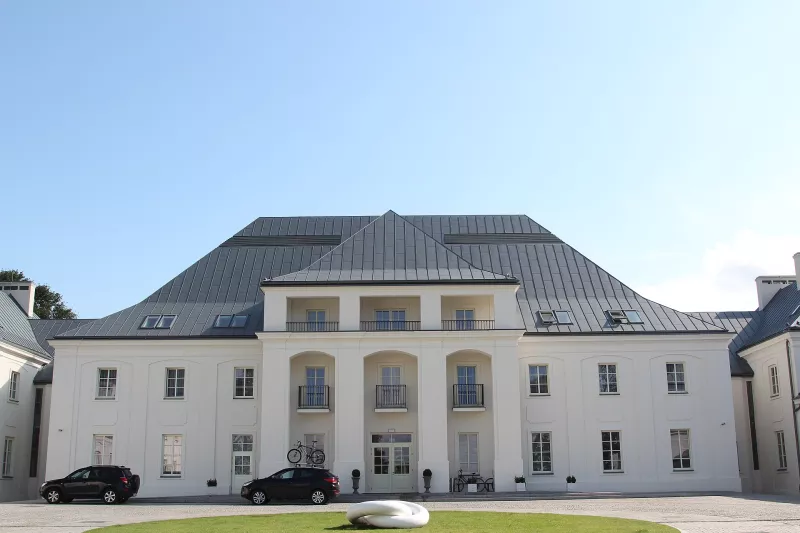

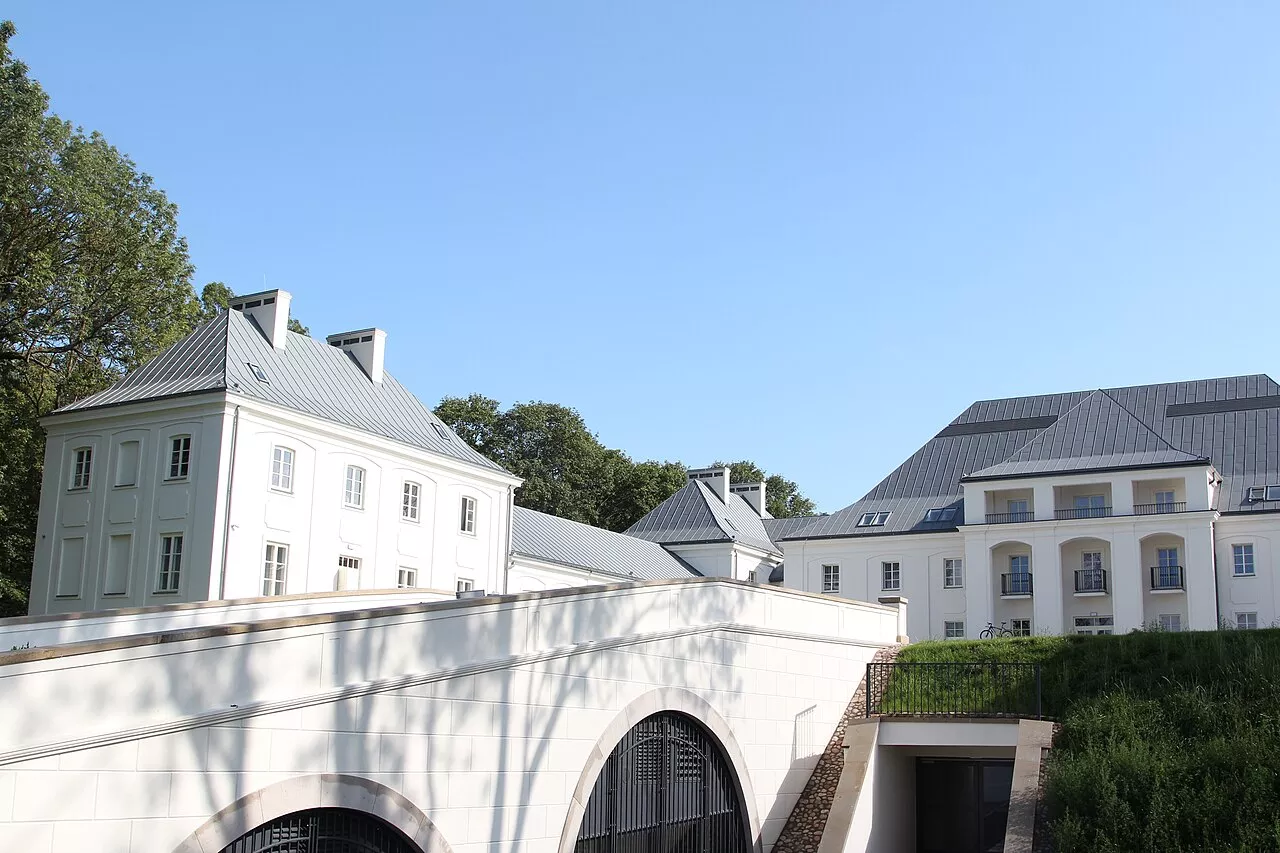
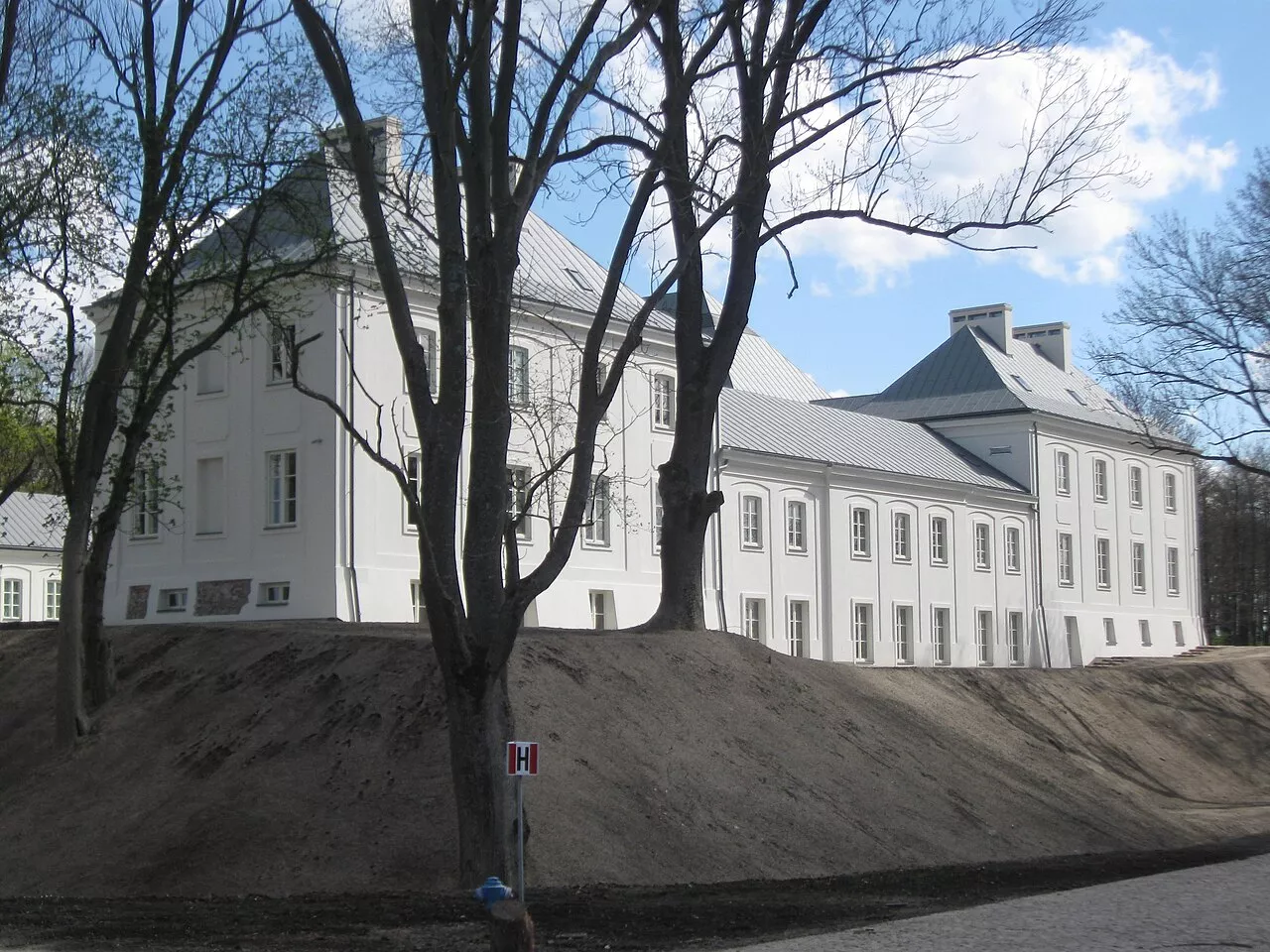
The Episcopal Castle in Janów Podlaski is the former residence of the Lutsk bishops, and later the Podlaskie bishops, located above the Krzywka River, a few kilometers from the Bug. Traces of bastion fortifications remain from the medieval fortress, while the main building is a late Baroque palace from the 1770s. After decades of decline, the complex was restored, and since 2016 it has housed the four-star Castle Hotel.
From Porkhiv to Janów
In 1423, the Grand Duke of Lithuania Vytautas gifted the village of Porkhiv to the Lutsk Cathedral. After the Tatars devastated Lutsk, Bishop Jan Losowicz moved his residence here in the mid-15th century. In 1465, Porkhiv was granted town rights and was renamed Janów in honor of the bishop, commonly known as Janów Episcopal. The town stood on the Kraków–Vilnius trade route and grew rapidly: by 1570, it had about 500 houses. The bishops had two churches and a defensive castle in Janów, expanded in the early 16th century.
In 1656, during the Swedish Deluge, the residence and churches were destroyed, and a few years later, the devastation was completed by Moscow troops. The castle was never rebuilt.
Turksi Palace and Naruszewicz’s Grotto
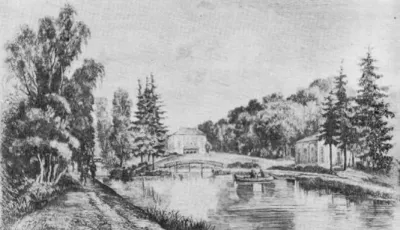
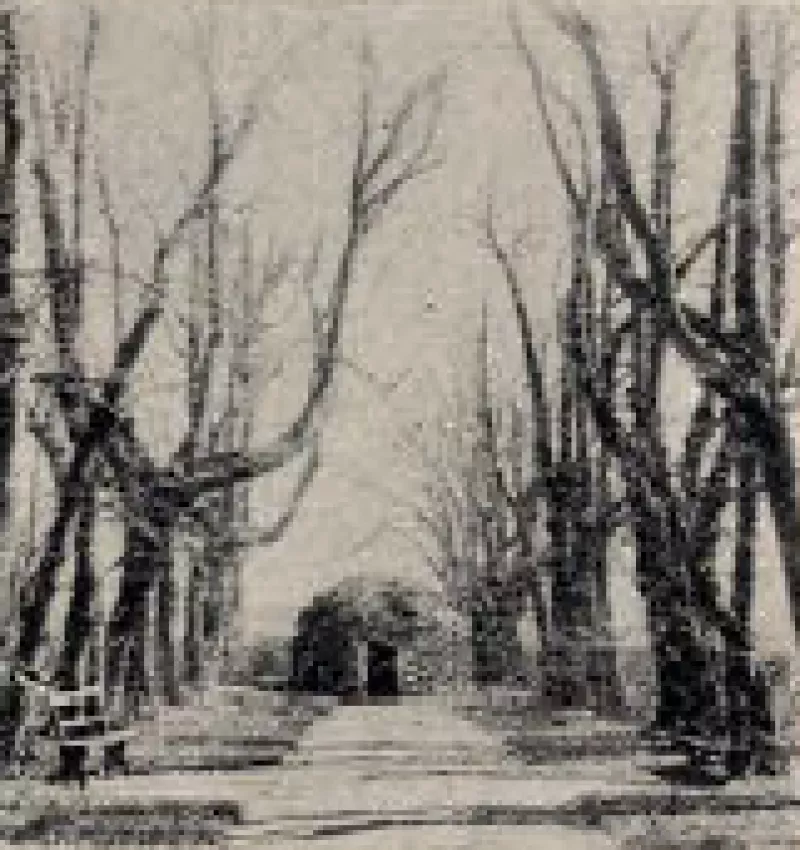
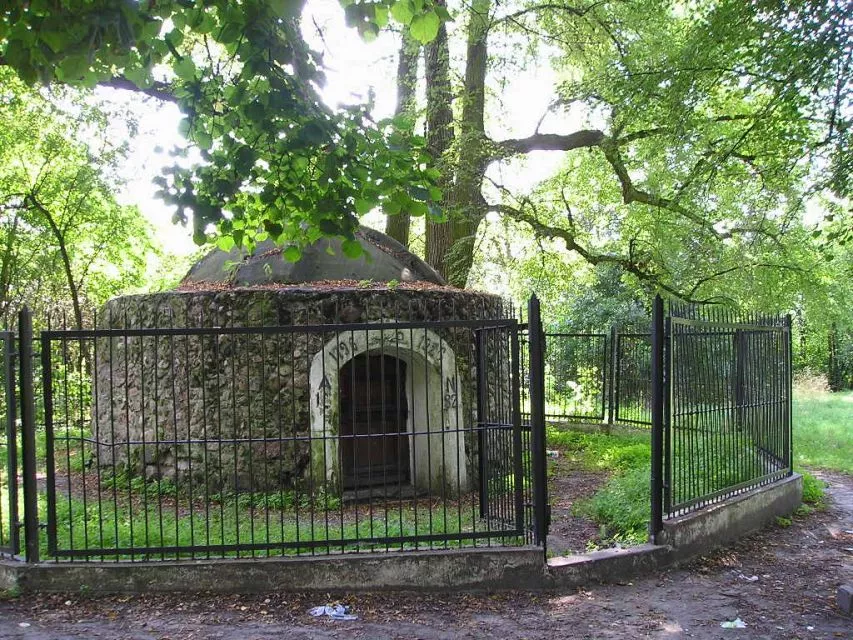
In 1770–1780, Bishop Feliks Paweł Turski built a late Baroque palace on the site of the old residence, featuring two pavilions by the courtyard, surrounded by a moat, an English park, ponds, and utility buildings. From 1788 until his death in 1796, Bishop Adam Naruszewicz—poet, historian, and author of the “History of the Polish Nation”—lived in the eastern pavilion. At the end of the linden alley stands a stone grotto shaped like a cylinder with a dome, associated with his name; local tradition holds that here he contemplated the provisions of the Constitution of May 3. Naruszewicz is buried in the crypt of the Holy Trinity Collegiate Church.
In 1818, Janów became the seat of the new Podlaskie (Janów) Diocese, but in 1867 the Tsarist authorities abolished it, partly due to the inhabitants’ participation in the January Uprising. After World War II, the palace passed to the state stud farm and gradually fell into decline.
Hotel and Stud Farm
On July 16, 2016, a four-star Castle Hotel with 199 rooms and a spa opened in the palace. The complex lies within the Podlaskie Landscape Park “Bug Breakthrough.” Two kilometers away, in Wygoda, is the famous Janów Podlaski Stud Farm, founded in 1817, the oldest state Arabian horse stud farm in Poland. Its 1840s stables were designed by Henryk Marconi, and the annual “Pride of Poland” auction attracts buyers from around the world. In 2017, the stud farm was declared a historic monument of Poland.
How to Get There
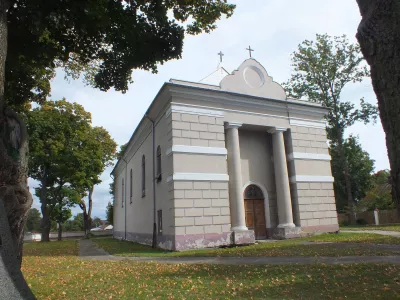
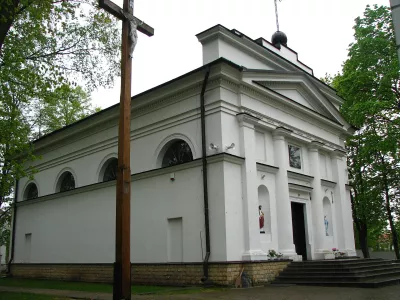
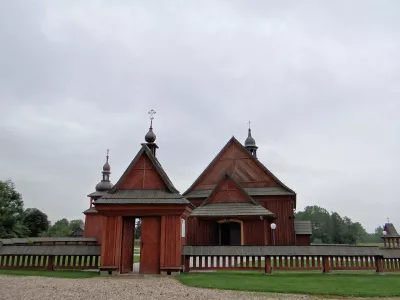
Yaniv-Pidlyaskyi is located about 22 km northeast of Biała Podlaska along road 698; from January 1, 2026, it will regain city status. Buses run from Biała. For Ukrainians, this is Poland, so a passport is required; the Bug River here marks the border with Belarus, so document checks near the river are possible. The palace grounds and park can be visited, but it is advisable to check the rules in advance at the hotel. In the town, there is the Basilica of the Holy Trinity and the Dominican church, nearby is the church in Staryi Pawliw, further east are the palace in Cielesnytsia and Pratulin.