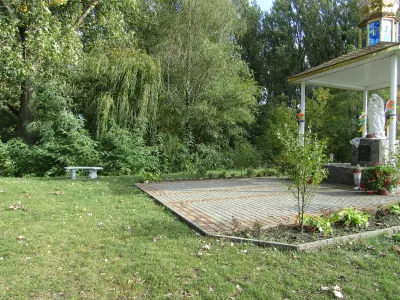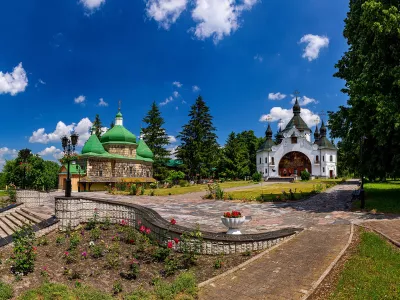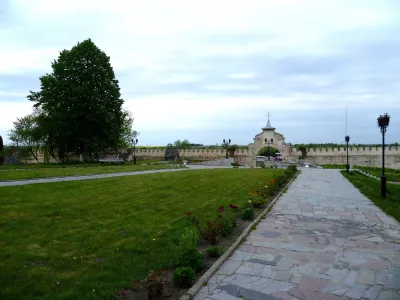

The ethnopark “Ladomyria” in Radyvyliv recreates the lifestyle and clothing of Great Volhynia — the lands from Kholmshchyna and Pinshchyna to Zhytomyr and Ternopil regions. It is created by the public organization “Center for the Study and Revival of Volhynia” on the territory of a former furniture factory. At the end of the 19th century, a company of the Viennese firm “Jacob & Josef Kohn,” which made bentwood furniture, operated here.
The name comes from Lodomeria — how Volhynia was called in Latin in medieval documents. The idea appeared in 2010 from the founder Volodymyr Dziobak, when his father told him that their grandfather wove in the village of Sribne, and the last weaving there was in 1956. The ethnopark has been under construction since 2019 and has been welcoming visitors since 2020. In 2021, “Ladomyria” won the “Regional Breakthrough of the Year” nomination at the Ukraine Tourism Awards, beating 22 competitors.
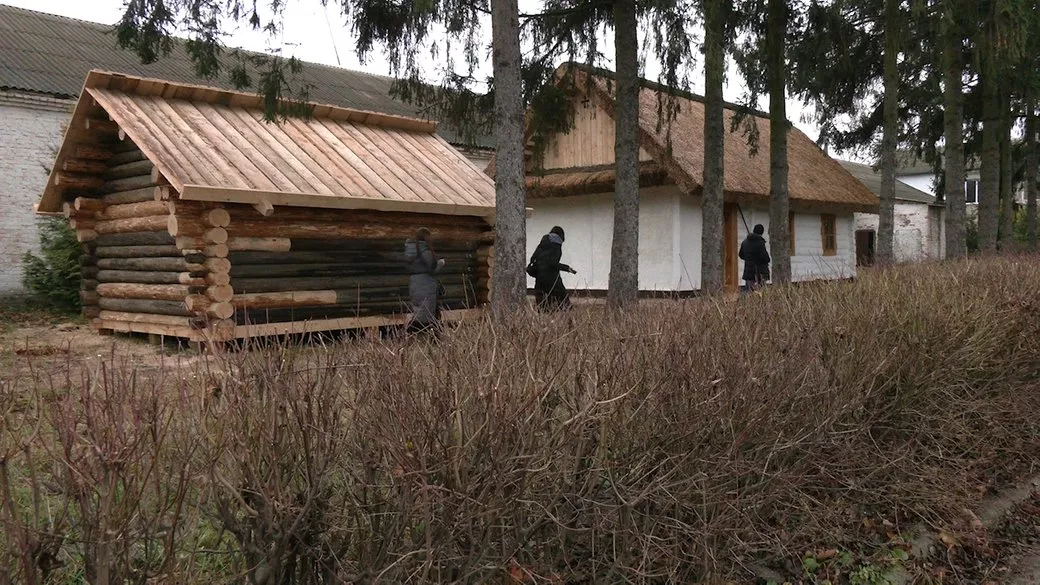
Photo: Suspilne Rivne
Huts and Forge
The first building of the open-air museum was an almost two-hundred-year-old hut from Shevchenko Street in Rivne, where clergymen once lived. It was dismantled and transported to Radyvyliv in September 2020, and its roof was thatched with reeds. To recreate the windows and doors of that time, the team visited the museum in Pyrohiv several times. Nearby stand a Volhynian hut about a hundred years old and a hut from Kosivshchyna.
The forge from Hutsulshchyna was donated by the Ihas family. It was opened as the first family museum, and at the end of August, more than thirty family members gathered near the restored forge of grandfather Ivan. Separately preserved is a Volhynian dugout boat from the first half of the 19th century.
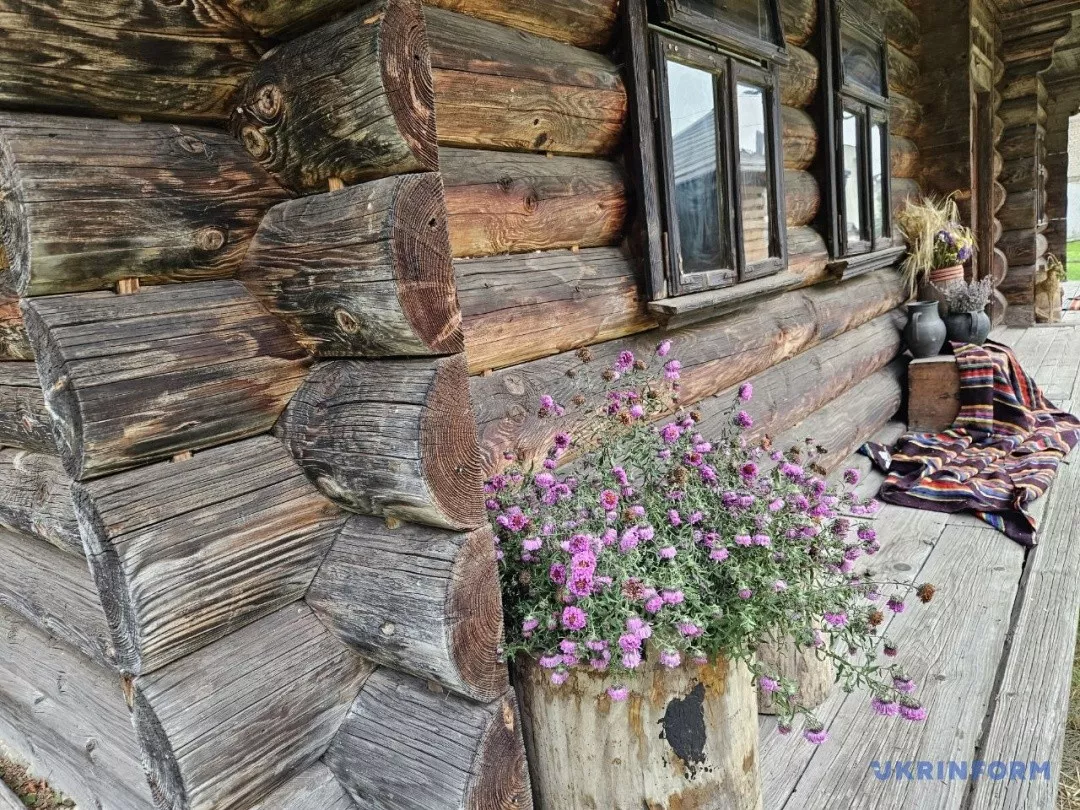
Photo: Ukrinform / Konkurrent
Serpanok and the Clothing Museum
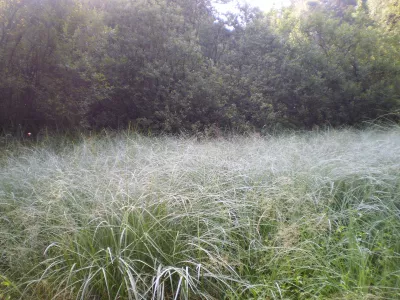
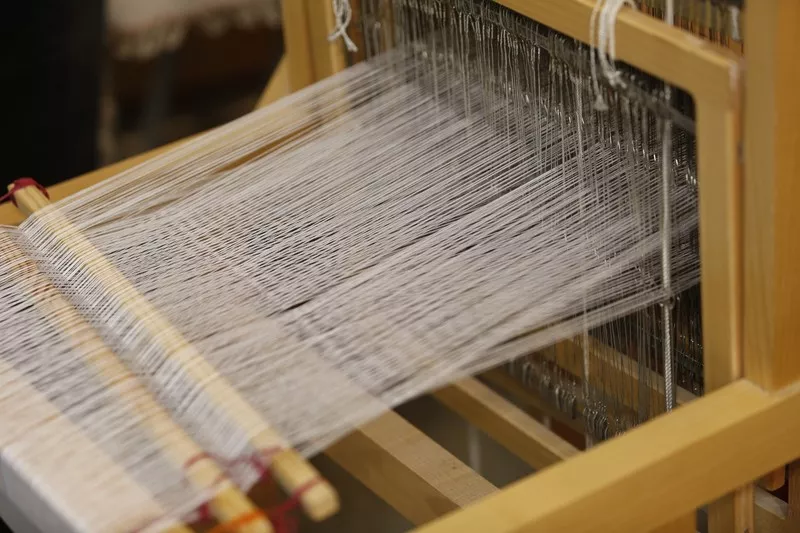
The weaving workshop “Serpanok” revives the eponymous ultra-fine, almost transparent linen fabric. Old looms were searched for in villages, and an oak one was found in Pliashova near the field of the Battle of Berestechko. New looms were made at the local furniture factory based on an Austrian model found in Zhytomyr region. The team grew seeds of an old flax variety for serpanok themselves.
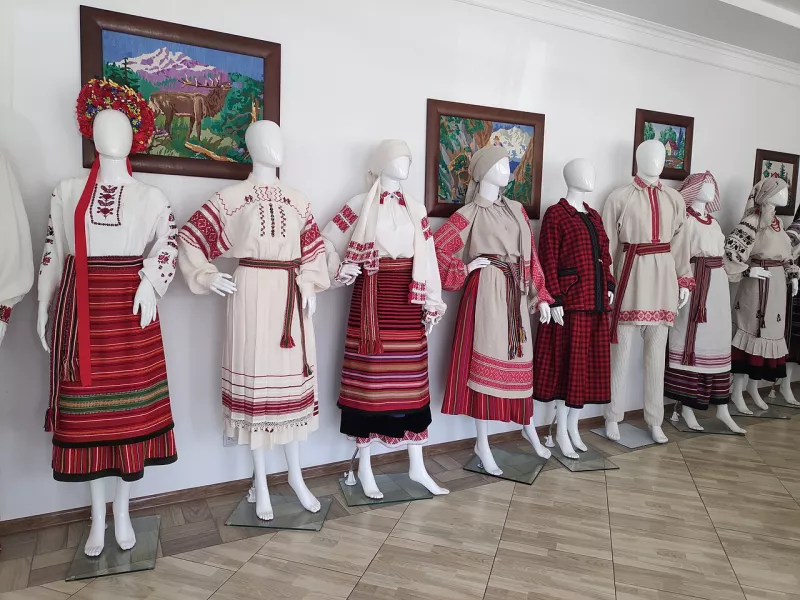
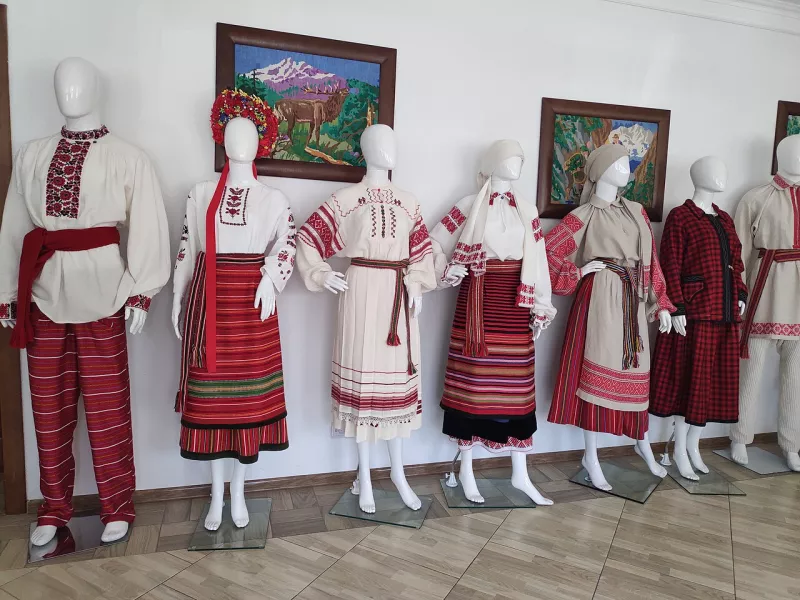
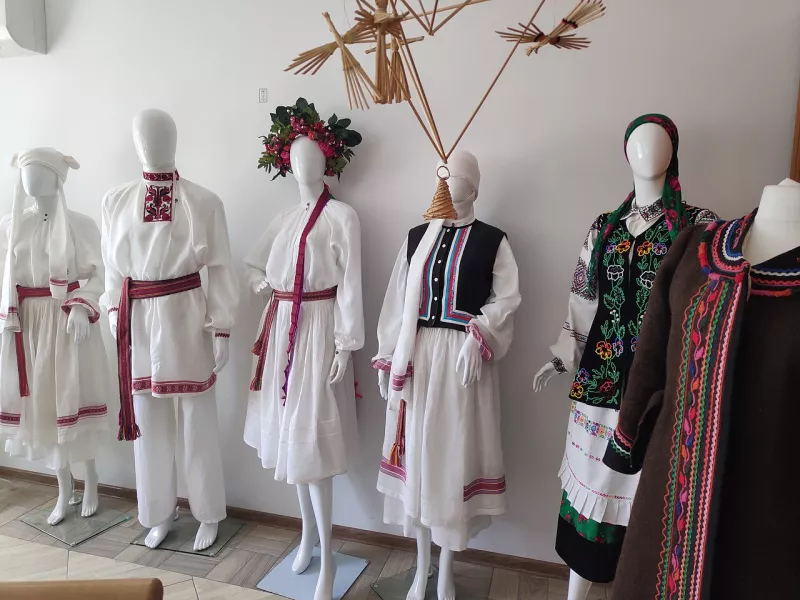
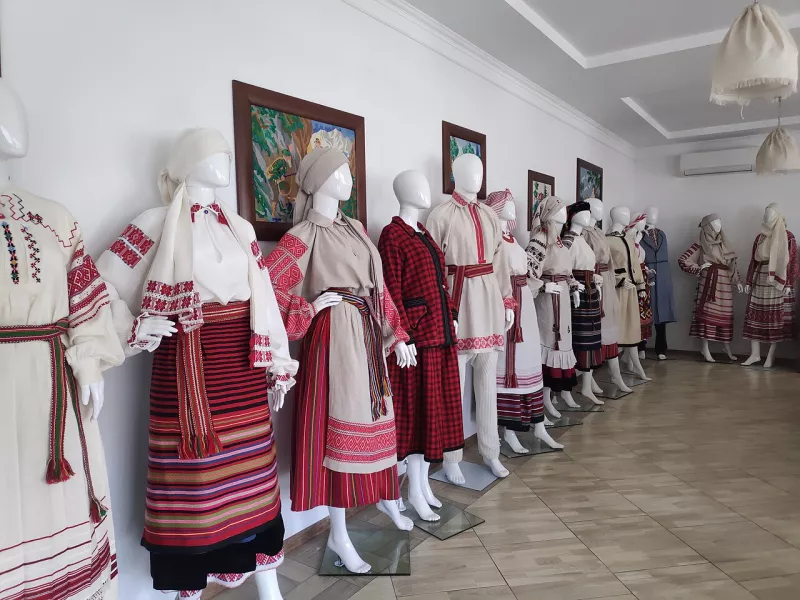
In the Great Volhynia Clothing Museum, dozens of reconstructed rural and burgher costumes of the 19th–20th centuries stand on mannequins. The fabric for them is woven, embroidered, and sewn by hand, and to recreate serpanok clothing, the team visited museum collections more than 25 times. The goal is to have at least one male and one female costume from each county of historical Volhynia.
In 2024, the ethnopark opened the exhibition “Schooling and Book Writing in Volhynia in the 11th–19th Centuries” with a 19th-century school classroom and a scriptorium where writing is done with a quill pen.
Kitchen and Celebrations
Catfish are bred in the ethnopark, so dumplings here are made with catfish, not carp as was once typical in these lands. They also prepare Kremenets tokmachi, volokhanyky, and white borscht, as well as dishes of the national communities of Volhynia: Polish żurek, German karivurst, Czech smažák, and Karaim barbulyannik. At master classes, guests grind grain and bake with different flours, and try weaving.
On the first Sunday of September, “Ladomyria” celebrates the Day of Traditional Authentic Costume, showcasing reconstructed clothing of the national communities that lived in Volhynia.
How to Get There
“Ladomyriya” is located in the city of Radyvyliv, Dubno Raion, Rivne Oblast, on the site of a former furniture factory. There is no ticket office at the entrance; the area is only visited in a group with a guide.