The PTTK blue hiking trail from Biała Podlaska to Hanna leads from southern Podlachia to the Bug River through the Łomazy Basin — the northern part of Western Polissia — and finally through the Sosnowica Basin right by the river. According to tourist maps, the trail is about 76 km long (our track is 76.5 km). The route is linear, marked with a blue stripe between two white ones; it takes three days to walk, with overnight stays in Łomazy or Wisznice and in Romanów or Sosnowica.
Biała Podlaska and Studzianka
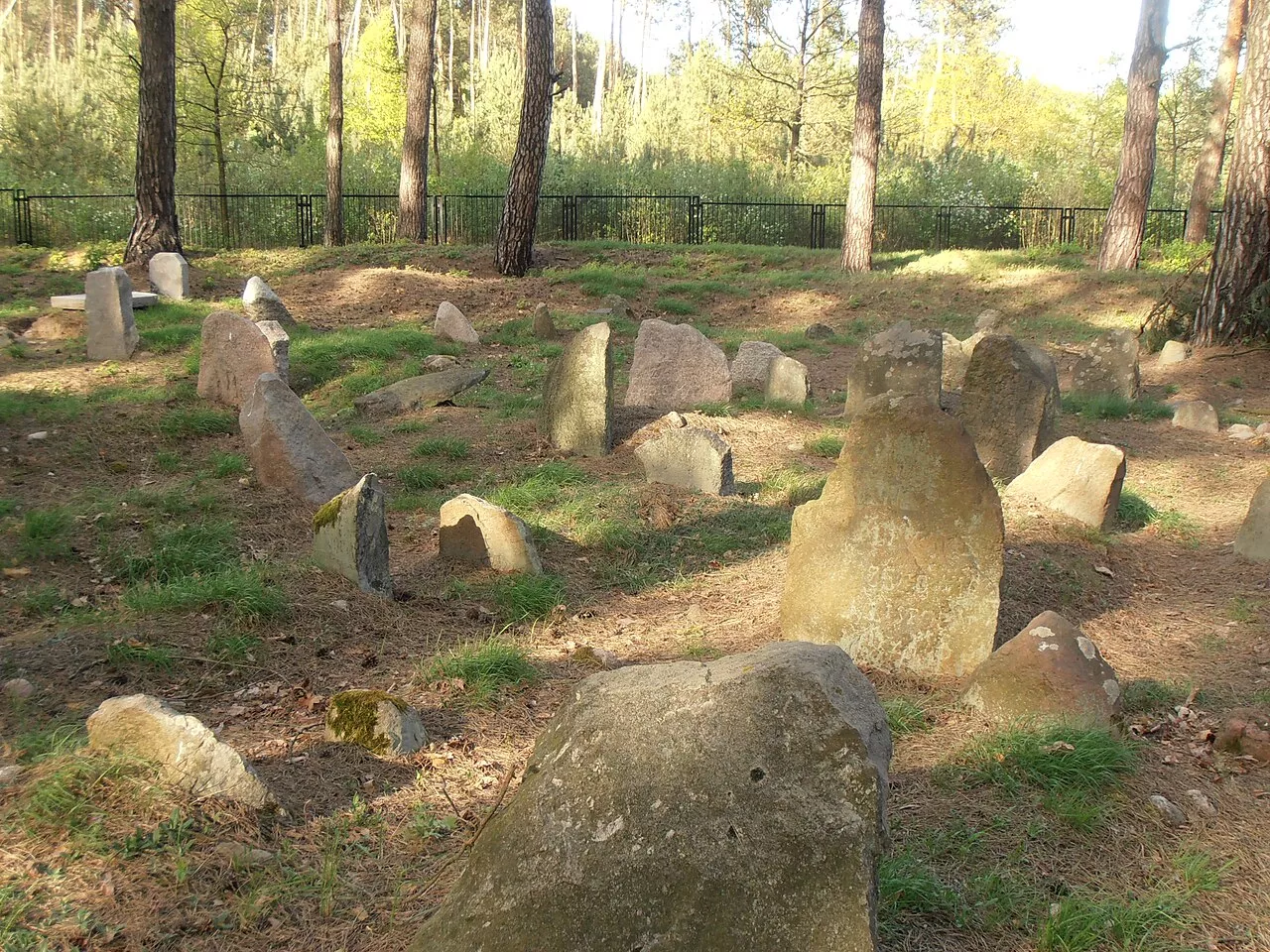
The start is in Biała Podlaska, the former Radziwiłł residence: of the 16th-century castle, only the gate tower, outbuildings, and park remain. The town lies on the edge of the Łomazy Basin, and just a few kilometers to the south, the trail enters the Polesian landscape — flat fields, damp meadows, and pine forests. Near Studzianka, it is worth making a detour to the old Tatar cemetery — a mizar with stone tombstones among the pines, commemorating the Polish Tatars who lived here for centuries.
Łomazy and Wisznice
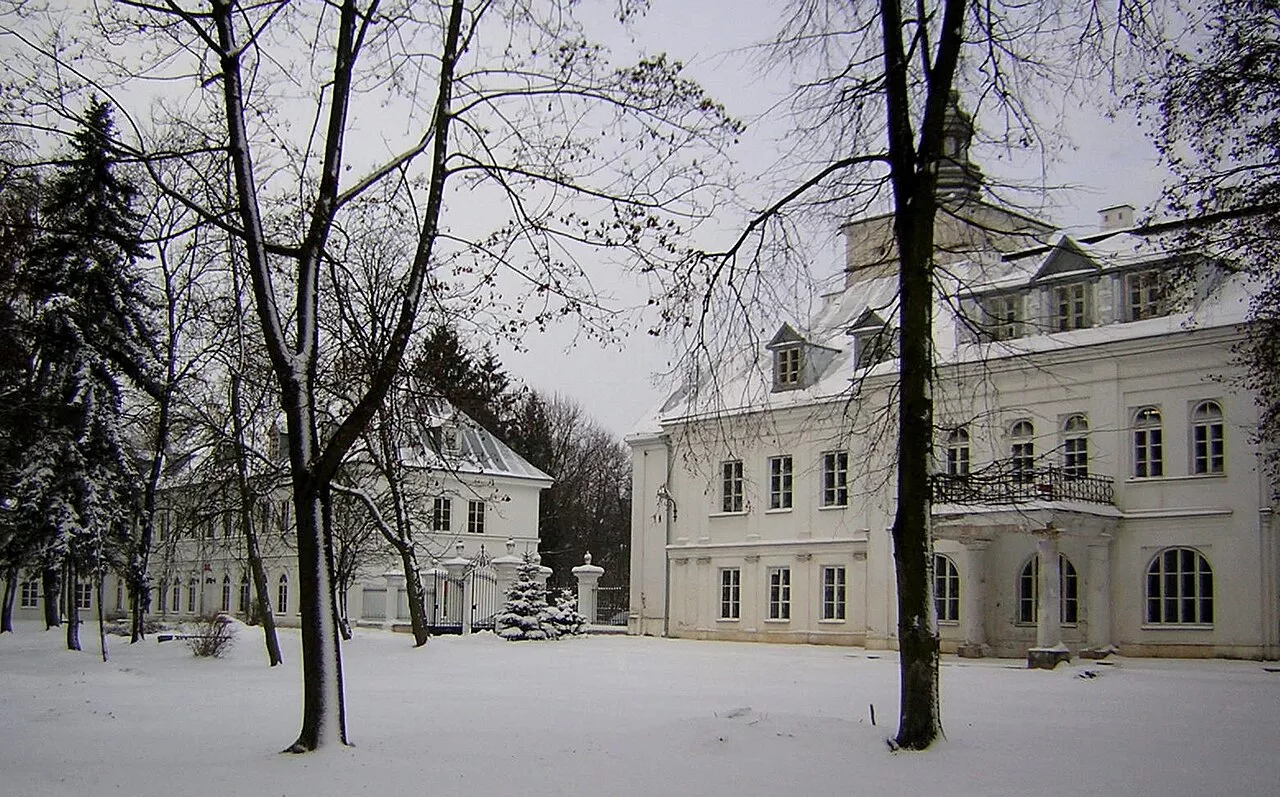
Łomazy is the main village of the basin named after it. In 1447, King Kazimierz Jagiellończyk incorporated it into the Brest Land, and in 1451 and 1464, congresses of Polish and Lithuanian envoys were held here. In 1568, Łomazy received Magdeburg rights. A tragic chapter is August 1942, when German police shot about 1,700 Jews from Łomazy in the forest near the village. Further on, via Bordziłówka and Dubica Górna, the trail reaches Wisznice on the Zelawa River — a town from 1579 to 1870, which belonged to the Sapieha family in the 19th century.
Romanów — Childhood of Kraszewski
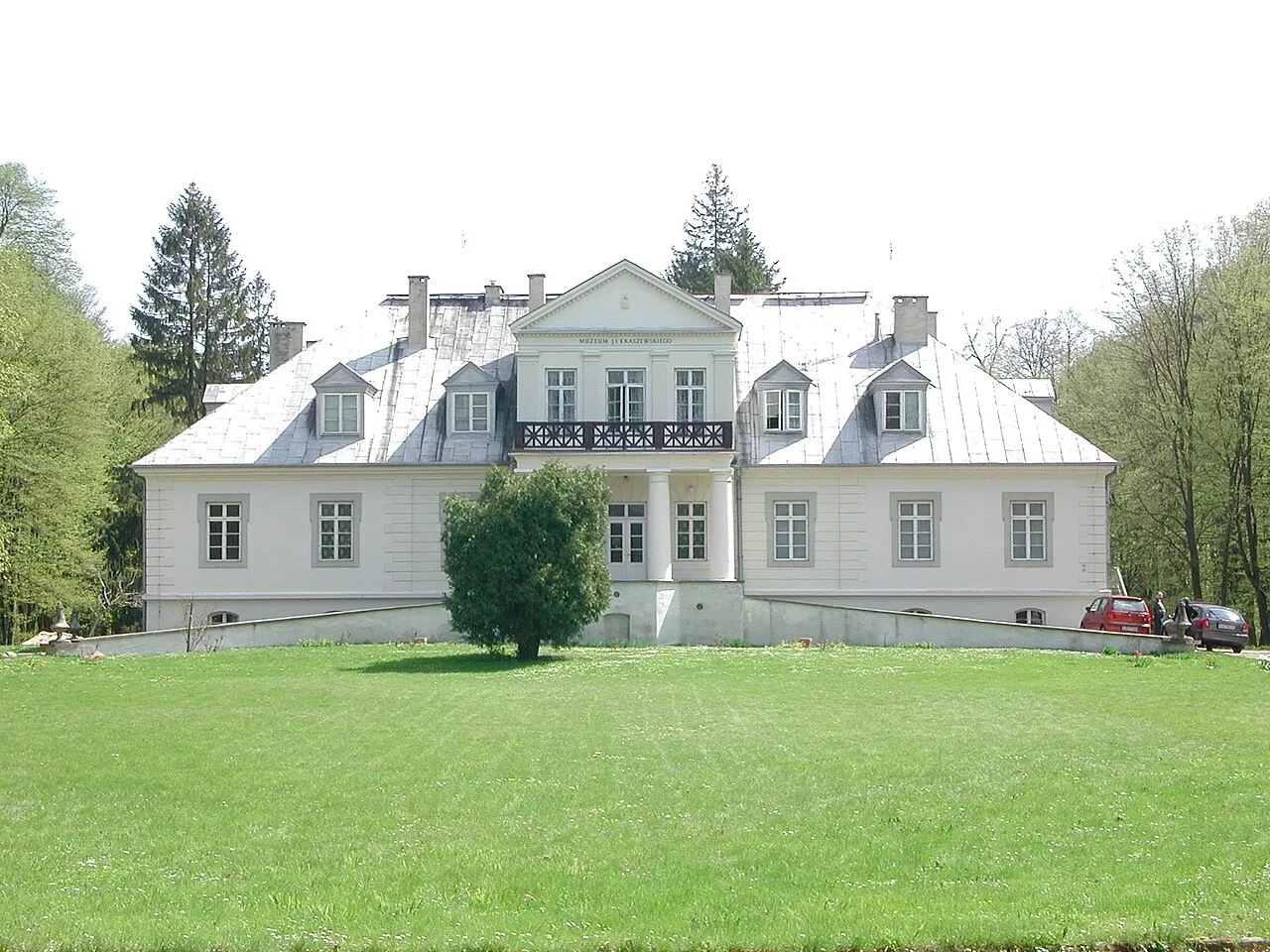
From Wisznice to Rozwadówka, the blue trail runs through forests, and then via Motwica it reaches Romanów. Here, in the classicist manor of 1806–1811, passed the childhood of Józef Ignacy Kraszewski — one of the most prolific writers of the 19th century; the estate was later inherited by his brother Kajetan, an artist, astronomer, and collector. Now the manor houses the Kraszewski Museum. Around it is an old 17th-century park, and the manor itself stands on the site of a wooden hunting lodge of Prince Roman Sanguszko.
Hanna on the Bug River
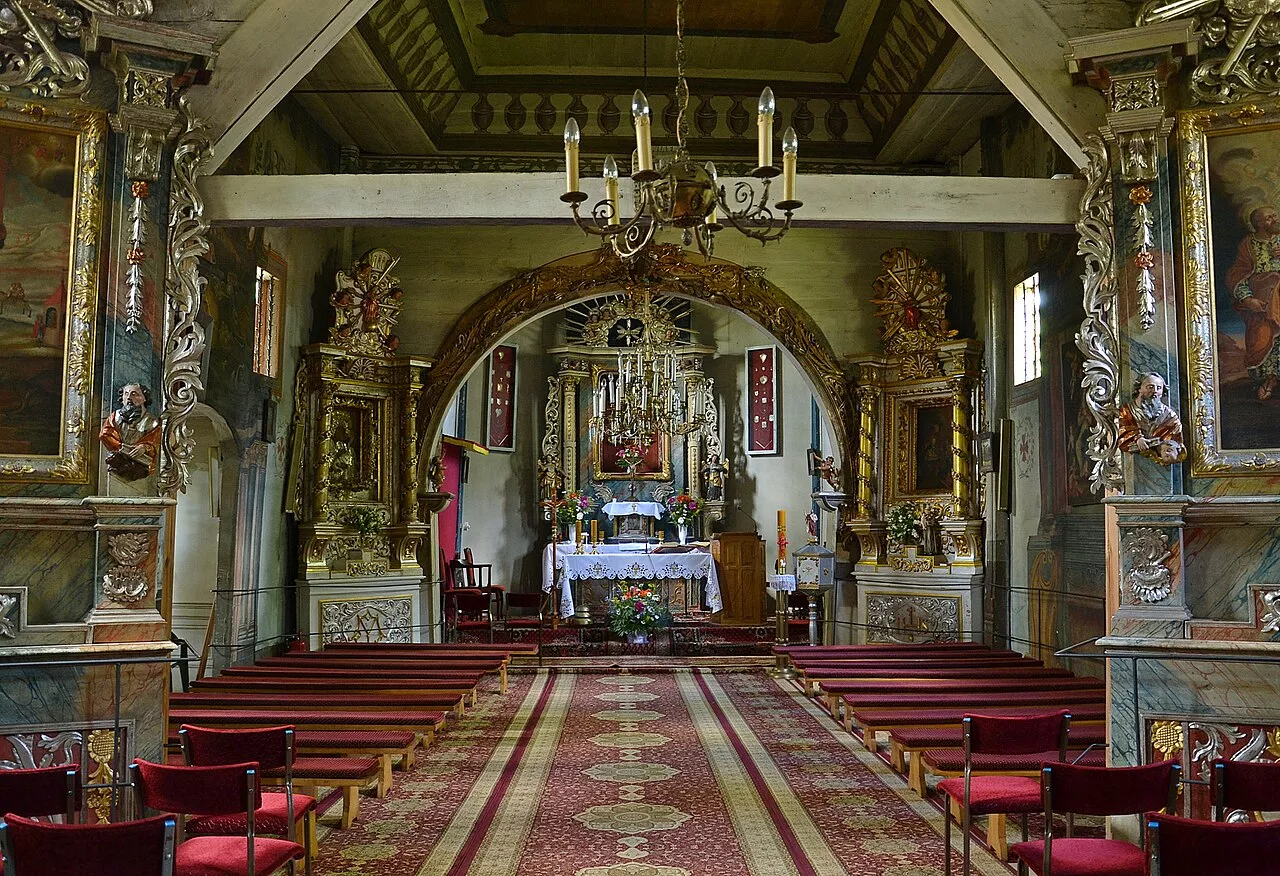
The final stretch leads through Dance, Janówka, and Kuzawka to Hanna. The former town, founded in 1546, had been part of the Nieśwież Ordynacja of the Radziwiłł family since the 17th century. According to legend, the village was named by Queen Anna Jagiellon, who stopped here for the night and was well received. The main landmark is the wooden Church of Saints Peter and Paul, built in 1739 as an Orthodox church and now a Catholic church. Hanna stands on the Bug River, opposite the Belarusian village of Podluzhzhya.
How to get there and what to consider
This is Poland: Ukrainian citizens need a foreign passport. It is convenient to reach Biała Podlaska by train from Warsaw — the town is located on the Warsaw – Terespol railway line. Local buses run between the villages along the route, but infrequently; leaving Hanna is more difficult, so plan your return in advance. The season lasts from May to September; there are ticks in the forests and mosquitoes near the Bug River. The finish in Hanna lies less than two kilometers from the border with Belarus: the border is closed, and checks by the Polish Border Guard are possible nearby.