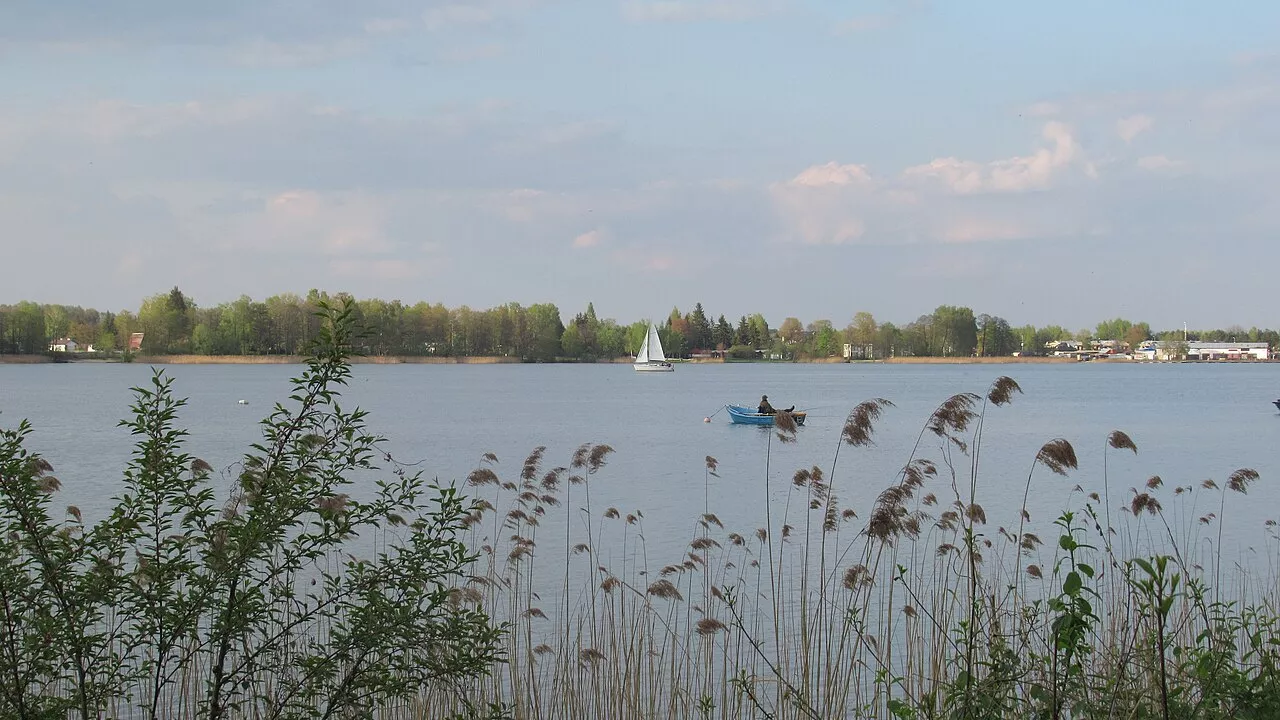
The Trail of the Seven Włodawa Lakes (Szlak Siedmiu Jezior Włodawskich) is a yellow hiking trail of the Polish Tourist and Sightseeing Society (PTTK) south of Włodawa, in the Sobibór Landscape Park. Officially, it is a loop of about 20.7 km from the Włodawa railway station, which is actually located in the village of Orchówek; our track is 22.5 km long and starts in Okuninka. The trail connects the forest lakes of the Łęczna-Włodawa Lake District, the resort town of Okuninka, the forests near Żłobek, and historical Orchówek. Expect 5 to 6 hours of walking.
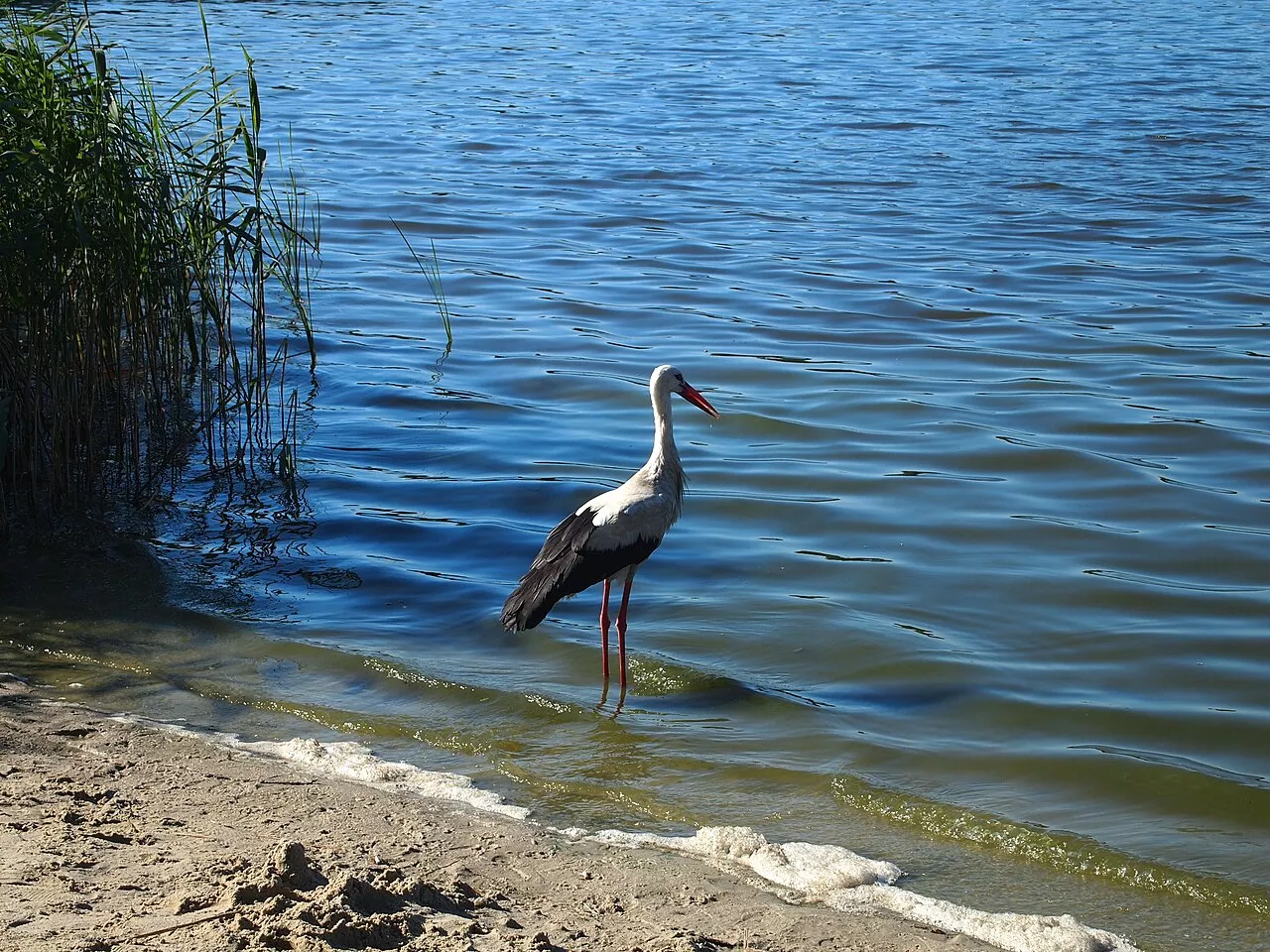
Lakes around Okuninka
Near Okuninka, the lakes lie in a tight cluster: Lipiniec, Rogóźno, Czarne, Święte, and in the middle—Białe, the largest and most famous. It has neither inflows nor outflows, the bottom is hard and sandy, and the water belongs to the first class of purity. Since the 1960s, its shores have been lined with holiday resorts—there are already over forty of them, so it is bustling here in summer. A little further to the east lies the quieter Lake Glinki with a beach.
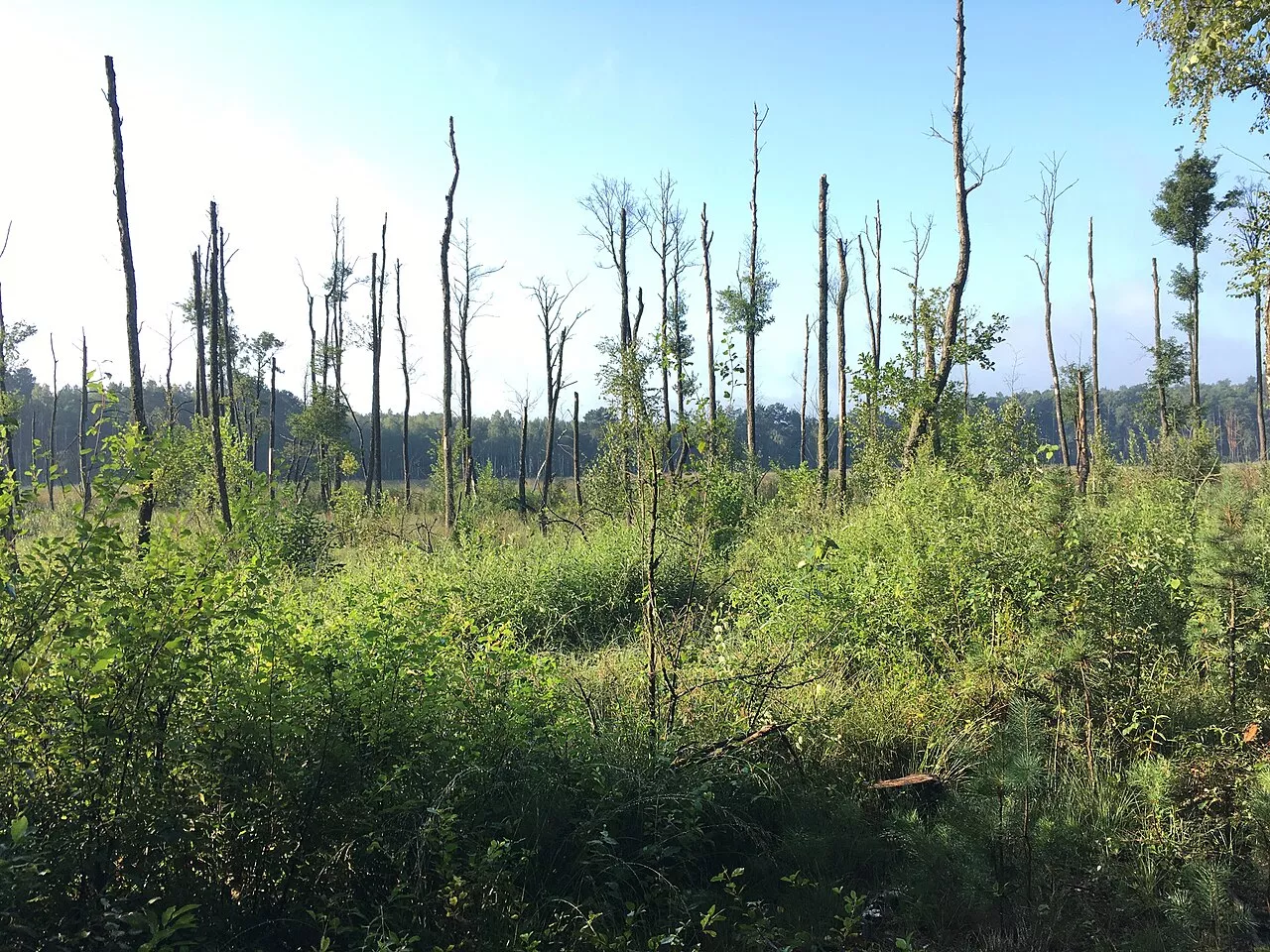
Forests and the protected Lake Orchowe
Between Okuninka, the Tarasuki hamlet, and the village of Żłobek, the route runs through the forests of the Sobibór Landscape Park. The park was established in 1983; three-quarters of its area is covered by pine forests, birch and alder woods with peat bogs and forest lakes. The European pond turtle, white-tailed eagle, black grouse, lesser spotted eagle, and black stork live here. Near Żłobek, the trail approaches Lake Orchowe: this is a shallow lake, up to a meter deep, in an ancient depression of the Bug River valley, with a layer of lake silt of about 10 m and a peat bog around it. Since 1996, the lake and the peat bog have been a nature reserve.
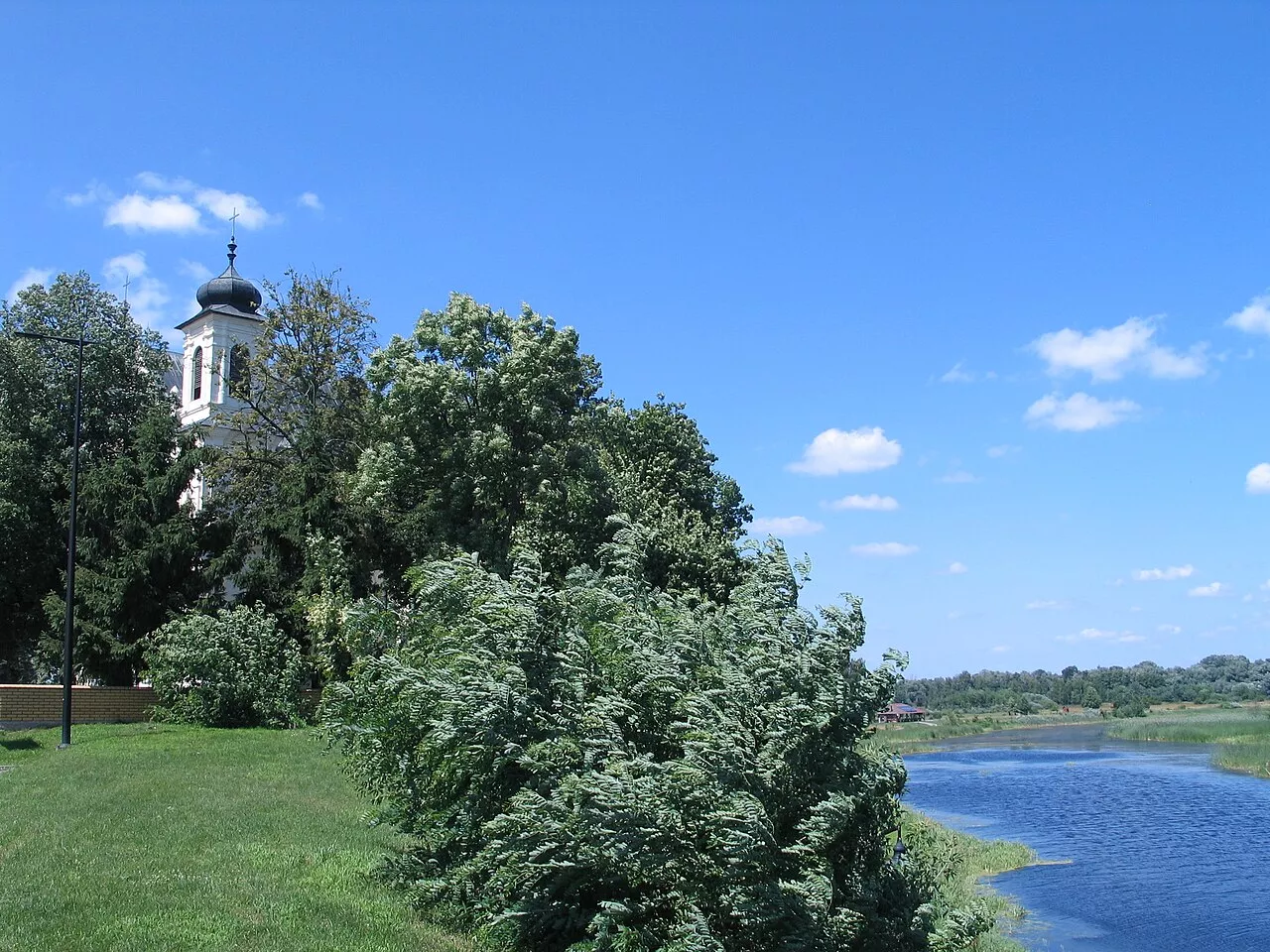
Orchówek above the Bug
Orchówek is now a village, but it used to be a town: it received town rights in 1506. The main landmark is the Baroque church of St. John the Almsgiver (św. Jana Jałmużnika), built in 1770–1777 according to the design of Paweł Antoni Fontana, the architect of the church in Włodawa. Until 1864, an Augustinian monastery operated here; after the January Uprising, the tsarist authorities converted the church into an Orthodox church. Since 1947, Capuchins have been serving here, and today it is a sanctuary of Our Lady of Consolation. From the high bank, the Bug River valley is visible: on the opposite bank is already Belarus, and a little further south converge the borders of Poland, Belarus, and Ukraine.
How to get there and what to consider
Okuninka lies 7 km south of Włodawa, along the road from Chełm (about 45 km). From Lublin, it is convenient to take a bus to Włodawa. Passenger trains on the Chełm — Włodawa line run only in summer on weekends. In Okuninka there are many parking lots and places to stay; off-season it is quiet. The path is flat, leading along forest roads and village streets; walking on loose sand is more difficult. The best time is May, June, and September; in the heat, the route can be combined with swimming in Lake Białe. Mosquitoes and ticks are common here, so a repellent is mandatory. The finish in Orchówek is less than a kilometer from the Bug River, which marks the border with Belarus. The border is closed, and document checks by the Polish Border Guard are possible in the border zone. For Ukrainians, this is Poland — a foreign passport is required.