
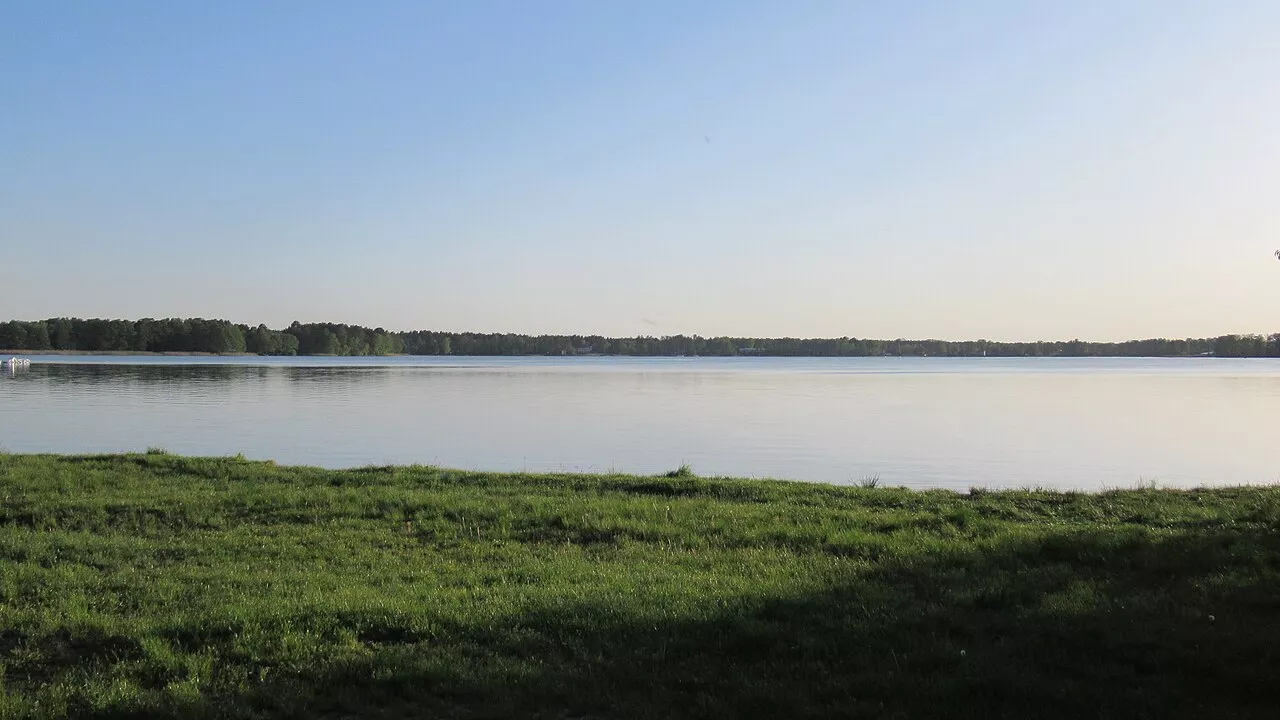
The Sobibór Forests Trail (Szlak Lasów Sobiborskich) is a black PTTK hiking trail connecting the resort town of Okuninka on Lake Białe with the Sobibór station. According to the PTTK list, its length is 11.6 km; on our track, according to OpenStreetMap data, it is 8.8 km. The trail is linear, takes 2.5–3 hours to walk, and runs almost entirely through the forests of the Sobibór Landscape Park. It ends near the Museum and Memorial Site at the location of the former Nazi German death camp, so this is not just a forest walk.
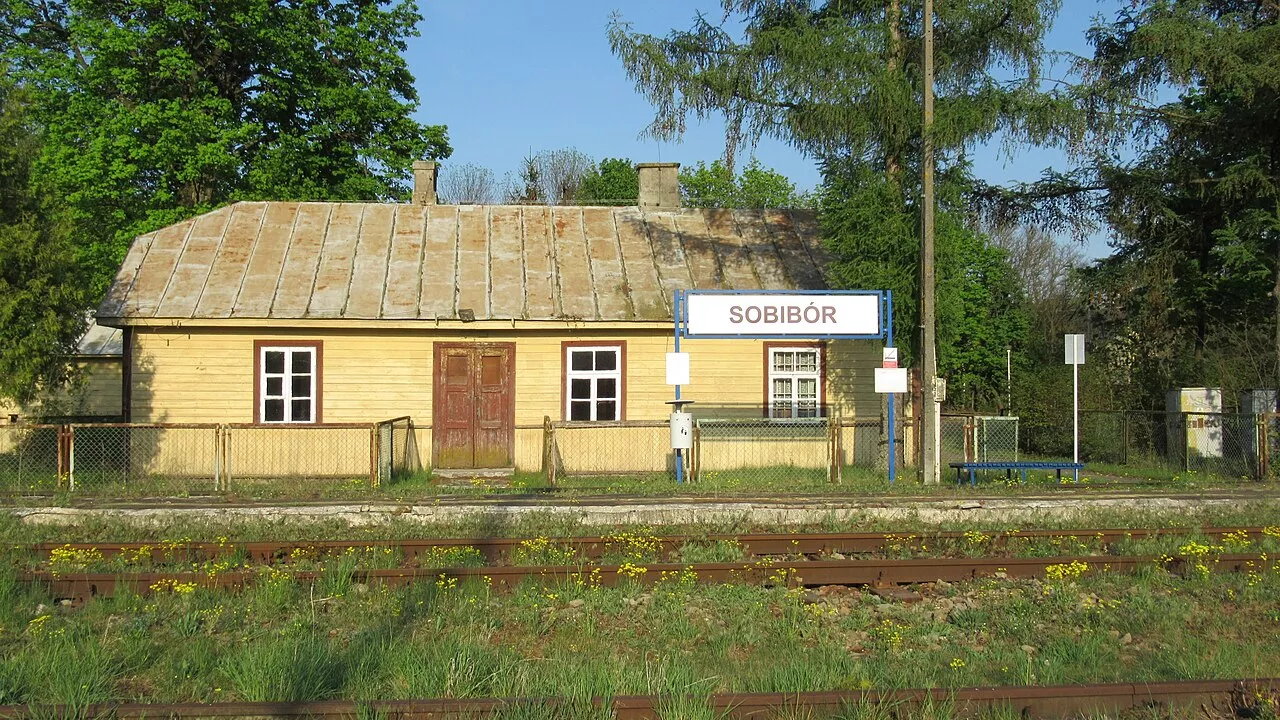
From the Lake Through the Sobibór Forests
The start is the southern shore of Lake Białe, one of the cleanest in the Łęczna-Włodawa Lake District. Further on, the trail plunges into the forest and leads southeast via the Tarasyuki hamlet and the village of Żłobek. The Sobibór Landscape Park was established in 1983; forests cover three-quarters of its area. Pine forests on sandy soils alternate here with peat bogs, alder swamps, and small forest lakes, while the park is home to the European pond turtle, white-tailed eagle, black grouse, and black stork.
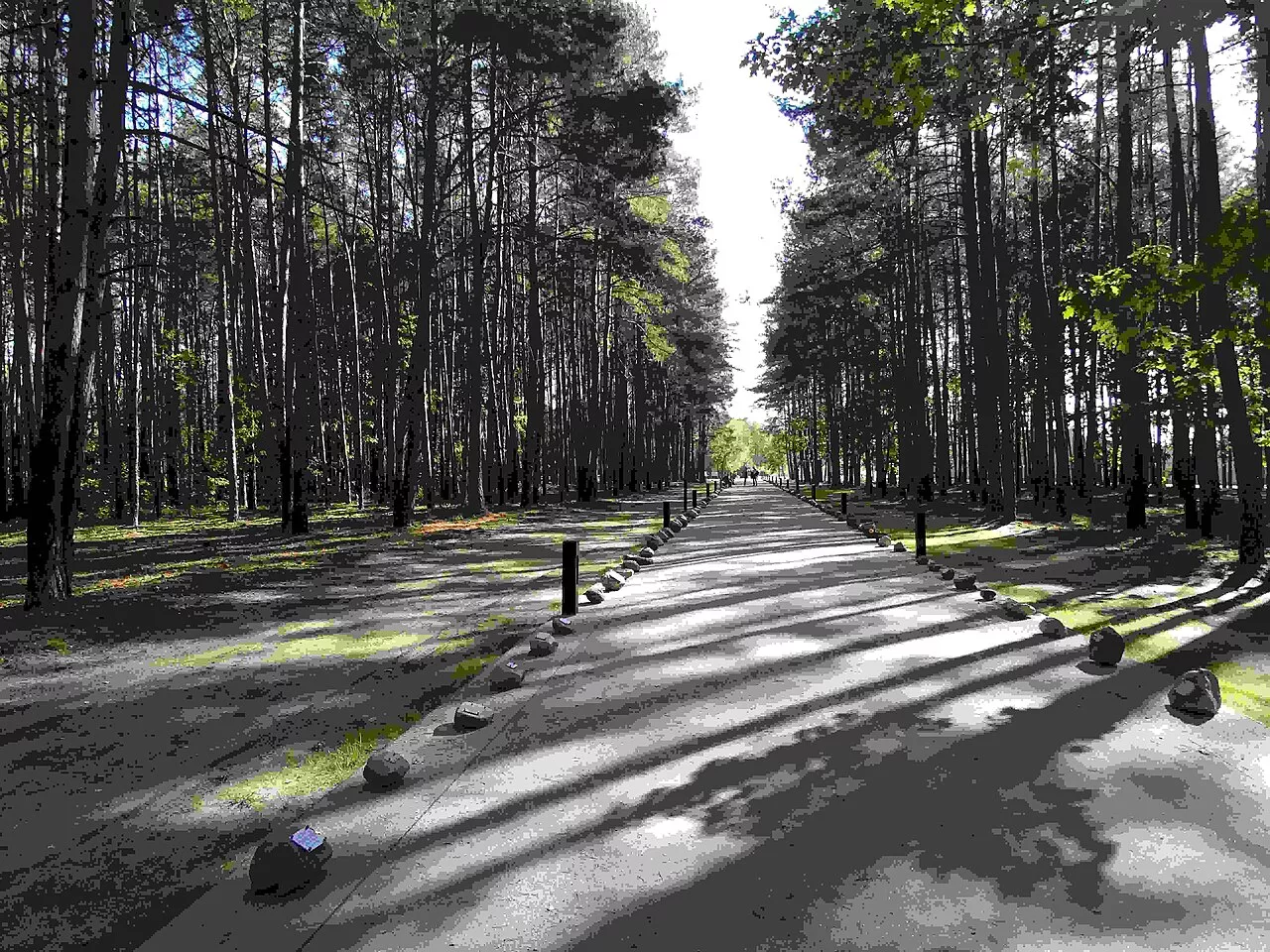
Sobibór: Memorial Site
Near the Sobibór station in 1942–1943, the German death camp SS-Sonderkommando Sobibor operated, established as part of Operation Reinhard for the extermination of Jews. People were brought here from the ghettos of the Lublin region, as well as from the Netherlands, France, Slovakia, Austria, the Czech Republic, Germany, and the occupied territories of the USSR. Most were murdered in gas chambers immediately upon arrival. Estimates of the number of victims vary; according to a study by historian Robert Kuwałek, about 170,000–180,000 Jews perished. On October 14, 1943, prisoners led by Alexander Pechersky and Leon Feldhendler rose up in revolt. About 300 people managed to escape, and several dozen survived the war. After the uprising, the camp was liquidated.
Today, this is the Sobibór Museum and Memorial Site — a branch of the State Museum at Majdanek. A new permanent exhibition was opened in 2020, and the updated memorial on the camp grounds in October 2023.
Visiting and Getting There
The Sobibór Museum and Memorial Site is open from Tuesday to Sunday: April–October 9:00–18:00 (last entry to the grounds at 17:00), November–March 9:00–16:00 (last entry at 15:00). Closed on Mondays, certain holidays, and December 24–31. Admission and parking are free, no reservation is required for independent visits, and guided tours in Polish, English, and German are available by prior arrangement. The museum advises against bringing children under 14. Please behave with restraint and dress as befits a cemetery; animals (except guide dogs), smoking, and lighting candles outside designated areas are prohibited on the grounds.
Okuninka can be reached from Włodawa (7 km) or from Chełm. The Chełm — Włodawa railway line stops at the Sobibór station only in summer, on Saturdays and Sundays (as well as August 15). Apart from that, according to the museum, from Włodawa to Sobibór without your own car you can only get by taxi, so plan your return from the linear route in advance. Until the end of 2026, repairs are underway on county road 1727L, and inconveniences are possible on the approach to the museum. There are many mosquitoes and ticks in the forest. A few kilometers to the east, the border runs along the Bug River: opposite Sobibór with Ukraine, and a little further north with Belarus. There are no border crossing points here, and document checks by the Polish Border Guard are possible in the border zone. For Ukrainians, this is Poland — a foreign passport is required.