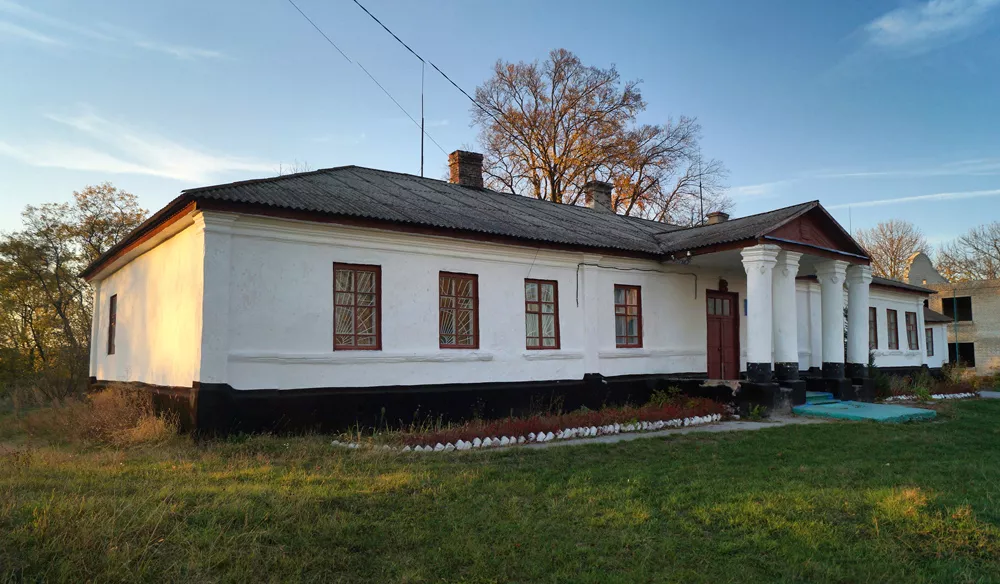
12 kilometres north of Berdychiv, in the village of Halchyn, an unusual historical estate has survived — the manor where the Polish-Ukrainian writer, military figure, and Ottoman pasha Michał Czajkowski was born. A man of incredible destiny, he changed his faith several times, served different states, and dreamed of reviving Cossack Ukraine.
A palace with a two-hundred-year history
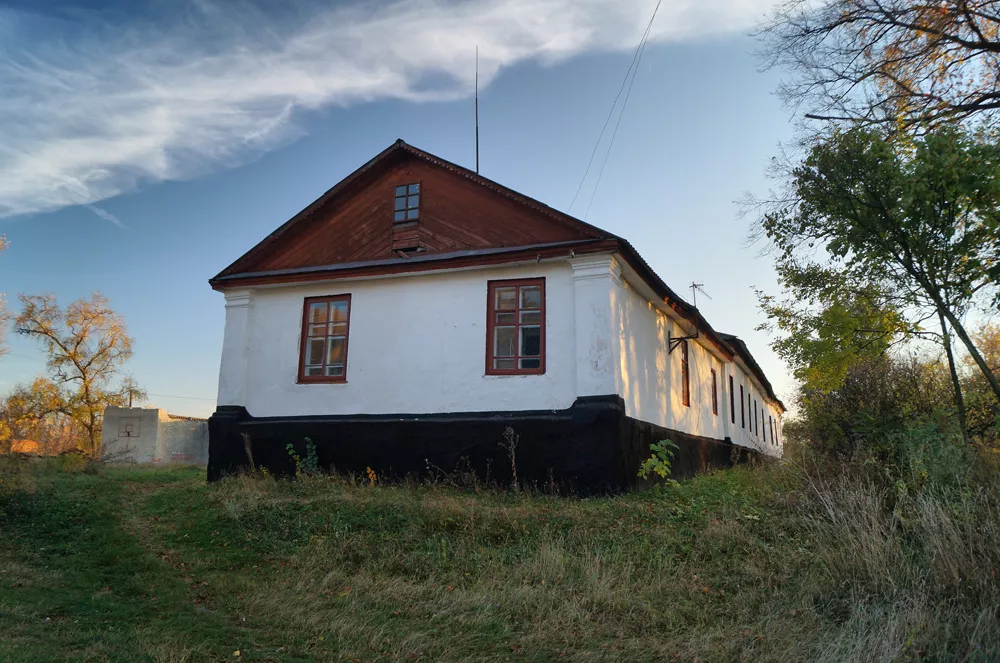
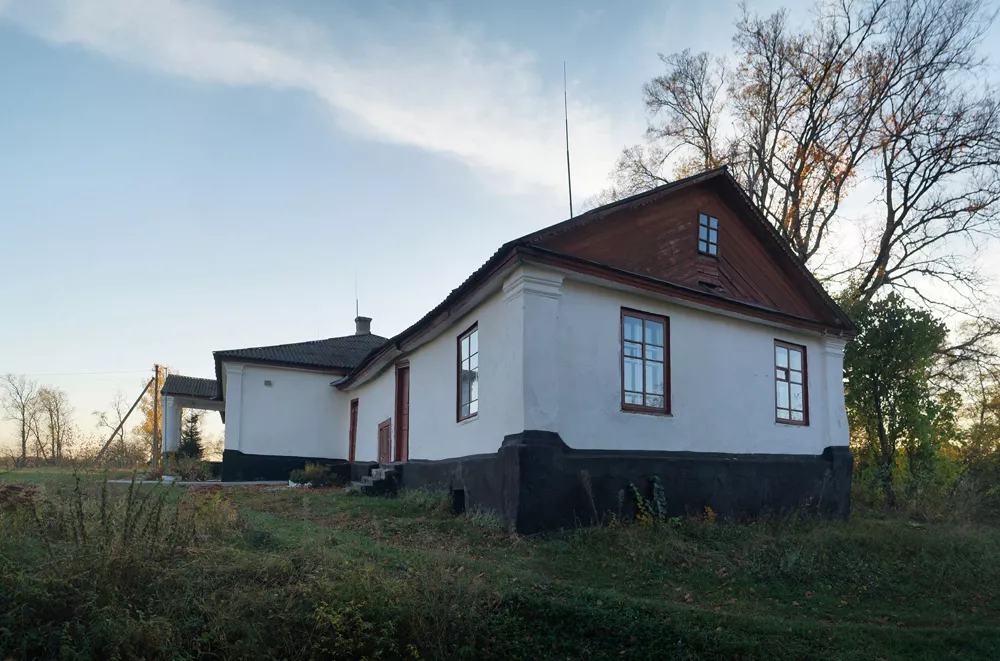
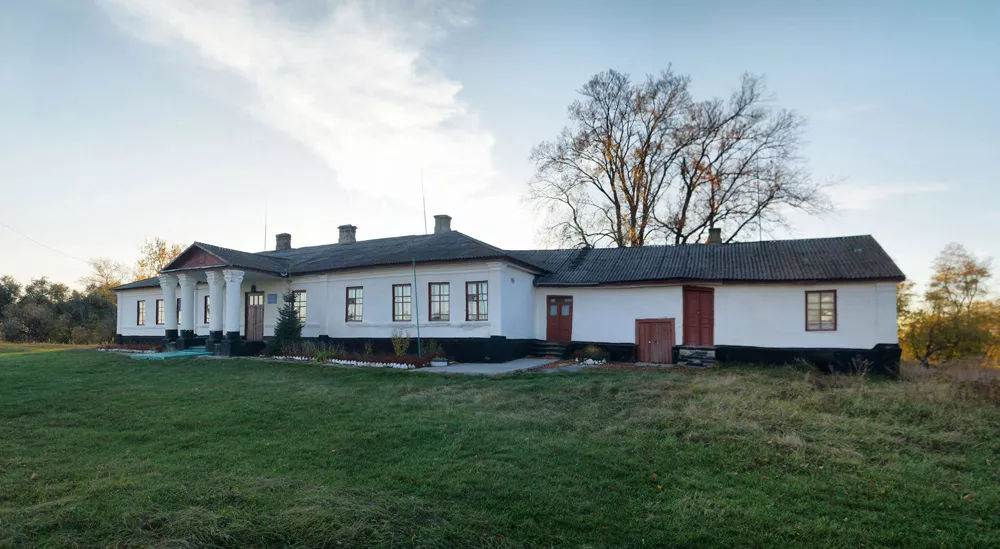
A single-storey classical-style palace with a four-column portico appeared at the turn of the 18th and 19th centuries. It was here in 1804 that Michał Czajkowski was born — a man whose life surpasses the wildest novels. Today, the building houses the "Tschajkowski Space" cultural and educational hub, open to visitors since 2023.
The estate survived thanks to the fact that it housed a village school for many years. The facade has remained almost unchanged: the four columns at the entrance, the stove heating, vintage rosettes, cornices, the original floor in one of the rooms, and the cellar under the house have all been preserved.
The incredible life of Michał Czajkowski
Childhood and Cossack roots
Czajkowski’s father came from a gentry family of Volhynia, and his mother Petronela, according to family legend, was the great-granddaughter of Hetman Ivan Briukhovetskyi. Two of his grandfathers fought under Zaporizhzhian banners — one of them died during the destruction of the Sich in 1775. His maternal grandfather, Mykhailo Hlembotskyi, according to legend, fought on Napoleon’s side, was wounded in the Battle of Borodino, and saved Bonaparte from capture at the Berezina by giving him his horse.
Education and youth
While studying in Warsaw, the young Michał met prominent figures of the era: Prince Adam Czartoryski, poets Juliusz Słowacki and Adam Mickiewicz, as well as Grand Duke Constantine Pavlovich, the Viceroy of Poland. In 1826, Constantine introduced him to his brother, Emperor Nicholas I, who offered Czajkowski a position at court. However, the young nobleman refused.
The Polish Uprising of 1830–1831
Instead, Michał Czajkowski became an active participant in the November Uprising against Russian rule. He freed his serfs from the porch of the Halchyn estate, formed Cossack detachments from them, and joined the insurgent army. For his bravery, he received an officer rank and the Golden Cross.
Following the defeat of the uprising, his estate was confiscated, and Czajkowski himself was declared an outlaw in the Russian Empire. He emigrated to France, where he began his literary career.
Literary work
In 1837 in Paris, Czajkowski published his first fictional work in Polish — the collection "Cossack Tales" ("Powieści kozackie"). It included the short story "The Grave", the action of which takes place precisely in Halchynets. He also wrote the novellas "Winter Night. Memories from Halchynets" and "Autumn Day. Memories from Halchynets".
In his works, Czajkowski popularized Cossack tradition, combining Cossack romance with the idealization of Polish-Ukrainian relations. His political ideal was the revival of Cossack Ukraine as an autonomous part of an independent Poland.
Later destiny and life's paradoxes
The subsequent life of Michał Czajkowski was full of sharp turns and contradictions. Seeking allies in the fight against the Russian Empire, he moved to the Ottoman Empire, where in 1850 he converted to Islam and took the name Sadyk Pasha. There he organized Cossack detachments in the sultan's service, dreaming of using them in a future war for the liberation of Poland and Ukraine.
During the Crimean War of 1853–1856, Chaikovsky actively collaborated with the Ottoman authorities and Western states, trying to revive the Cossack army as a political force. His vision of the Cossacks was romantic and political rather than purely military, but it was this vision that influenced the European perception of the Ukrainian Cossack tradition in the 19th century.
At the end of his life, disillusioned with politics, Chaikovsky received a pardon from Alexander II and in 1873 settled on the Birky farmstead in the Chernihiv region, converting back to Orthodoxy. In 1886, lonely and ill, he committed suicide, leaving behind a complex and ambiguous legacy.
Legacy
Mykhailo Chaikovsky was a man of multiple identities: a Polish nobleman, a Cossack romantic, an Ottoman pasha, a political émigré, and a writer. His life reflected the dramatic history of 19th-century Eastern Europe—a time of empires, failed uprisings, and unfulfilled national dreams.
Despite the contradictory nature of his figure, Chaikovsky played an important role in popularizing the Cossack myth in European culture, becoming one of those who brought the image of Ukraine and the Cossacks to the intellectual circles of the West.
Photo by Roman Malenkov