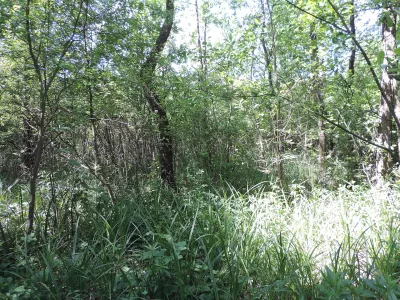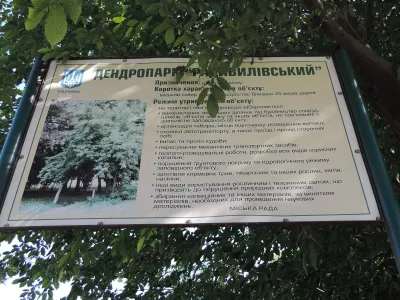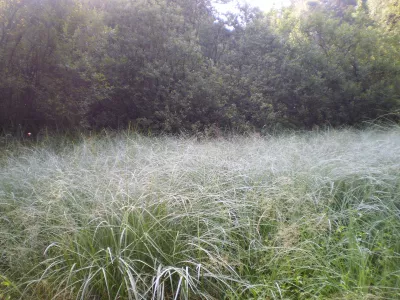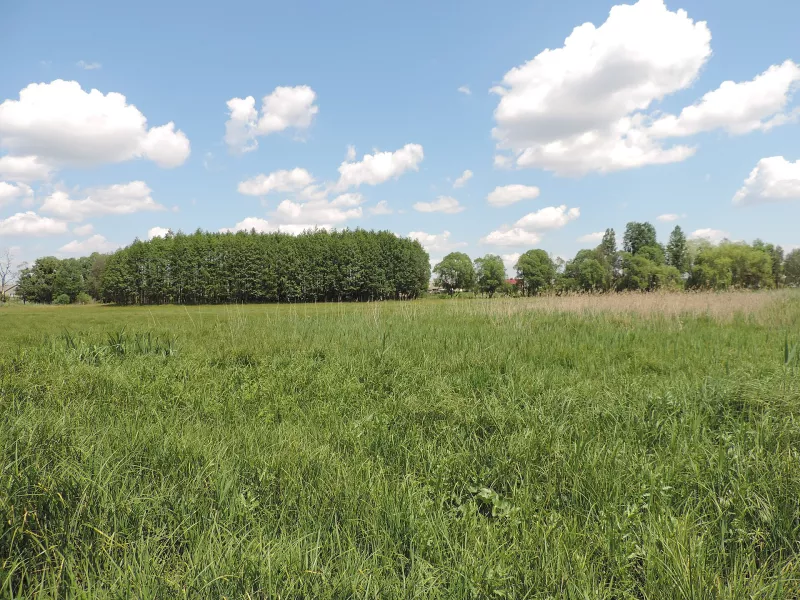
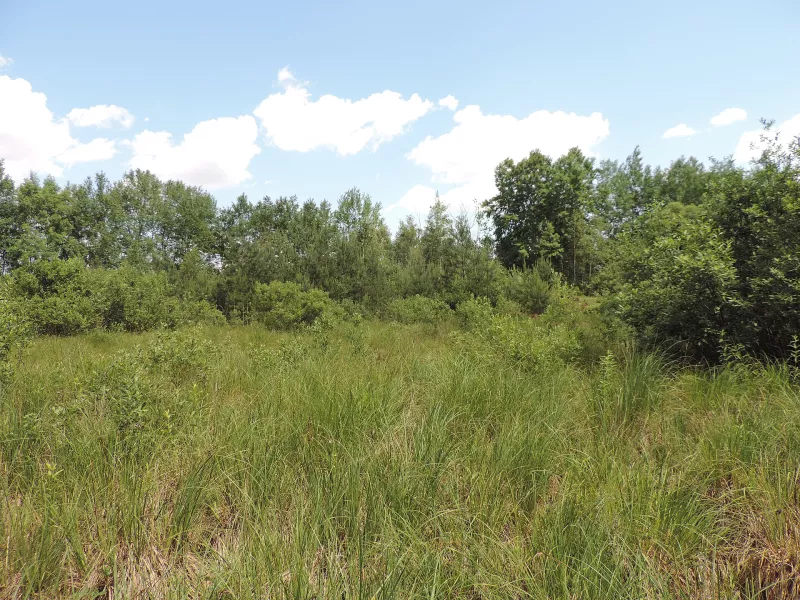
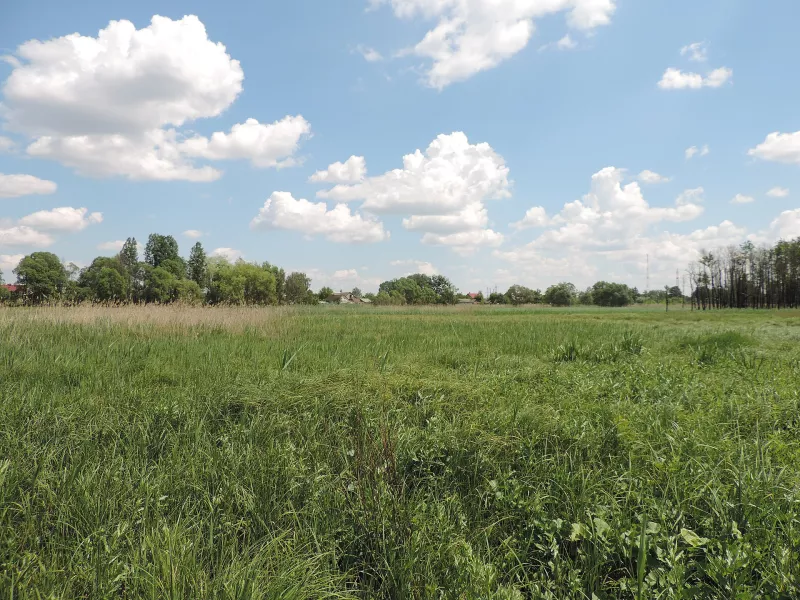

Porokhovnia is a botanical natural monument on the southern outskirts of Radyvyliv, not far from the railway. The area is 1.9 hectares, with an additional 1.4 hectares of meadows forming a buffer zone. The monument was established in 1995 to preserve a sphagnum bog in the valley of the Slonivka River with rare plants. The bog formed back in the glacial period, and a pine forest approaches it from the south.
What this bog is like
The sphagnum bog is formed by sphagnum moss. It grows layer by layer, and the lower layers slowly turn into peat. Such bogs are fed mostly by precipitation, the water in them is acidic and poor in nutrients, so only special plants survive here. Porokhovnia dates back to the glacial period — that is thousands of years of continuous moss growth in a small area near the town.
The Slonivka Valley
The bog lies in the valley of the Slonivka, a right tributary of the Styr that flows through Radyvyliv. Of the river's 49 kilometres, about 40 are within the Radyvyliv region. The river's name is connected not with the animal, but with salt — "saline water", or with the word "fields" (lany).
How to get there
Porokhovnia is on the southern outskirts of Radyvyliv, near the railway track, so you can walk here from the town. The site is small, and half an hour is enough to see it. Stay on the edge: stepping on sphagnum hummocks is dangerous, and the bog plants are protected.
Nearby
Radyvyliv is a town, Leviatynske Boloto is another bog on the outskirts.