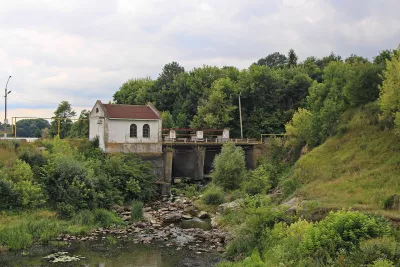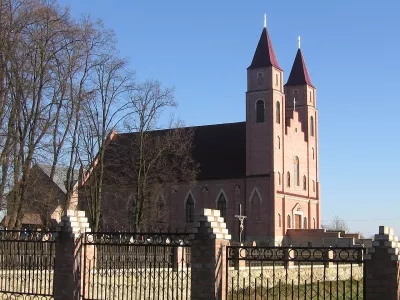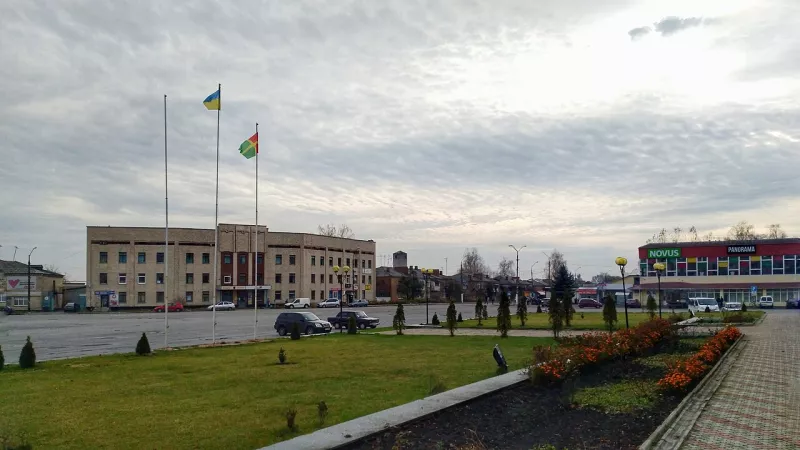

Romaniv is an urban-type settlement in Zhytomyr Raion, and one of the largest settlements in the oblast, with a population of over 7,000 people. It lies on the Lisova River, a tributary of the Teteriv, 67 km from Zhytomyr and 11 km from the Razine railway station on the Shepetivka — Berdychiv line. From 1933 to 2003, the town was named Dzerzhynsk, and in 2003 its historical name was restored.
Today, Romaniv is a quiet district town, but two hundred years ago it was home to one of the largest palaces on the Right-Bank region, a cloth factory, a Jesuit collegium, and an orchestra known throughout the entire empire.
From the Lithuanian Metrica to the Ostrogskis
Romaniv was first mentioned in the Lithuanian Metrica of the 15th century: its inhabitants paid taxes for the maintenance of the Zhytomyr Castle, and engaged in farming, cattle breeding, and bee-keeping. The founding of the settlement dates back to 1471. At the beginning of the 16th century, there were 18 homesteads here. In 1505, the King of Poland and Grand Duke of Lithuania, Alexander Jagiellon, granted the village to the governor of Zhytomyr County, Dmytro Oleksandrovych, and the peasants had to give the lord "forty buckets of fresh honey and twenty foxes."
In the second half of the 16th century, Romaniv belonged to the Ostrogski princes and was assigned to their castle in Chudniv. Later it was owned by Beata Kostelecka, the mother of the famous Halshka Ostrozka, and then the town passed to the Illinsky family.
The Illinsky Residence
In the 18th century, Romaniv became the property of Kazymyr Illinsky and the seat of the senior, "senatorial" branch of the family. Józef August Illinsky (1766–1844) did the most for the town. He built a steam mill and a large cloth factory with 120 looms, for which he invited craftsmen from England, and also established a stable of English horses.
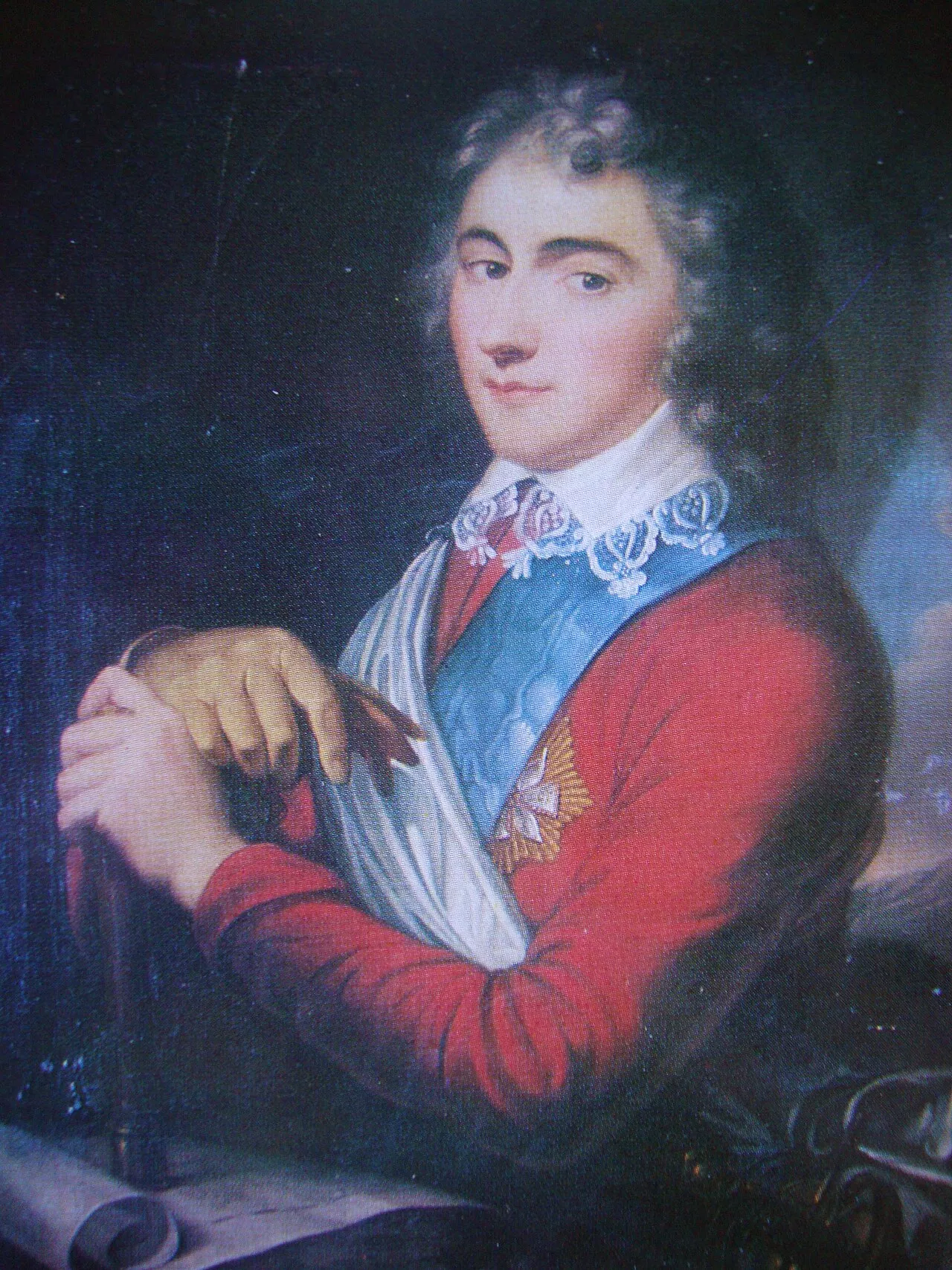
In 1811, a Jesuit collegium was founded on the Illinsky estate, which officially opened on March 14, 1817, as a branch of the Polotsk Academy. The town also had monasteries of the Visitation and Charity sisters and a school for the deaf and dumb, and Tadeusz Czacki founded a boarding school for girls here. In 1817, Romaniv received Magdeburg rights — townspeople's self-government, its own court, and trade guilds.
In the 1820s, a horn music orchestra led by Syla Karelin, one of the best in the Russian Empire, played on the Illinsky estate. In such an orchestra, each musician had a horn that produced only one note, so the melody was created together by everyone, like on an organ.
The Palace of a Hundred Rooms
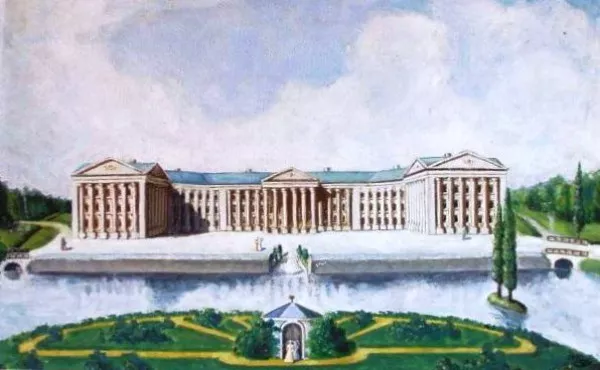
At the end of the 18th century, Józef August Illinsky began building a huge palace in Romaniv designed by Valentin Merck. The classicist building had a U-shaped plan, thirteen windows along the façade, a portico on six columns, and a Corinthian colonnade all around. Inside there were a hundred rooms and a chapel. In terms of size, only the Potocki Palace in Tulchyn could compete with it in the eastern lands of the Polish-Lithuanian Commonwealth at that time. A theater, opera, and ballet operated at the palace.
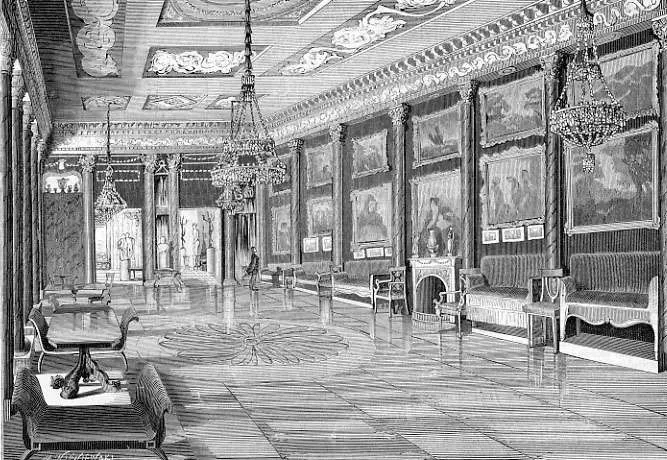
The halls housed a large art collection: canvases attributed to Titian, Rubens, Tintoretto, Jacopo Bassano, Luca Giordano, and David Teniers, as well as sculptures, antiquities, mosaic and malachite tables, and even a writing desk that Marie Antoinette gifted to Empress Catherine II. Around the palace was a park with a menagerie, featuring a three-meter-high granite pyramid in memory of General Janusz Iliński, who died in 1792 near Markuszów.
In the second half of the 19th century, Romaniv passed to the Steцкий family. On December 5, 1876, the palace burned to the ground along with its collections, the value of which was estimated at one million rubles. It was not rebuilt: the Steцкий family moved into the former Jesuit collegium, and the appearance of the palace is known only from engravings.
The 20th Century
During the First World War, Romaniv became a frontline town, and many refugees flocked here. It received the status of an urban-type settlement in 1924. During the years of the Nazi occupation, in the summer of 1941, the Nazis created a ghetto in Romaniv, where they held about two thousand Jews. On October 23, 1941, they were shot at the Jewish cemetery.
Romaniv is the birthplace of composer Ignacy Feliks Dobrzyński, General Józef August Iliński, and diplomat Borys Tarasyuk, who twice headed the Ministry of Foreign Affairs of Ukraine.
How to Get There
From Zhytomyr to Romaniv it is about 67 km by road to the west. The nearest railway station is Razine, 11 km away. A trip to Romaniv is conveniently combined with Chudniv and Myropil on the Sluch, as well as with the Rylskyi Museum-Estate in Romanivka. Just don't confuse them: Romanivka is another village, in the east of the Zhytomyr district.