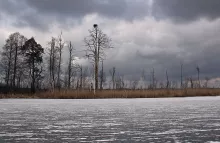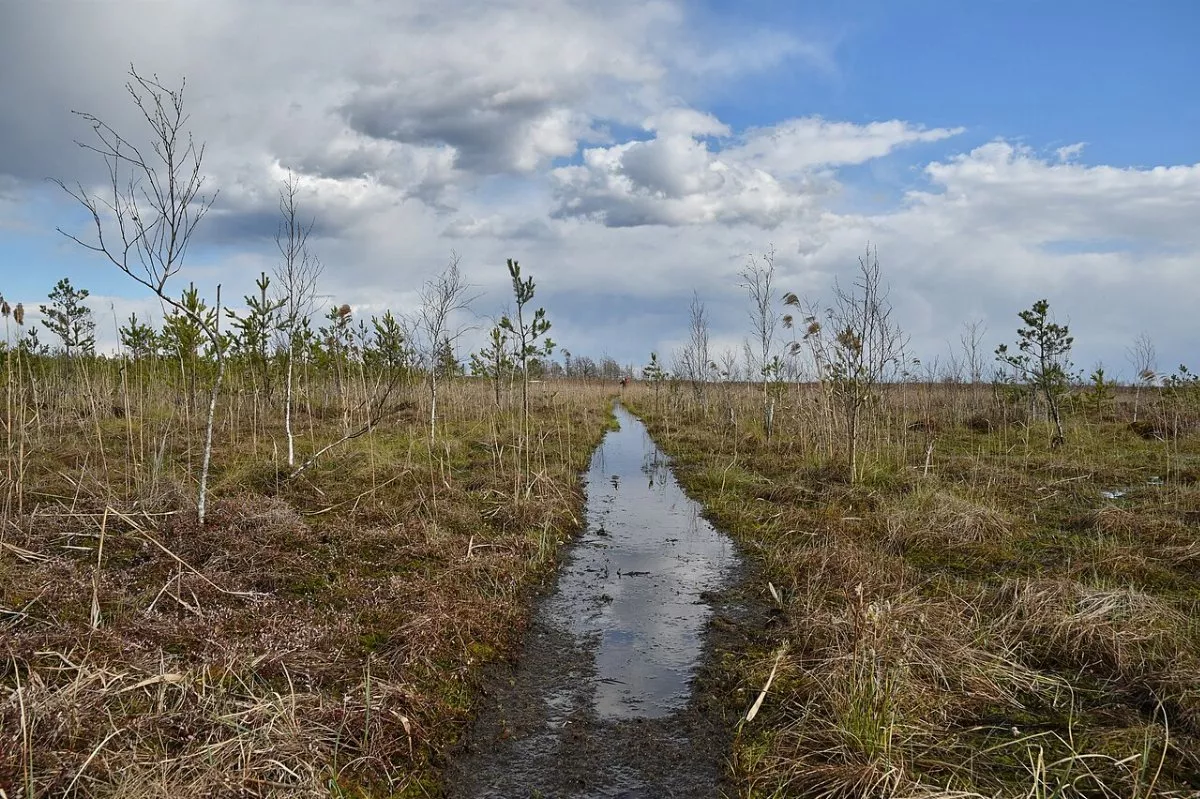
The Cheremskyi Nature Reserve in Manevychi Raion, Volyn, is one of the wildest places in Polissia: there are no power lines or paved roads here. To allow visitors to see its heart — the Cheremskyi Marsh and Lake — the reserve has laid out an ecological trail 3.5 km long. A significant part of it is a wooden boardwalk: it protects the vulnerable sphagnum mosses from being trampled. The trail is linear, with the return along the same path; plan two to three hours for a round trip walk.
Important: this is a strict regime reserve, so visits must be arranged in advance with its administration.
What’s on the trail
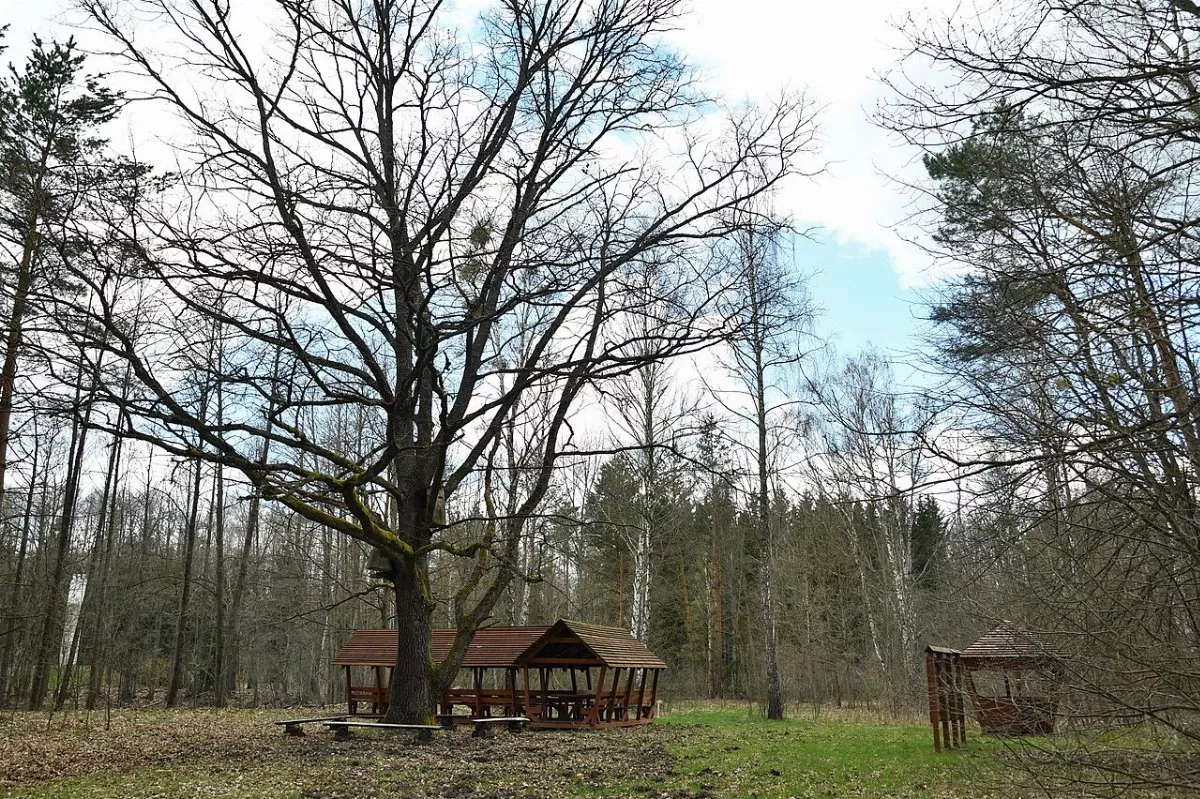
Near the entrance in the Kukhiv Hrud tract are gazebos and a partisan glory monument. Further on is an open-air ecological classroom with informational stands. On the old oaks and pines nearby, you can see hollow beehives: these are traces of beekeeping, an ancient Polissian craft — harvesting honey from wild bees.
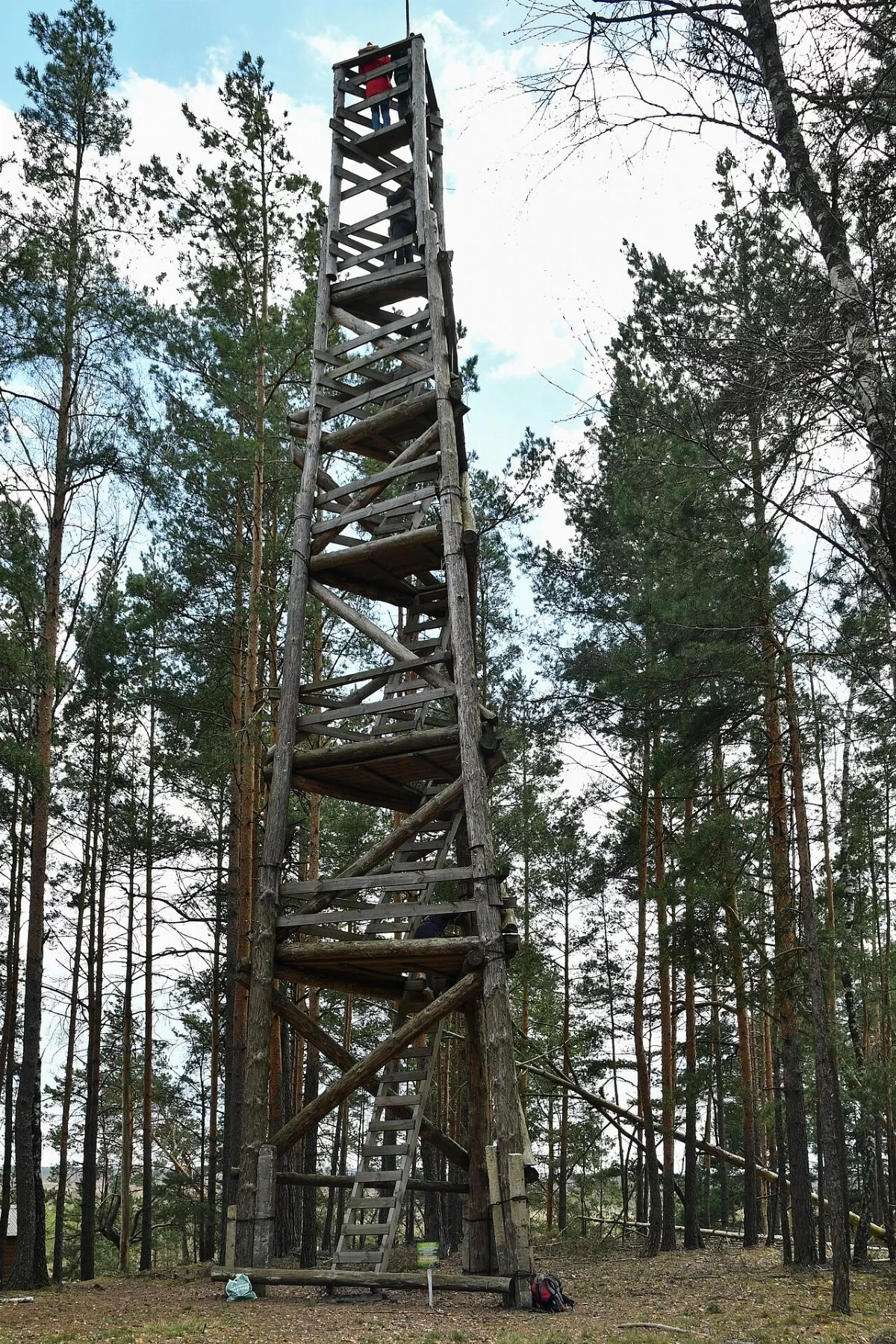
The trail climbs an aeolian dune — a hill of quartz sand deposited by the wind, 164 m above sea level. On it stands an observation tower from which the marsh can be seen as if in the palm of your hand.
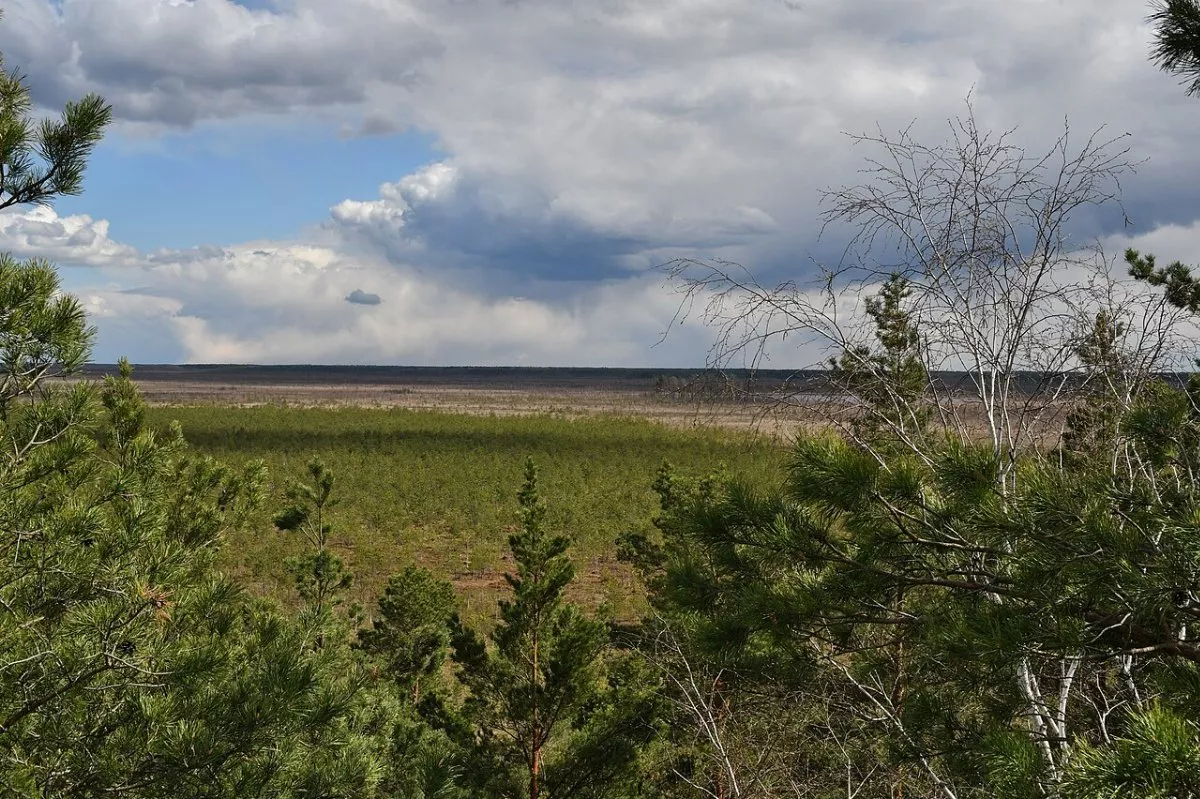
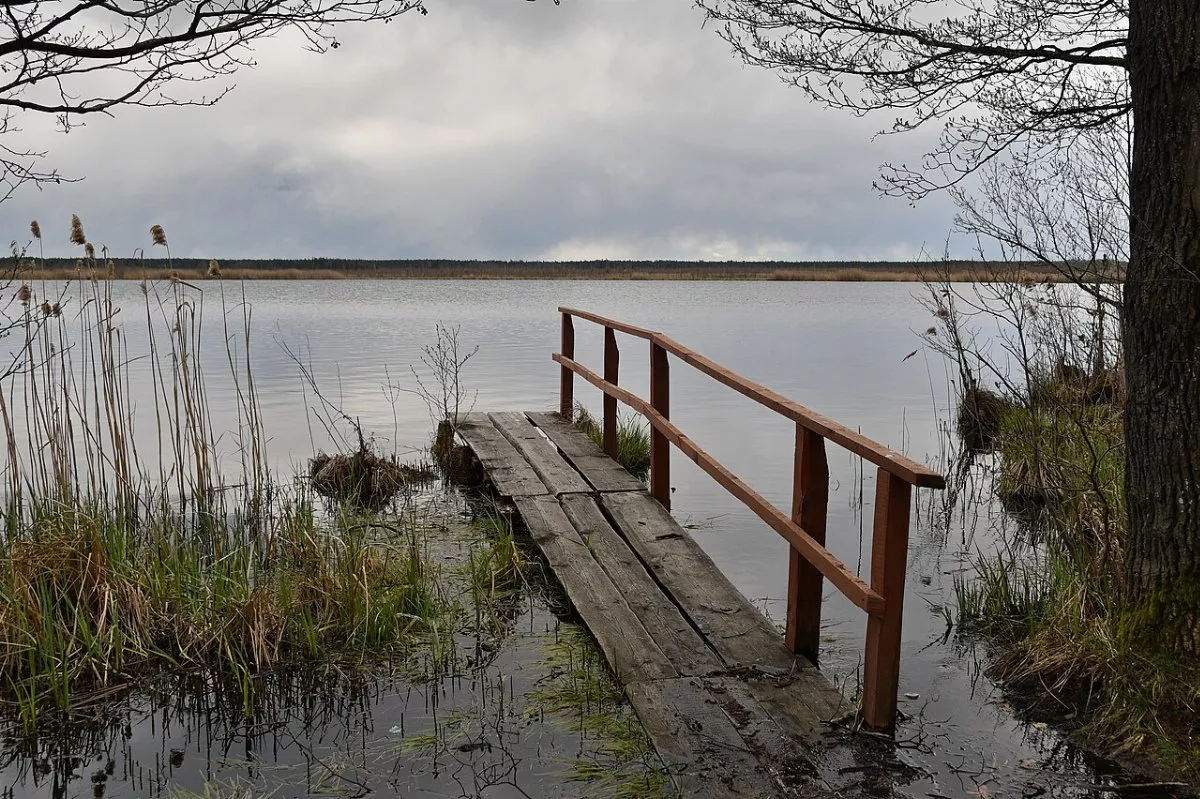
From here begins a wooden boardwalk nearly a kilometer long across the Cheremskyi Marsh, which locals call Chirmuskyi. It leads to a gazebo on the shore of Cheremskyi Lake.
Marsh and lakes
Once there was a large glacial lake here that existed 5–8 thousand years ago. Its remnants are Cheremskyi Lake (7.7 hectares, up to 7–8 m deep) and Redychi Lake. The marsh has been overgrowing for centuries, and today it is a wetland of international importance under the Ramsar Convention.
The marsh was saved from drainage by a rare relict plant — Scheuchzeria palustris: in 1978 a protected area was established here, and in 2001 the reserve was created on its basis, covering almost 3,000 hectares. Glacial relicts grow here, including the carnivorous intermediate sundew, and camera traps record capercaillies, common cranes, moose, wolves, and lynxes.
How to get there
From Lutsk — about 77 km along highway R14 towards Liubeshiv. After the village of Lyshnivka, there is a signpost “Kukhiv Hrud Tract, Cheremskyi Nature Reserve” on the road. Before your trip, call the reserve to arrange your visit and bring mosquito and tick repellent. The “How to get to the start” button will plot the route to the entrance.