
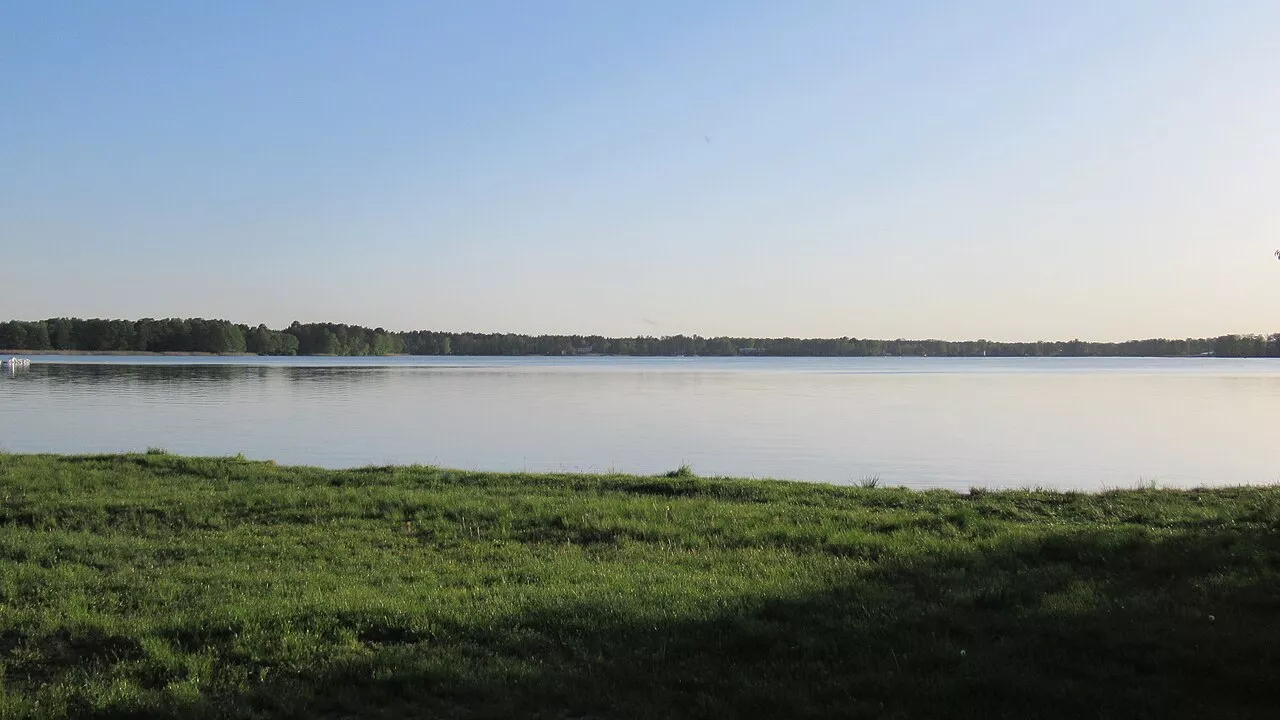
These are the first 30 kilometers of the PTTK blue trail Włodawa – Urszulin, which totals about 122 km and crosses the Łęczna-Włodawa Lakeland to the headquarters of Polissia National Park. The section begins at the bus station in Włodawa, reaches the Bug in Orchówek, skirts Lake Białe in Okuninka, and then leads through forests and fields via Luta, Dubeczno, and Hańsk to Wytyczno. The route is linear, marked with a blue stripe between two white ones. According to our track, it is 29.7 km: one long day or two leisurely ones with an overnight stay in Okuninka.
Włodawa and the Bug
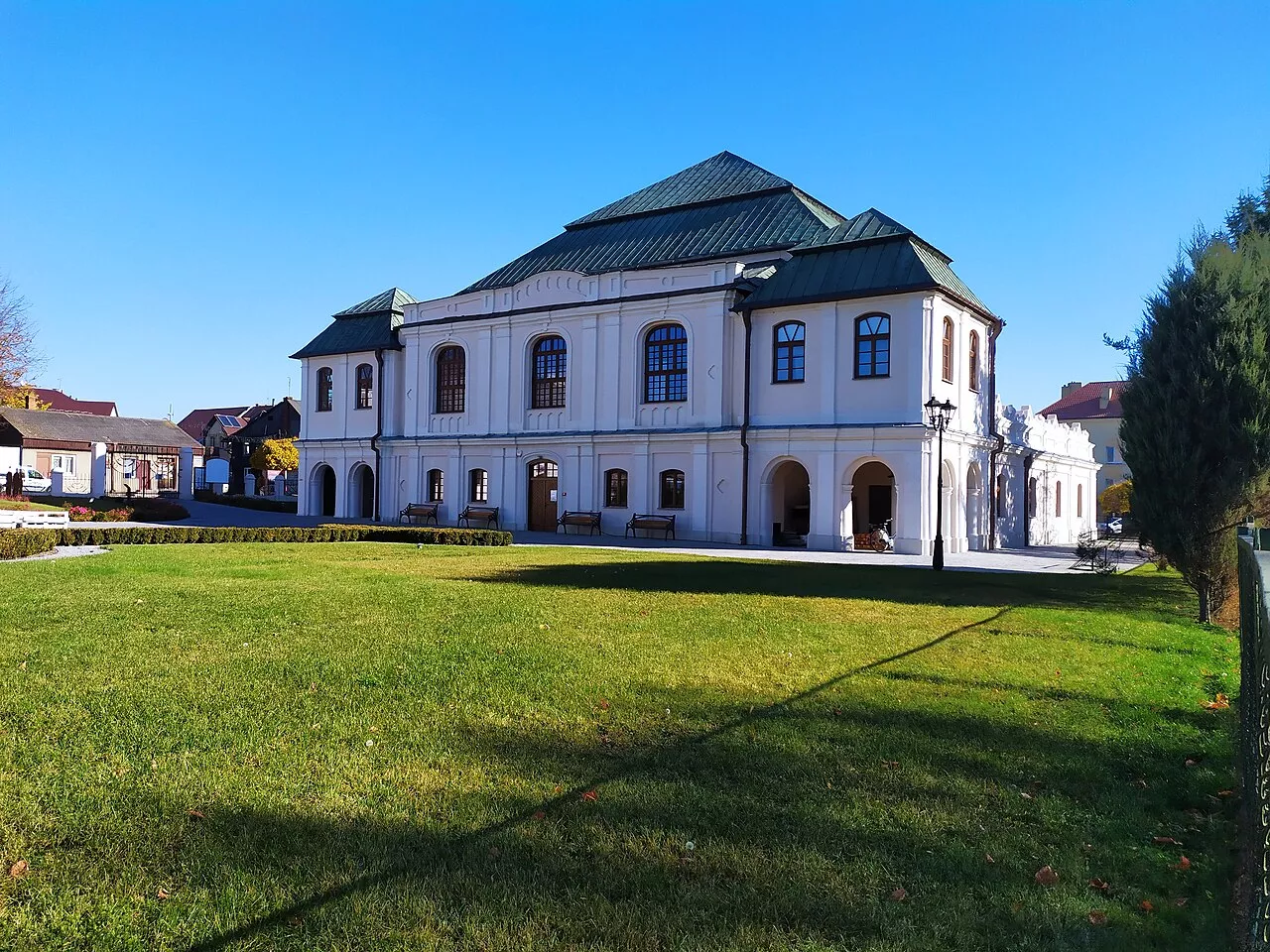
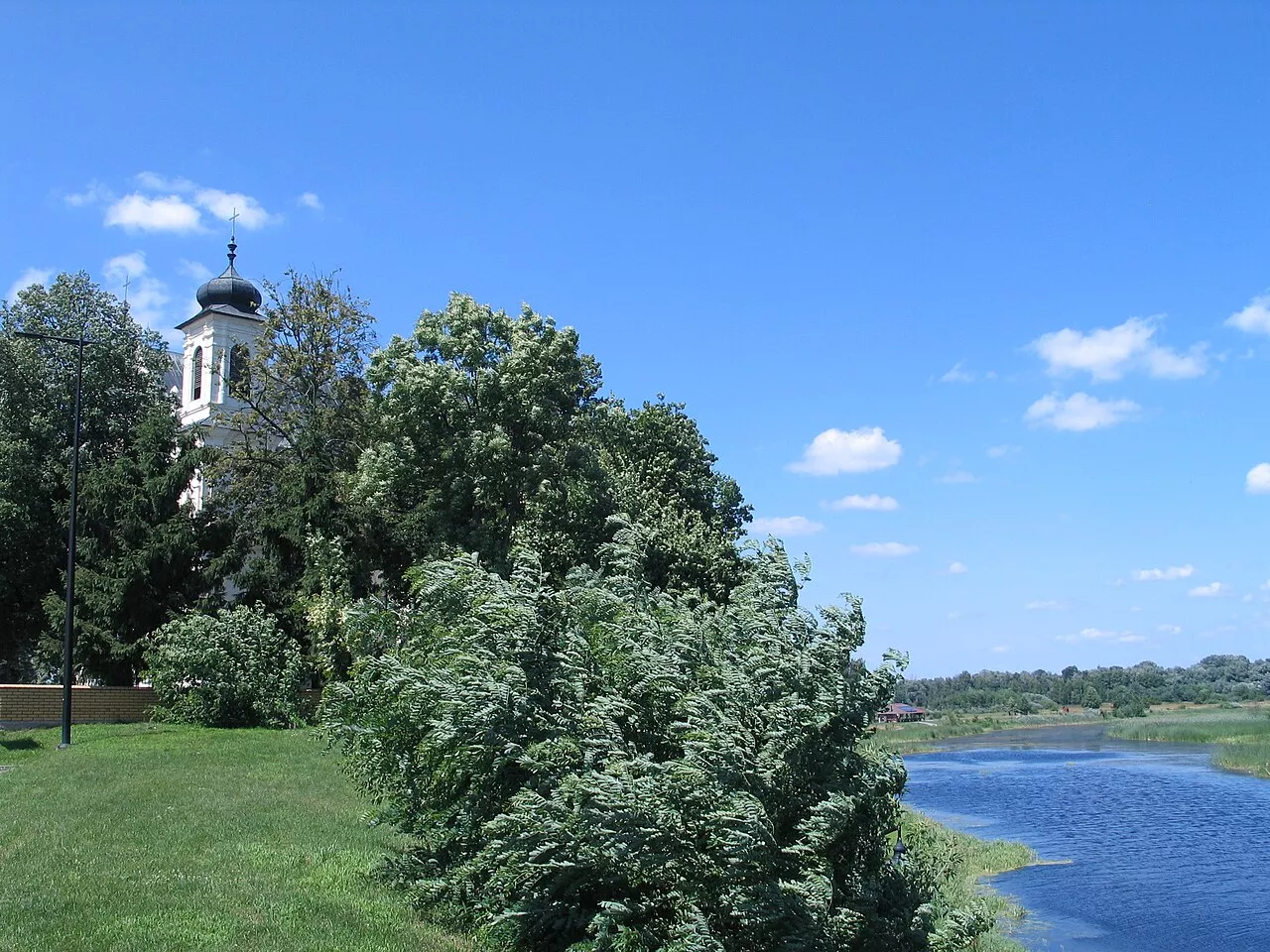
Włodawa is called the city of three cultures: in the center, the 18th-century Great Synagogue (now a museum), the Pauline church, and the Orthodox church stand close to each other. From here the trail goes south to Orchówek, a former town that received town rights in 1506. Over the steep bank of the Bug stands the Church of Saint John the Almsgiver, once Augustinian. Here the railway from Chełm ends: the track reaches the river and breaks off near the remnants of the bridge that German aviation destroyed in September 1939. The Bug here is the border with Belarus, and a little further south the borders of Poland, Belarus, and Ukraine meet.
Lake Białe in Okuninka
Okuninka is a summer village on the northern shore of Lake Białe, one of the cleanest in the lakeland. Since the 1960s, holiday resorts have been built around the lake, and now there are more than forty of them; in summer it is crowded here, with bars, campsites, and attractions operating. Nearby lie the smaller lakes Lipiec, Święte, Rogóźno, Czarne, and Glinki. For a hiker, this is the main overnight place on the section: accommodation is easy to find, but in July and August it is better to book in advance.
Luta, Dubeczno, and Hańsk
Beyond Okuninka, the trail goes along forest roads. Near Luta in 1863, the insurgents of the January Uprising fought against Russian troops — now it is a small village with several dozen inhabitants. Dubeczno is the largest village in Hańsk gmina, with a glassworks and the small Lake Dubeczyńskie to the north. Next is Hańsk and the colony of Kryłów, from where a few kilometers through fields remain to Wytyczno.
Wytyczno
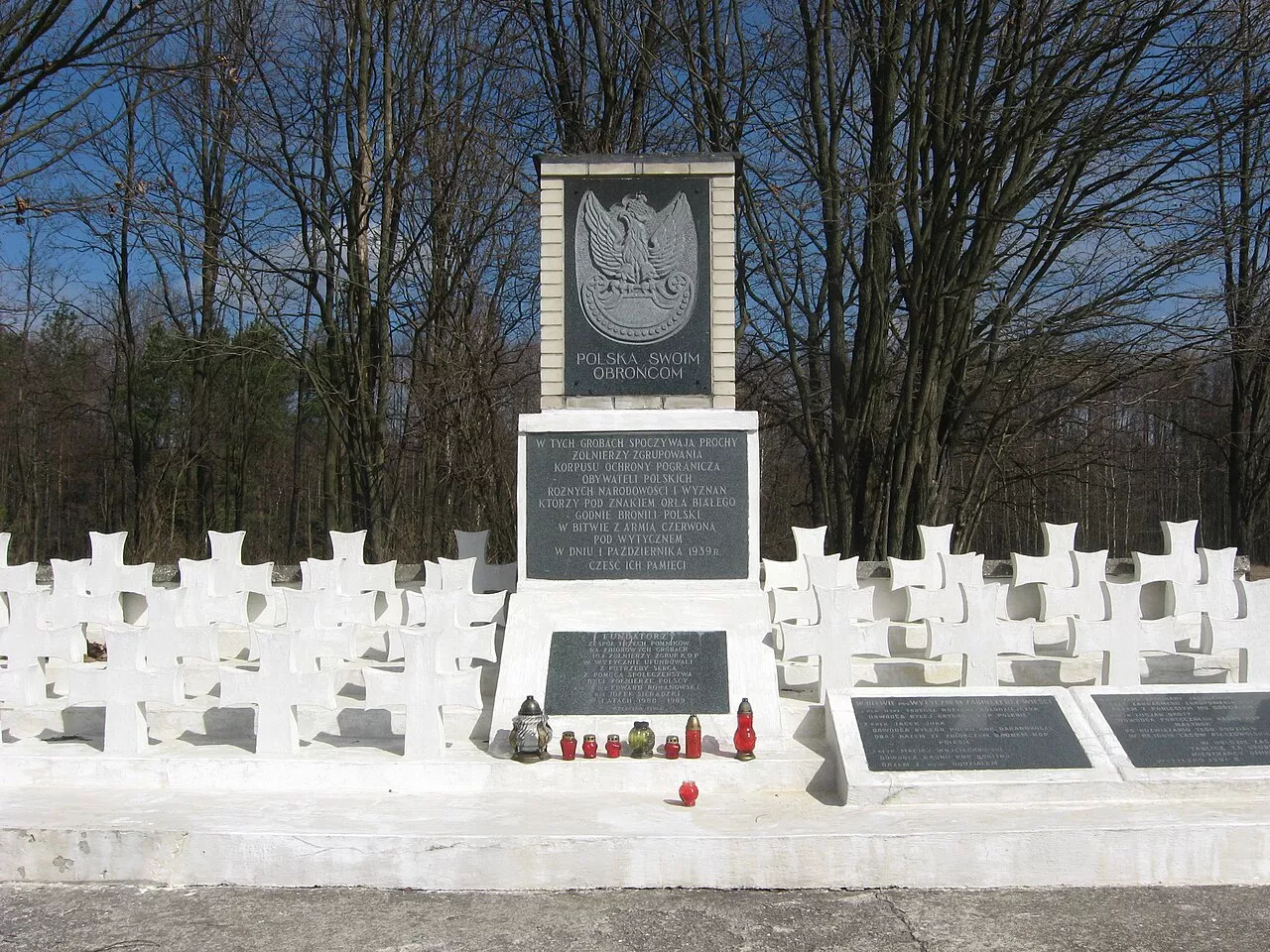
On October 1, 1939, near Wytyczno, the soldiers of the Border Protection Corps fought a battle against the Red Army; the fallen were partially buried in the military cemetery by the road, and nearby there is also an old Orthodox cemetery. Beyond the village lies Lake Wytyckie, the largest in the Łęczna-Włodawa Lakeland, now a reservoir of the Wieprz-Krzna canal system. In Wytyczno, Polissia National Park has the educational center "Polissia Homestead" with free admission. From here the blue trail continues to Pieszowola, Sosnowica, and Urszulin — this is a separate page.
How to get there and what to consider
This is Poland: Ukrainian citizens need a foreign passport. Buses and minibuses run to Włodawa from Lublin along the route through Łęczna and Urszulin; from Wytyczno, you can return by bus towards Włodawa or Lublin, but rural services are infrequent, so check the schedule in advance. There is a railway between Chełm and Włodawa, but there are few passenger trains on it. The best time is from May to September; there are many mosquitoes and ticks in the forests and near the lakes, so repellent and covered clothing are needed. The beginning of the route runs along the Bug a few hundred meters from the border with Belarus: the border is closed, and checks by the Polish Border Guard are possible nearby.