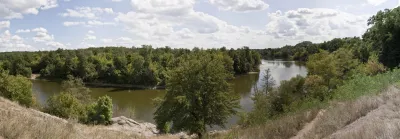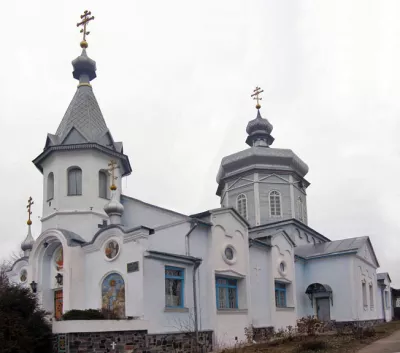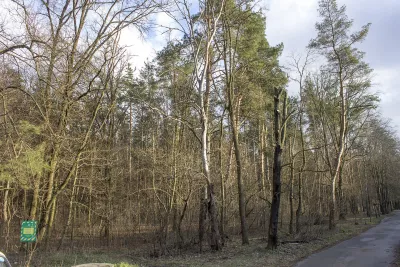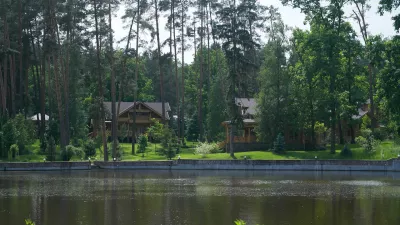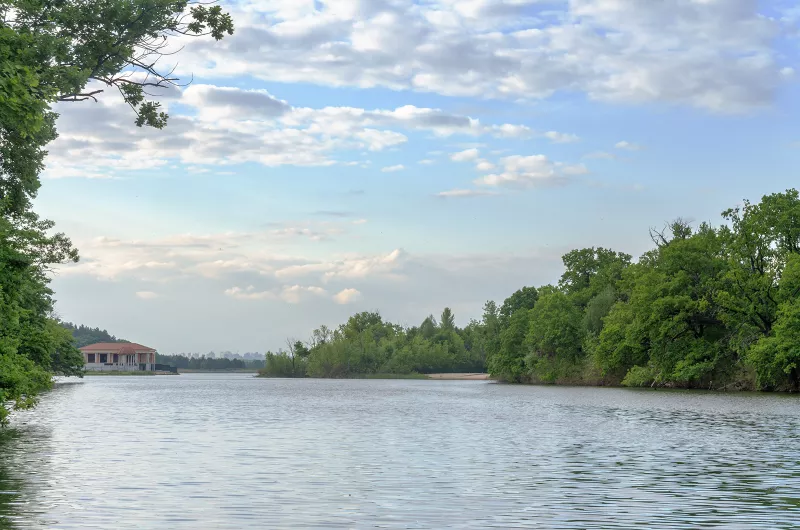
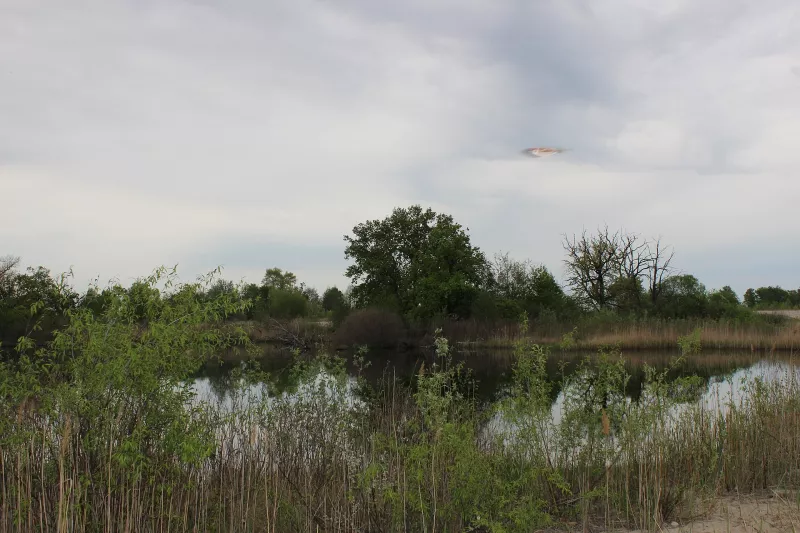
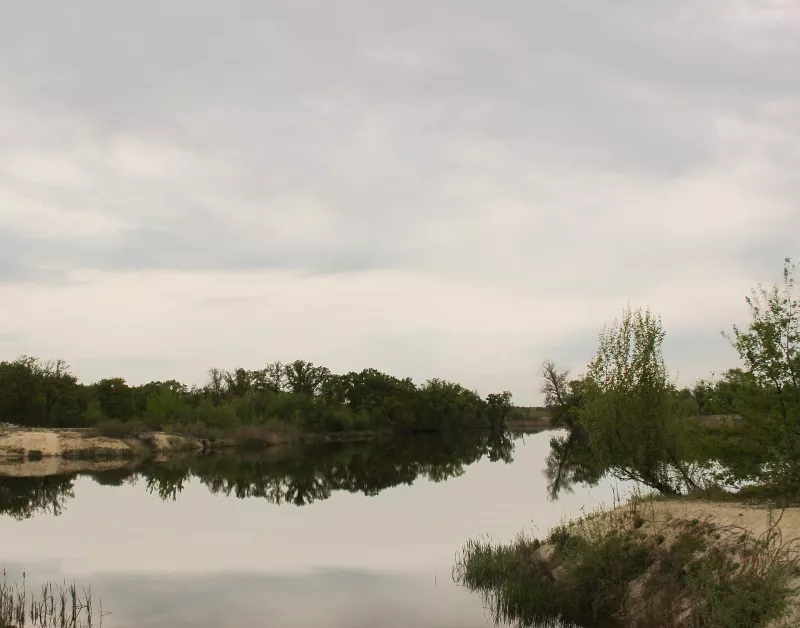
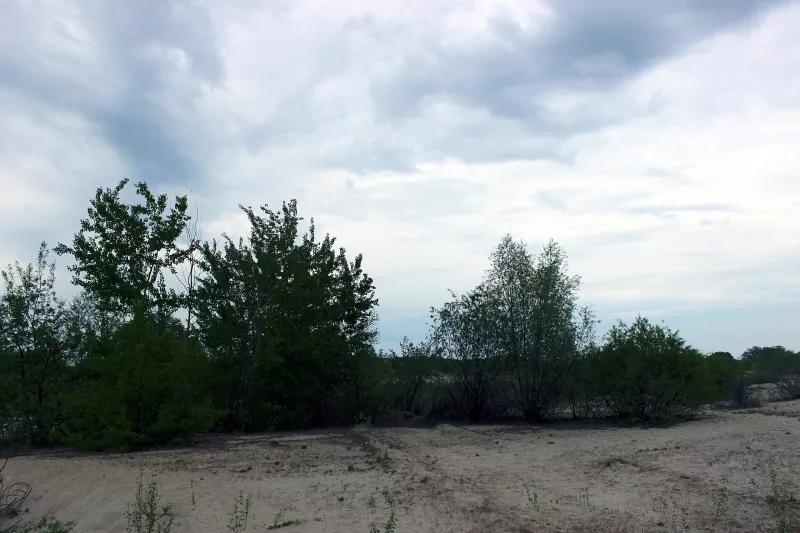

Koncha is a narrow lake about 11 km long on the border of the Holosiivskyi district of Kyiv and the Obukhiv district of the Kyiv region, near the villages of Romankiv and Khodosivka. It is a former branch of the Dnipro that separated from the river as a result of channel processes. The shores of Koncha are covered with oak forests and meadows, and the lake itself gave its name to the well-known area of Koncha-Zaspa.
An arm that became a lake
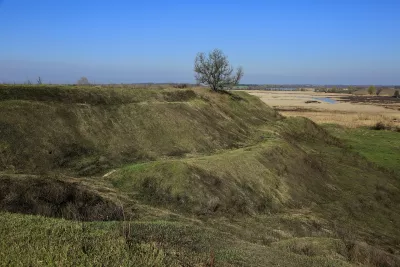
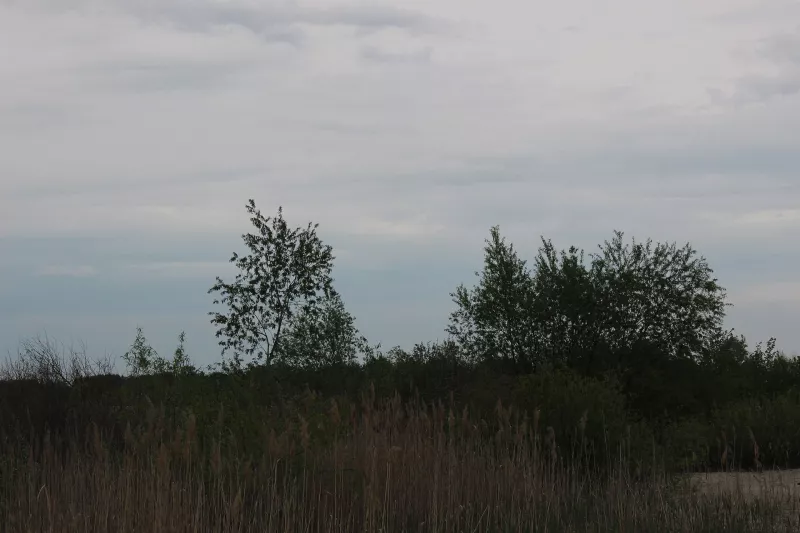
Once upon a time, the Dnipro branched out into numerous arms here. One of them separated and turned into a lake. On the 1934 map, Koncha is still marked as a river stretching from the Konyk River to Kozynka. The width of the lake ranges from 30 to 140 meters. The right bank in the central part is steep, overgrown with an oak forest, while for the most part the banks are gentle, swampy, with meadows and bushes. Part of the water surface is covered with reeds. The lake is not used for economic purposes.
Nature reserve and old oaks
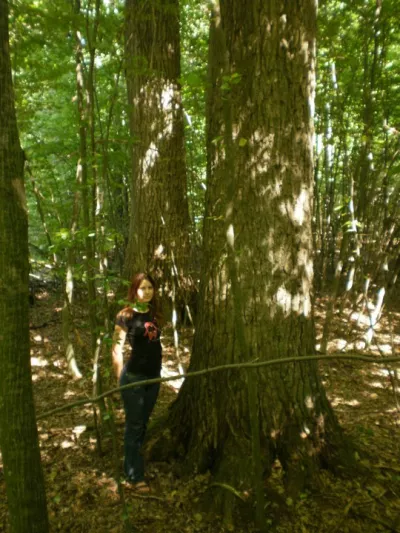
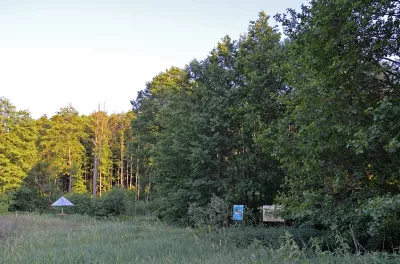
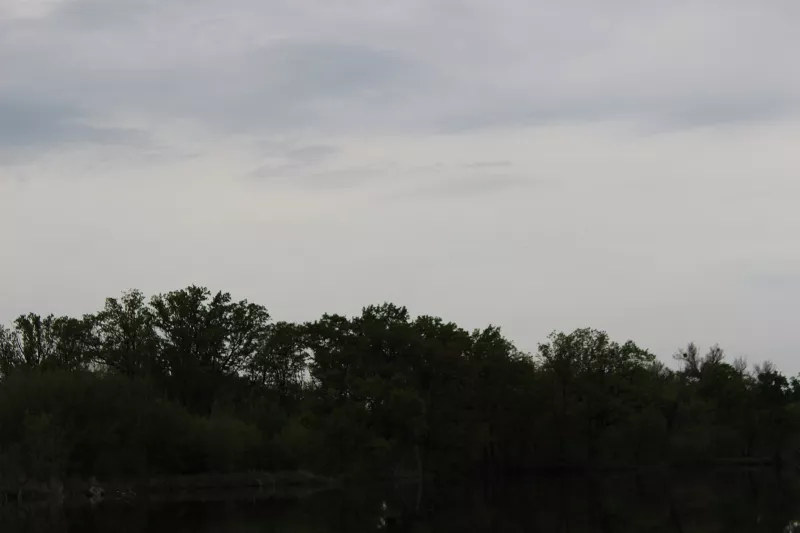
The left bank of Koncha, which belongs to Kyiv, has been the "Livyi bereh ozero Koncha" nature reserve with an area of 80 hectares since 1997. On the right bank, on the territory of the Koncha-Zaspa sanatorium, two oak trees grow – natural monuments over 300 and 500 years old, with a girth of 4.1 and 5 meters. In the 1920s–1930s, the lake was part of the Koncha-Zaspa nature reserve.
History of Koncha-Zaspa
The first known description of the lake dates back to the 16th century: back then it was called Hlushets and was famous for its fish, and the hayfields around it were highly valued. Later, these lands became the property of the tsar's family, and then of the Soviet nomenclature. Today, sanatoriums, holiday homes, state residences, and private estates are located on the right bank, so access to the water is not available everywhere.
How to get there
Koncha is located south of Kyiv along Stolychne Highway (the highway to Obukhiv and Ukrainka). It is most convenient to get to the lake from the side of Romankiv or Khodosivka, as well as from the Kyiv left bank, where the nature reserve is located.
Tip
A significant part of the shores consists of private or departmental territories, so respect fences and signs. For a walk, it is better to choose the nature reserve on the left bank, where you can peacefully walk along the water.