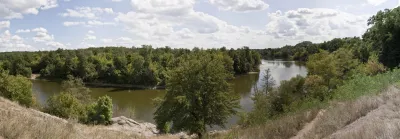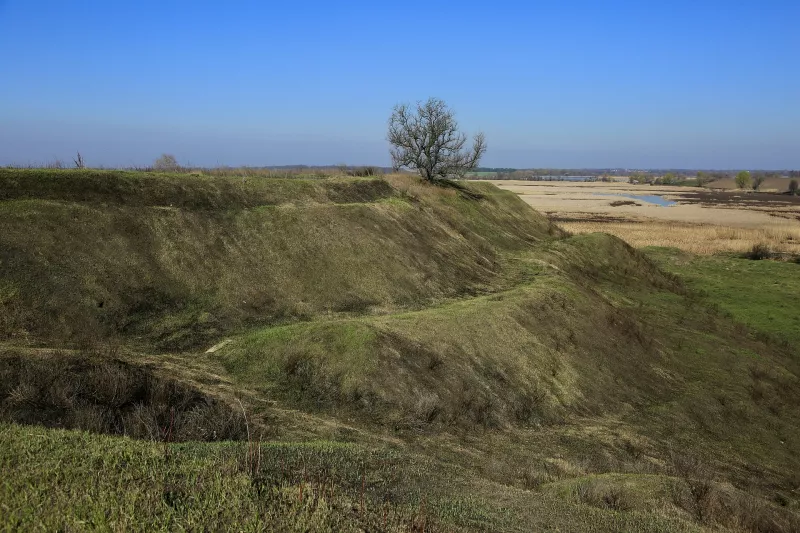
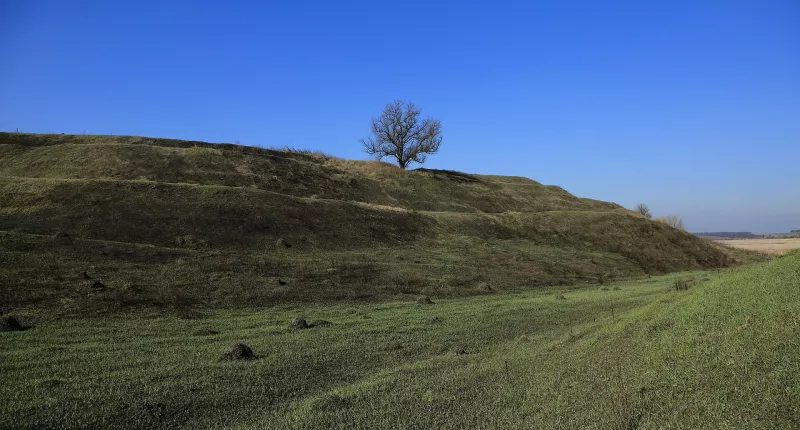
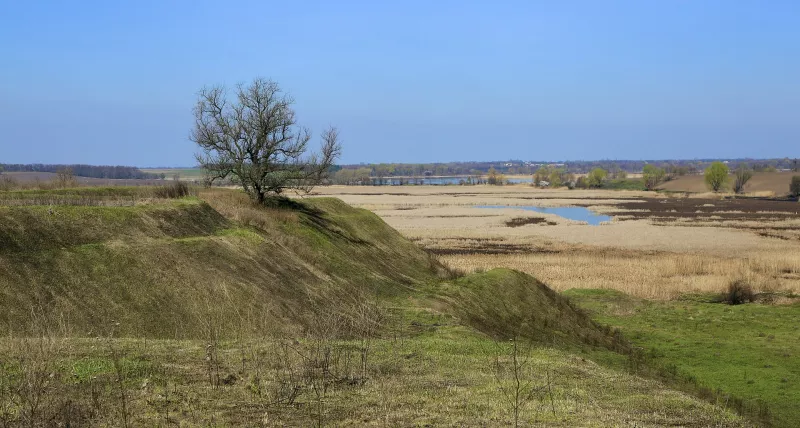
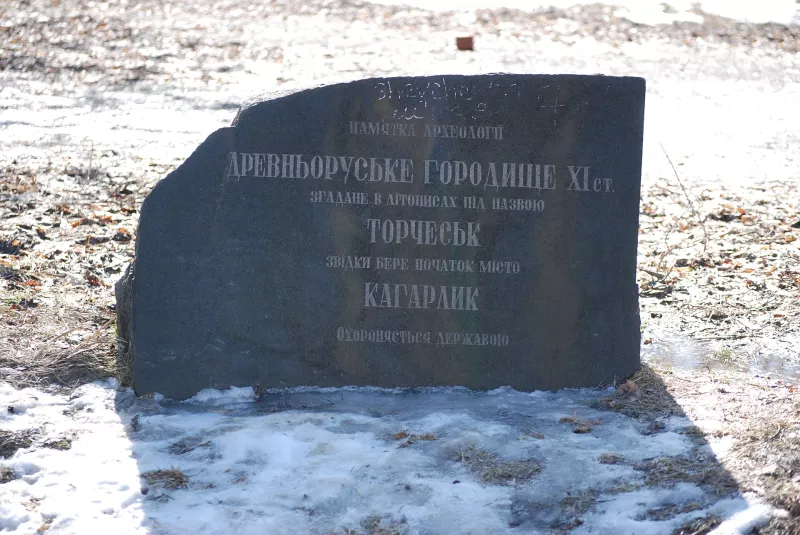

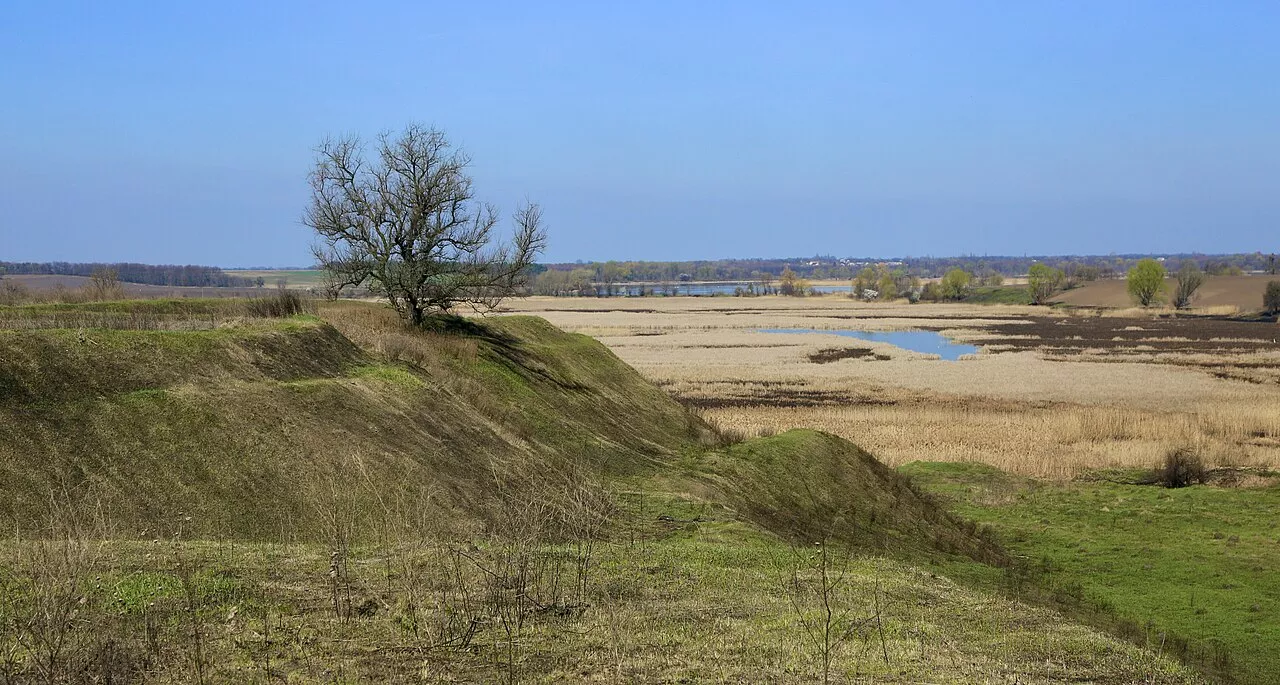
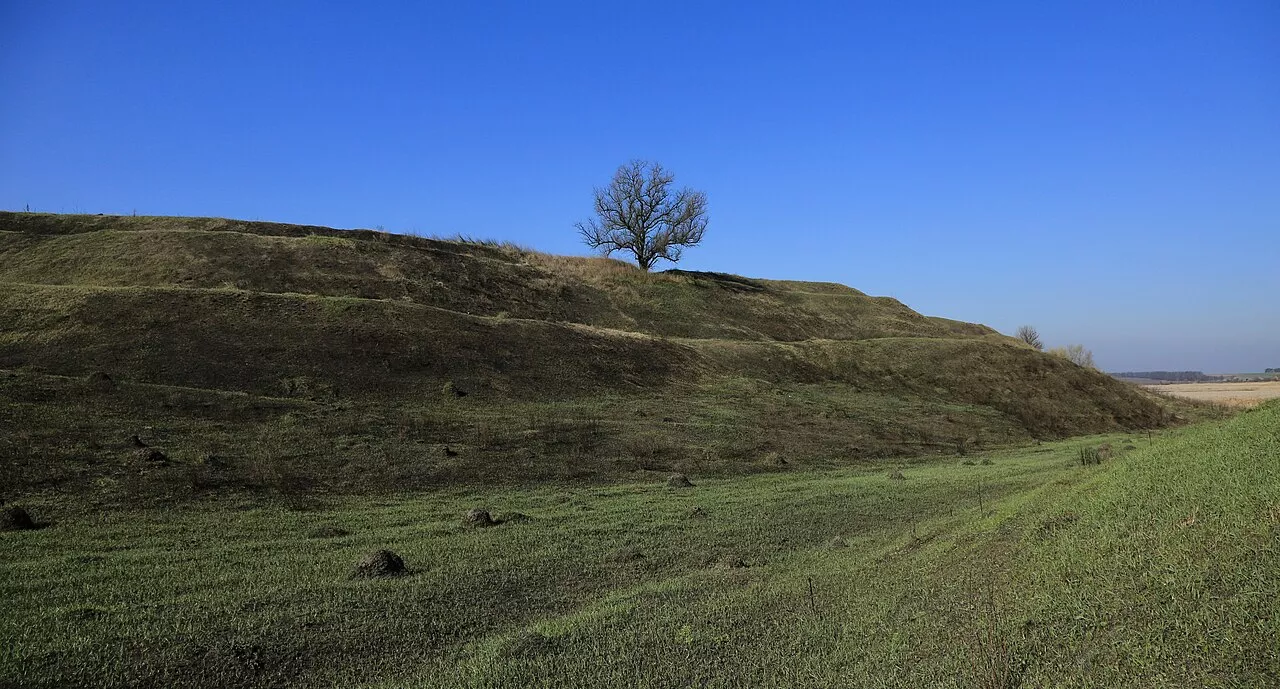
Between the villages of Olshanytsia and Sharky in Bila Tserkva district, 38 km east of Bila Tserkva, on the right bank of the Horokhuvatka River floodplain, lies the Torchesk hillfort. In the 11th–13th centuries, this was the main city of the Torks—a Turkic people whom the Kyiv princes settled in the Porossia region to defend the southern border of Rus against the steppe nomads. The hillfort stretches for 1.3 km and consists of three parts.
City of the Torks
The name Torchesk means "city of the Torks". The Kyiv princes allocated lands to the Torks in the center of Porossia, and they became their allies in wars against the steppe. Later, the Torks, together with other nomadic tribes, formed the union of the Black Cloaks, and Torchesk became their main city.
Siege of 1093
Torchesk is first mentioned in the Tale of Bygone Years in the account of the war with the Polovtsians in 1093. The new Kyiv prince Sviatopolk Iziaslavych refused to pay the Polovtsians for peace and imprisoned their ambassadors. In spring, the Polovtsians besieged Torchesk, defeated the Rus princes on the Stuhna River on May 26, and on the Zhelian River near Kyiv on July 23. The besieged Torks, whose water supply was cut off, held out for nine weeks and surrendered only on July 24. The city was burned.
Princely throne and destruction
In the 12th century, Torchesk was rebuilt and became one of the largest cities of Porossia. At the end of the century, a princely throne was established here, and a Rus garrison was stationed; Prince Mstyslav held the Hungarian prince Koloman captive in Torchesk. During the Mongol invasion led by Batu Khan in 1240, most of the Torks perished or were displaced, and the rest mixed with the local population.
Excavations
At the late 19th and early 20th centuries, the hillfort was excavated by Kyiv archaeologist Vikentii Khvoyka, in 1966 by Borys Rybakov, and later it was surveyed by Mykhailo Braichevskyi and Mykhailo Kuchera. Archaeologists found the remains of dwellings and utility structures, everyday objects, and burials. The finds are kept in the National Museum of the History of Ukraine. The hillfort has been protected since 1970.
How to get there
Olshanytsia is in Bila Tserkva district, approximately 100 km south of Kyiv. The hillfort is to the left of the Sharky – Olshanytsia road, 2 km from Olshanytsia and 3 km from Sharky. It is most convenient to travel by car.
Tip
The hillfort is a field with ramparts and ditches, so the relief is best seen in spring and late autumn when the grass is low. Do not dig or use a metal detector — this is an archaeological site protected by the state. The trip can be combined with visiting Bila Tserkva and Oleksandria Park.