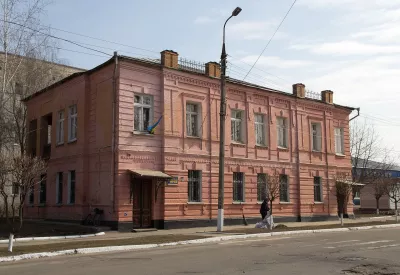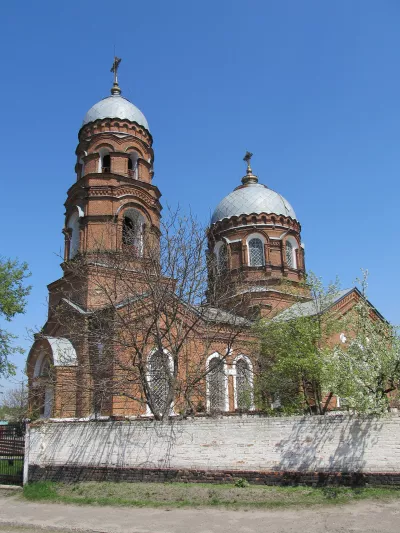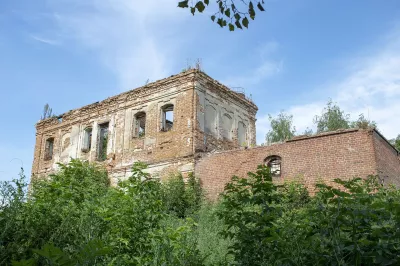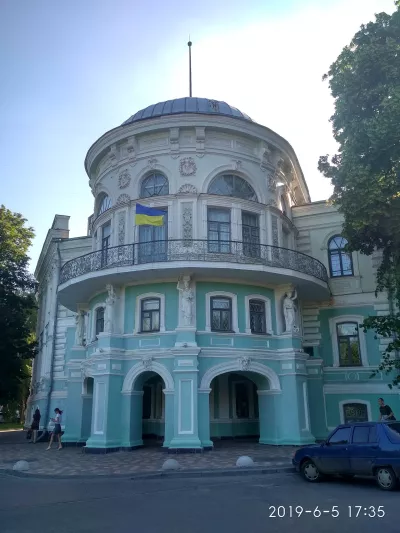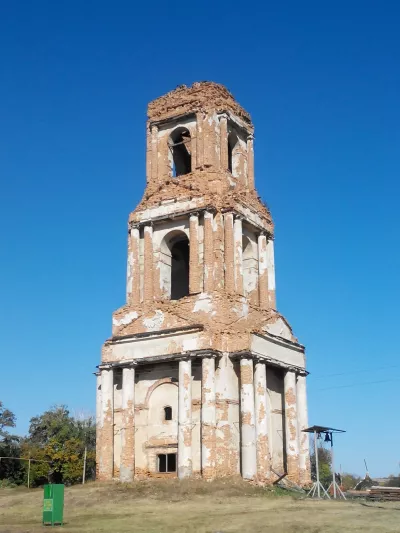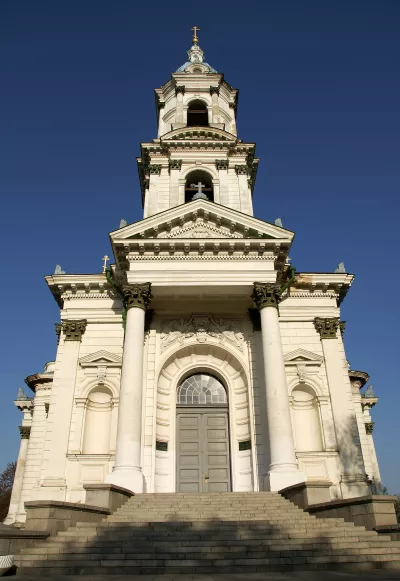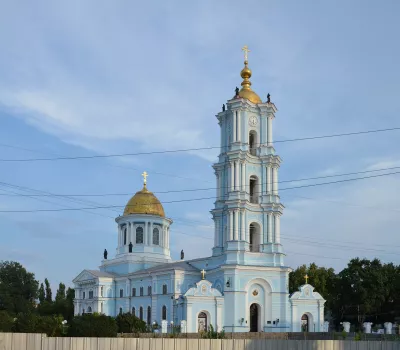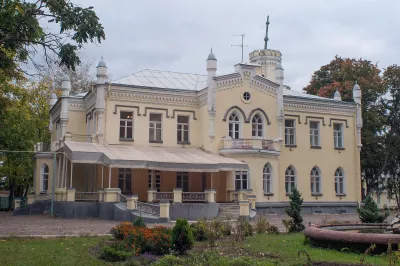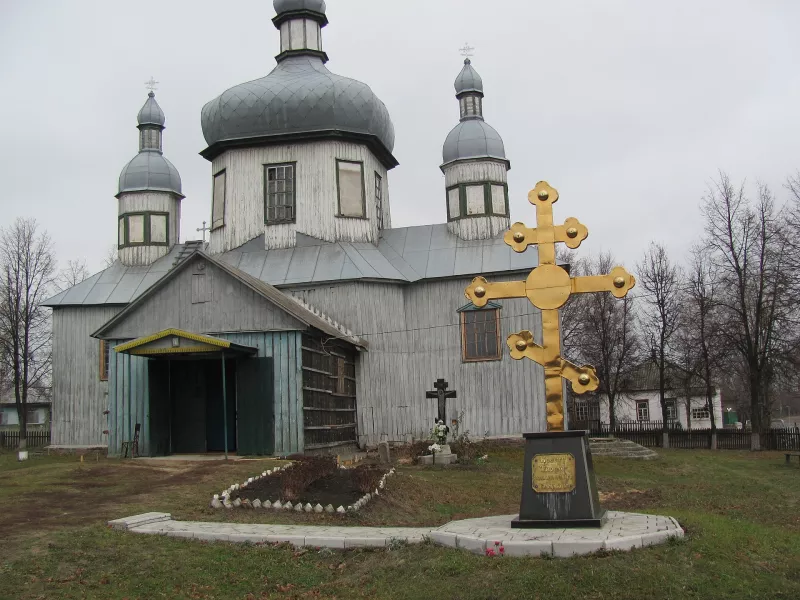
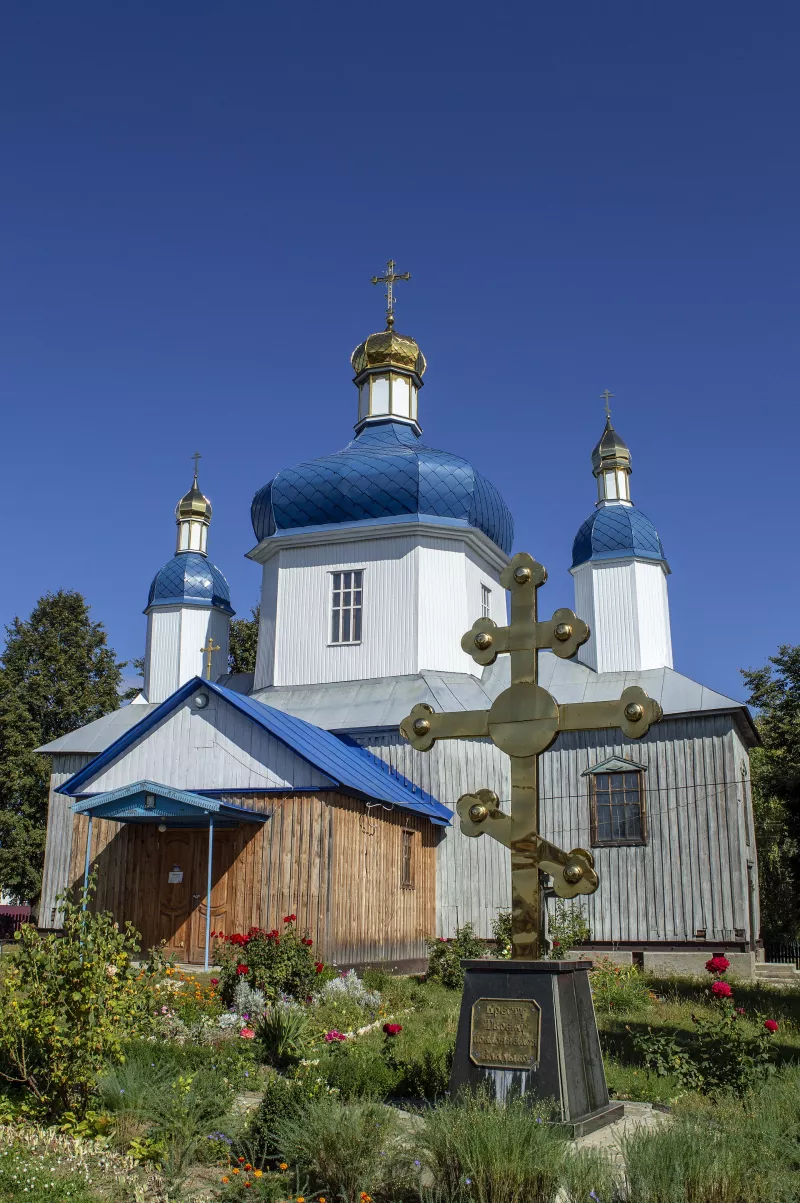
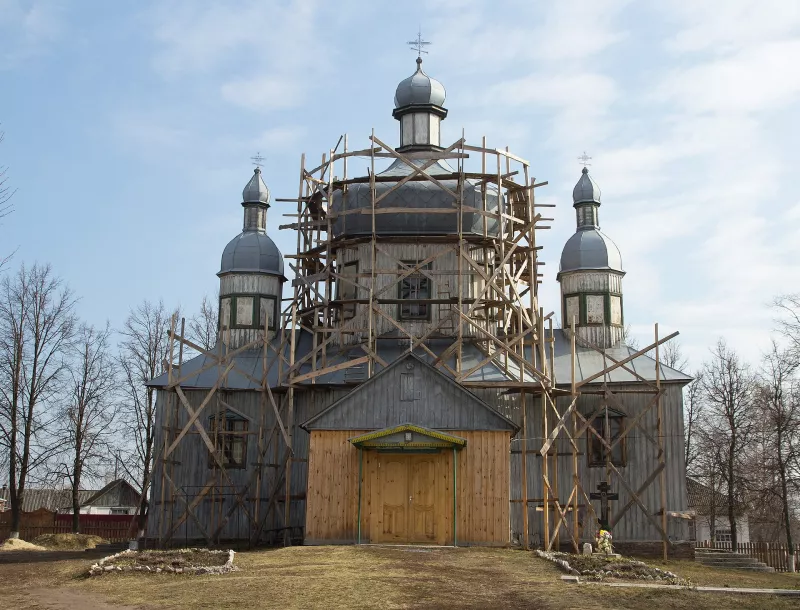
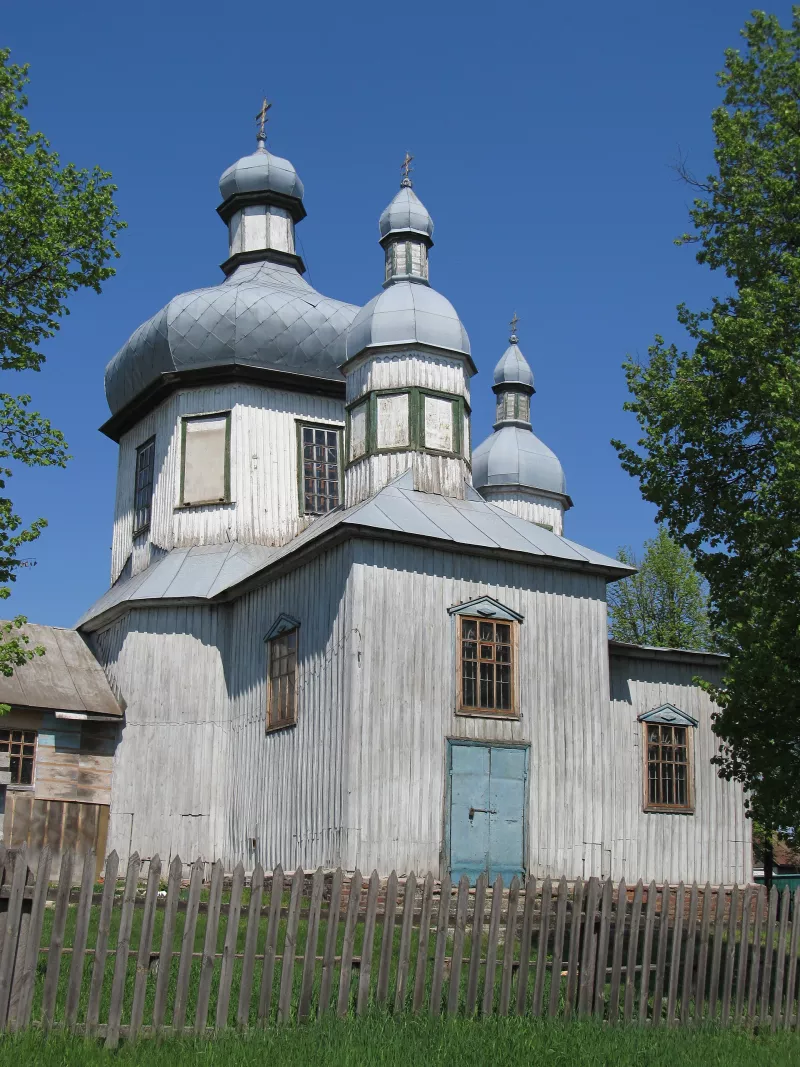
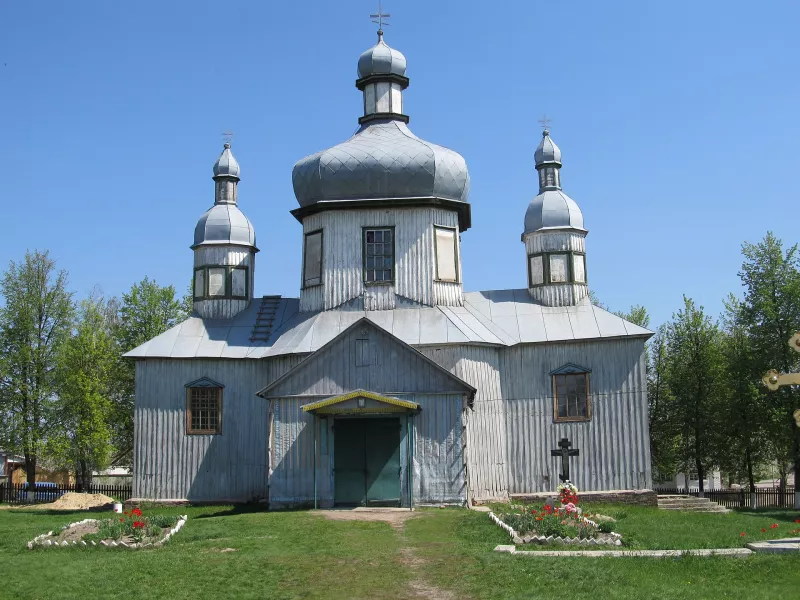

The Resurrection Church is the oldest temple in Lebedyn and a valuable wooden architecture monument protected by the state. According to local tradition, it was built from pine beams without a single nail, and under the central log structure, oak posts have partially survived. The church stands on Kobyzhcha Street and has a long dramatic history.
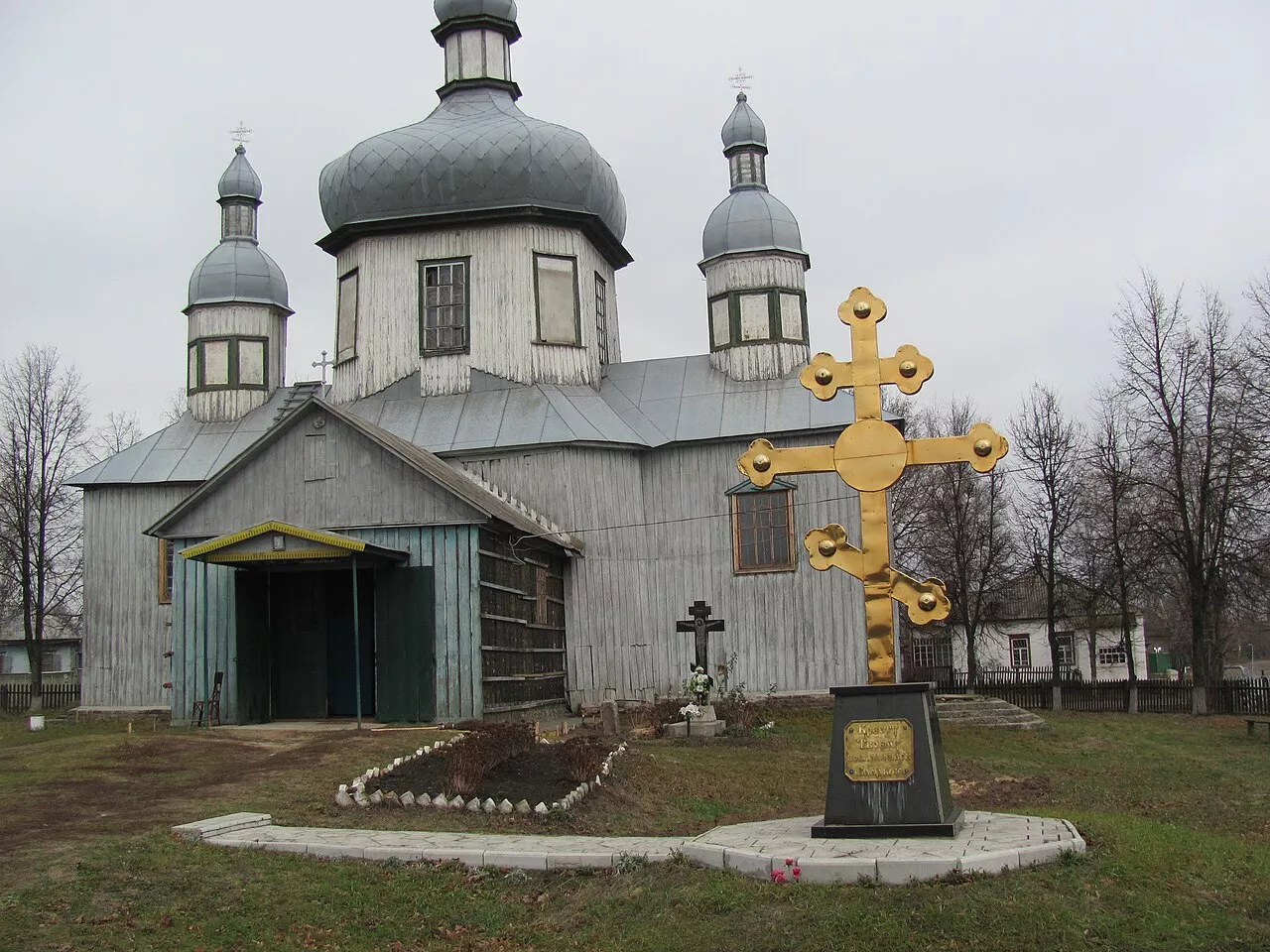
Temple from a Monastery Church
The first priest of the Resurrection Church, Ioann, was ordained back in 1701. At the end of the 18th century, between 1783 and 1789, the old church burned down. When in 1788 the authorities closed the Pretechenska Hermitage monastery, the local landlords Ivanenko and Miklashevskyi gave one of the monastery churches—the refectory Vvedenska Church—for the rebuilding of the Lebedyn church. The new wooden three-domed church was completed in 1789 through the efforts of priest Hryhorii Shkurskyi and the parishioners.
In 1867, the temple was expanded with side chapels, becoming a three-altar church—Resurrection, Transfiguration, and Basil the Great; at that time, the log structures were placed on brick foundations and connected to the bell tower. The original central octagonal log structure and the five-walled altar remained. The number of parishioners grew: 1,170 in 1790, 2,324 in 1904.
1930s
After the anti-religious circulars of 1929, all churches in Lebedyn were closed. Between 1937 and 1939, half of the Resurrection Church was dismantled, and the materials were used for a collective farm pigsty; the bell tower and fence were demolished. According to the accounts of elders, the destruction stopped after a man who was removing the cross from the central dome fell and died: no one else agreed to destroy the church. In spring 1941, the narthex and the remaining bell tower were dismantled, but the central part survived.
How to Get There
Address: Lebedyn, Kobyzhcha Street, 121. Lebedyn is about 50 km from Sumy. Nearby in the city is the Mykolaivska Church.
What to Consider
Lebedyn is regularly attacked by drones, so before your trip, check the security situation and restrictions of the Sumy Regional Military Administration.