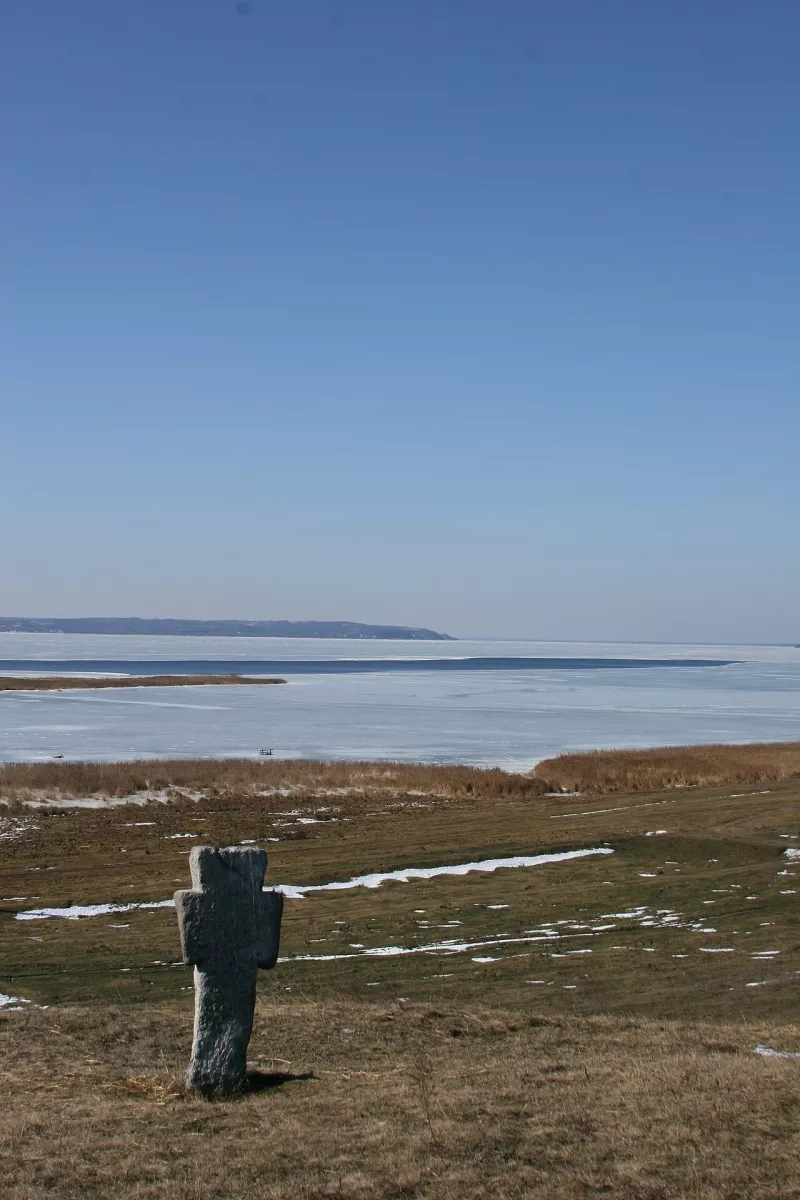

Tsybli is a village on the left bank of the Kaniv Reservoir in Boryspil Raion, Kyiv Oblast, and the center of the Tsybli community. The old village stood on a swampy old riverbed of the Dnipro — the Tsyblia River, from which it took its name, and it is first mentioned in written sources in 1622.
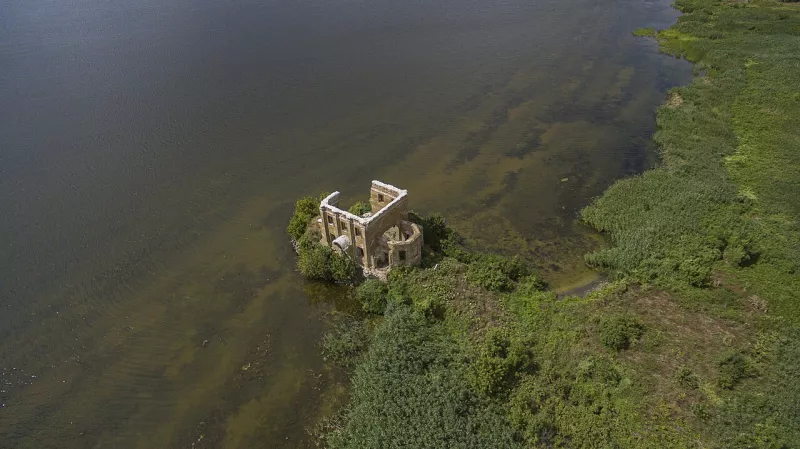
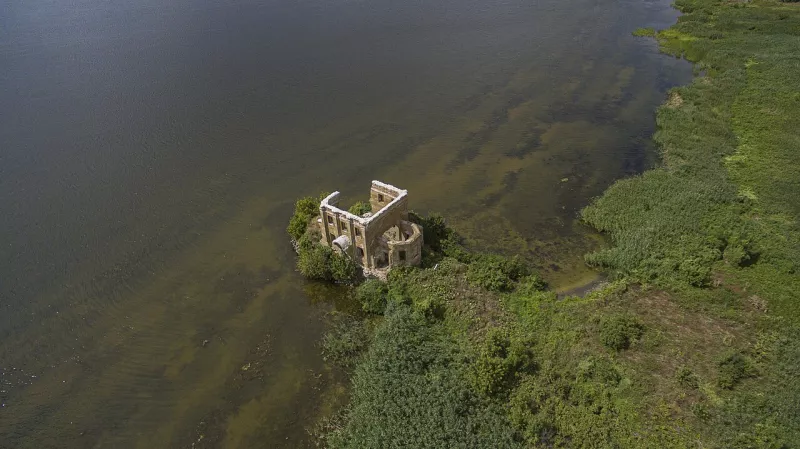
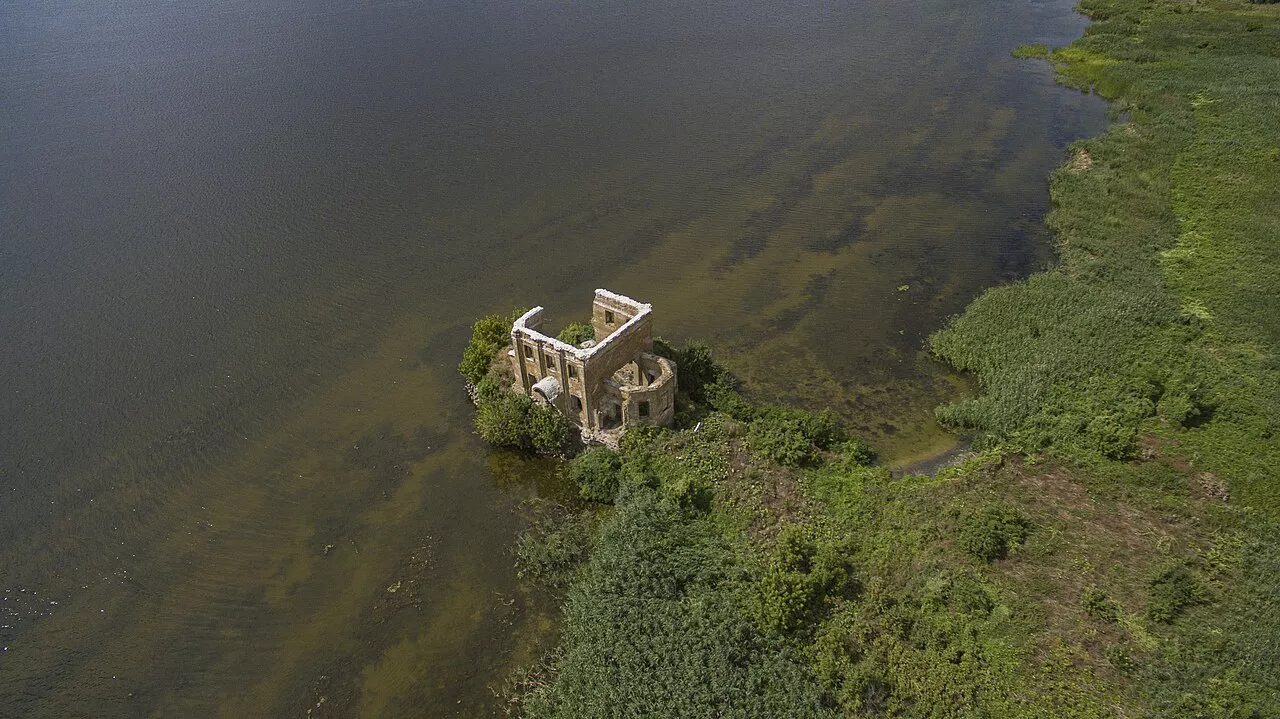
The most famous place in Tsybli is the half-ruined Church of Saint Elijah, which after the reservoir was filled ended up on an island near the shore. The village itself was relocated to a high bank in the 1960s–1970s.
From the 1622 lustration to a Cossack village
At the site of the old village, traces of settlements have been found from the Neolithic and Trypillian culture up to the Cossack era, including a hillfort, two settlements, and a kurgan burial ground from the Old Rus’ period. In the 1622 lustration of royal Rus’ lands, the village is recorded as “Cible.” By a 1658 universal, Pavlo Teterya donated the Kalytynskyi Grove near Tsybli to the Kyiv-Mezhyhirya Monastery. From 1648 to 1782, the Cossacks of Tsybli belonged to the Second Sotnia of the Pereiaslav Regiment; by 1790, the village had two churches — Saint Elijah and Saint Cyril.
Church of Saint Elijah
The brick church in Tsybli, according to most sources, was built in 1861 at the expense of Collegiate Secretary Kyrylo Oplachko on the site of an 18th-century wooden church; some publications mention 1912. The design corresponded to typical projects by architect Kostyantyn Ton, and the church resembled the Borysohlibskyi Church in Vyshhorod: five gilded domes, a three-tier iconostasis, and a bell tower above the narthex with a tented roof.
In the 1930s, the church was closed, the bell tower dismantled, and the building used as a grain storage. Services resumed in 1941, and the church remained active until the early 1960s.
Relocation and the island
Residents were informed about the relocation at a general meeting in 1964 due to the construction of the Kaniv Hydroelectric Power Plant. In the 1970s, the Dnipro floodplain was flooded, and a new village was established on the neighboring high bank. The old church remained in the flood zone and now stands on a small island: it can be reached by boat or wading. Three walls and a small part of the altar remain of the church; a new Church of Saint Elijah has been built in the village.
Holodomor
In 1929, Tsybli had 342 households and 2,211 residents, with a collective farm named after the Paris Commune operating. During the 1932–1933 famine, an estimated 1,200 people died; names have been established for 695 of them.
Tsybli today
According to the 2001 census, 3,069 people lived in the village. The children’s dance ensemble “Lastivka,” the folk choir “Dniprovi Khvyli,” and the theatre studio “Oberyh” are active. Nearby operates the Ukrainian State Medical and Social Center for War Veterans.
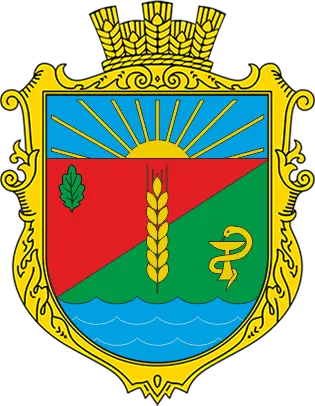
Coat of arms