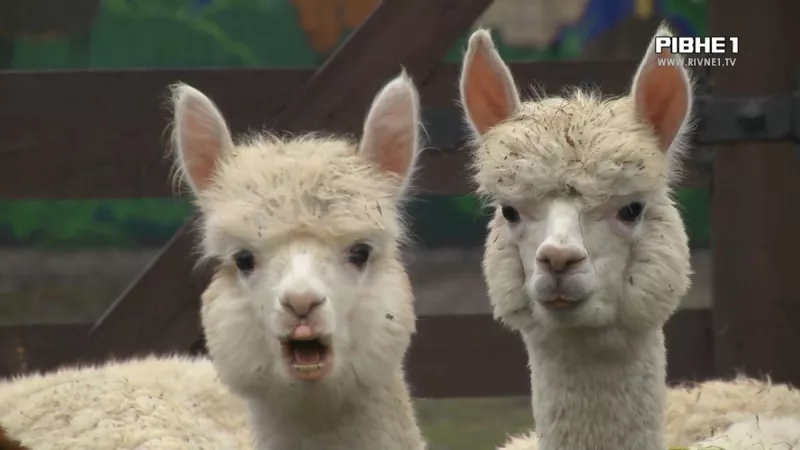
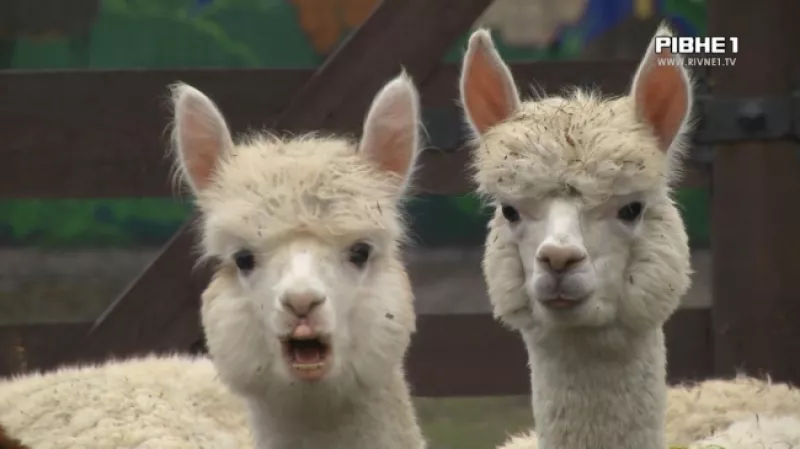
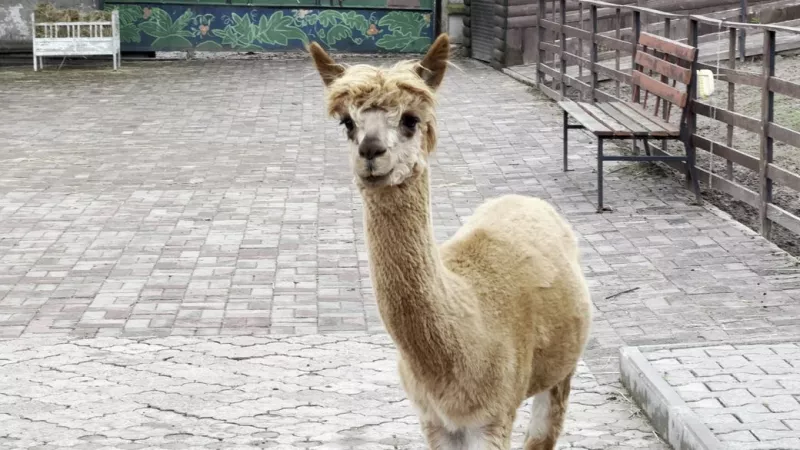

At the AlpacaHome eco-farm in the village of Horodyshche near Rivne, about three dozen alpacas live — South American relatives of the llama. The farm was opened in 2024 by Anna Parshyna: she brought the idea from her travels across Europe, where such farms are common.
The first five alpacas were brought from Europe, and later the herd was replenished in batches of five to ten animals. Besides alpacas, the farm keeps decorative goats, sheep, rabbits, guinea pigs, and peacocks.
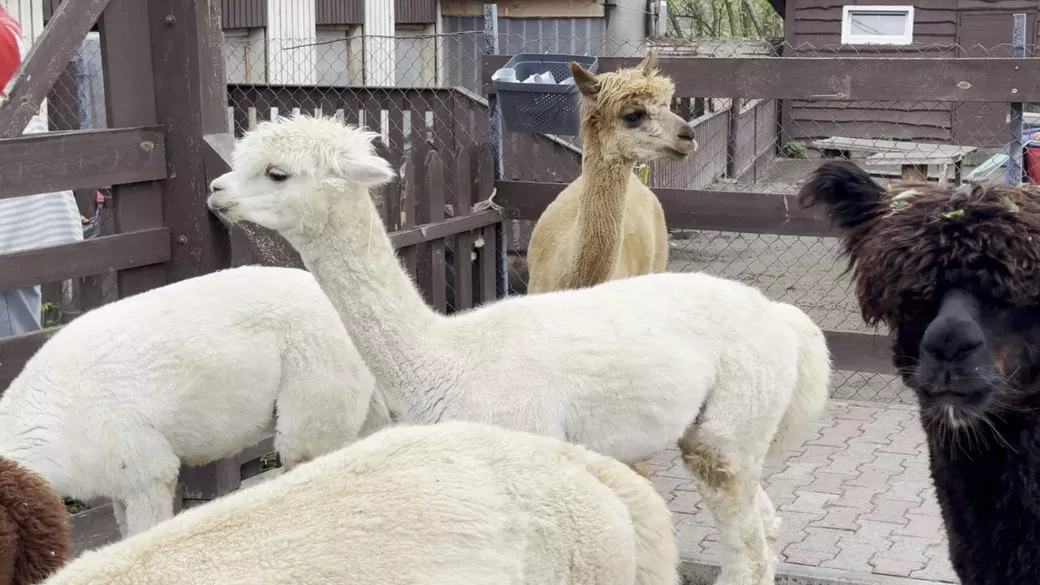
Photo: Suspilne Rivne
The Herd and the Wool
The main goal of the farm is breeding alpacas and shearing. The animals are sheared once a year, by the end of May. An adult alpaca yields on average four kilograms of wool. It is not dyed: alpacas have 22 natural shades, and nine of them are represented in the herd at Horodyshche. The wool is sent to artisans in the Carpathians, where it is made into yarn, socks, and rugs.
Alpaca wool is warmer than sheep’s wool and does not cause allergies. It retains heat well, so the animals spend the winter in covered enclosures without heating. Pregnant females and newborns have a separate enclosed aviary.
A female carries her baby for eleven months and gives birth to one cria. Within a few hours, it can already run. One of the crias at Horodyshche was born weighing seven kilograms and gained over twelve kilograms in one and a half months. Alpacas are fed compressed grass, hay, and carrots.
What the Farm Offers Visitors
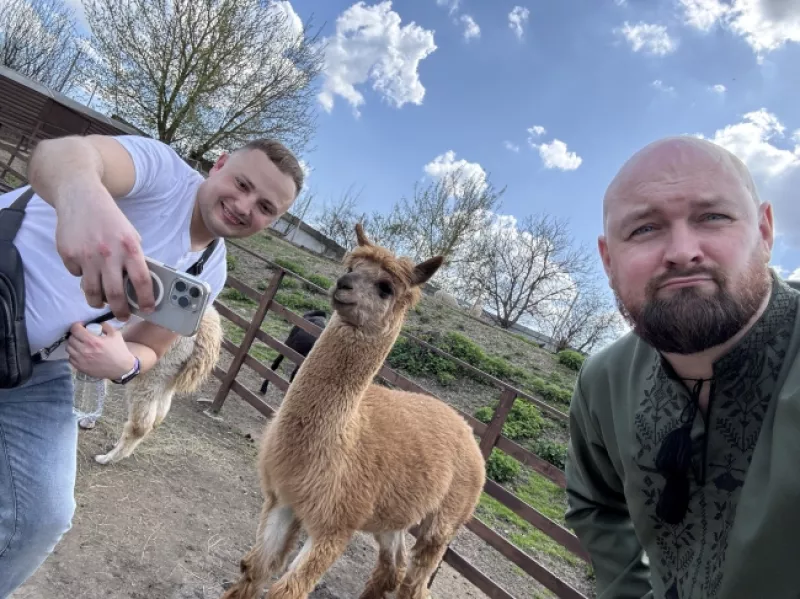
The alpacas on the farm are friendly; visitors can pet them and feed them compressed grass and carrots, while rabbits and guinea pigs can be fed carrots. The entrance ticket includes a farm tour and a small wool weaving workshop.
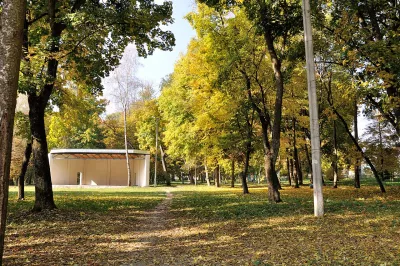
For guests, there are benches, photo zones, a café, and parking.
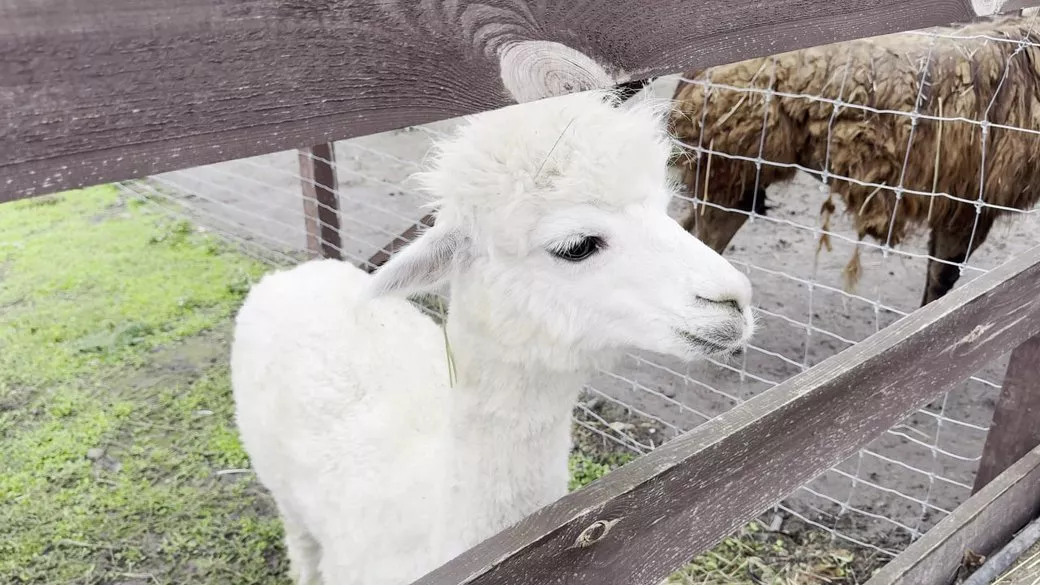
Photo: Suspilne Rivne
Where the Farm Is
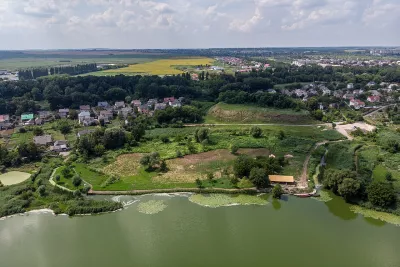
The eco-farm is located in the village of Horodyshche, Bilokrynytska community, Rivne district, a few kilometers east of Rivne.