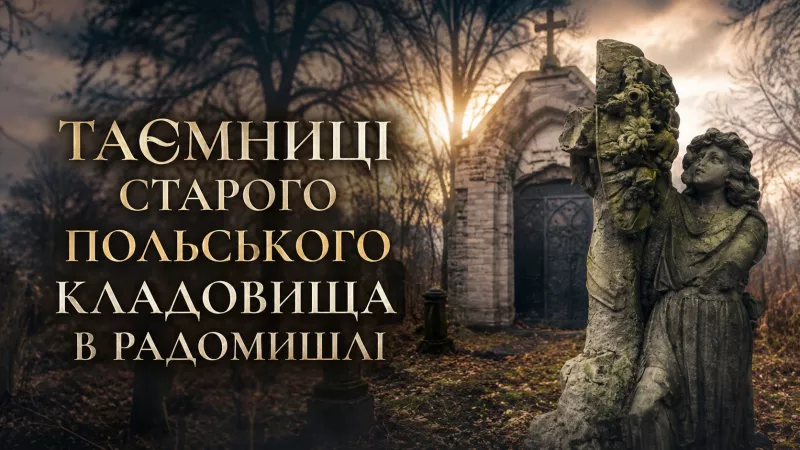

A little way past Radomyshl's central municipal cemetery, on the corner of Mykulskyi Street and Pivnichnyi Lane, lies a place most townspeople walk past without realising what they are looking at. This is the old Polish (Catholic) cemetery — more than two hundred years of history, dozens of families from the town's Polish and gentry community, and, in the midst of it all, the half-ruined underground crypt of the Wierzbicki family, around which locals still pass down legends of embalmed dead, underground passages and night-time prayers by candlelight.
This is not a glossy tourist location. It is a piece about memory — about what oblivion looks like when it reaches its very edge, and why such a place is worth knowing and speaking about all the same. Here, legends of underground passages are interwoven with the real tragedy of a repressed Italian family, an "Angel" with a broken wing, and an almost detective-like story of how an entire cemetery "disappeared" from the documents. This text draws on the local-history work of Radomyshl native Valerii Fisun, who studied and photographed the cemetery back in the early 2000s, and on the materials of activist Anna Mozghova, who in 2020 tried to save the necropolis.
Where it is and what it is
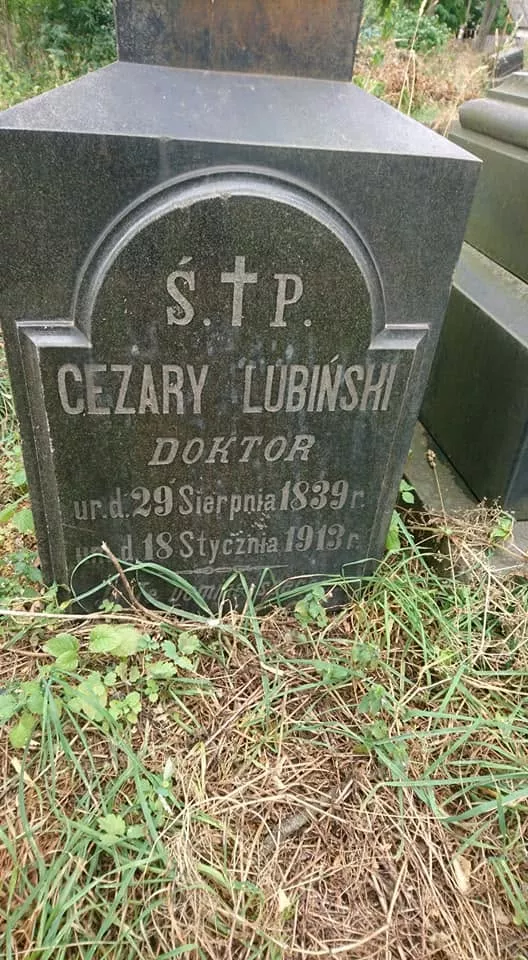
The Polish cemetery in Radomyshl began to function, according to local historian Oleksandr Pyrohov, at the start of the 19th century. It was the burial ground of the town's Catholic community — mostly Poles and Russified gentry, whose families lived and worked in Radomyshl through the 19th and early 20th centuries. Dozens of gravestones survive here to this day, on some of which Polish inscriptions can still be made out; many are dated to the mid-19th century, and a few burials reach back as far as the 1830s.
It is worth mentioning straight away another, still older Polish cemetery in the town — the one on Prysutstvenna Street. Almost nothing remains of it: today it lies simply beneath an asphalted road. That very fate, researchers say, threatens the cemetery on Mykulskyi Street too, if it is finally forgotten.
The Wierzbicki family crypt
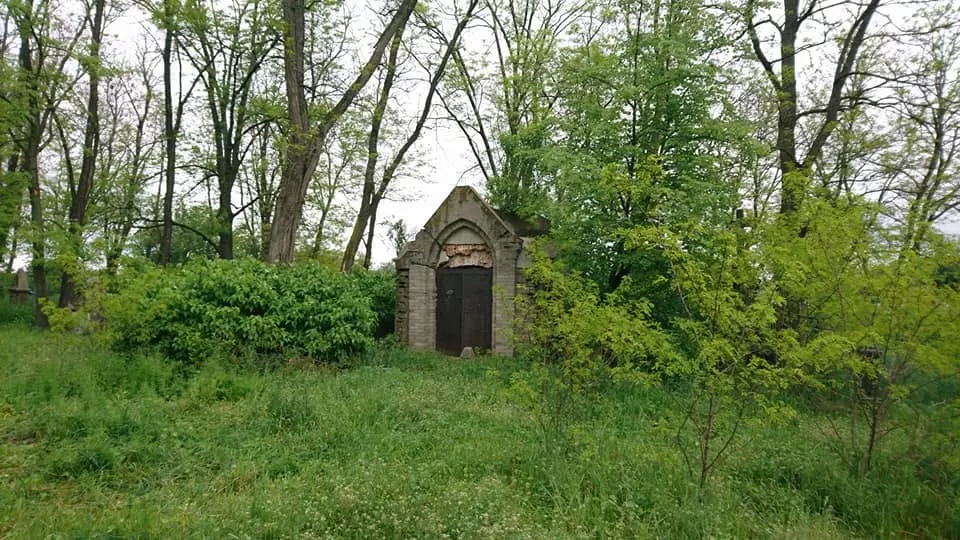
The cemetery's main structure is the underground burial chamber of the Wierzbicki family, in the southwestern part of the graveyard, near the cottage where the caretaker-watchman once lived.
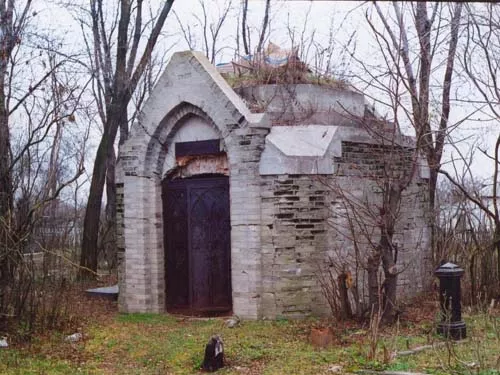
Here a detail matters. In popular memory the family is called the "Verbytskyi," but in the Polish inscription on the gravestone the surname reads Wierzbicki. In the full list of burials compiled by Fisun, this family appears as a separate cluster: Maria (1808–1839), Barbara née Bukata (1809–1873), Julia (1848–1870) and the very young Helenka (1863–1871). "Verbytskyi" is most likely the Ukrainianised popular pronunciation of that same Polish surname.
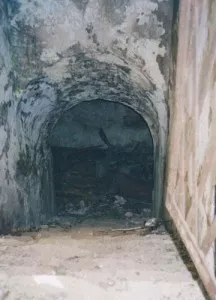
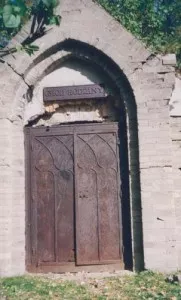
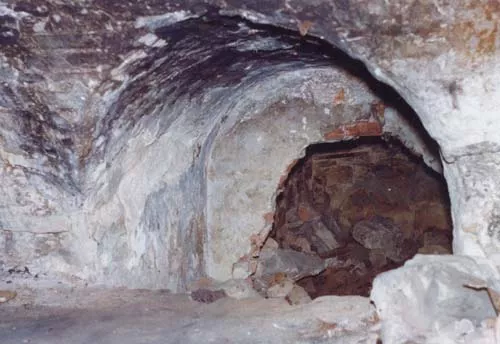
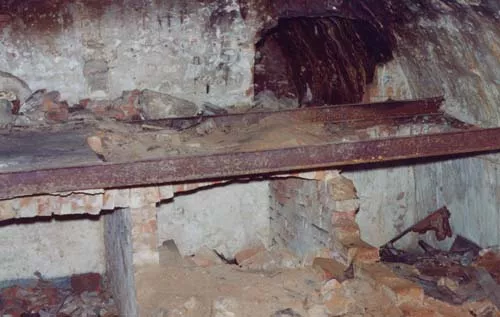
The above-ground part of the crypt was built in the Byzantine cross-domed style from imported brick. The surviving upper section stands about 4.5 metres high, while the underground chamber is an arched vault about 10 metres long, laid with local brick and natural stone bearing traces of plaster, with an additional cylindrical niche. The metal entrance doors face the rising sun, and above them a plaque with the inscription "GRÓB RODZINY" ("family grave") still survives — the lower board with the surname itself was destroyed long ago.
Legends and the memories of locals
The most valuable — and the most moving — part of this story is what has been preserved in the memory of the people who lived nearby.
Klavdiia Kozakova, whose mother (Baba Marynia) was for many years the cemetery's caretaker and lived right on its grounds, recalled that the crypt was built by the wealthy Poles the Wierzbickis, who before the war lived on Papirnia — where the former mill still stands. By her account, a fine marble statue stood above the entrance, and the dead lay in the underground niches "as if embalmed," each with a little window made for it. Relatives had the right to come at any time — even at night: they would take the key from the caretaker, descend the steps, light candles and pray.
A wartime memory is bound up with this same crypt: during the Second World War, Baba Marynia and her children sheltered there from the bombing. By her account, the Germans, being Catholics like the Poles, treated the crypt with wariness — they even left food for the children. And on one occasion the crypt saved the lives of partisans who, during a raid, hid in the empty burial niches themselves.
A separate — and the grimmest — part of the legend concerns the underground passages. Locals told of an underground passage supposedly running all the way from the town church to the crypt. Two men who, as teenagers in the 1960s, climbed down into the vaults with a flashlight, recalled coffins bricked into the niches, passages branching off in different directions, and more than a dozen smashed caskets. It was then, by their account, that the iron was carried off from the crypt for scrap, the marble slabs with their inscriptions were knocked off, and from one well-preserved body a gold signet ring bearing the inscription "MARTYNA. 1856" was taken and sold. These testimonies are at once the living history of the place and a record of its destruction.
The "Angel of Radomyshl" and the tragedy of the Buzetti family
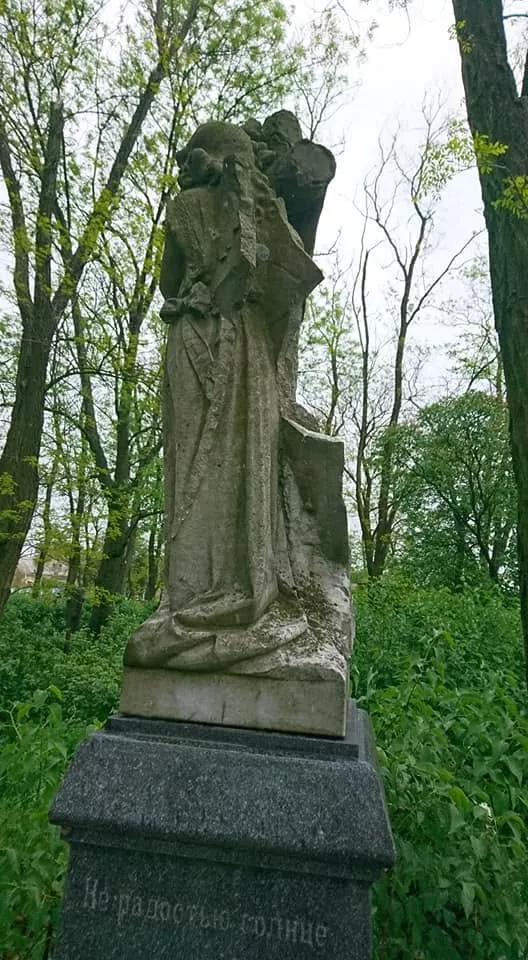
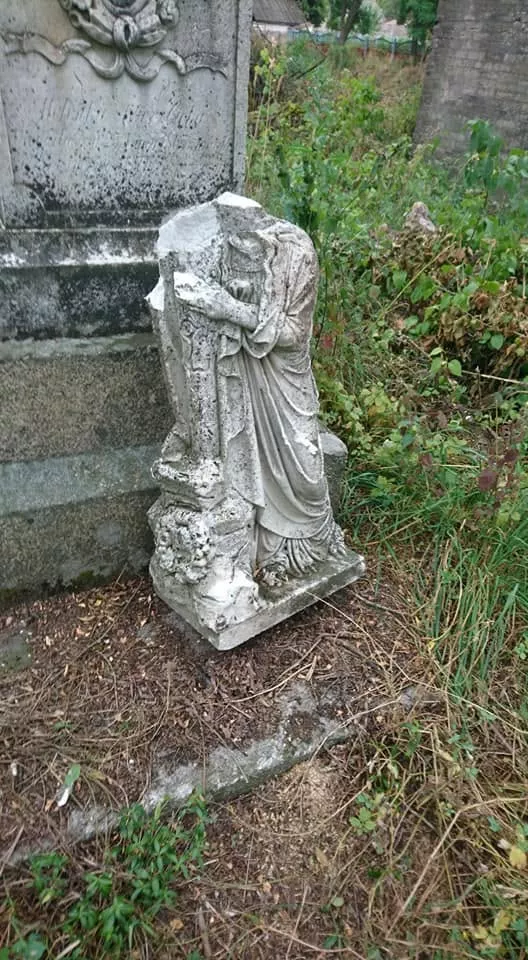
Among the cemetery's gravestones is one that stands out in particular — an intricate sculpture that locals call the "Angel of Radomyshl." The most dramatic human story of this place is tied to it. We give it as it is told and preserved by Radomyshl activist Anna Mozghova — it is more an oral local-history account, a reconstruction of a family drama, than a documented, verified chronicle, but it is precisely such stories that bring the stone to life.
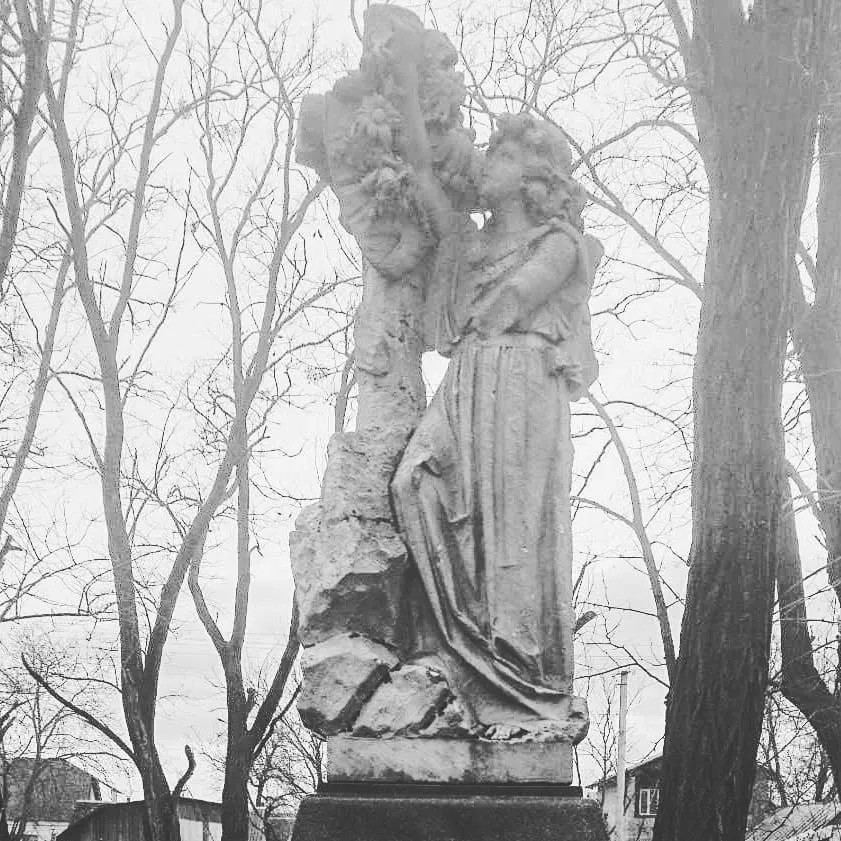
By this account, a family named Buzetti, who retained Italian citizenship, lived in Radomyshl for a long time. One of its members, Fortunato, went to serve in Italy in the 1920s and, on his return, fell in love with a local girl — Halyna Novytska, daughter of a once-wealthy landowner. A son was born to the family. But 1937 came — and the wave of Stalinist repression reached Radomyshl. The Italian Buzettis were accused of spying for the fascists and of an alleged act of "sabotage" at the power station (though everyone in town knew the lights had gone out then because of an ordinary celebration). Halyna was shot; the men of the family were, in effect, too, under the wording "deported beyond the borders of the USSR." At the moment of arrest, a neighbour hid the little son; later he was taken in by relatives in Kyiv, and during the war the boy was carried off to Italy by an uncle who came specially for his nephew. According to the account, the family's descendants live in Italy to this day.
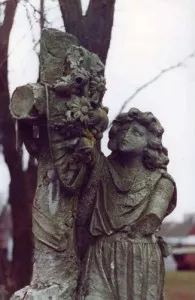
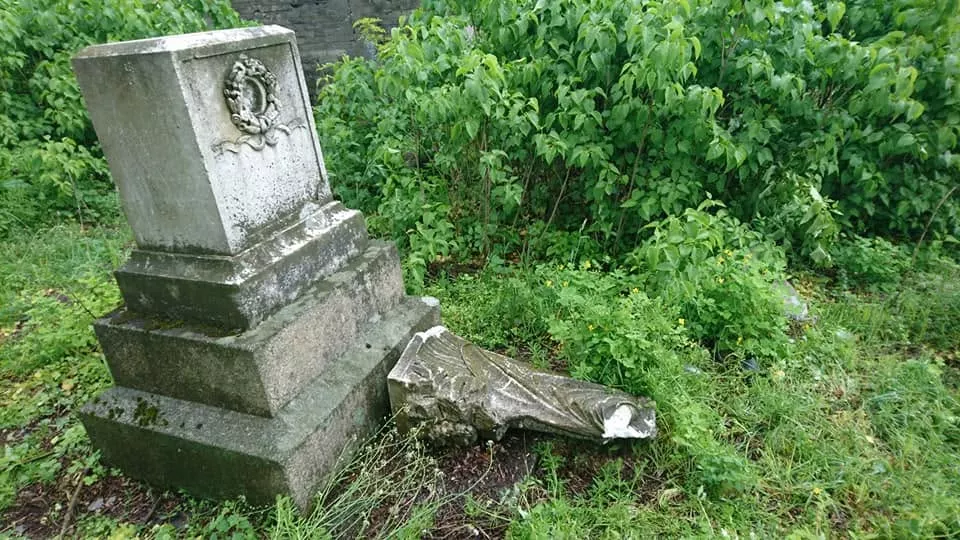
The "Angel of Radomyshl," in Mozghova's version, is a gravestone tied to this very family — the sculpture of a mother who, even after death, watches over her child. Sadly, this monument too has suffered: the Angel's wing was broken off.
An important caveat: the names, dates and details of this story come from a family account gathered by the activist, and not all of them can be verified against the official databases of the repressed. So it should be taken as touching local memory rather than a verified historical document — but the very existence of an Italian family destroyed by the repressions of 1937 fits well into the tragic history of that time.
A chronicle of the fight for the cemetery
The cemetery's decline is not only a matter of the past. In 2020 Radomyshl activists led by Anna Mozghova (the "Radomyshl — Museum City" project) tried to save the necropolis, and what they found is telling in itself.
It emerged that the cemetery legally seemed not to exist: it was not on the city council's books, and on the cadastral map the plot was not listed as communal property. The activists warned plainly: until the site was properly registered, no one was responsible for it — no one maintained it, funded it or fenced it — and so, in time, it could be "cleared with a bulldozer" for development. To prevent that, they launched a petition to the city council for the cemetery's proper registration, and raised the questions of a fence, the felling of hazardous trees and the clearing of the grounds of extraneous property.
Reburial became a painful topic of its own. In the open crypt, human remains lay right underfoot — on the steps, in the broken niches — and visitors, without wishing to, walked over bones. The activists secured the mayor's understanding regarding the reburial of the family's remains from the crypt and raised the question of sealing the crypt itself to halt its further destruction. How far this matter was later pushed remains an open question: after the key activist left the town, the cemetery's further fate remains uncertain, so before a trip it is worth looking for fresh information in local communities.
An unexpected find: the Taiferts and the Radomyshl brewery
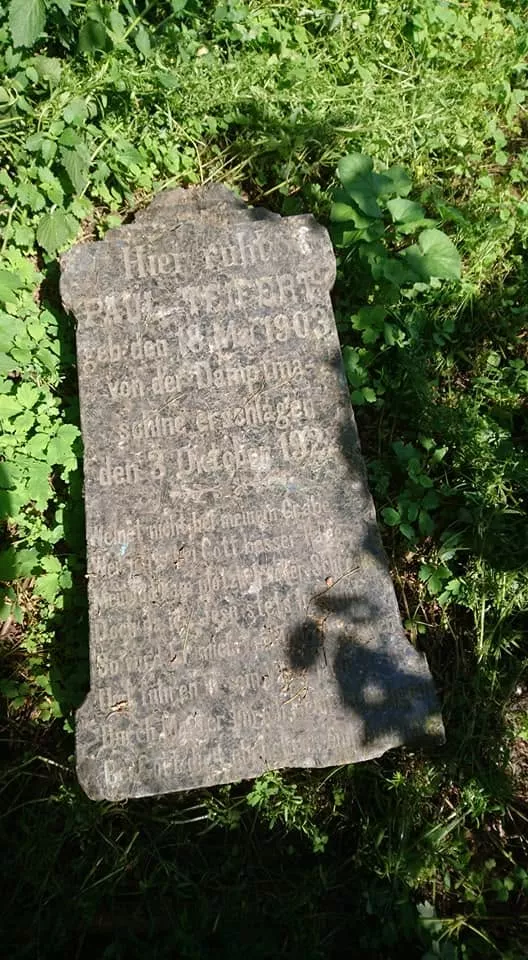
While clearing the cemetery, the activists made another discovery. In the "Austrian-Czech-German" corner of the necropolis they found a gravestone bearing the surname Taifert — the same one borne by one of the founders of the Radomyshl brewery (the brewery in the Mykhorod area has been operating for over a hundred years). According to accounts, back in the early 2000s people around Radomyshl were searching for descendants of this German family in connection with an allegedly sizeable inheritance. Just who was buried beneath that stone, and whether any descendants of the line remained in town, is still a mystery awaiting its researcher.
A sorrowful present
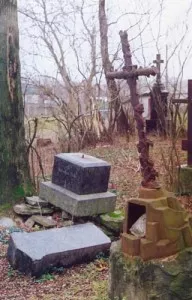
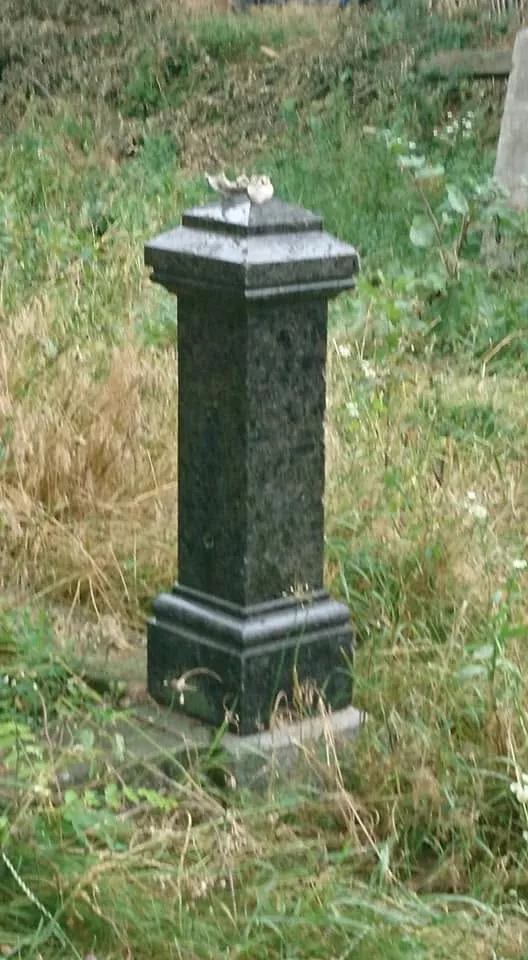
The state of the cemetery, as recorded by the researcher, is depressing: toppled crosses and obelisks, looted crypts, trampled graves, rubbish, goats among the gravestones and — the strongest impression of all — strips of dug-over earth between the burials, from which locals gathered potatoes. This is the part of the history that cannot be passed over in silence, because it is precisely this that is the main message: a neglected cemetery is a mirror in which a community sees its own attitude to memory.
A similar fate befell the Polish and Lutheran necropolises in Zhytomyr itself — local outlets have written about the destruction of the regional capital's Catholic cemetery too. In other words, the problem of forgotten Polish burials is common to the whole region, not Radomyshl's alone.
What's nearby: Radomysl Castle
Here it is fitting to mention a connection that makes this sorrowful location part of a wider route. The family from the crypt lived on Papirnia — beside the old mill. It was this very mill on the Papirnia pond that, in 2011, the physician and public figure Olha Bohomolets bought and restored, creating the historical-cultural complex "Radomysl Castle" — today one of the Zhytomyr region's best-known tourist attractions, with a collection of icons and a museum of Ukrainian domestic antiquity. Beneath the mill, incidentally, traces were found of an ancient paper mill of the Kyiv-Pechersk Lavra, known from chronicles of the early 17th century. So a few minutes from the forgotten cemetery stands a restored gem — a contrast that shows well how differently the fate of historical heritage can unfold.
If you decide to visit
The cemetery is on the corner of Mykulskyi Street and Pivnichnyi Lane in Radomyshl, behind the central municipal cemetery.
This is not a developed location: there are no paths, no signposts, no fence; the grounds are overgrown, and the ruined crypts and hollows are dangerous — do not descend into the vaults or approach unstable structures.
Treat the place with respect: these are the graves of real people. People come here to pay their respects and to see history, not to "clamber about the ruins."
It makes sense to combine a visit with a tour of the "Radomysl" castle-museum — they are connected both geographically and historically.
If you are a descendant of one of the families buried here, the full list of surnames deciphered by Valerii Fisun as of 2001 is preserved in his publication and may help in tracing your roots.
FAQ
Where is the Polish cemetery in Radomyshl? On the corner of Mykulskyi Street and Pivnichnyi Lane, behind the central municipal cemetery.
When did it appear? According to local historian Oleksandr Pyrohov, the cemetery began to function at the start of the 19th century.
What is the Wierzbicki crypt? The underground burial chamber of a wealthy Polish family, with an arched vault about 10 metres long and an above-ground structure in the Byzantine cross-domed style.
Why is the family called both Verbytskyi and Wierzbicki? In the Polish inscription the surname is Wierzbicki; "Verbytskyi" is the Ukrainianised popular pronunciation of the same name.
What is written above the crypt entrance? A metal plaque, "GRÓB RODZINY" ("family grave"), survives; the board with the surname itself was destroyed.
Is it true that an underground passage leads from the church to the crypt? This is a local legend; teenagers in the 1960s did find branching passages in the crypt, but a continuous passage to the church is not documented.
Who studied this cemetery? Radomyshl local historian Valerii Fisun, who described and photographed it in the early 2000s and compiled a list of the surviving gravestones.
What state is the cemetery in now? A neglected one: toppled crosses, looted crypts, rubbish and overgrowth; in places the grounds were even used for vegetable plots.
Is it safe to go there? The grounds are not developed; the ruined crypts and hollows are dangerous, so descending into the vaults is not allowed.
What's of interest nearby? The historical-cultural complex "Radomysl Castle" — a restored paper mill with a museum of icons, historically connected to the family from the crypt.
What is the "Angel of Radomyshl"? An intricate gravestone sculpture at the cemetery, which locals connect with the tragic story of the Italian Buzetti family, repressed in 1937; by the account, it is an image of a mother watching over her child. The sculpture's wing was broken off.
How reliable is the story of the Buzetti family? It is an oral local-history account gathered by a local activist; some details have not been verified against the official databases of the repressed, so it should be taken as local memory rather than a document.
Is the cemetery legally registered? As of 2020, activists found that it was not on the city council's books and was not listed as communal property; that is exactly why they pushed for its proper registration in order to preserve it.
Is one of the brewery's founders really buried at the cemetery? Activists found a gravestone bearing the surname Taifert — the same as one of the founders of the Radomyshl brewery; the exact connection and the fate of any descendants remain unclear.