
There is a route two hours from Kyiv that packs in almost everything people travel far and wide for: the ruins of a lavish palace steeped in ghosts and legends, 25-metre granite cliffs where climbers from all over Europe train, a century-old watermill still standing on the water, an ancient monastery above a canyon, and even exotic lizards once brought from the Caucasus. All of it lies along a single stretch of the Teteriv River between the village of Denyshi and the city of Zhytomyr.
This piece is for those who love to combine industrial authenticity, history and wild nature in one trip. We'll tell you what there is to see here, what each location is famous for, and how to string it all into a single weekend route — whether by kayak or by car.
The Teteriv River: the essentials
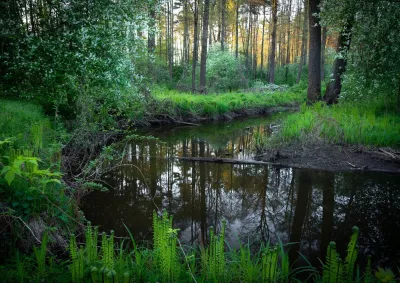
The Teteriv is a right-bank tributary of the Dnipro, 385 km long, rising in the Zhytomyr region and flowing into the Kyiv Reservoir. In places — especially in its upper reaches and on the granite stretches near Zhytomyr — the river takes on an almost mountain character, with rapids, cliffs and fast water. The Teteriv was once an important log-floating artery: according to archival records, up to 800 rafts were floated down it in a single season. Today the stretch from Denyshi to Zhytomyr (about 24 km) is a popular weekend kayaking route, lined with all the attractions described below.
The Tereshchenko palace at Denyshi — the Zhytomyr region's foremost historical landmark
The most famous ruin in these parts is the palace of the Tereshchenko family — sugar magnates — rising above the rocky bank of the Teteriv near the village of Denyshi.
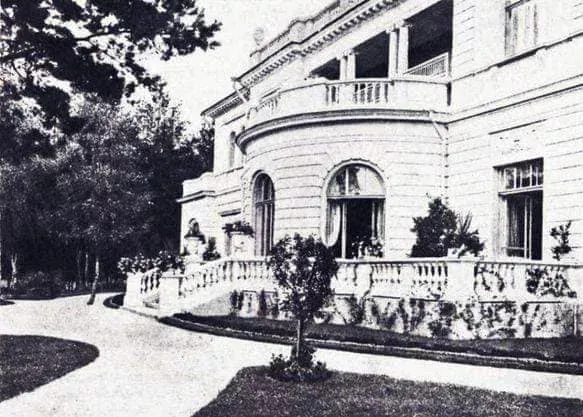
It is one of Ukraine's "youngest" palaces: it was built in 1910–1913 to a design by the noted architect Pavlo Hollandskyi. The client was Nadiia Volodymyrivna Tereshchenko, widow of the sugar tycoon and philanthropist Fedir Tereshchenko.
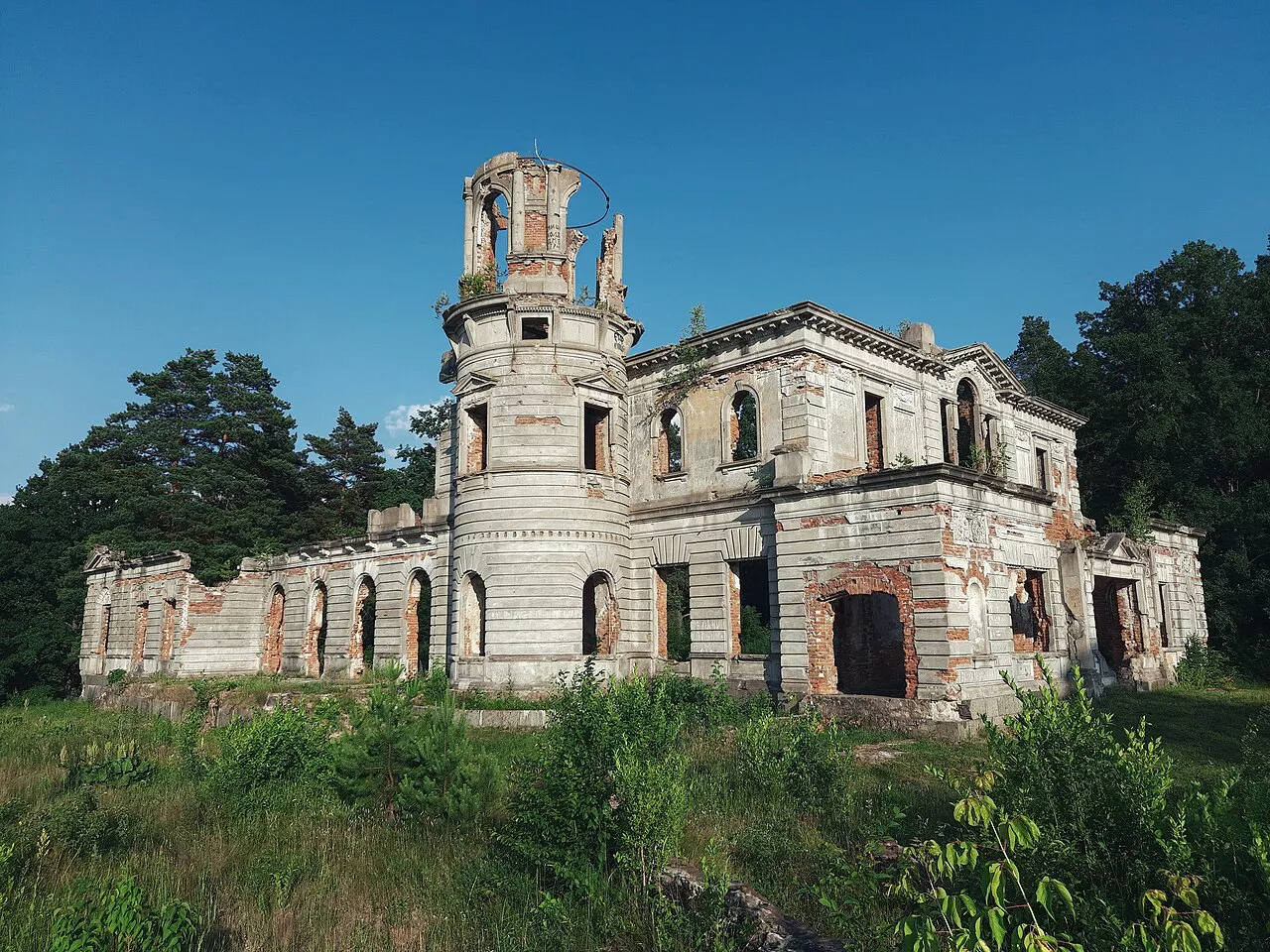
The palace's fate was tragic and swift. As early as 1917, after the revolution, the Tereshchenko family emigrated to France, and the estate was looted and began to be dismantled for its bricks — by locals and by seekers of mythical treasure alike. The building did not survive the Second World War. Today, of its former splendour there remain two walls, a half-ruined three-tier tower that lends the structure the look of an ancient castle, part of a bas-relief and, here and there, traces of moulding on the walls. Despite its ruined state, the place is striking and remains one of the region's most popular photo locations, used for photo shoots and creative projects.
The palace legends
Around the palace, as around any lavish ruin, a good many legends have grown up. The most popular tells of a whim of Tereshchenko's daughter, Nataliia: the girl supposedly took it into her head, in summer, to ride in a new sleigh, and her father ordered a clearing in the park to be strewn with sugar to indulge her. In another version of the same legend, this "winter in midsummer" of sugar "snow" was staged to entertain the emperor, who had come to visit — and he rode a sleigh along the sweet road all the way to the entrance. Yet another account claims that a huge aquarium with carp and other fish was built into the floor of the upper storey. Historians are sceptical of these stories, but it is precisely they that keep the ruins alive in visitors' imaginations.
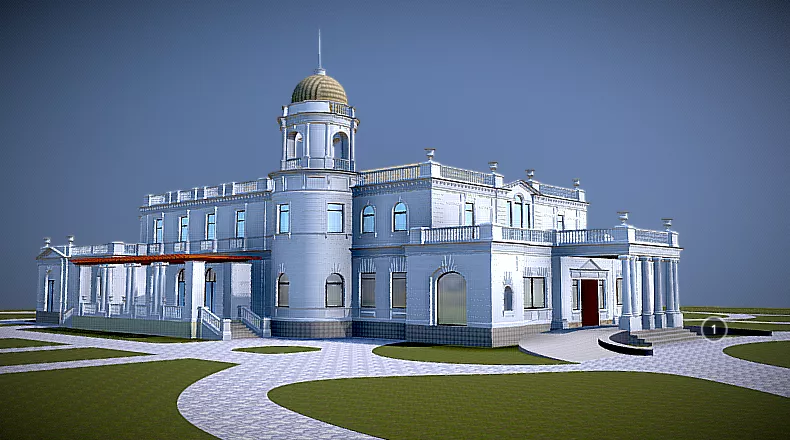
Recently, a stand with a 3D visualisation of the estate was installed at Denyshi. Thanks to it, every visitor can see how this lavish building looked in its heyday.
The Denyshi–Tryhiria cliffs — a mecca for Ukrainian climbers
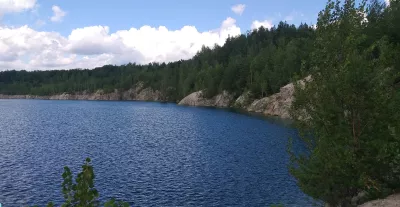
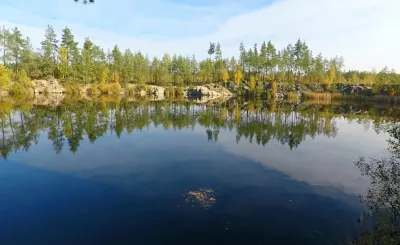
Just beyond the palace, the Teteriv cuts through a granite canyon, and here the route's main natural draw begins — the Denyshi–Tryhiria cliffs. These are steep granite bluffs 20–25 metres high and about 150 metres long, belonging to the Zhytomyr granite shield.
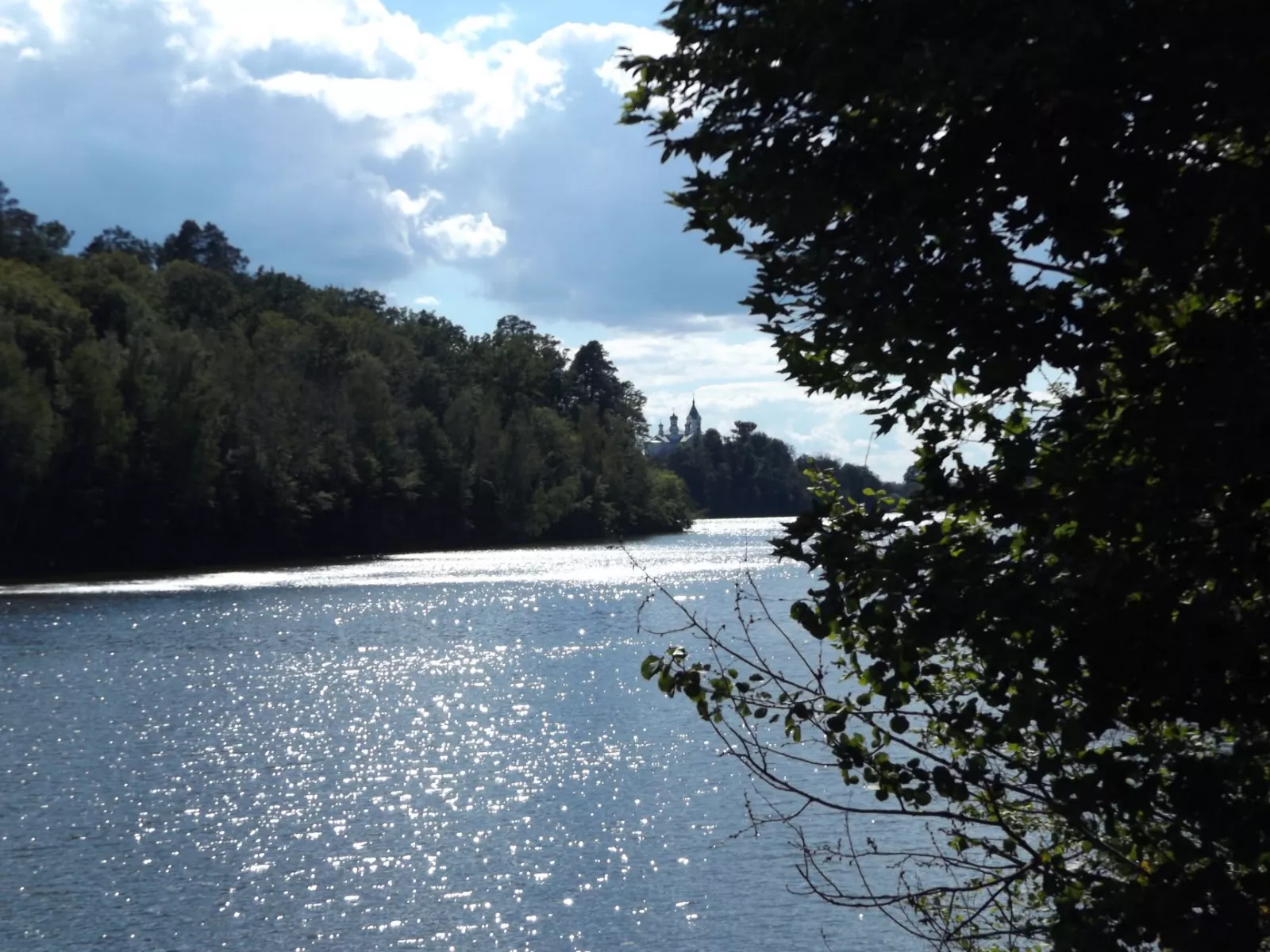
For climbers this is one of the best and most popular natural spots in Ukraine. There are more than 50 bolted routes here (sources give figures from 30 to 50+), of varying difficulty (from grade 4c to 7a), split across several sectors — with smooth "mirrors," overhanging ledges and deep chimneys. From Soviet times to the present, championships and festivals of national and European scale have been held here, and in the warm season whole tent cities of athletes from Ukraine and neighbouring countries spring up beneath the cliffs.
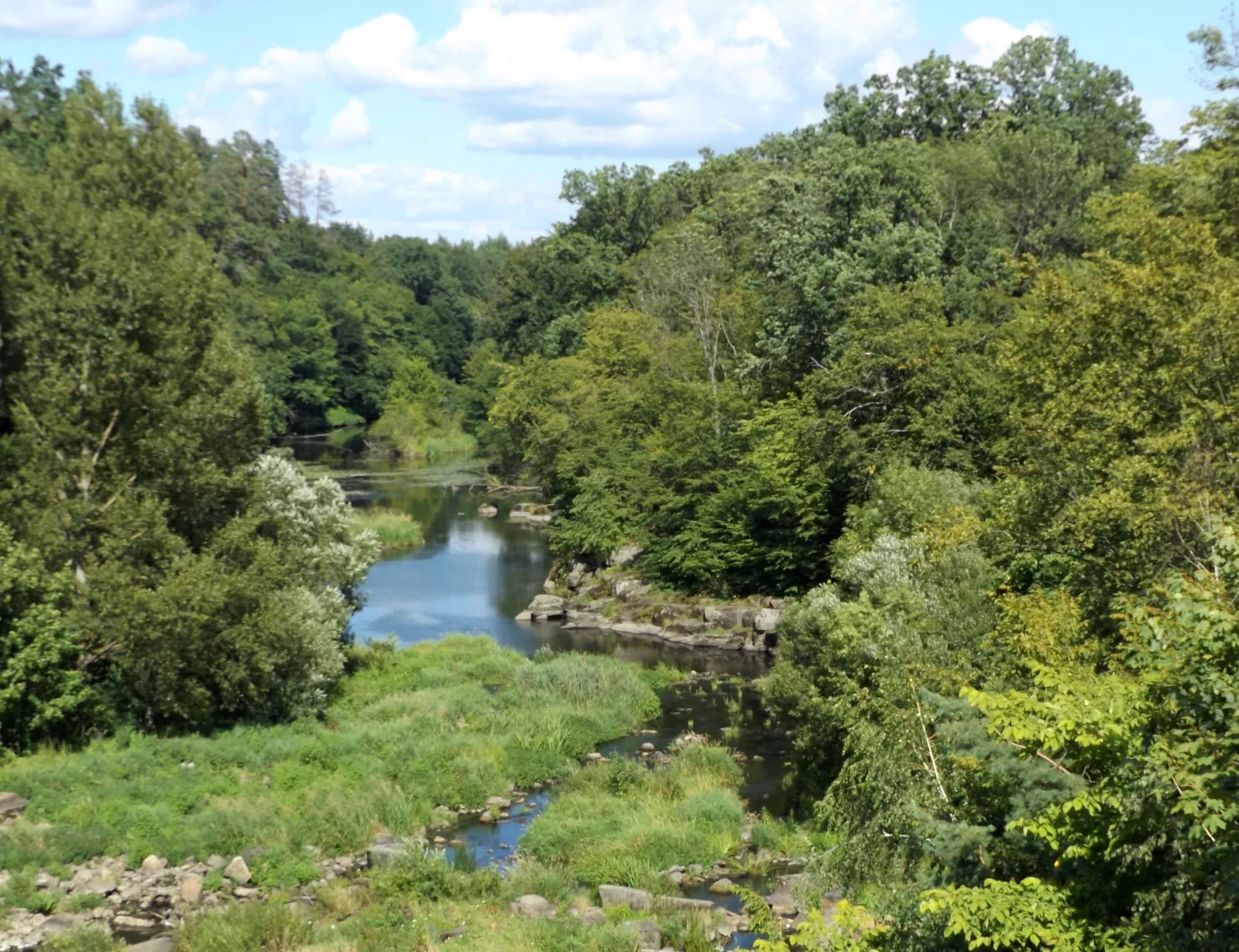
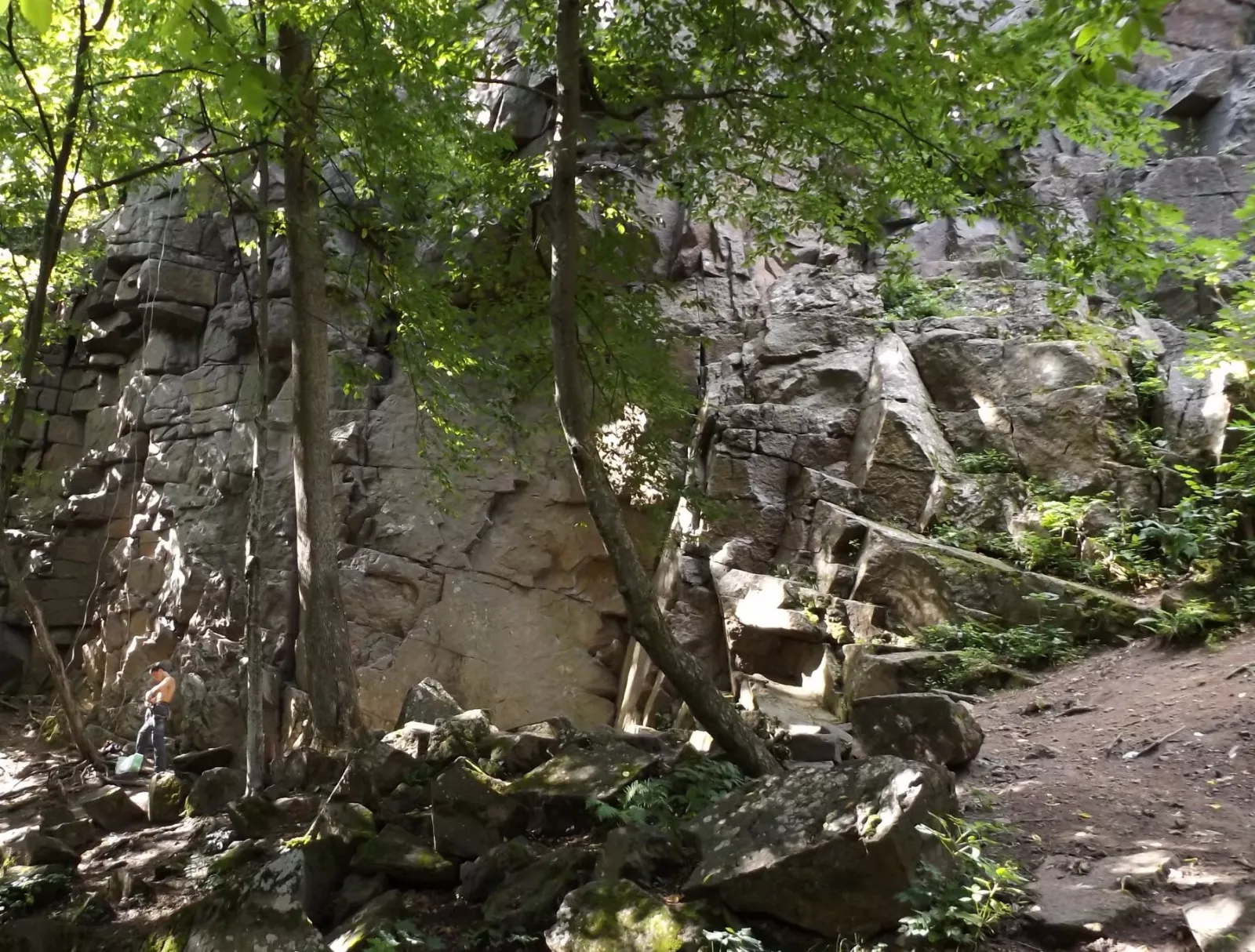
An interesting detail: in 2019 the 12-part historical-fantasy series Slaviany ("The Slavs"), based on ancient Slavic mythology, was filmed on these cliffs — the canyon's atmosphere really is "cinematic."
Lizards from the Caucasus
Another unique feature of the canyon is its inhabitants. In the 1960s (by various accounts, in 1967), near the "Denyshi" health resort, rock lizards brought from the Caucasus — from Armenia and Georgia — were acclimatised here for scientific purposes. The Armenian rock lizard (Darevskia armeniaca) and Dahl's lizard took hold and formed a large population along the left bank of the Teteriv, over a stretch of about 3.7 km near the dam. This is, by some accounts, the only place of its kind in the Zhytomyr region — so an attentive traveller may spot lizards here that are found nowhere else in the area.
The Denyshi dam — Zhytomyr's strategic water
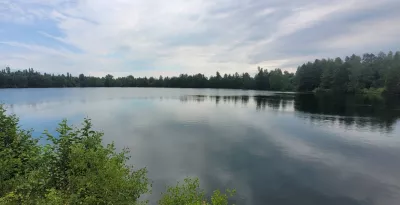
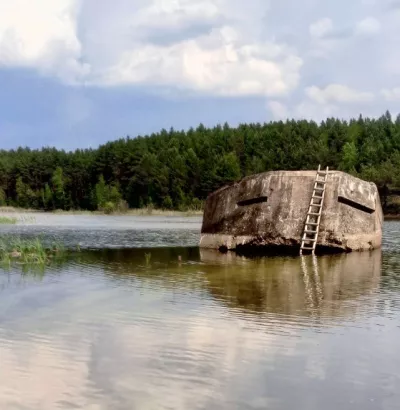
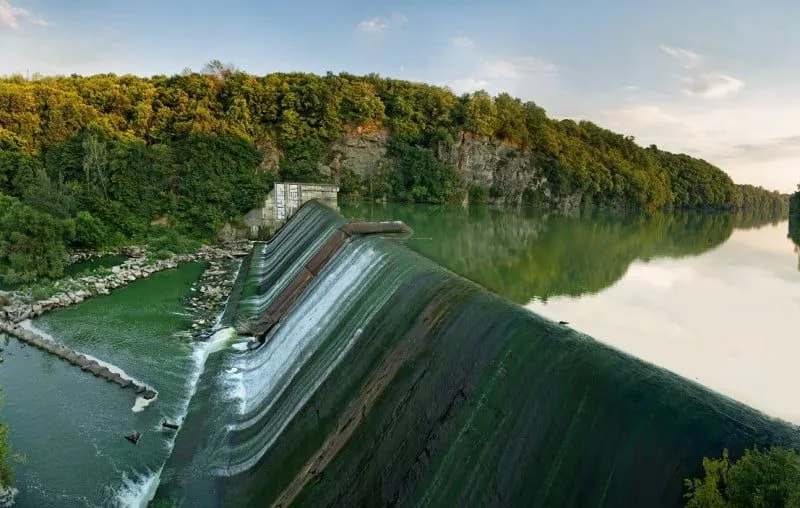
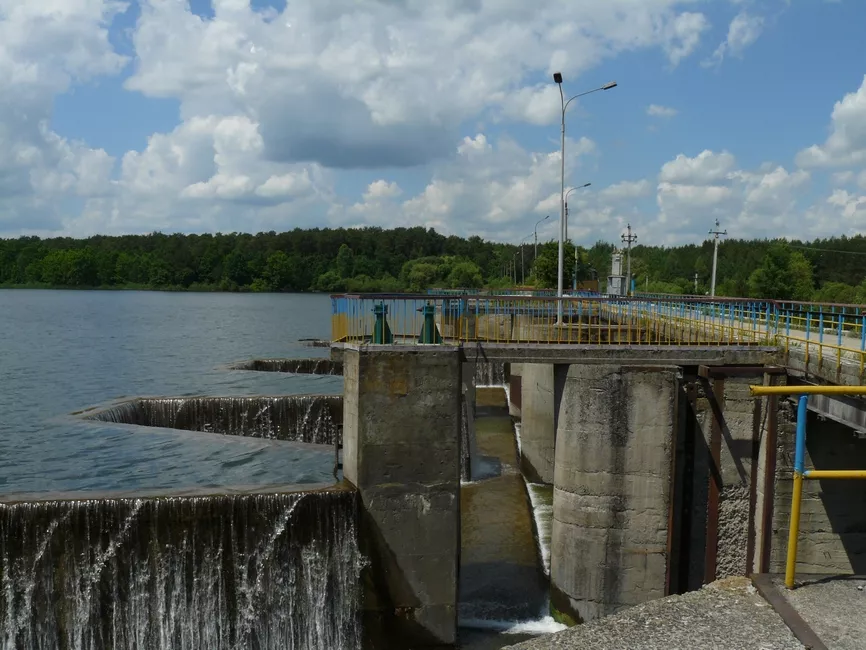
A little upstream of the cliffs, a sizeable dam blocks the Teteriv, forming a reservoir. This is not merely a hydro-structure but a strategic asset: it is from here that Zhytomyr draws a significant part of the water it needs. The dam stands about 25 metres high. For paddlers it is a portage point; for the ordinary tourist, a viewing platform with a vista over the reservoir, the rocky shoreline and the Tryhiria monastery in the distance. Cross the dam to the other bank and you may come upon ancient oaks, among them a true giant.
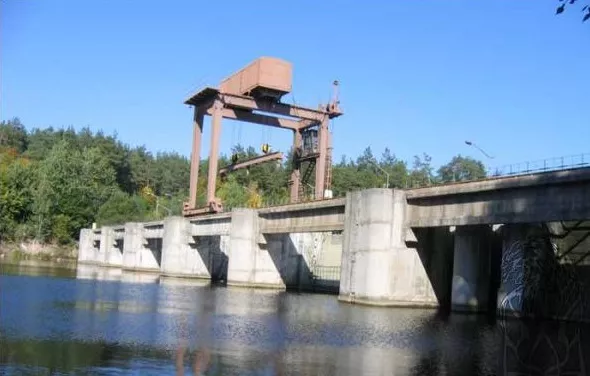
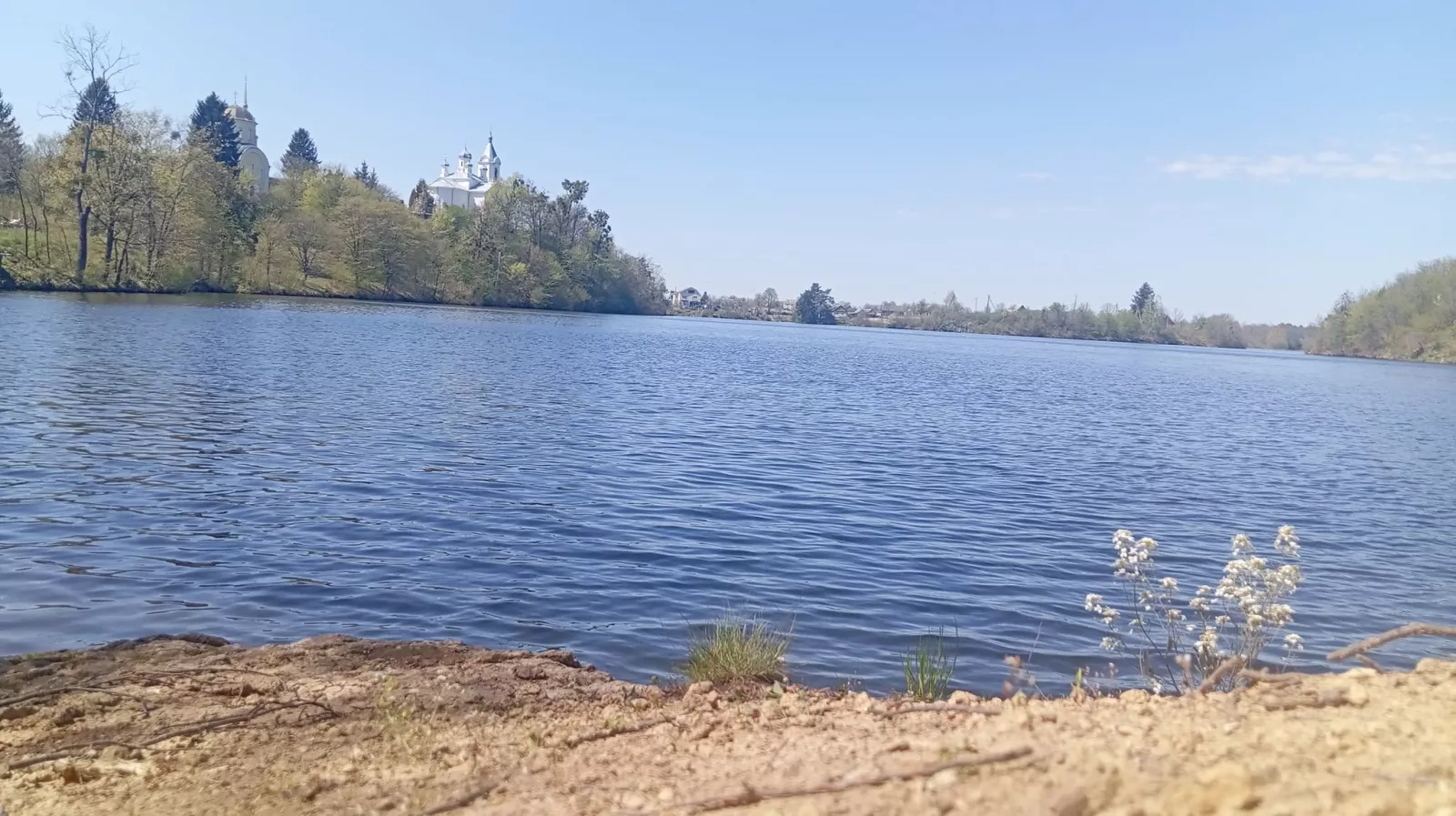
A practical warning: since this is the city's drinking-water intake, the river here should be protected — don't litter or pollute the water.
Tryhiria Transfiguration Monastery
On the rocky bank of the Teteriv, near the village of Tryhiria, stands an ancient monastery for monks. Its history reaches back at least to the late 16th or early 17th century: depending on the source, its founders are named as either Prince Volodymyr of Zhytomyr (16th century) or the Voronych landowners, who restored the cloister in 1613. The monastery survived devastation during the Khmelnytsky era, rebuilding in the 18th century and the Soviet period. Its chief treasure is the miracle-working icon of the Tryhiria Mother of God which, according to legend, appeared in a spring near the monastery. From the monastery wall, a fine panorama of the canyon, the reservoir and the rocky banks opens up.
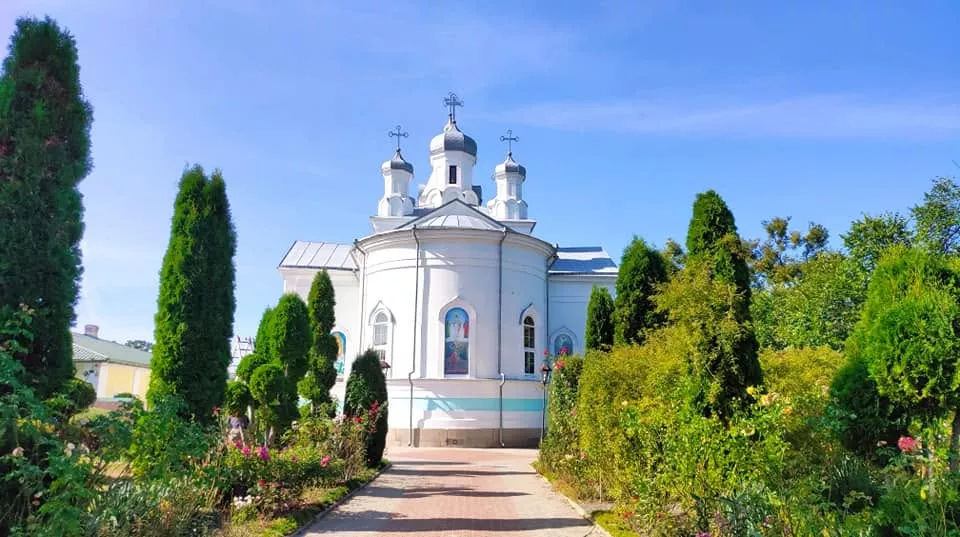
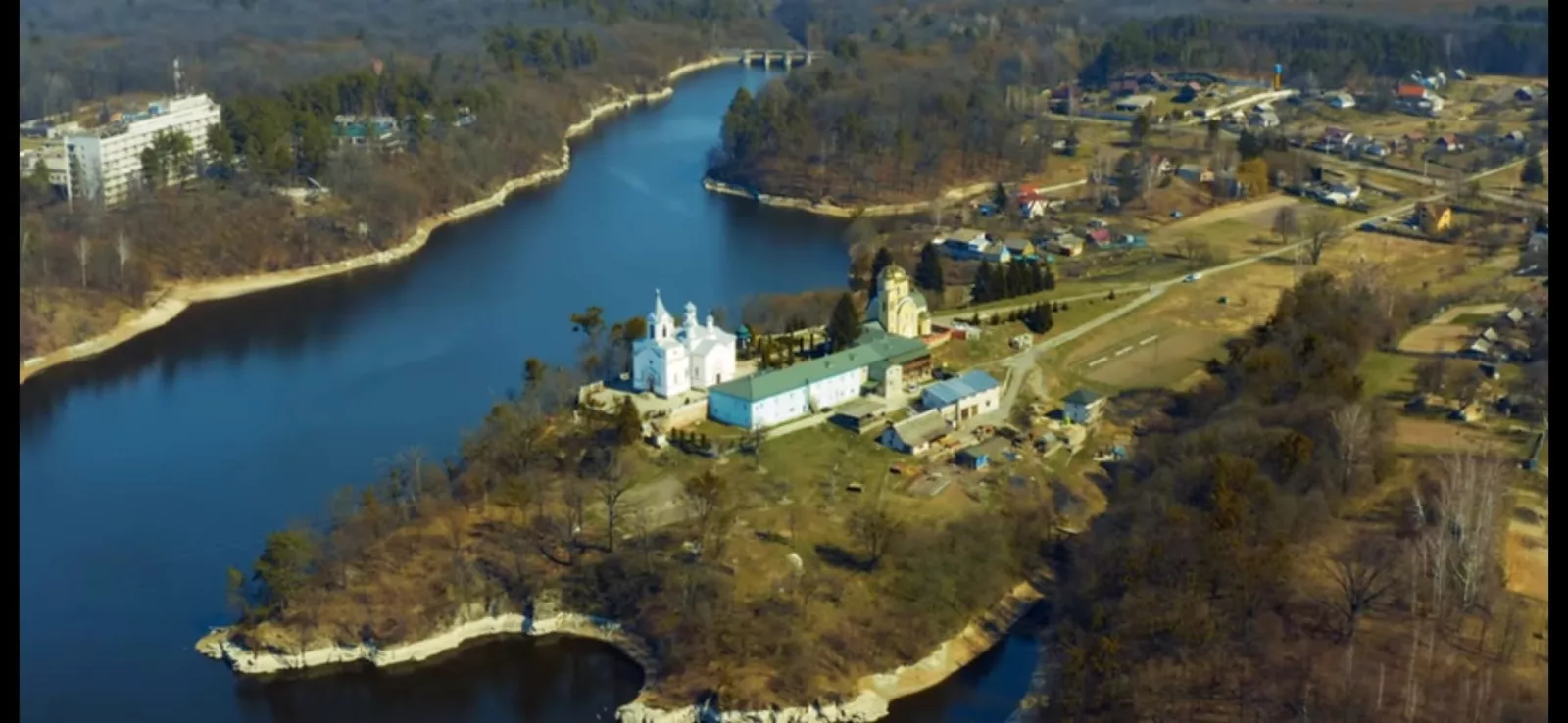
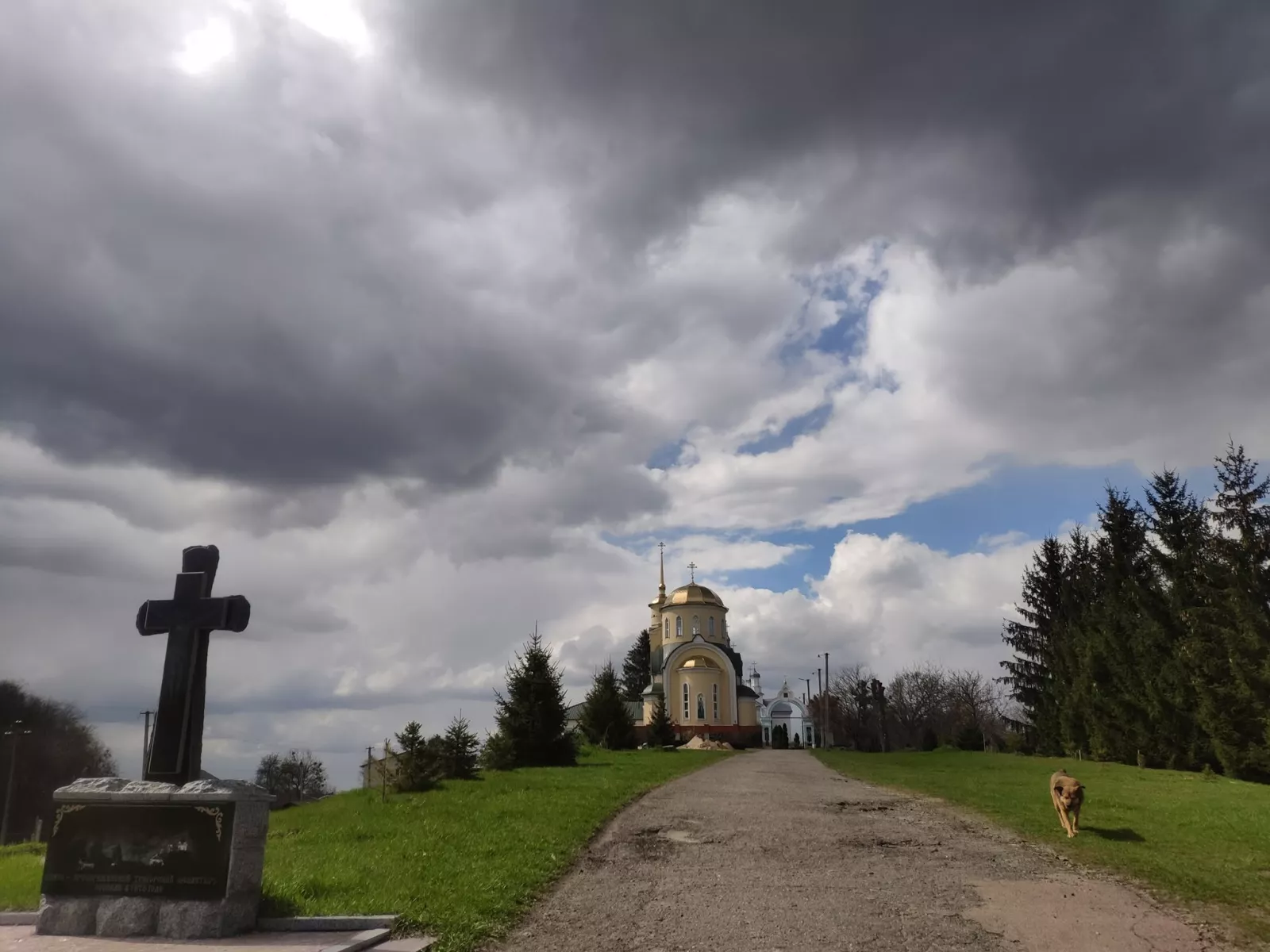
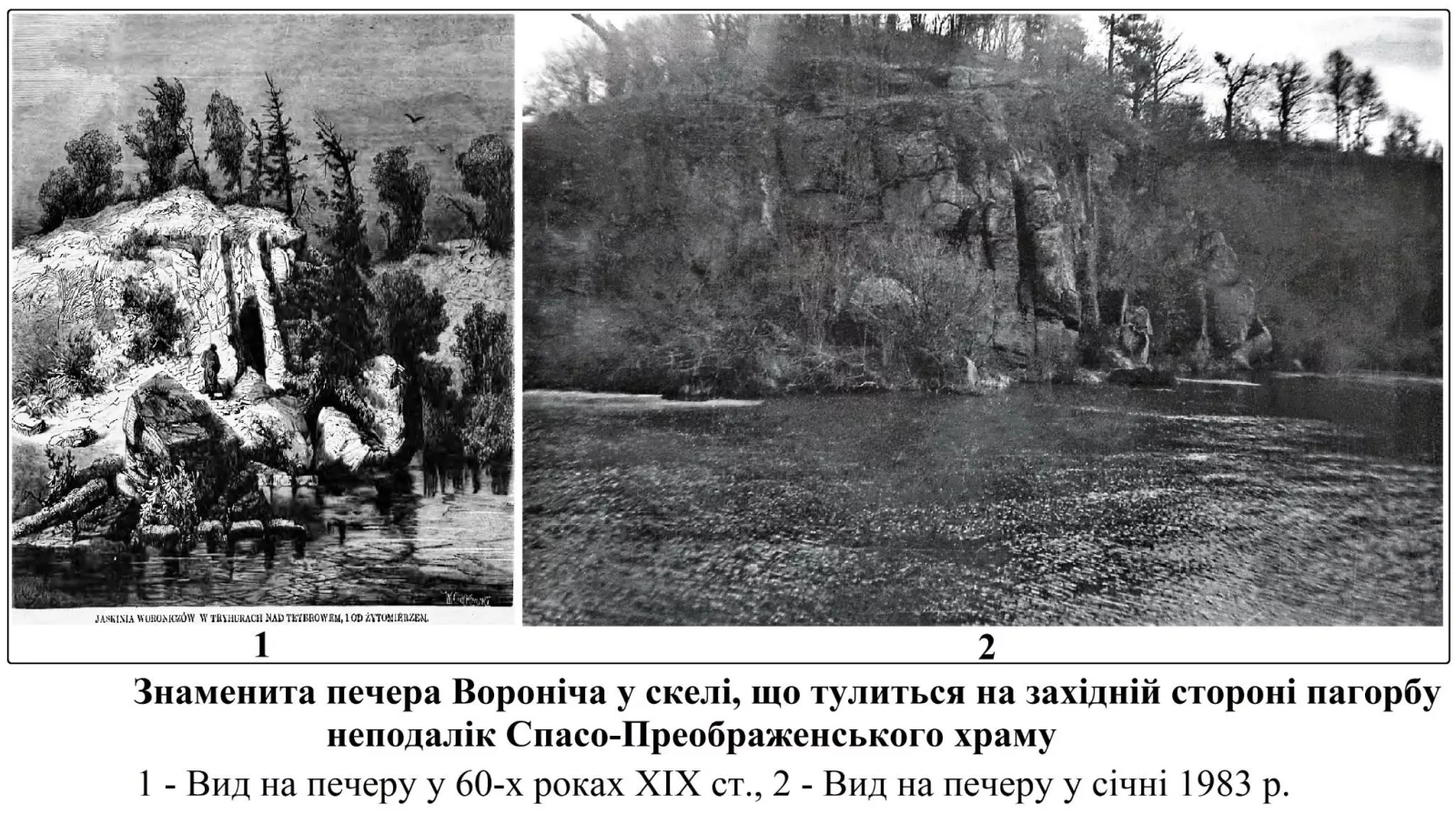
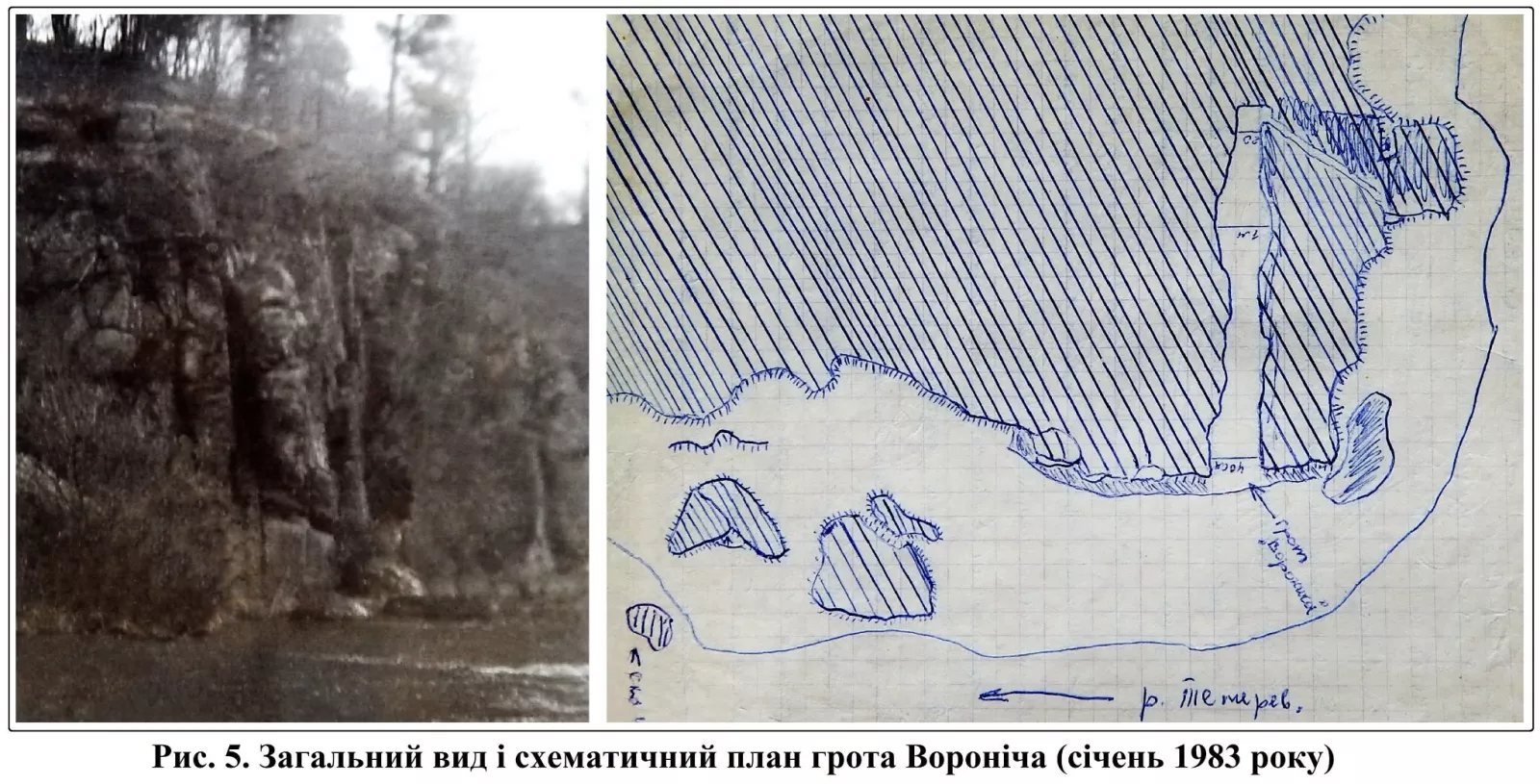
It was on the western slope of the monastery hill, beneath the Transfiguration church of Tryhiria Monastery, that the famous entrance to the Voronych cave once lay — one of the best-known underground sites in the Zhytomyr region. The cave was part of an ancient complex of monastic underground passages, cut into the granite rock by the monastery's very first monks. It took its name from the noble Voronych family, who owned these lands in the 17th and 18th centuries and were bound up with the cloister's history. In the 19th century the cave was depicted in a lithograph published in the Polish magazine Tygodnik Ilustrowany, and as recently as 1983 its entrance could still be seen in photographs. But after the Denyshi dam was built and the reservoir created, the water level in the Teteriv rose, and today the historic cave entrance is completely hidden underwater.
The "Denyshi" health resort — a base for radon therapy
If you want comfort rather than tents, the "Denyshi" health resort operates right by the cliffs — a well-known medical facility in a pine forest on the bank of the Teteriv. Its speciality is treatment with radon baths from local springs; there is a pool, a spa and a mineral-water pump room. It's a convenient base from which to make out-and-back excursions to the palace, the cliffs and the monastery. It also offers a "weekend tour" format of 2–3 days with meals.
The 115-year-old watermill at Volosivka
Further downstream, in the village of Volosivka in the Vilsk community, right on the bank of the Teteriv, stands a true gem of industrial heritage — a watermill more than a century old. This is the route's most vivid "living" history, and it deserves telling in detail.
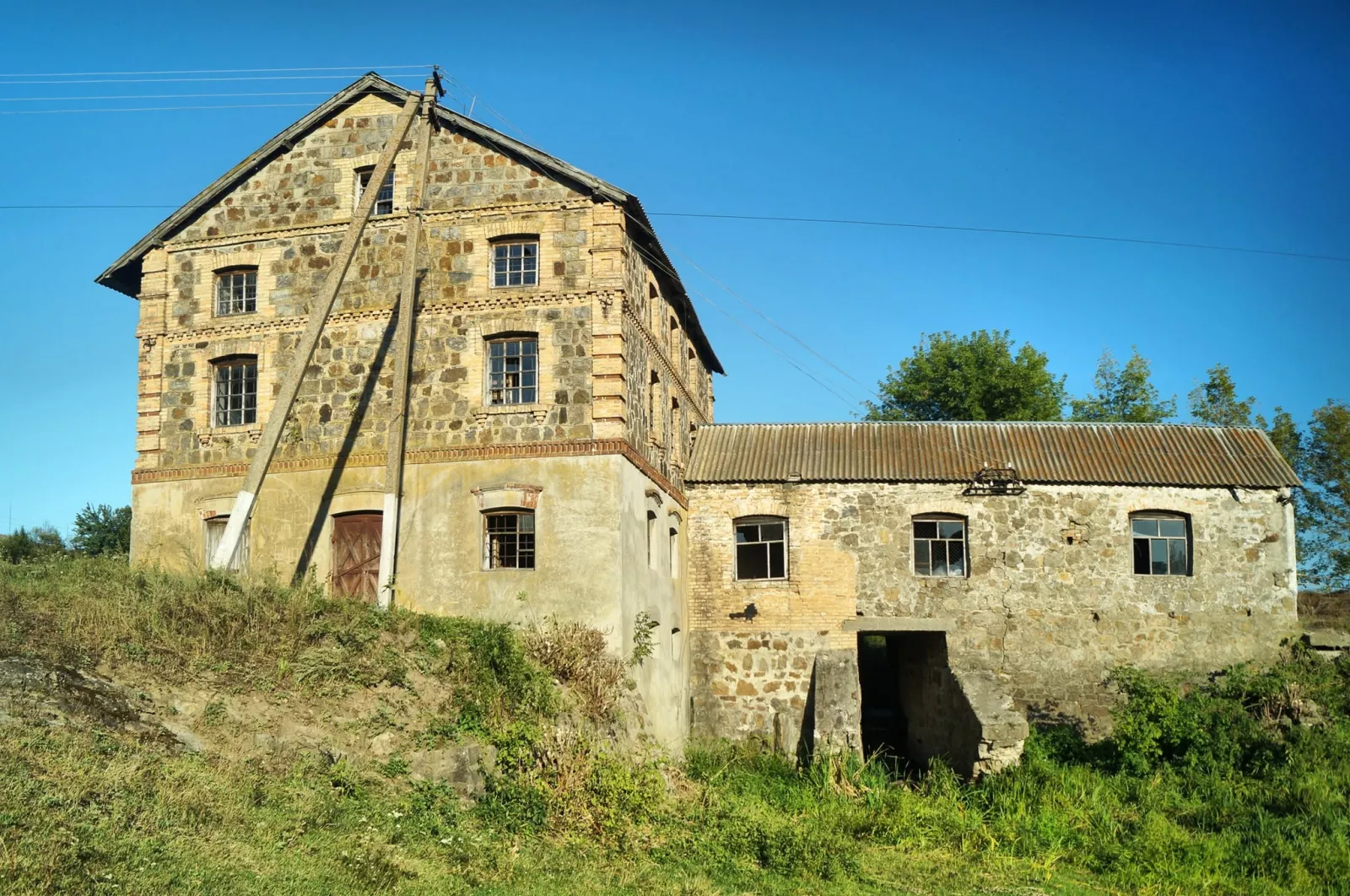
The mill that survives to this day was built in 1910 — on the site of an older wooden mill that burned down in 1906 (according to local historian Oleksii Hodliuk, the old mill was set alight by former workers to cover up the theft of flour). The earlier mill is documented as far back as 1862, when it brought its owner 7,000 roubles in profit a year.
The new building was raised from local granite, quarried just across the road. There's a colourful detail: for the strength of the masonry, local peasants are said to have brought in an enormous quantity of chicken eggs. Inside, equipment that was modern for its time was installed — from Viktor Mensel's factory and Gustav Felhauer's engineering works.
For over 100 years the mill was the heart of the village: here wheat was ground into flour, and once a week, rye. In 1950 a room with a diesel generator was added alongside — and for the first time the village had electric light: a single bulb in each house, light in the club with its cinema projector and on the farm, though only in the evening hours. The mill worked right up until 2010.
In 2013 the building was bought by Nataliia Chyrytsia, a local by birth, together with her husband — with the sole aim of preserving the mill. By her account, all the equipment remained in place and nothing was changed; the only damage was to the windows, blown out by a blast wave during the war. The Vilsk community plans to add the mill to its tourist map and make it an official architectural landmark. The place is extraordinarily photogenic — a massive stone-and-granite building standing practically on the water, right by the road.
The dams at Perliavka and Teterivka
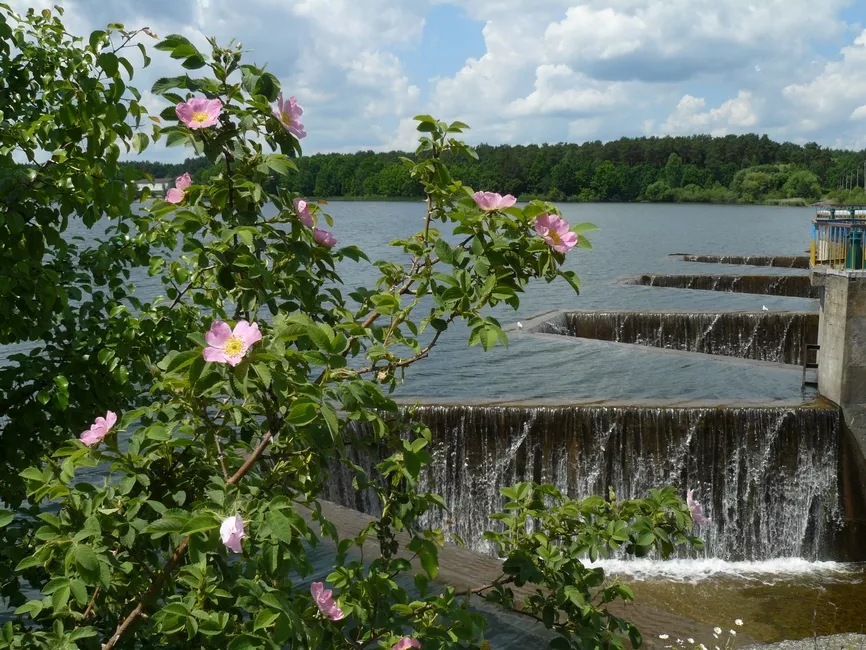
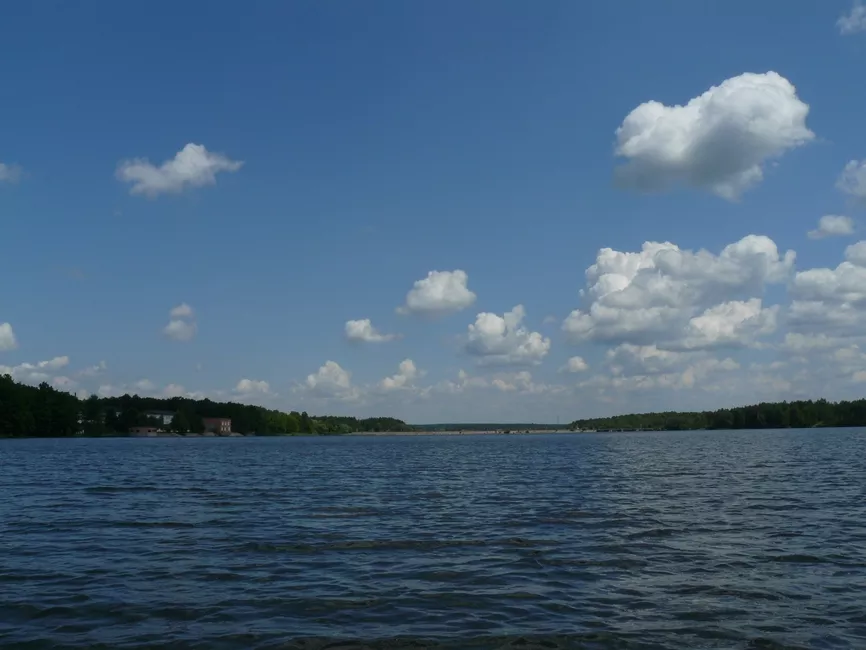
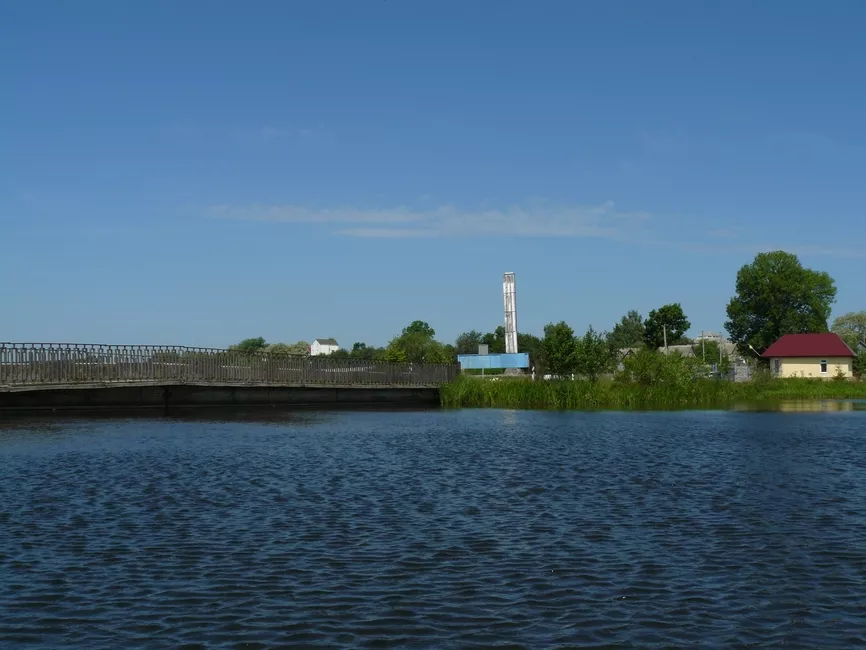
Closer to Zhytomyr, kayakers pass two more hydro-structures — a dam with a bridge in the village of Perliavka and a larger dam near the village of Teterivka (formerly Albinivka). These are working regulating structures, not abandoned hydro plants: near Teterivka is the route's longest portage, along the right bank, and below the dam the river livens up again. For the urban explorer they are less spectacular than the palace or the mill, but for the paddler they are key waypoints on the route. Here too, on the right bank, kayakers' reports mention an unusual neighbour — a military training ground amid flowering meadows.
The finale: the Zhytomyr dam and "Chatsky's Head"
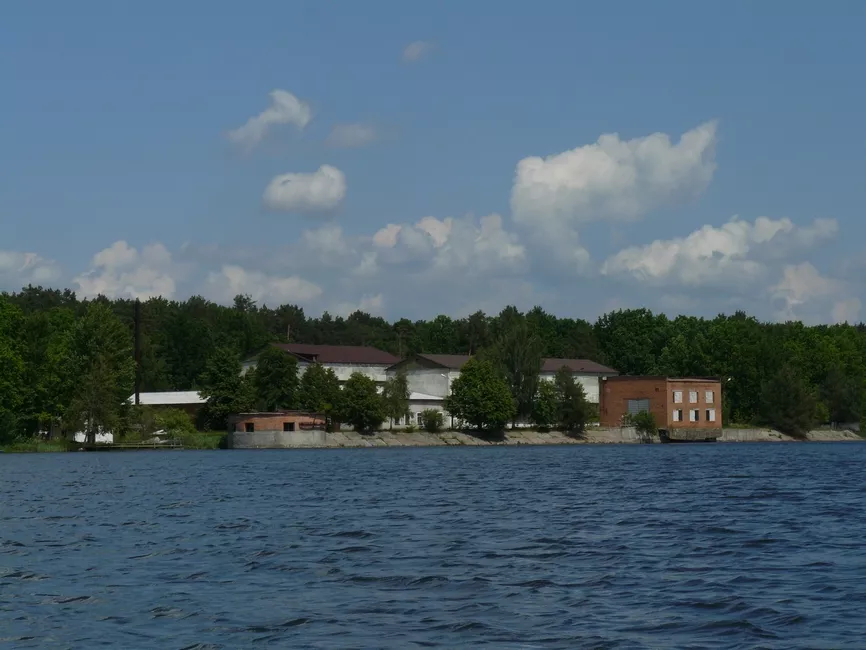
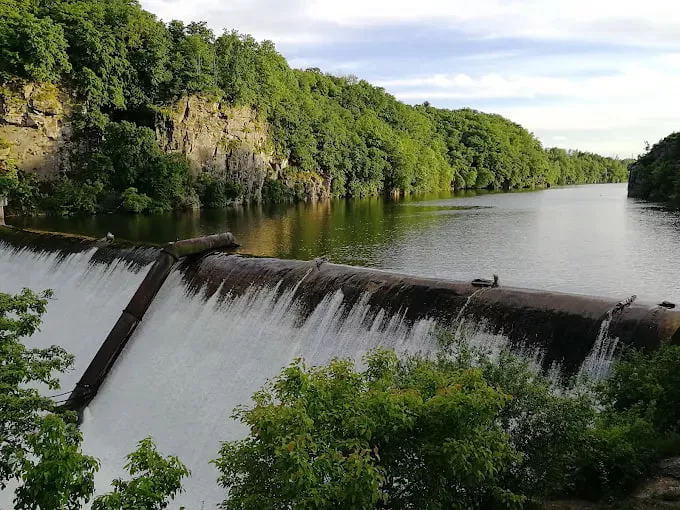
The route ends within Zhytomyr itself, and the final chord is worthy of the whole journey. The Zhytomyr dam stands on the Teteriv in a picturesque spot with high granite cliffs on either side, beside the "Chatsky's Head" rock — one of the city's chief natural symbols. The top of this rock is shaped like a human head; since 1967 it has held the status of a geological nature monument. A fine end to the journey, uniting — like the Teteriv as a whole — industry, granite and legend.
How to tie it all together: practical information
By car: from Kyiv to Denyshi is about 160 km (roughly 2 hours); from Zhytomyr, only 20 km along the Starokostiantyniv highway. For the palace ruins: in the centre of Denyshi, turn onto the bridge over the Teteriv, and the palace will be on your left. Volosivka is separate, closer to Zhytomyr (Vilsk community).
By public transport: to Denyshi — by bus from the Zhytomyr bus terminal (a route heading toward Vysoka Pich / the "Denyshi" health resort).
By kayak: the classic Denyshi–Zhytomyr route, about 24 km, with several dam portages; the best time is spring and early summer, when the Teteriv is at high water.
Where to stay: the "Denyshi" health resort (comfort, radon baths), tents beneath the cliffs (for climbers and kayakers), or a base in Zhytomyr.
When to go: the cliffs and the palace are lovely throughout the warm season; for kayaking, the spring high water; the Volosivka mill is accessible any time (it stands right by the road).
What to bring: comfortable footwear for the cliffs and ruins, water and a snack (there's little infrastructure at the palace and the mill), and a rubbish bag — especially near the Denyshi dam, since this is Zhytomyr's drinking water.
A word of caution: the palace ruins are half-collapsed — don't climb the unstable walls and tower; on the cliffs, without gear and experience, keep away from the edges of the bluffs.
FAQ
Where is the Tereshchenko palace? In the village of Denyshi, Zhytomyr district, on the bank of the Teteriv, roughly 20 km from Zhytomyr and 160 km from Kyiv.
When was the Tereshchenko palace built? In 1910–1913, to a design by architect Pavlo Hollandskyi; the client was Nadiia Tereshchenko.
Why is the palace ruined? After 1917 the family emigrated, the palace was looted and dismantled for bricks, and the Second World War finished off the destruction.
Can you visit the palace ruins for free? Yes, it's an open location with free entry; there's an information board nearby.
What are the Denyshi–Tryhiria cliffs? Granite bluffs 20–25 m high on the banks of the Teteriv — one of the most popular climbing spots in Ukraine.
How many climbing routes are there at Denyshi? By various sources, from 30 to 50+, of varying difficulty, split across several sectors.
What are the exotic lizards living at Denyshi? Rock lizards (the Armenian and Dahl's lizards), acclimatised here from the Caucasus in the 1960s; they formed a large population along the Teteriv.
What is the watermill at Volosivka? A stone-and-granite watermill from 1910 on the bank of the Teteriv, which worked until 2010 and has survived with its original equipment.
Can you go inside the Volosivka mill? The mill is privately owned (bought in 2013 for the sake of preservation); it stands right by the road and can be viewed and photographed from the outside — to visit inside, it's best to contact the owners.
What is Tryhiria Monastery? An ancient monastery for monks from the late 16th–early 17th century, on the rocky bank of the Teteriv near the village of Tryhiria.
Is there a place for a comfortable stay nearby? Yes, the "Denyshi" health resort with radon baths, a pool and a spa, in a pine forest on the riverbank.
Do the dams on the route work as hydro plants? No — the dams at Denyshi, Perliavka and Teterivka are working regulating structures, not abandoned power plants; for kayakers they are portage points.
What is the kayaking route along this stretch? The classic Denyshi–Zhytomyr route, about 24 km, with several portages; best in spring at high water.
What is "Chatsky's Head"? A granite rock in Zhytomyr near the dam on the Teteriv, its top resembling a human head; a geological nature monument since 1967.
When is the best time to go? For the cliffs and ruins — the whole warm season; for paddling — spring and early summer, when the river is at high water.