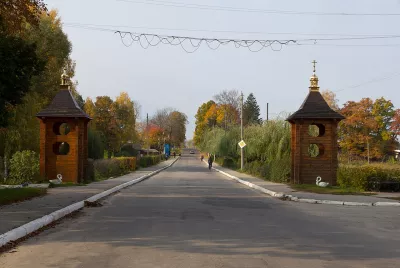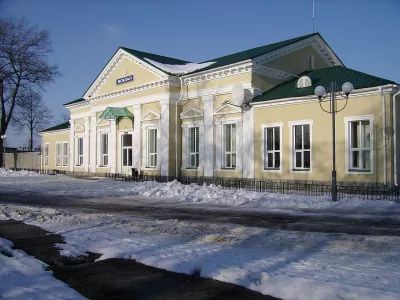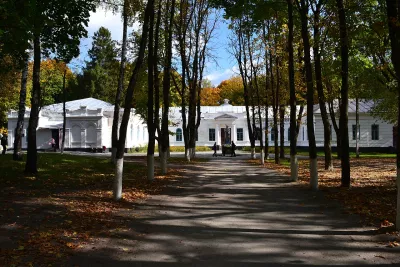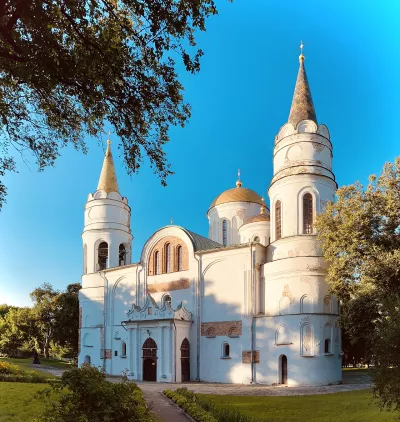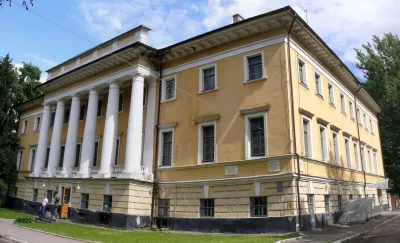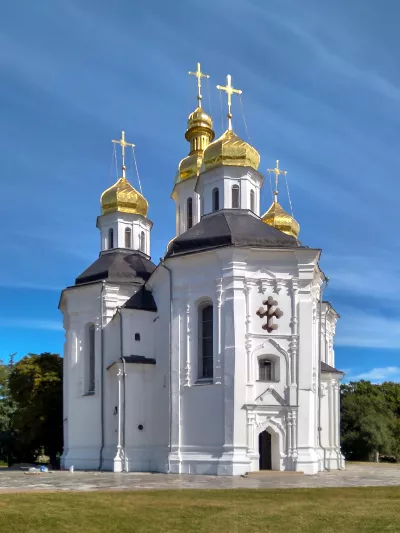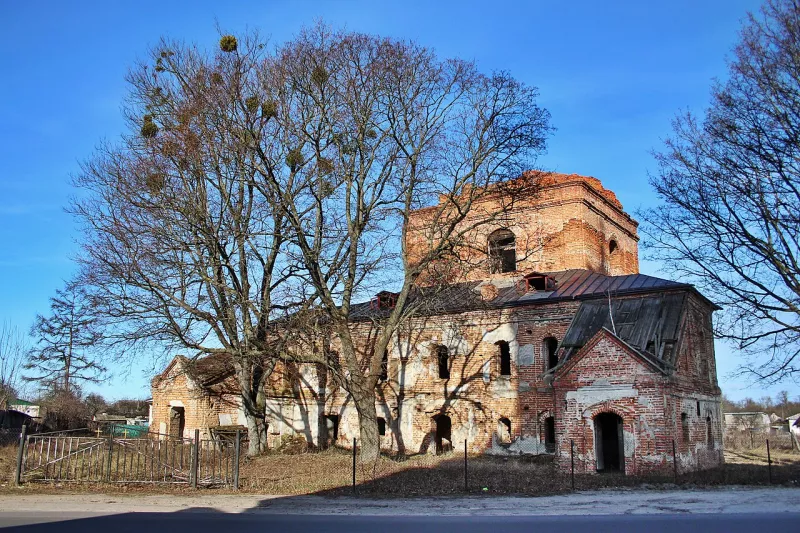

Korop is a settlement in eastern Chernihiv Oblast, 3 km from the Maltseve landing stage on the Desna River. Once a sotnia (company) town and the main base of the Hetmanate's artillery, today visitors come here primarily for the St. Elijah fortress-church — the only one of its kind in Left-Bank Ukraine — and the views of the Desna. Nearby on the Desna lies the Mezyn National Nature Park.
A Cossack and a Carp on a Sabre
According to legend, a Zaporozhian Cossack routed a Tatar detachment driving people into captivity and freed the prisoners. Another version tells of a Cossack from Baturyn who stopped on the bank of the Desna: when he lowered his sabre into the water, a carp was impaled on it. Such a place was suited for a watchpost, out of which the town grew.
Archaeologists consider Korop a pre-Tatar town: Slavic settlements of the 2nd–5th centuries, a fortified settlement, and a burial mound complex from the times of Kyiv Rus were found on its outskirts.
Sotnia and Artillery
From 1659, Korop was a sotnia town of the Nizhyn Regiment, with the Korop sotnia directly subordinate to the Hetman. In the 1660s, many Wallachians resettled here. Hetman Demian Mnohohrishnyi, a native of Korop, generously endowed his hometown with privileges. From 1718, Cossack artillery — the "military armata" — was stationed in Korop, and in 1728 Hetman Danylo Apostol made Korop the main supply center for the Hetmanate's artillery. Gunpowder was produced here, and according to some sources, cannonballs as well, while blacksmithing, weaving, and tailoring developed. At the end of the 18th century, distilling became the main industry: in 1782, 816 distilling stills were recorded in Korop.
St. Elijah Fortress-Church
The oldest stone structure in Korop stands on the western approaches to the former citadel. It is dated to the late 17th — early 18th century, though some believe the oldest section may date to the 15th–16th centuries. The base is a small tower-like building with a single cupola, walls up to two meters thick, and a hall less than five meters wide. It originally had a defensive purpose and was rebuilt into a church with a bell tower between 1782 and 1818.
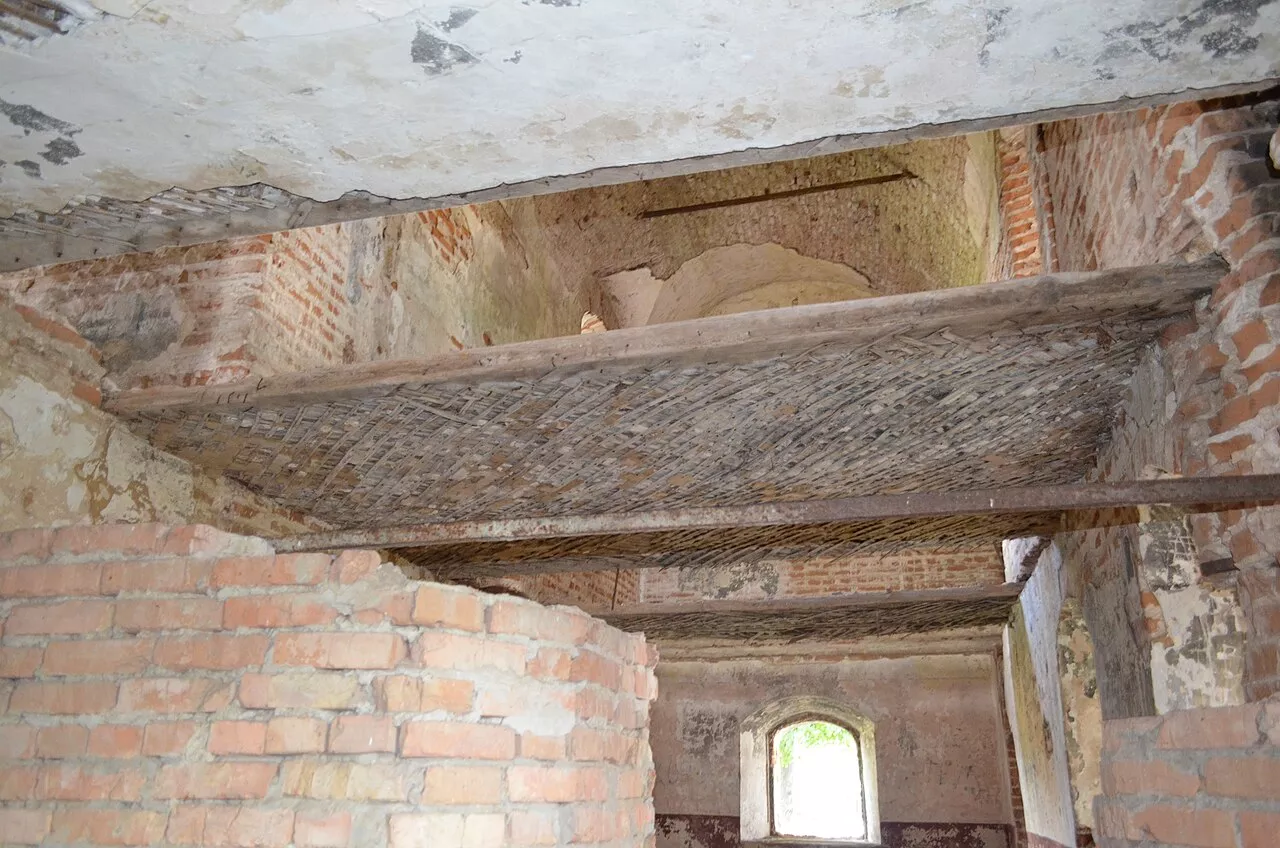
At the end of the 18th century, Korop was home to the wooden Holy Trinity Cathedral (1716), Exaltation of the Cross, and Intercession churches, as well as the brick Ascension (1764), Transfiguration (1790), and St. Michael's (1837) churches. Only a few of them have survived to this day.
Nature
Surrounding Korop is the Desna River with its tributary, the Vit, and floodplain lakes such as Karpivka, Panske, and others. It is a convenient starting point for trips to the Mezyn Park and the famous Mezyn Palaeolithic site.
Coat of Arms
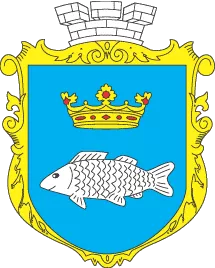
The coat of arms of Korop, approved in 2001, restores an ancient 17th-century symbol: in an azure field, a silver carp under a golden crown — a canting symbol reflecting the town's name.
How to Get There
Korop lies 21 km from the highway; the nearest railway station is Altynivka. Nearby are Sosnytsia, Novhorod-Siverskyi, and Baturyn.