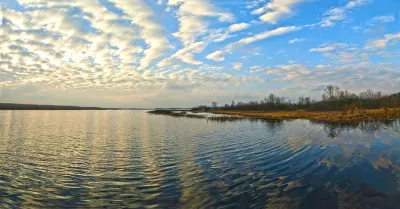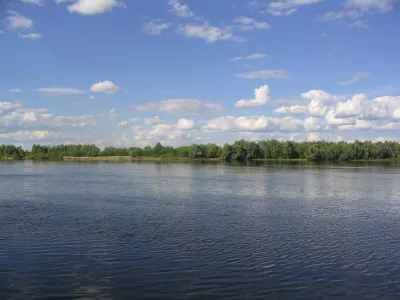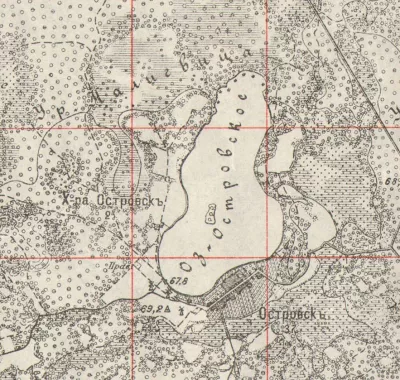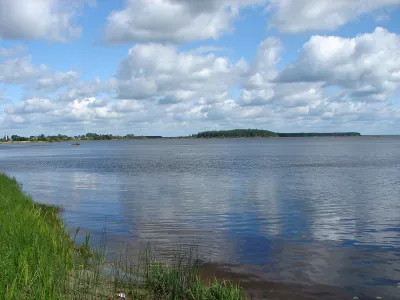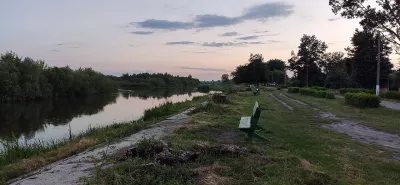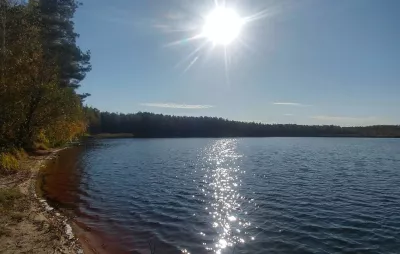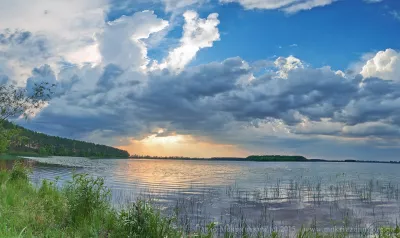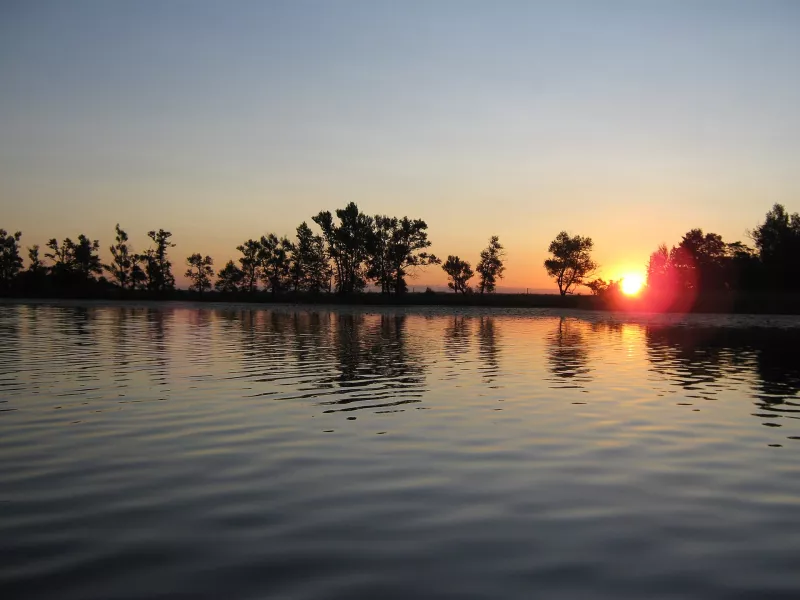
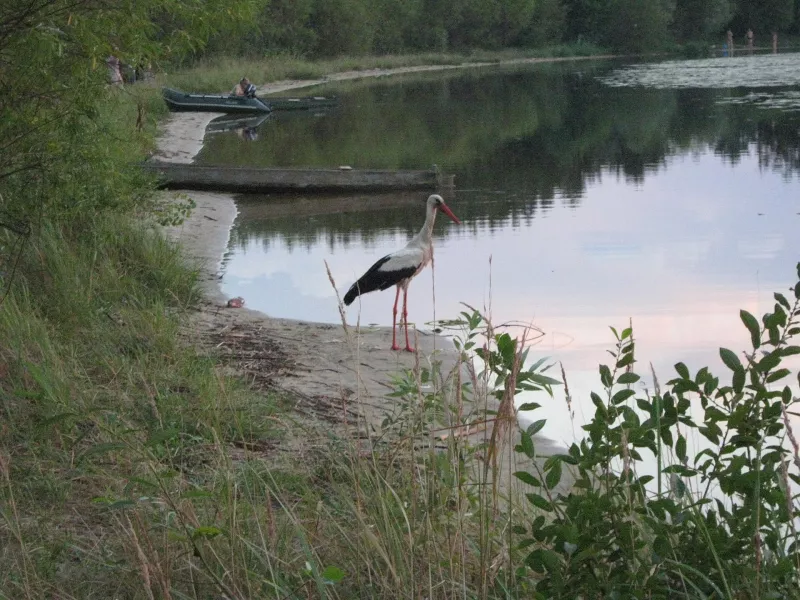
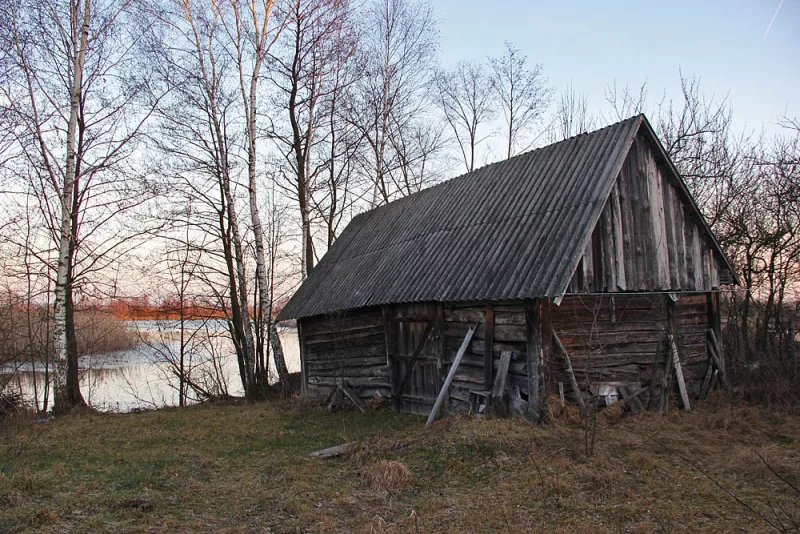
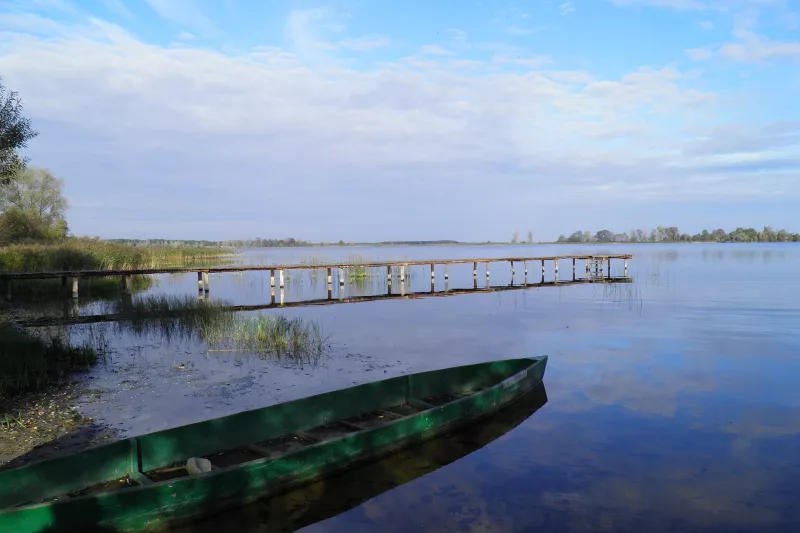
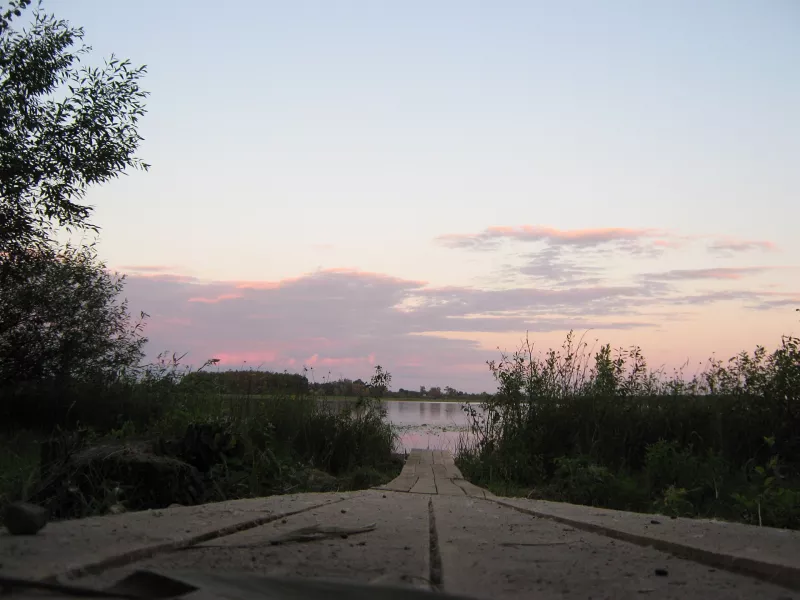
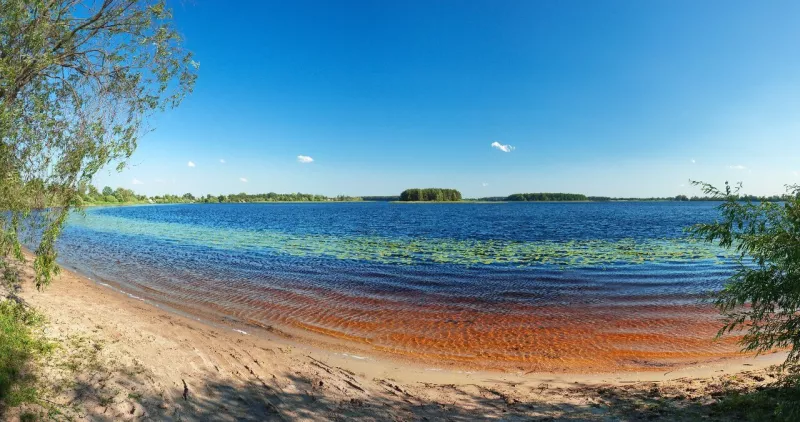
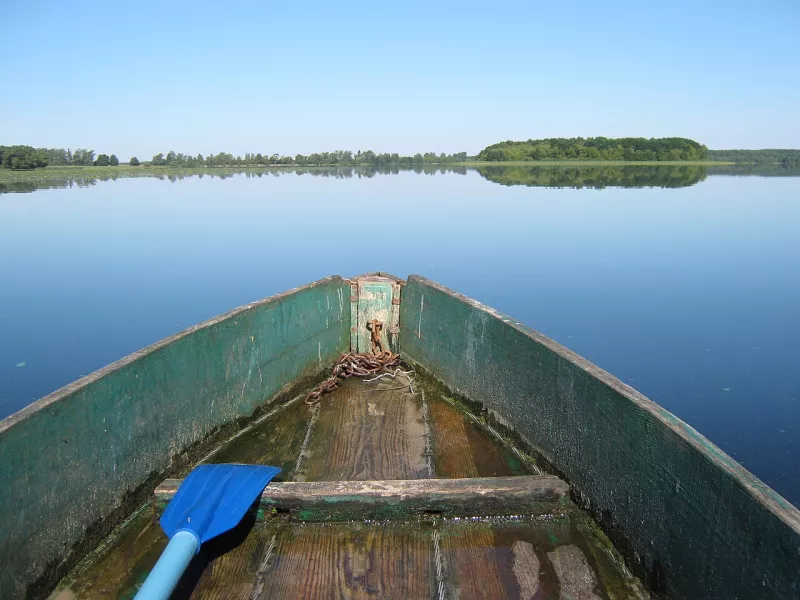
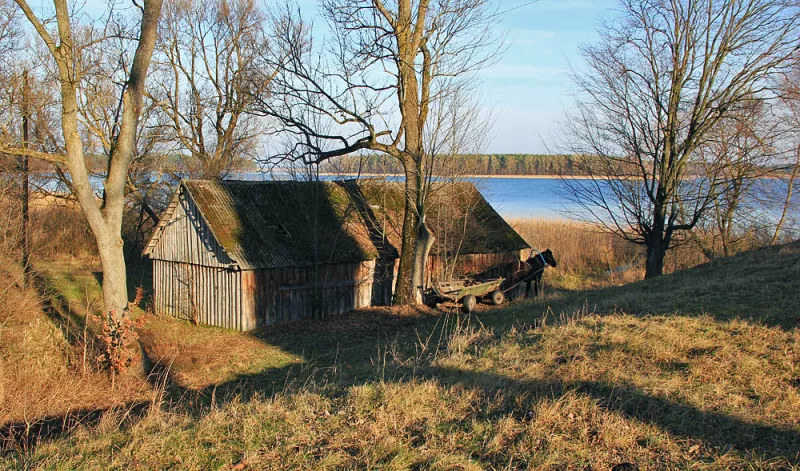
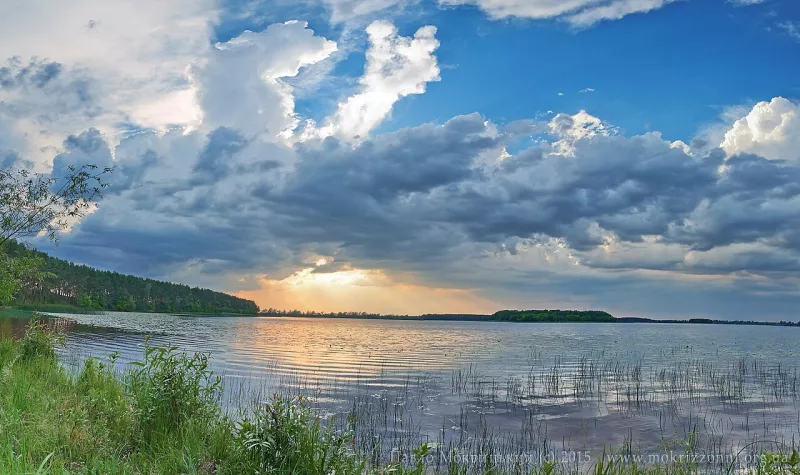
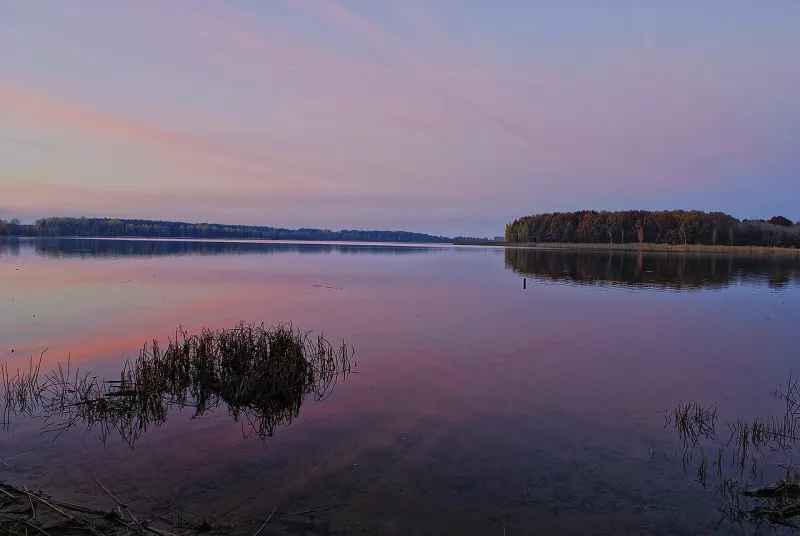
Nobel is the largest lake in Rivne Oblast. It lies in the very north of the region, in the Prypiat floodplain, among the swamps and forests of Western Polissia. The village of Nobel sits on a peninsula in the middle of the lake, so water surrounds it on three sides. Once this was a chronicled town, and now it is one of the most beautiful and remote places in Rivne Oblast.
Dimensions and Depth
The length of the lake is 3.2 kilometres, the width is up to 2.5, the area is almost five square kilometres, and the depth is over ten metres. The peninsula with the village divides the lake into two parts: the eastern one is narrow and elongated, the western one is oval. Together they form an irregular heart shape. The shores and bottom are sandy and very indented, and there are four islands on the lake.
Nobel is fed by the waters of the Prypiat: the river flows into the eastern part of the lake from the north and flows out from the east. Water transparency is up to two metres. In winter, the lake freezes.
The Town of Nebel
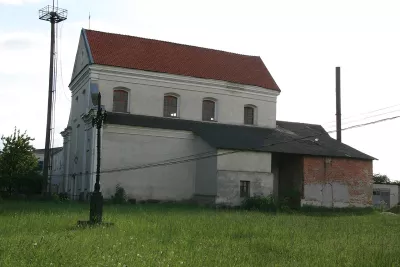
The village of Nobel is first mentioned in the Hypatian Codex under the year 1158, and in 1262 the chronicle calls the town Nebel. The fortification stood on the elevated "Tserkovna Hora" at the southeastern end of the village. In Lithuanian times, Nebel belonged to the princes of Turaŭ and Pinsk, and in 1524 Queen Bona granted the local monastery the right to fish in the lake and the Prypiat. In 1520, the Nobel Gospels were written here. And on the sand dunes near the village, archaeologists found settlements from the end of the Stone Age, which gave their name to a separate Nobel group of archaeological sites.
Catfish and the Festival of Humour
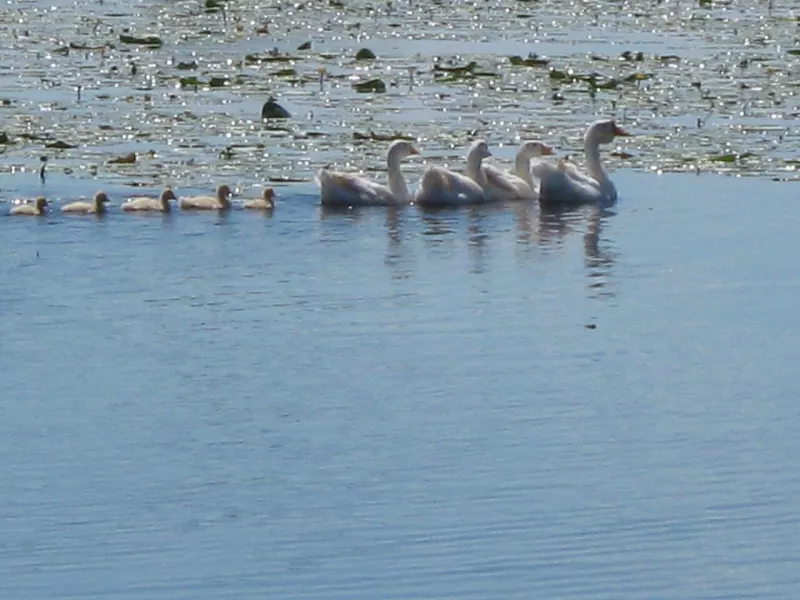
The lake is home to crucified carp, tench, pike, perch, crayfish, and large catfish. Locals fish a lot, and the catfish has become the symbol of the annual festival of humour "Laureate of the Nobel Prize", which has been held here since 2003 at the initiative of the writer Hryhoriy Shton. Wild geese, ducks, and other birds nest on the shores.
Recreation
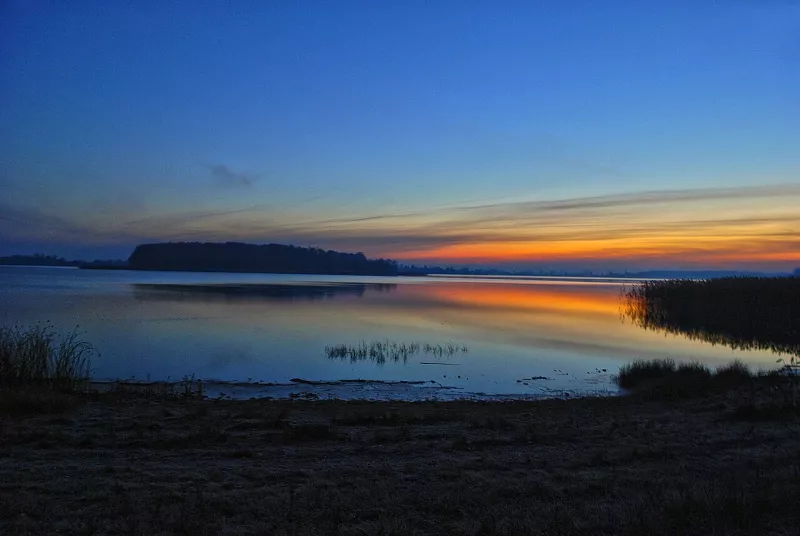
Nobel lies within the Prypiat-Stokhid Regional Landscape Park, with the Nobel Nature Reserve nearby. People come here for silence, fishing, kayaking, and sunsets over the water. Besides Nobel, the villages of Didivka and Kotyra also lie along the lake.
Fishing
Nobel is famous for its catfish — it is no wonder the catfish became the symbol of the local festival. Pike, perch, tench, and crucified carp are also caught here, and crayfish are present. Locals fish mostly from wooden flat-bottomed boats, and the most interesting spots are near the islands and in the channels connecting the lake to the Prypiat. General fishing regulations apply, and from 1 November fishing is prohibited in wintering pits — list and map of pits.
Nobel on Video
When to Go
The best time is from June to September. In summer the water is warm, and in August the sunsets over the lake are at their most beautiful.
Nearby
Zarichne is the nearest urban-type settlement, and the Prypiat-Stokhid National Nature Park is further west. Find more in the article Varash Raion.
How to Get There
Roads through Zarichne and Loknytsia lead to Nobel. Public transport runs rarely, so it is more convenient to travel by car.