The southeastern part of the yellow "Southern Lakeland" PTTK trail, which runs for a total of about 102 km from Sosnowica to Hniszów. From Urszulin, where the administration of the Polesie National Park is located, the trail leads through Wereszczyn and Wielkopole into Chełm County, to the old town of Sawin, and then through the forests of the Ruda-Huta gmina to Hniszów on the Bug River. According to our track, it is 57 km, and the route is linear: two days of walking with an overnight stay in Sawin or its surroundings. Along the way, the landscape changes noticeably: the bogs and lakes of the lakeland give way to the chalk hills of the Chełm region and the forested lowlands of the Dubienka Basin — this is already Volhynian Polissia.
Wereszczyn and Wielkopole
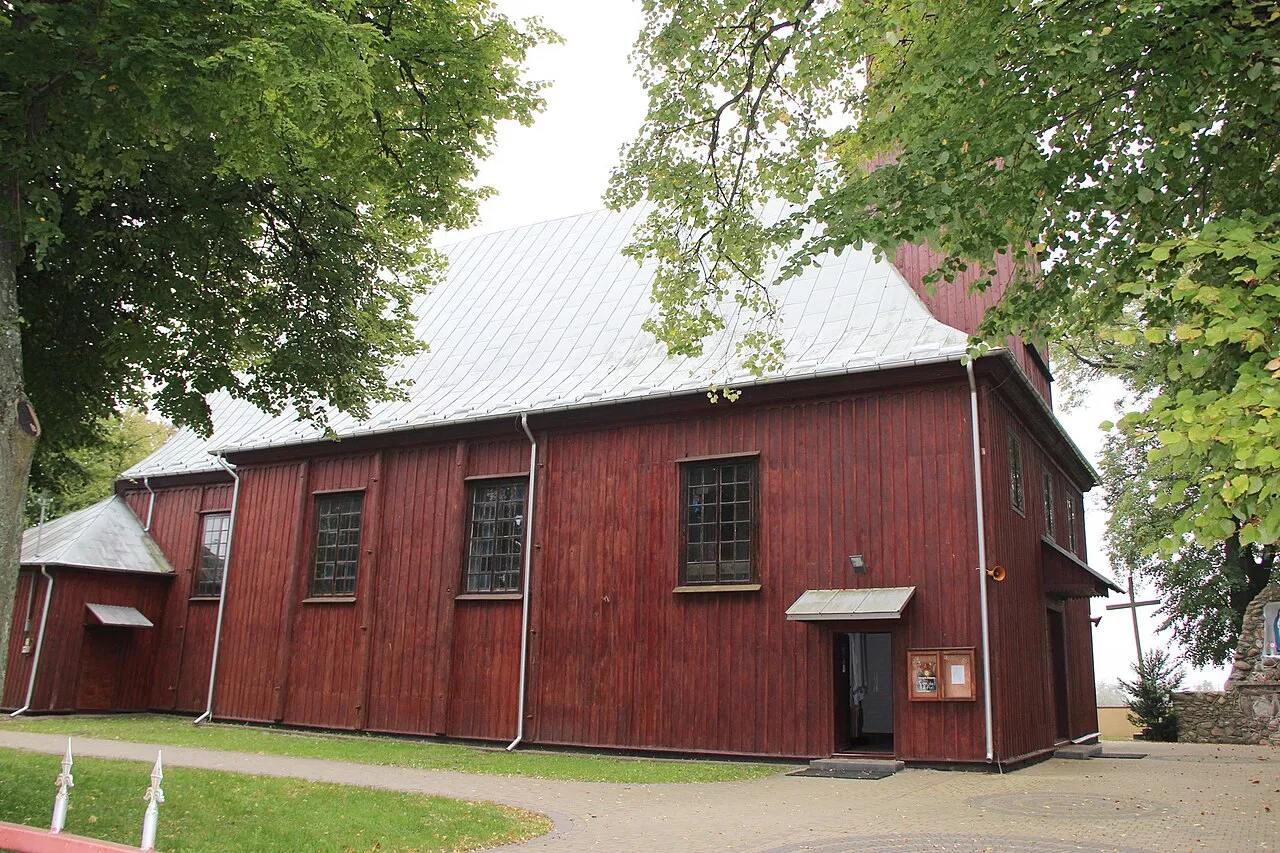
Just four kilometers from Urszulin lies Wereszczyn, an early medieval settlement known from the 13th century and the ancestral nest of the Wereszczyński family. Here stands the Church of Saint Stanislaus from 1783 and a monastery, and Aniela Dembowska, the wife of Edward Dembowski — the organizer of the Kraków Uprising of 1846 — is buried in the parish cemetery. On May 26, 1942, the Germans shot 300 Jews in Wereszczyn. Further on, the trail runs through fields and patches of woods via Wielkopole and Karczunek to Tarnów and Serniawy, already in Chełm County.
Sawin
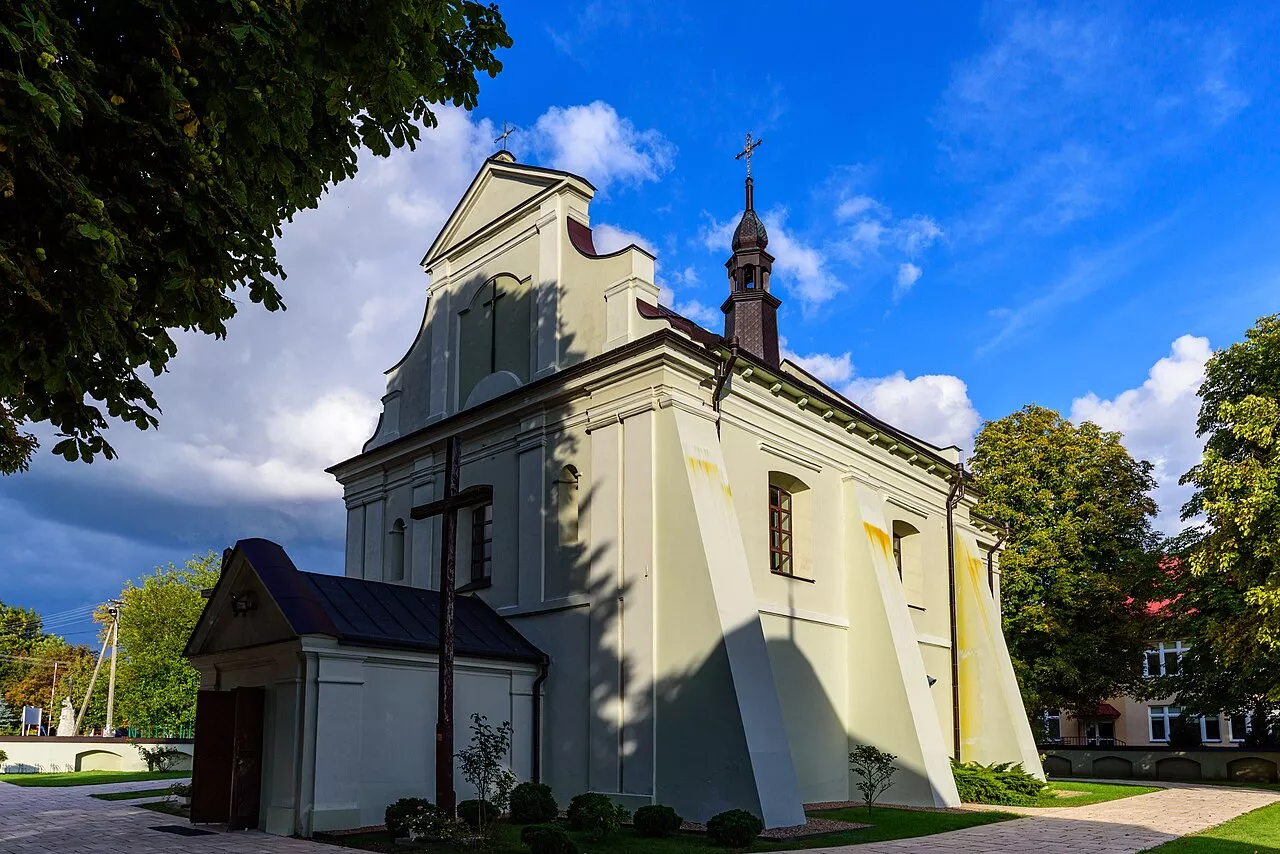
Sawin received town rights in 1456 from King Kazimierz Jagiellończyk and belonged to the bishops of Chełm; it was a town until 1870. The main landmark is the Church of the Transfiguration with a gate-bell tower from the 1730s. The history here is difficult: in 1915, retreating Russian troops burned down Sawin, before World War II almost half of the residents were Jews, and in June 1942 all of them were taken to the Sobibór extermination camp. Today it is the largest village in the gmina, with shops — a convenient place for a break in the middle of the route.
To the Bug River in Hniszów
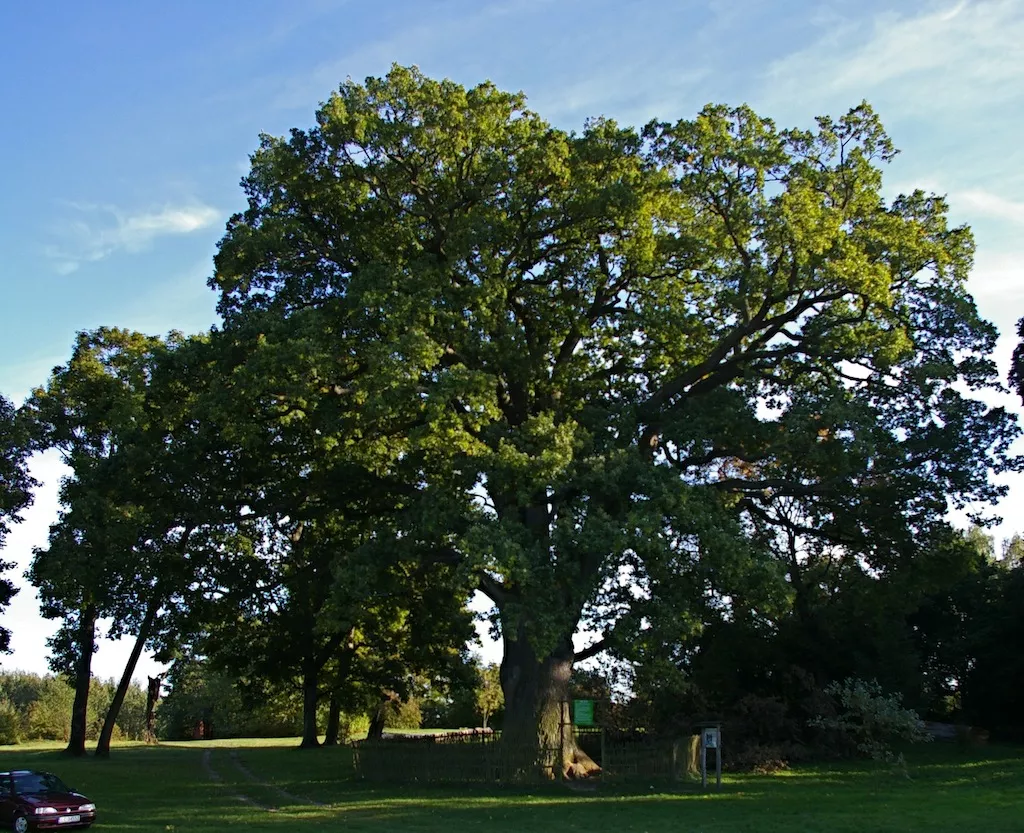
After Sawin, the trail enters the Dubienka Basin: Stańków, Ruda, Rudka, Jazyków, Dobryłów — forests, sandy roads, and peat lowlands. The final destination, Hniszów, is mentioned in the early 16th century as a gentry settlement that guarded the crossing across the Bug River; Vlachs also settled here. A park with the "Bolko" oak — one of the most impressive pedunculate oaks in Poland — remains from the Karpiński estate. The Bug River near Hniszów forms the border with Ukraine.
How to get there and what to consider
This is Poland: Ukrainian citizens need a foreign passport. Buses run to Urszulin from Lublin and Włodawa. Sawin lies 15 km north of Chełm, on voivodeship road 812, making it convenient to return from there or split the route into two days. From Hniszów to Chełm it is over 20 km, and public transport in the village is scarce, so the return should be planned in advance, for example by ordering a taxi from Chełm. The season runs from May to October; ticks in the forests and mosquitoes in the lowlands are common. Near Hniszów, the border with Ukraine runs along the Bug River; it can only be crossed at border checkpoints, with the closest one being Dorohusk.