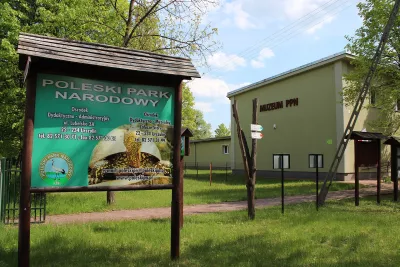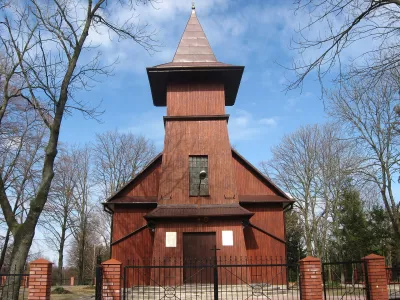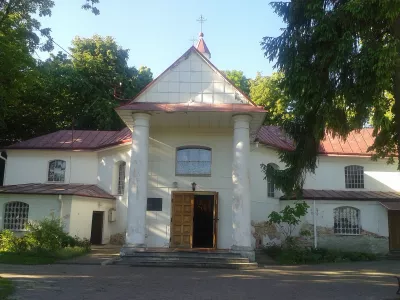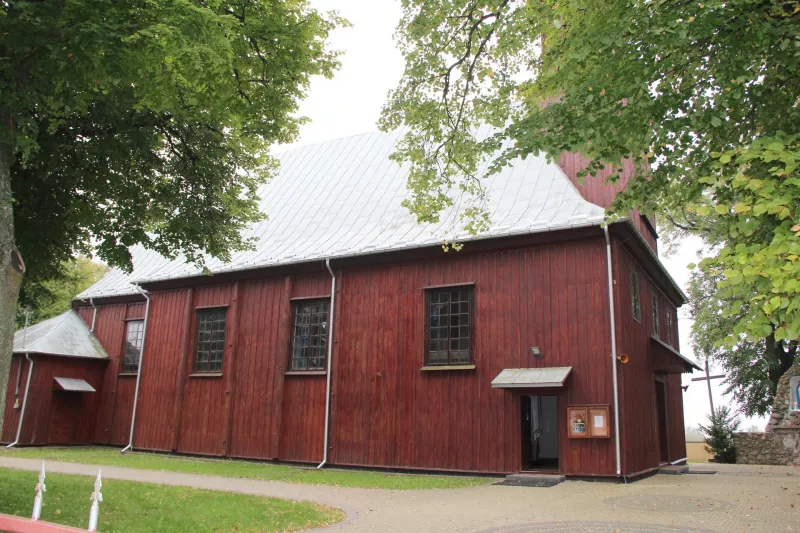
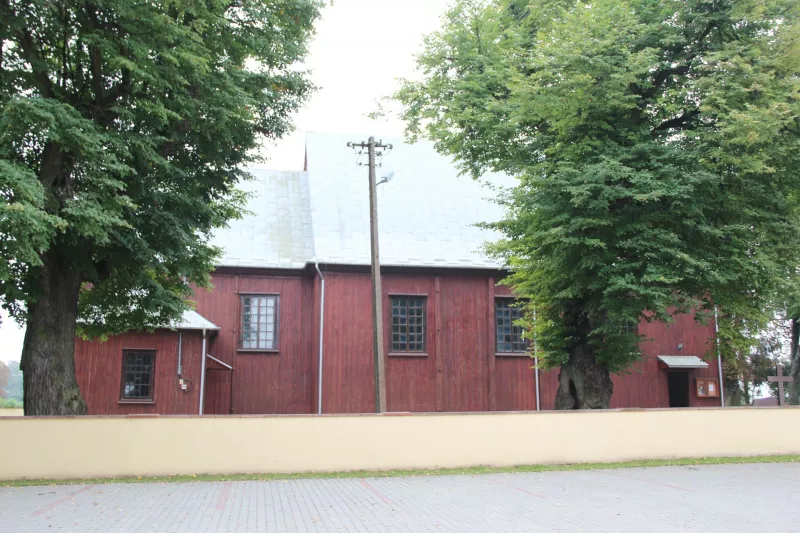
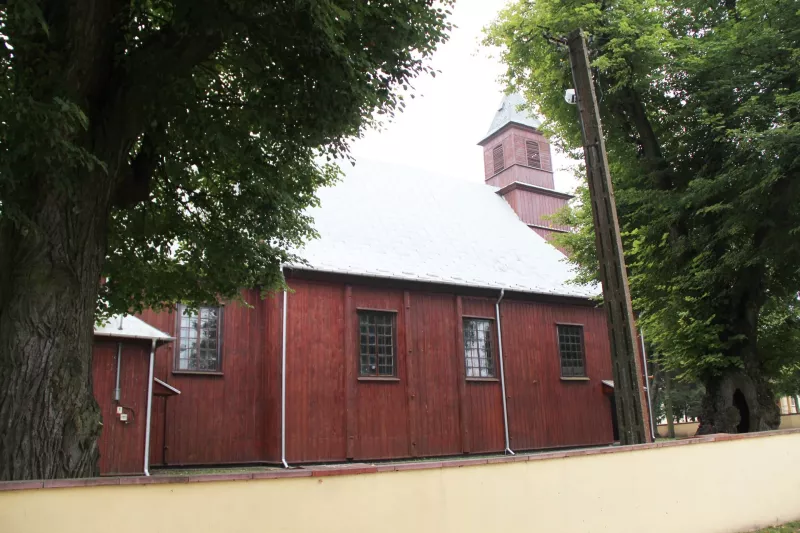
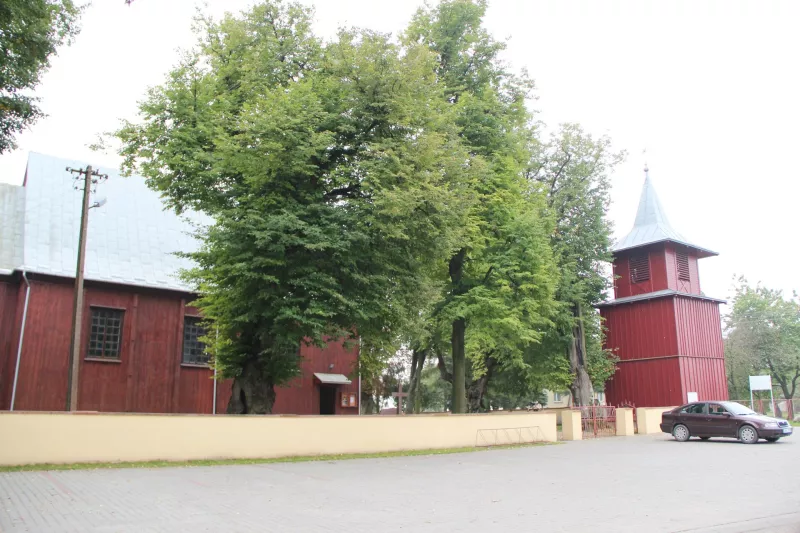
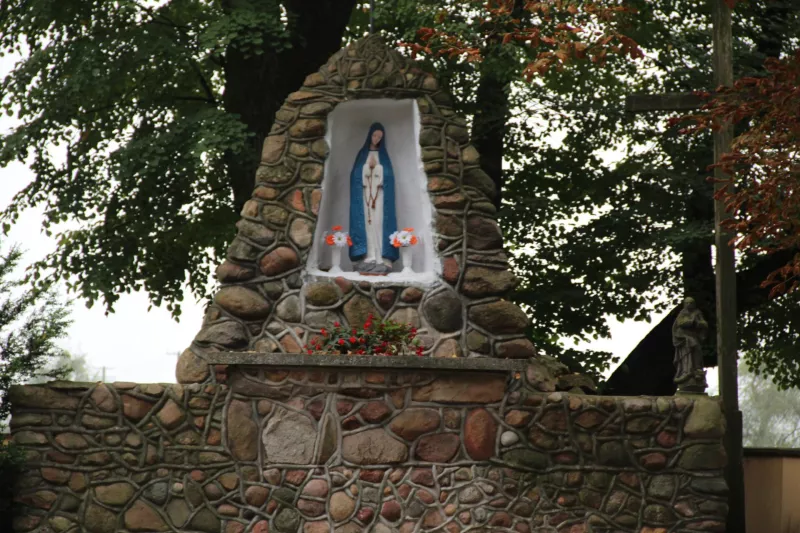

The Church of Saint Stanislaus, Bishop and Martyr is a wooden parish church in the village of Wereszczyn in the gmina of Urszulin, four kilometres from the headquarters of the Polesie National Park. It was built in 1783 on the site of a burned-down church, and the village itself is one of the oldest in the region and the ancestral nest of the Wereszczyński noble family. The poet Mikołaj Rej visited here, and Joseph Wereszczyński, Bishop of Kyiv, originated from here.
Two churches on the same site
The first wooden church in Wereszczyn was built and furnished in 1634 by Zofia Tyszkiewicz, wife of the Voivode of Trakai. It stood until 1783, when it was destroyed by a fire. Only the masonry crypts survived, and they were used when constructing the new church. It was built that same year of 1783 through the efforts of brothers Józef and Seweryn Wereszczyński, consecrated in 1784, and expanded in 1929.
The church consists of a narthex, nave, presbytery, and two sacristies; above the entrance are the choir lofts. The square three-tier tower, flush with the façade, is covered by a hipped roof. The interior decoration is partly baroque and partly neogothic. The parish metric books have been kept since 1811. In the 19th century, a church and an Eastern rite church stood side by side in Wereszczyn: the latter was founded by the landowner Seweryn Wereszczyński.
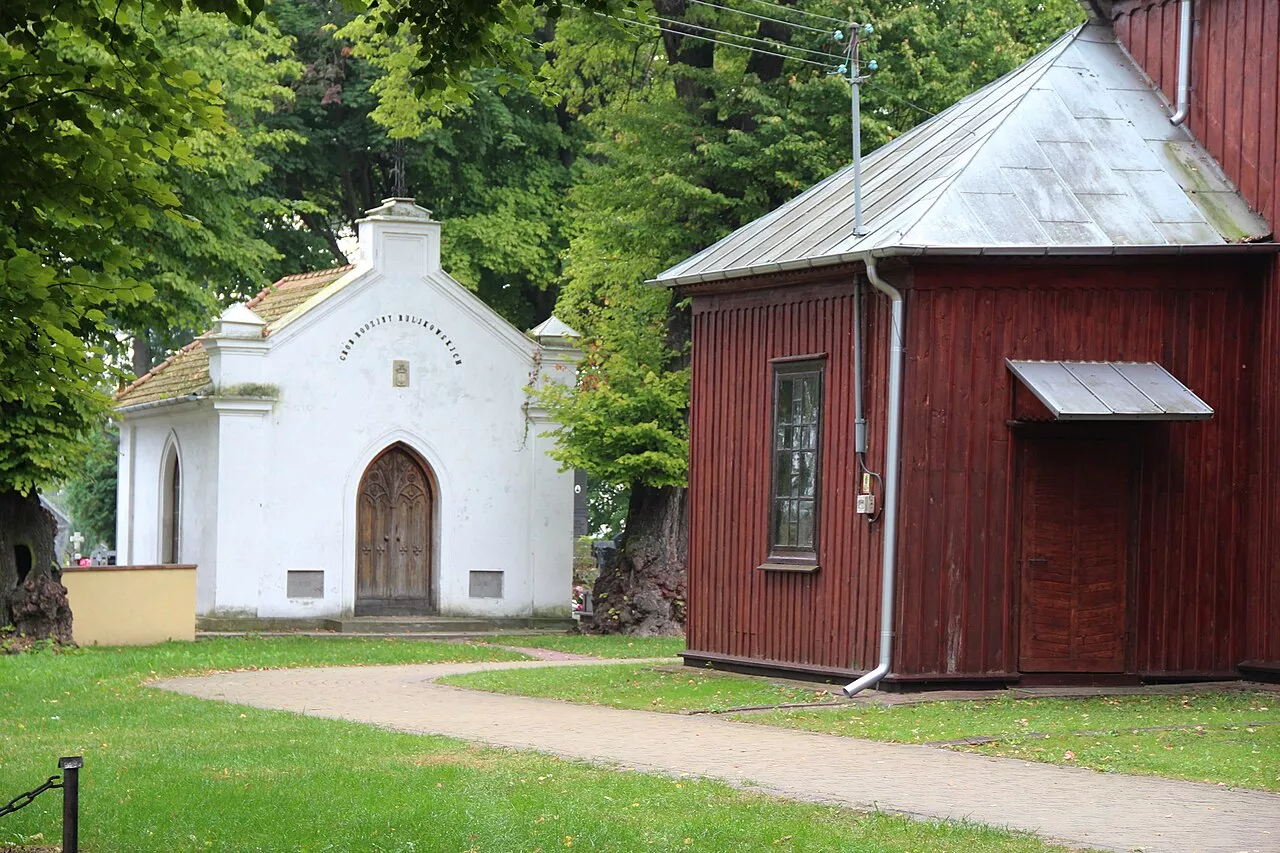
The Wereszczyńskis and Mikołaj Rej
Wereszczyn has been known since the 13th century as an early medieval settlement among swamps: the village stands on an elevation that, according to an old description, resembles an island in the middle of wet lowlands. In the 15th century, Fedir Wereszczyński lived here, and his grandson Józef (1530–1598) became an abbot in Sieciechów and, in 1592, the Catholic Bishop of Kyiv. He wrote political sermons and treatises, in particular about the settlement of the "deserts" of the Ruthenian lands and about a knightly school to defend Ukraine against the Tatars. In his books, Józef also described a feast at his father's house, where Mikołaj Rej, the "father of Polish literature," used to visit: in 1565, Rej held the largest share of land in Wereszczyn, obtained as his wife's dowry.
Cemetery and memory
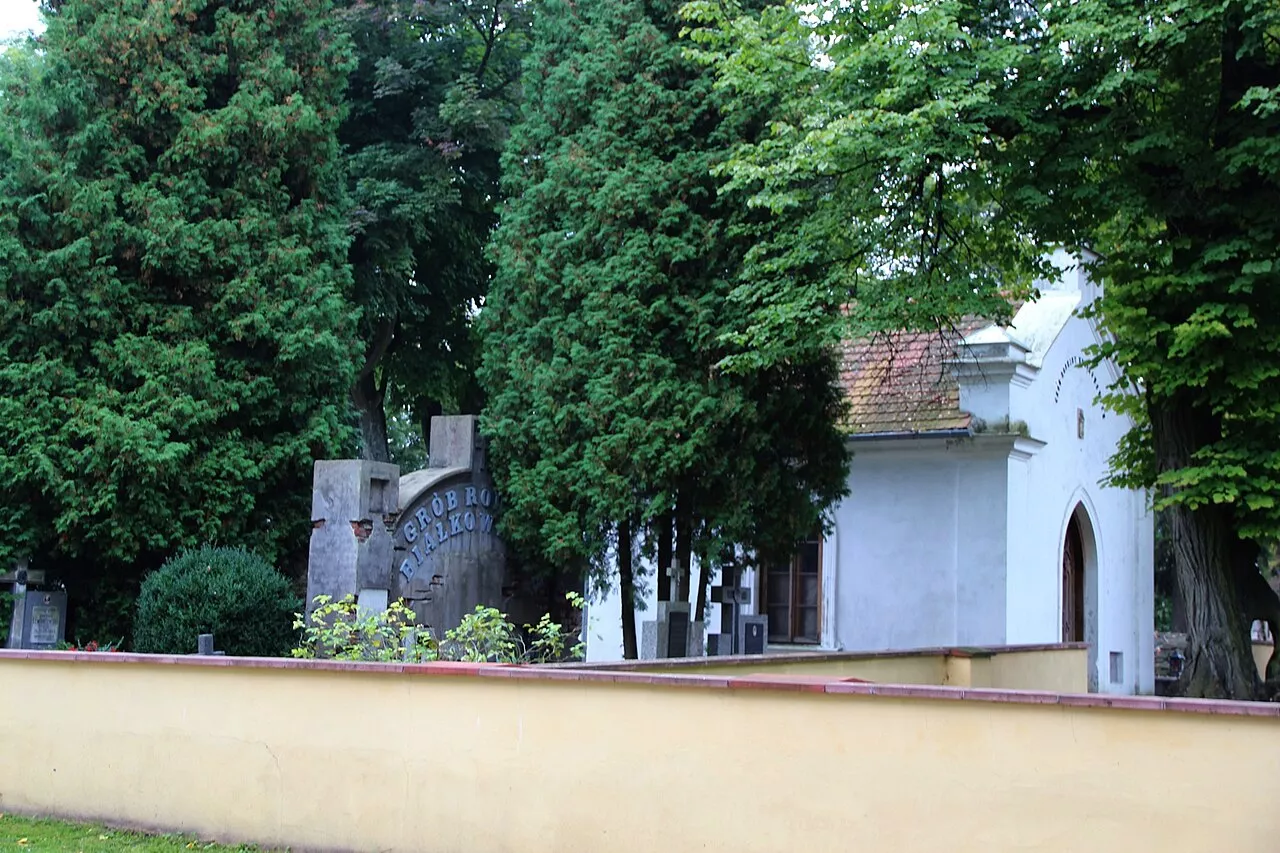
Aniela Dembowska, née Chłędowska, the wife of Edward Dembowski — one of the organizers of the Kraków Uprising of 1846 — is buried in the mid-19th-century parish cemetery. There is also an old Jewish cemetery in Wereszczyn: on 26 May 1942, the Germans shot 300 Jews here. The village also has a monastery of the Congregation of the Sisters of Our Lady of Mercy.
How to get there
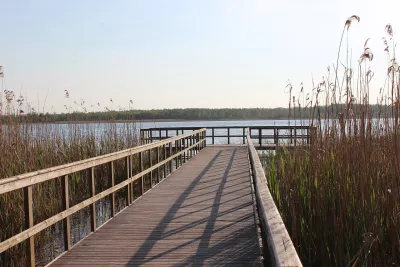
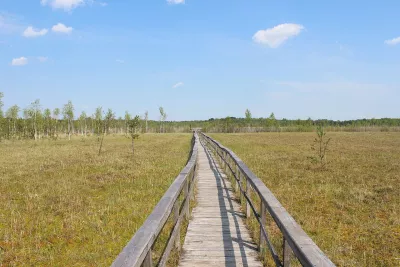
From Urszulin, located on route no. 82 Lublin — Włodawa, Wereszczyn is about 4 km to the south. The same road leads to the "Czahary" trail across the Bubnowskoe Marsh: less than 2 km from Urszulin, one must turn toward Zastawie. The Southern Lake District Trail from Urszulin to Hniszów on the Bug and the blue trail Vytyčno — Urszulin pass through Wereszczyn. Nearby, it is worth seeing the church in Wytyčno, the former church in Stary Brus, and Lake Łukie. The church is a parish church, so it is most reliable to get inside before a service or on Sunday. This is Poland: citizens of Ukraine need a foreign passport.