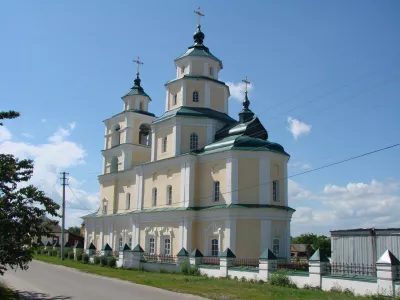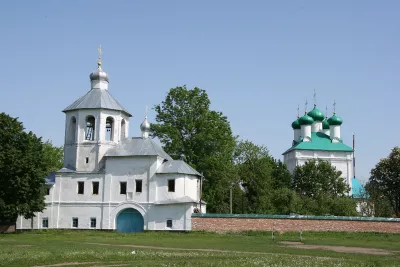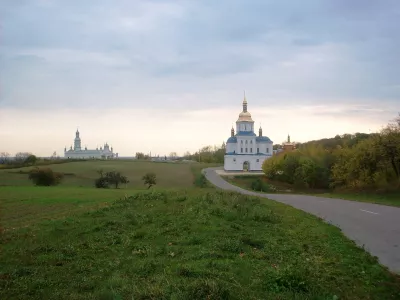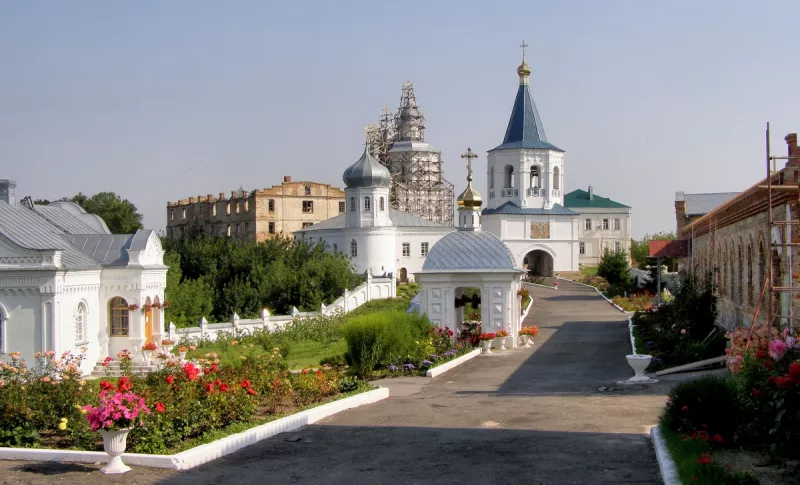
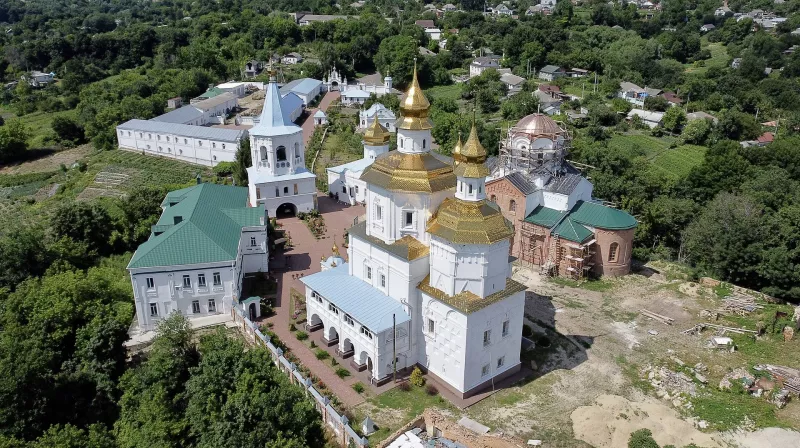
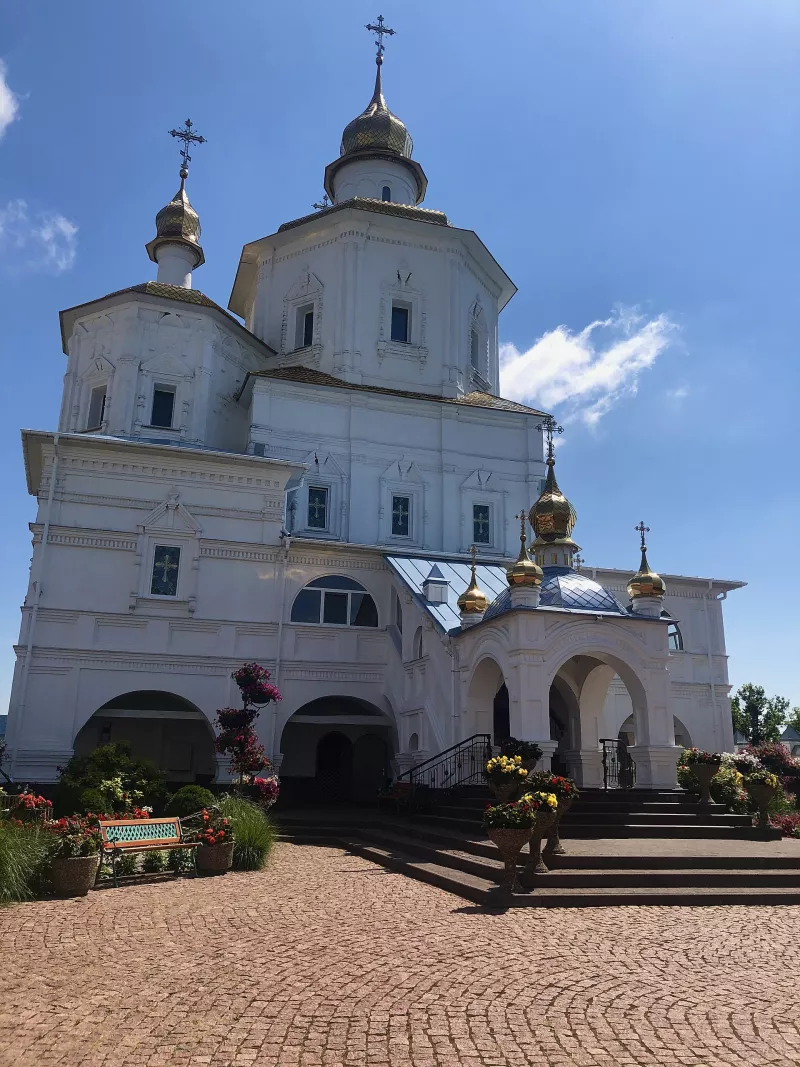
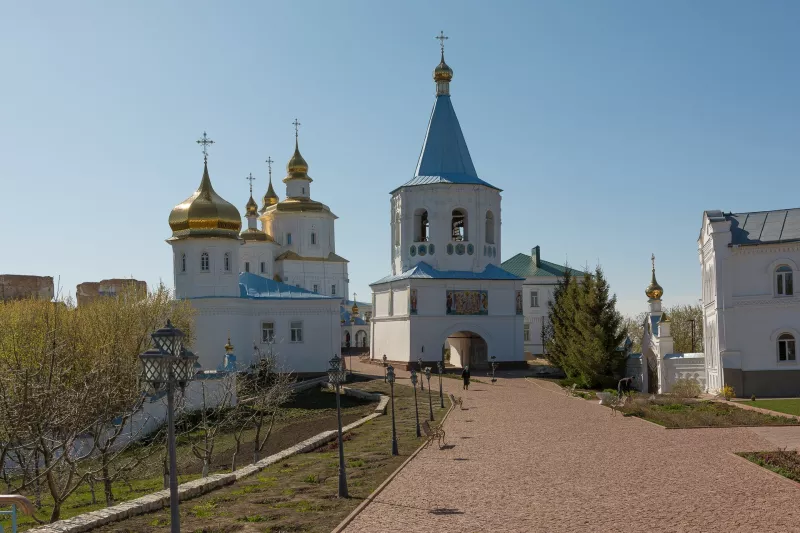
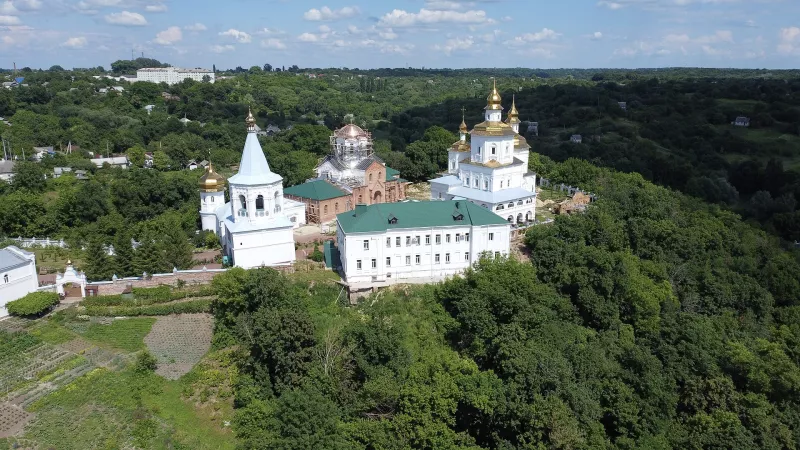

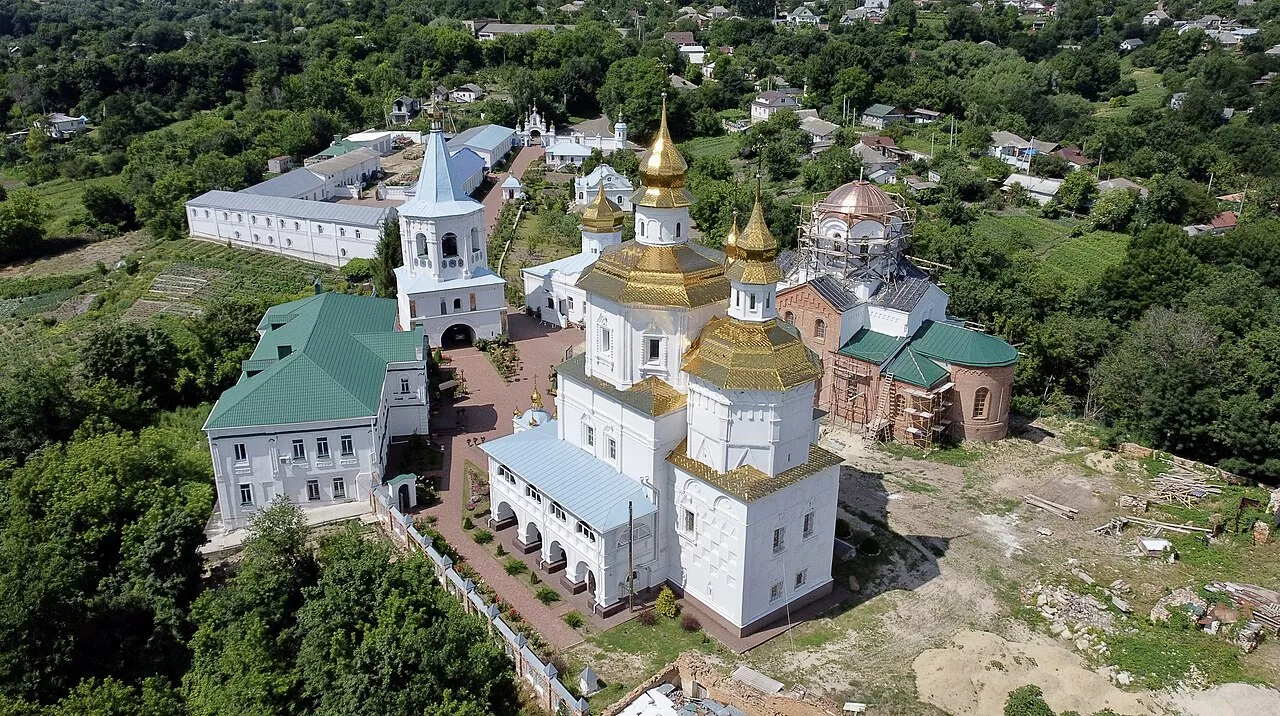
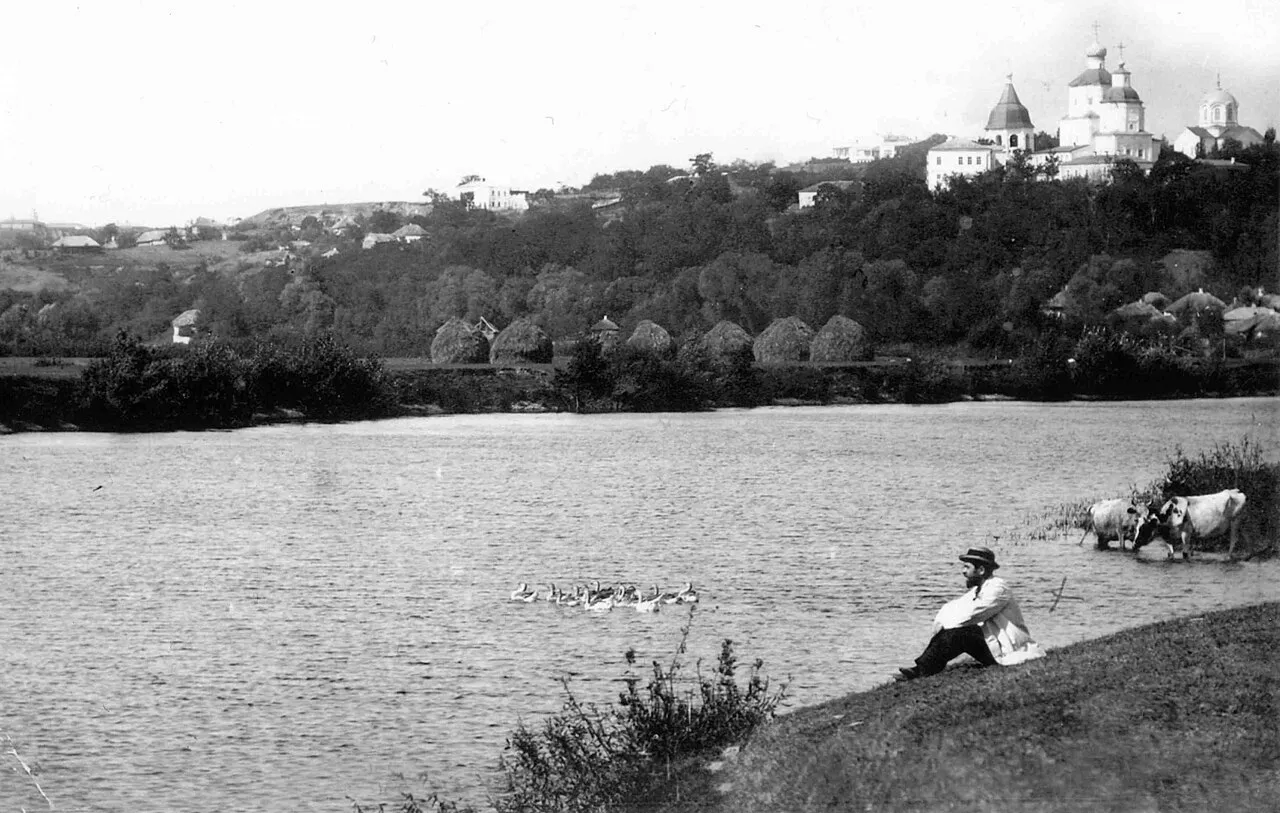
On a high bank of the Seym in Putyvl stands the Movchanskyi (Molchenskyi) Monastery of the Nativity of the Mother of God — a true fortress with walls, towers, and a cathedral, in the altar of which a combat chamber with embrasures was arranged. The cloister, built in the 17th to 19th centuries, remembers False Dmitry I, the Time of Troubles, and long years of decline. The main shrine is the Movchanska Icon of the Mother of God. Today it is a women's monastery of the UOC (MP).
From a hermitage above the marsh to a town fortress
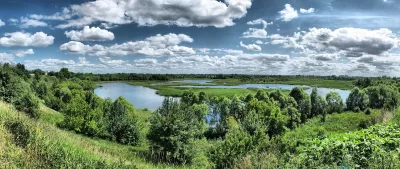
The history of the monastery begins in 1405, 20 versts from Putyvl, near the Molche marsh, where, according to legend, the miraculous icon of the Mother of God appeared. The Movchanska Hermitage arose there. In 1592 it was burned by the Tatars, and the following year the monks moved to Putyvl, where they had several homesteads. In 1602–1604, masonry fortifications were erected here, and the monastery became a defensive outpost where monks and townspeople hid more than once. The restored hermitage above the marsh was later named the Sofroniivska Hermitage.
Residence of False Dmitry
From November 18, 1604 to May 26, 1605, False Dmitry I lived in the monastery, setting out from here for Moscow; at this time, the construction of the Cathedral of the Nativity of the Mother of God was completed. During the Time of Troubles, the cloister burned, and in 1653 it was restored. Later, the monastery, like Putyvl, fell into decay; for centuries, gunpowder and weapons were stored here, and only from the 19th century did it become purely ecclesiastical. Then, on the remains of the fortress walls, the Church of John the Baptist was built in the Russian-Byzantine style.
A cathedral with a combat chamber
The Cathedral of the Nativity of the Mother of God was erected in 1602–1604 in the middle of a cramped fortress courtyard, which is why everything was combined in one building: in the basement and ground floor were storehouses, a refectory, and a kitchen; on the second tier, the cathedral and a warm church; and on the third, above the altar, a combat chamber with embrasures under a tent roof. The altar has the shape of a square tower rather than a semi-circular apse — a rare composition for Ukrainian architecture.
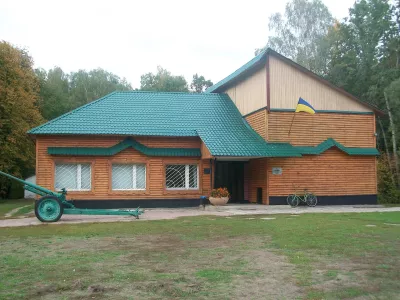
After 1917, the monastery was closed; an orphanage, a vocational school, and a military plant were located here, which brought the heritage site to a dilapidated state. From 1960, restoration continued, in 1977 a historical and cultural reserve was created, and in 1991 the monastery was returned to the church.
How to get there
Address: Putyvl, 1/1 Seymska Street. The monastery is above the Seym in the old part of the town, not far from the Holy Spirit Monastery and the Church of Nicholas the Cossack.
What to consider
The monastery is active — follow the rules of the cloister and the dress code. Putyvl lies about 25 km from the border with Russia, so before the trip, check the security situation and the restrictions of the Sumy RMA.