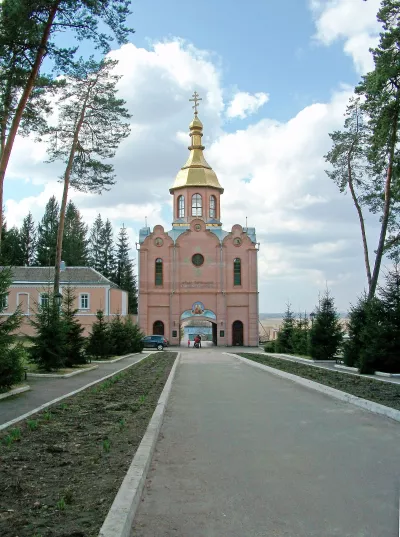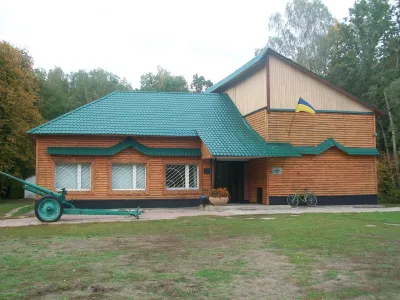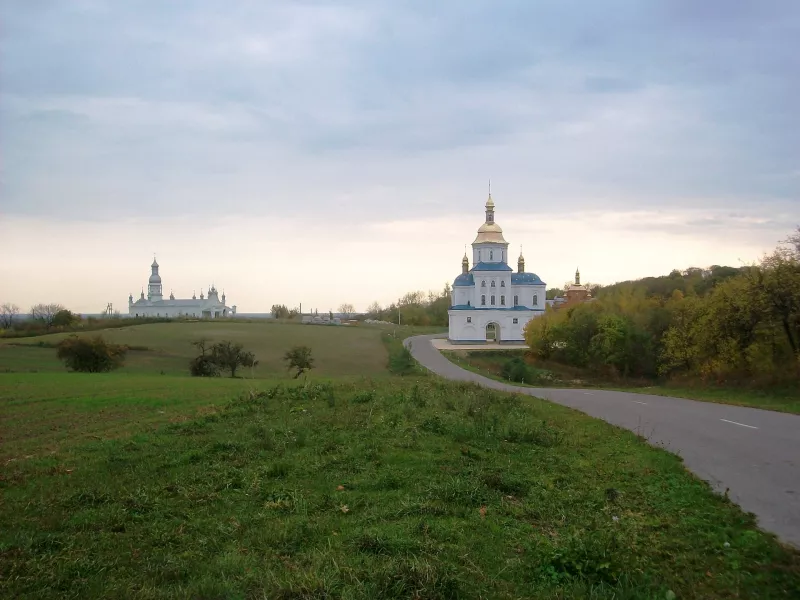
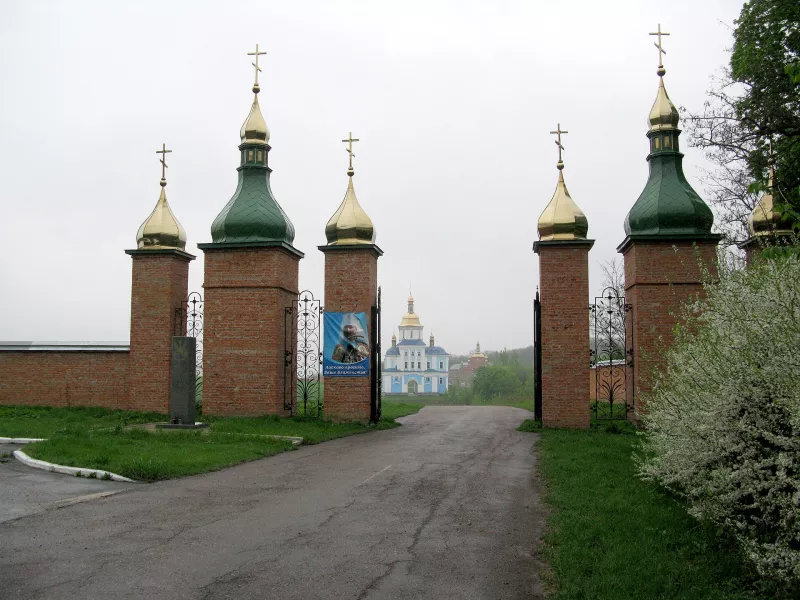
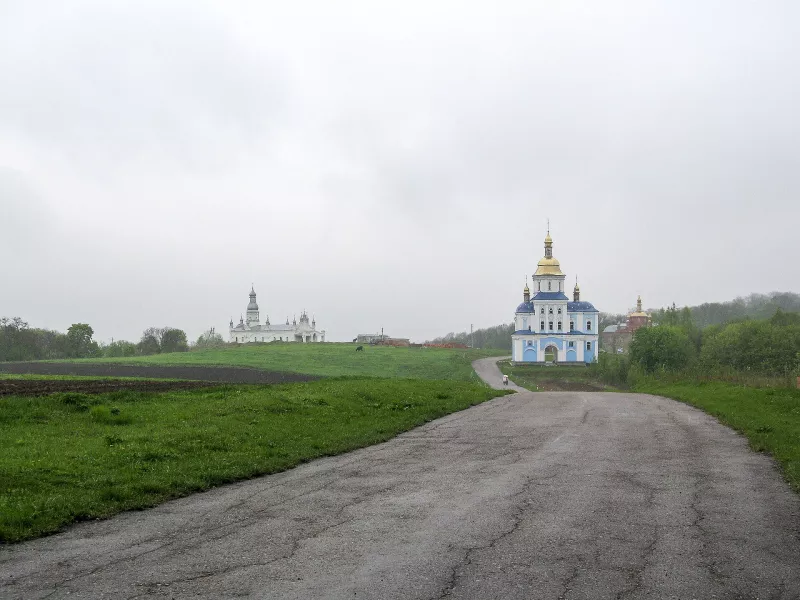
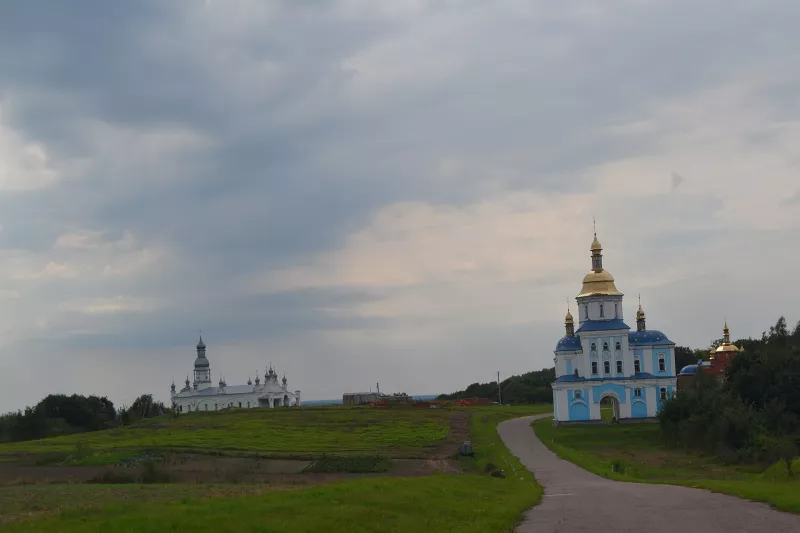

On Chudna Hora near the village of Nova Sloboda, about 20 versts east of Putivl, stands the Sofronii Monastery — one of the oldest abbeys of Sivershchyna. Here, above the Molche marsh, the wonder-working Movchansk Icon of the Mother of God was found in 1405, according to legend. The monastery survived Tatar raids, the heyday of the 17th and 18th centuries, complete destruction under Soviet rule, and revival after 1999. Today it belongs to the UOC (MP).
From caves to wilderness
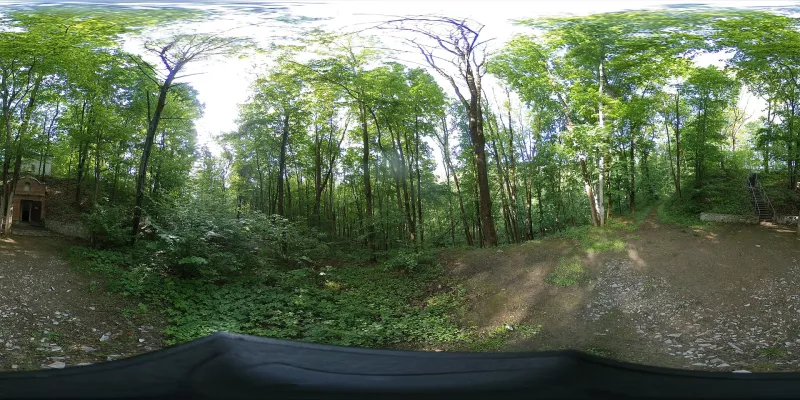
The exact founding date is unknown. Legends link the first monks on Chudna Hora to the 11th–13th centuries, and most likely to the monks of the Kyiv-Pechersk Lavra who fled the Mongol invasion of 1240 and dug caves here. In the 14th century, a monastery already existed here, which was destroyed by nomads. In the autumn of 1405, according to legend, a beekeeper found an icon of the Mother of God on the mountain, and a wooden church was built on this spot — thus the Movchansk Hermitage arose. In 1592 it was burned by Tatars, and the monks moved to Putivl, where they founded the Movchansk Monastery.
Hegumen Sofronii and the heyday
In 1630, the first masonry Church of the Nativity of the Mother of God was built on the mountain, and in 1653 the hermitage was restored as the Lesser Movchansk Monastery. Hegumen Sofronii (in secular life Stefan Batovrin) did the most for it: under him, the abbey became the most famous on the Seim region and received rich estates. After Sofronii's death in 1692, the monastery was officially named the Sofronii Monastery. In 1757, the gate Intercession Church was erected in the Ukrainian Baroque style, and the monastery garden was famous for fruits supplied to the imperial table.
What has survived
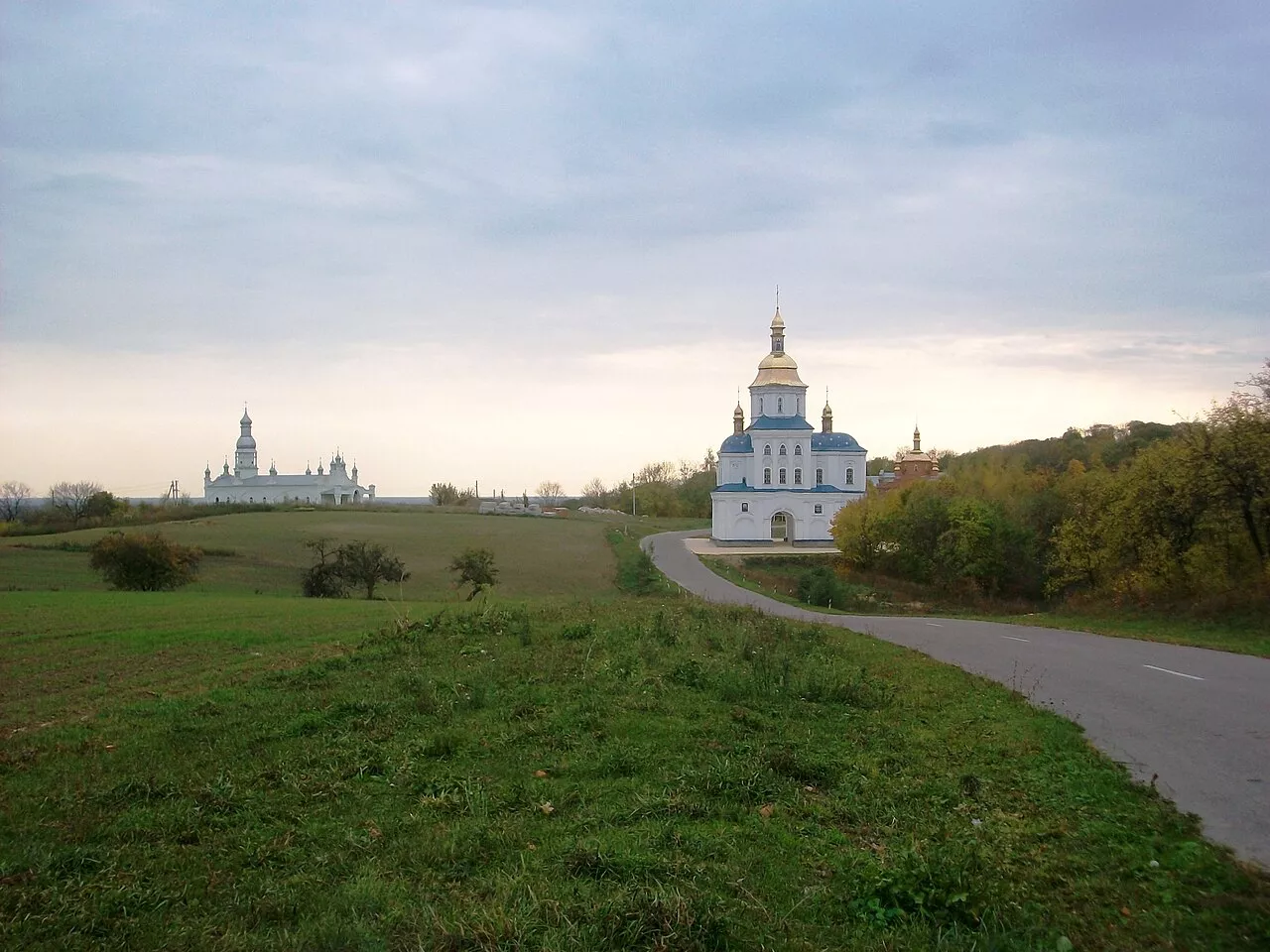
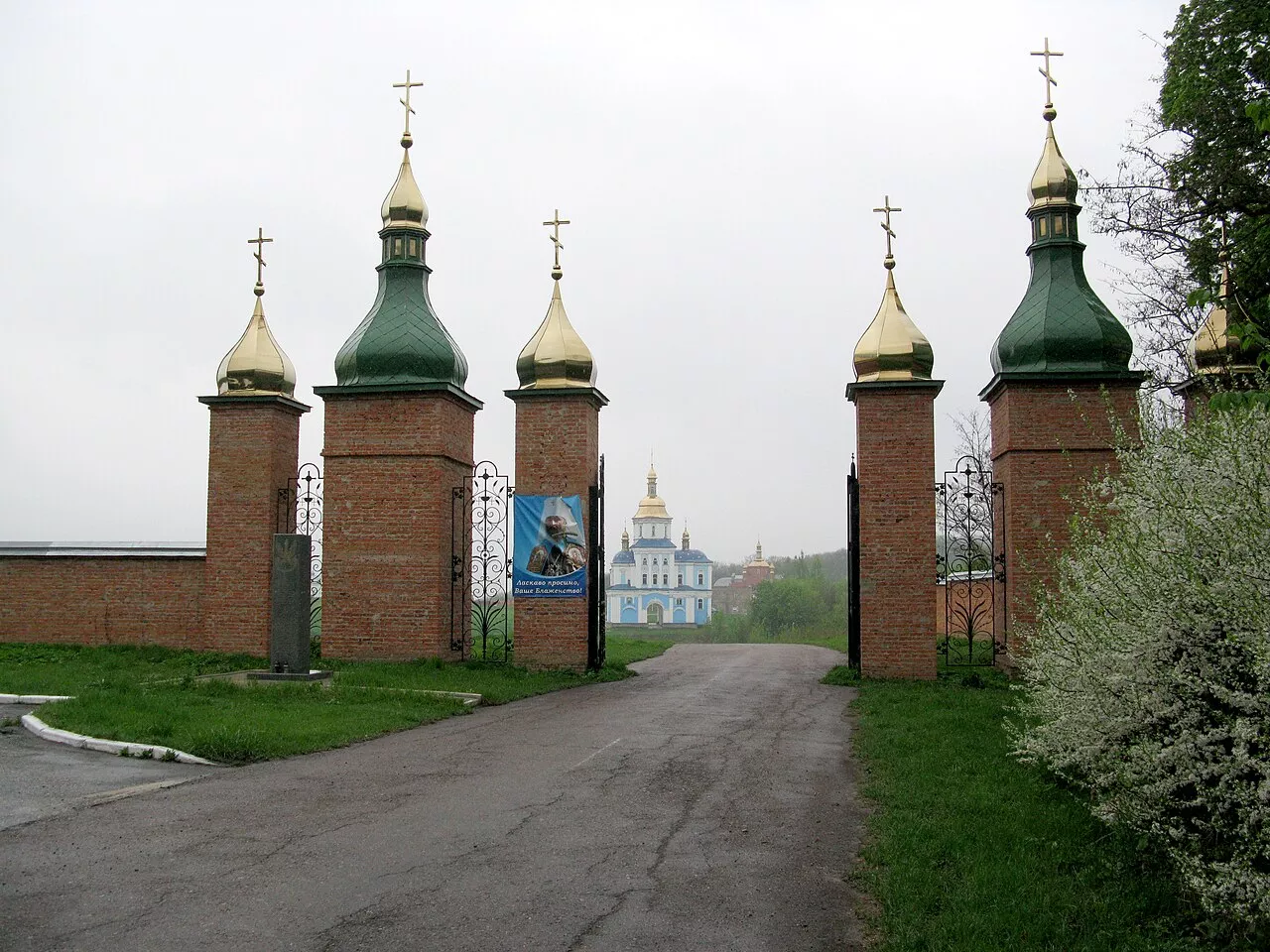
The center of the complex is a two-story, tripartite, three-domed gate Intercession Church with curved cornices and lush window frames. Nearby is the refectory, which from the courtyard appears single-story, and up close — two-story; its two-pillar hall is unique in Ukrainian architecture. There is a former hospital building and an abbot's building with the church of Elijah the Prophet, a chapel of the Mother of God, and little-studied caves that eyewitnesses compare to the caves of the Kyiv-Pechersk Lavra.
Destruction and revival
On February 15, 1919, a revolutionary committee commission arrived at the monastery for treasures. Later, the walls, the 1630 cathedral, and two churches were destroyed, the caves were partially filled in, and the archives were burned. There was an orphanage here, partisans during the war, and after the war the ruins were dismantled for bricks for pigsties, while the Nativity Church was leveled by bulldozers. The revival began in 1999 when monks arrived at the ruins. The cave church and underground passages were restored, and in 2010 the gate church was consecrated. In 2007, the monastery entered the top 100 of the "Seven Wonders of Ukraine" campaign.
How to get there
The monastery is on Chudna Hora near Nova Sloboda in Konotop Raion, about 20 km east of Putivl. Accessible by car.
What to consider
The monastery is active — please follow the rules of the cloister. Putivl region lies close to the border with Russia and is subject to shelling, so before your trip, check the security situation and restrictions of the Sumy RMA.