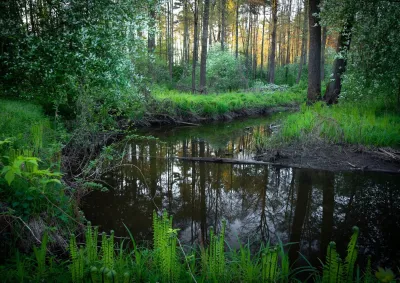
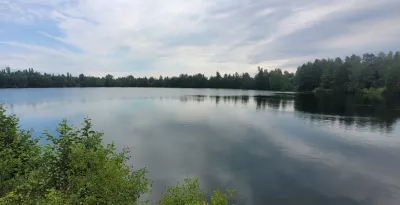
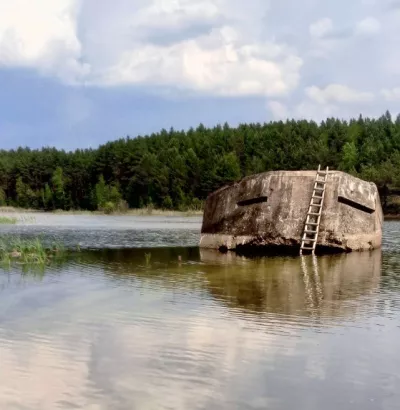
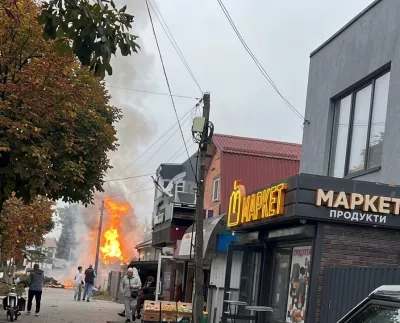
The village of Khodorkiv, located in Zhytomyr Oblast on the banks of the Irpin River, has a much deeper and richer history than it might seem at first glance. In the past, it was a town that played a prominent role in the life of the region, and today Khodorkiv preserves the memory of several important historical epochs.
From ancient ramparts to a town
The first written mentions of Khodorkiv date back to 1471. Already in the 16th century, the settlement held the status of a town, which indicates its economic and administrative significance. In different periods, Khodorkiv was under the rule of the Grand Duchy of Lithuania, the Polish-Lithuanian Commonwealth, and later the Russian Empire. The town was owned by the Tysha-Bykovsky family, in the 18th century by the Nitoslavsky and Rosściszewski families, later by the Radziwills, and from 1850 by the Lewandowski family. Such changes repeatedly influenced the fate of the town, which experienced both periods of development and decline.
The outskirts of Khodorkiv preserve traces of a much more ancient history. Approximately half a kilometer southwest of the village, archaeologists have explored the remains of the Zmiiv Valy (Serpent's Walis) from the 10th and 11th centuries—defensive structures from the times of Kievan Rus. This confirms that the territory was inhabited even back then and had defensive significance.
The birthplace of Hetman Ivan Samoylovych
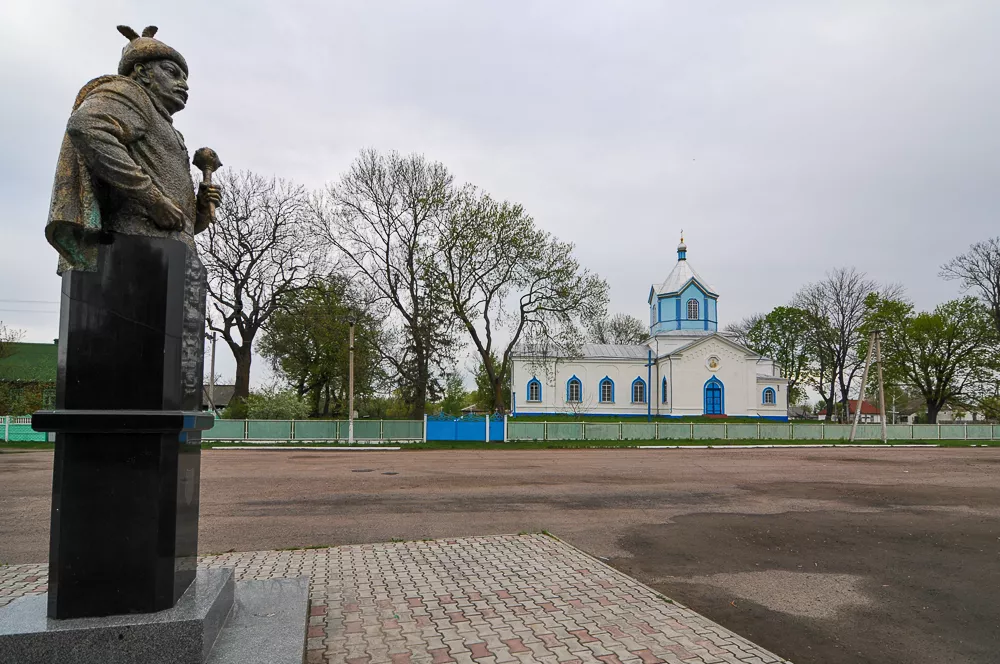
A special place in the history of Khodorkiv is held by the figure of Ivan Samoylovych, one of the most famous hetmans of the Zaporozhian Host. He was born right here, in the family of a local priest. In 1672, Samoylovych headed the Hetmanate of Left-Bank Ukraine, and from 1674 he held the title of hetman of "both sides of the Dnieper." His political career ended tragically: as a result of a conspiracy by part of the Cossack starshyna, which included Ivan Mazepa, and the Moscow favorite Prince Vasily Golitsyn, the hetman was removed from power in 1687 and exiled to Siberia, where he died. Today, a monument to the hetman has been erected in Khodorkiv.
The temples of Khodorkiv
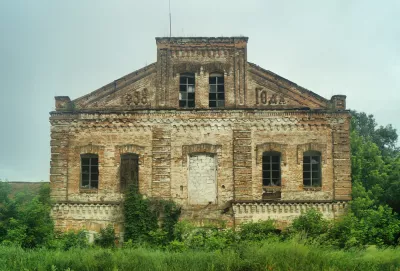
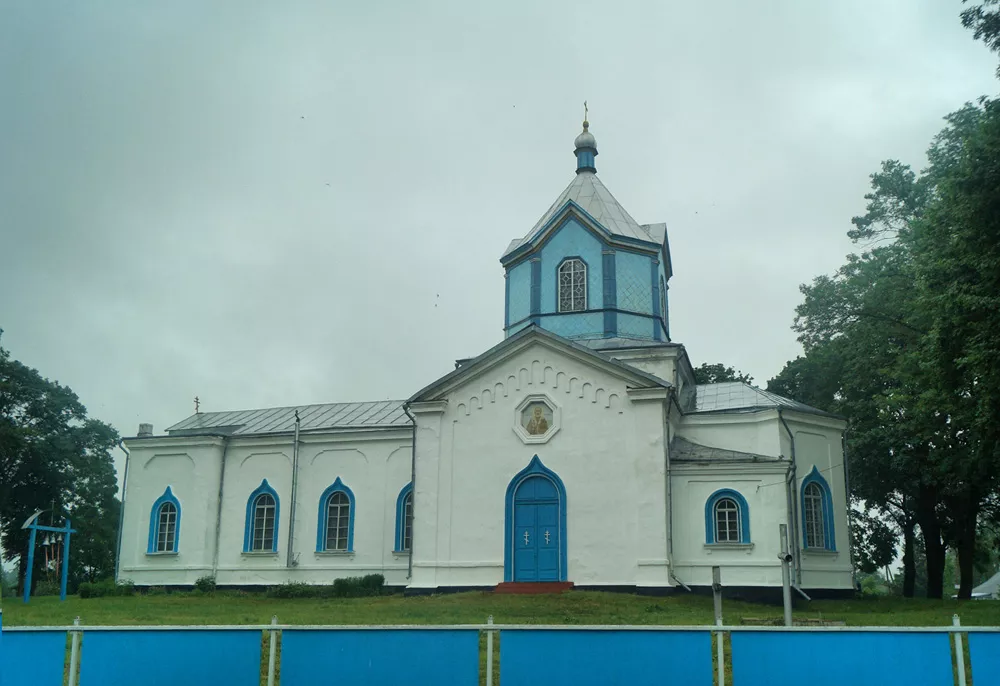
In the 18th century, Khodorkiv was a prominent religious center: the parish church of Saint Stanislaus, consecrated in 1753, a Dominican monastery, and a Capuchin monastery with the church of Saint Cajetan operated here. The main landmark that travelers see today is the masonry Church of the Nativity of the Blessed Virgin Mary, which began to be built in 1870 on the site of the ruins of the Dominican monastery.
Khodorkiv today
Throughout the 19th and 20th centuries, Khodorkiv gradually lost its town status, but remained an important local center. A network of buildings characteristic of ancient settlements has been preserved here, as well as the memory of past centuries, recorded in local toponyms and family legends. Wars, revolutions, and Soviet policy caused significant damage to the historical heritage of the village, as well as to many other settlements in Right-Bank Ukraine.
Today, Khodorkiv is a peaceful village of the Popilnia hromada that lives alongside its own rich history. Its past—from Old Rus fortifications to the hetman era—makes this settlement an important point on the historical map of Zhytomyr region.
The text and photographs were prepared by Roman Malenkov and Serhii Shcherbiy.