
The Zhytomyr region has lived with the railway for more than a century and a half — and in that time it has managed not only to build a dense network of tracks but also to lose part of it. Here there are main lines more than 125 years old; there are the narrow-gauge railways of the sugar barons that vanished without a trace into the fields; there are neglected dead-end branches the trains no longer travel; and there is a line the locals defended from dismantling with a bonfire on the rails. This article is an honest guide to the region's railway history: only what could be confirmed from reliable sources, with no legends passed off as fact.
How the railway came to the Zhytomyr region
First, the broad picture, to understand where it all came from. The railway appeared in the region as part of the Kyiv–Brest link: in 1870 a station was founded in Berdychiv, and in 1873 the Berdychiv–Brest section came into service, connecting Right-Bank Ukraine with the Polish lands. This was the region's first major railway junction.
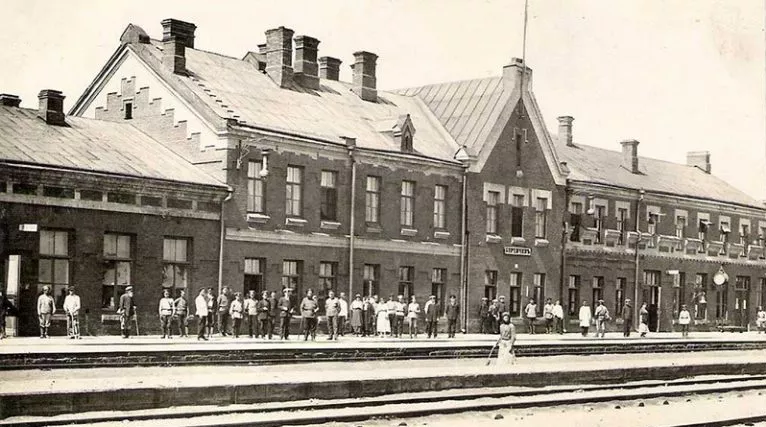
Berdychiv station
An important detail of that era: the Polissian terrain — boggy and forested — was difficult to build on, requiring canals to be dug, ravines to be filled with sand and forest to be cleared. Because of a shortage of brick and sand but an abundance of timber, the local stations were built mostly of wood. What's more, the peasants themselves resisted the construction: in places they pulled up the tracks and unscrewed the parts, believing the railway "brought plague" and "drew the milk out of cows." So part of the work was done by the hands of prisoners and conscript soldiers.
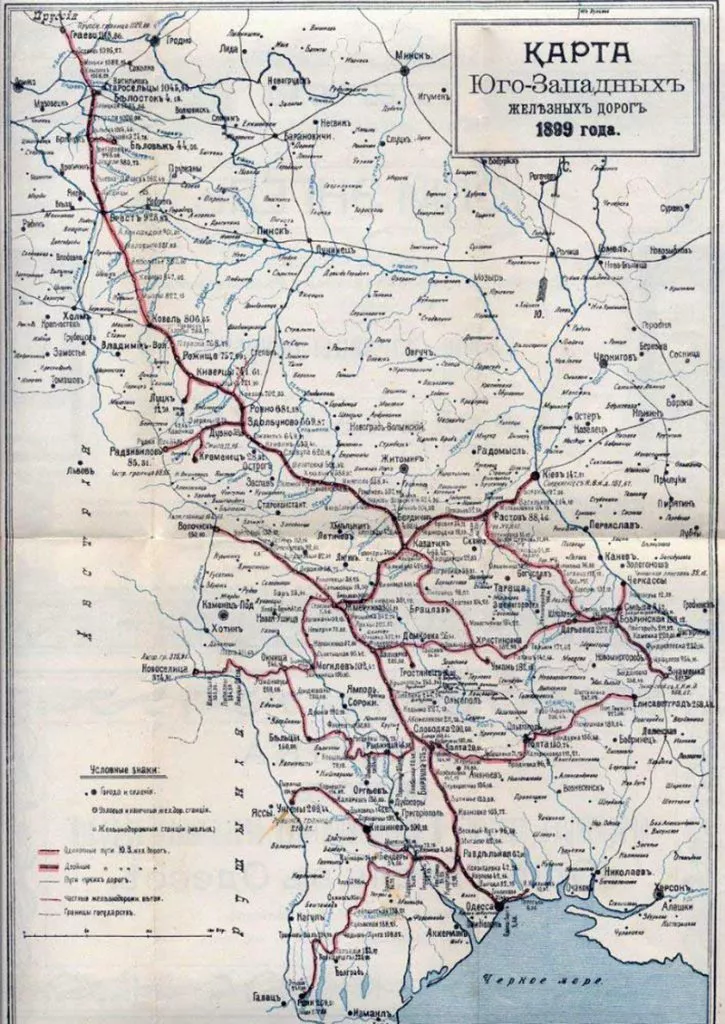
The next junction took shape at the turn of the century, thanks to the military. In 1899 the imperial government decided to lay a direct strategic line from Kyiv to Kovel via Teteriv, Korosten, Bilokorovychi, Olevsk and Sarny. It was built in several places at once, and because of a delay with the bridge over the Uzh, passenger traffic opened only in the spring of 1902. Thus Korosten became the key railway gateway to the north of the region.
Zhytomyr's first railway: a narrow gauge that became broad
The regional capital itself got its railway later than Berdychiv — and at first a narrow one. The first link connecting Zhytomyr with the major junction at Berdychiv appeared in 1896 and was narrow-gauge (about 53 km). That same year, 1896, Zhytomyr station opened with its first wooden station building.
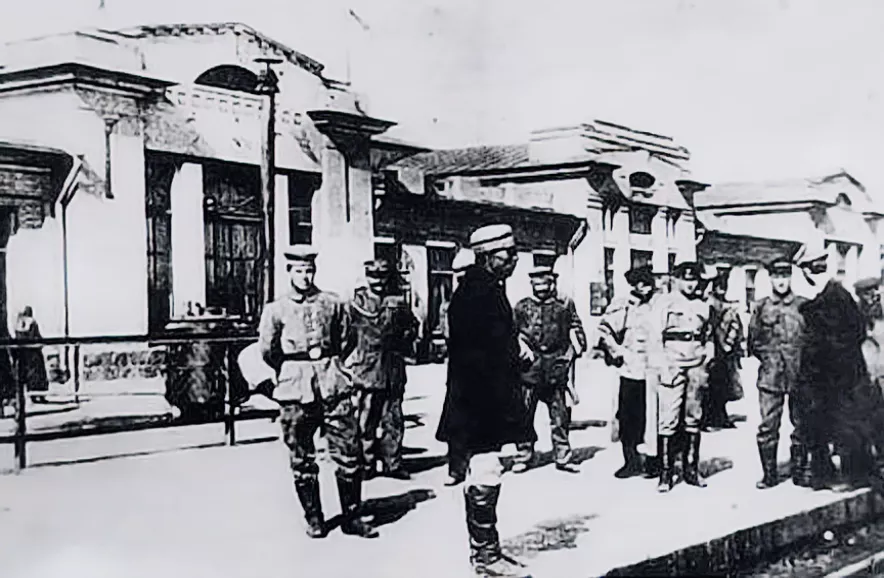
During the First World War, in 1915, the Zhytomyr–Berdychiv section was re-laid to broad gauge, and along with the new Berdychiv–Zhytomyr–Korosten line, a new stone station was built in Zhytomyr that served almost unchanged until 1971. So when you ride the modern Zhytomyr–Berdychiv train, you are in effect travelling a route more than 125 years old. This is that rare case where an old line did not vanish but simply changed beyond recognition.
The Tereshchenkos' Chervone narrow-gauge line: sugar, spirits and the "Germans"
The region's most colourful railway history — and at the same time the most completely lost — is tied to the settlement of Chervone (Berdychiv district) and the family of sugar magnates, the Tereshchenkos. In the late 1860s, Mykola Tereshchenko bought a neo-Gothic estate and vast lands here from the widow of Count Hrocholski, and in time a whole industrial empire grew up around it — a sugar refinery and a distillery.
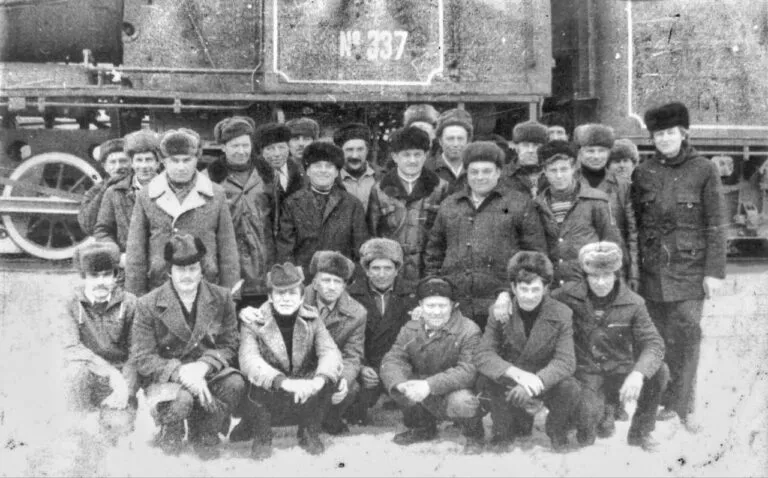
The railway branch's crew and depot workers
To carry top-grade sugar and spirits to market, horse-drawn transport was not enough — and in 1914 a narrow-gauge railway was laid from Chervone to Berdychiv with the involvement of German specialists. Details of this line survive in the memories of Chervone's old-timers. The first steam engines were German — for which the drivers nicknamed them the "Germans"; later Soviet locomotives took to the track. Workers and management were carried on handcars, including hand-pumped "Swedish" ones. In 1963–65, when buses to Berdychiv still did not run, one or two passenger carriages holding up to 30 people were coupled to the train, and the whole journey took about an hour; a bus service appeared only in 1968–69.
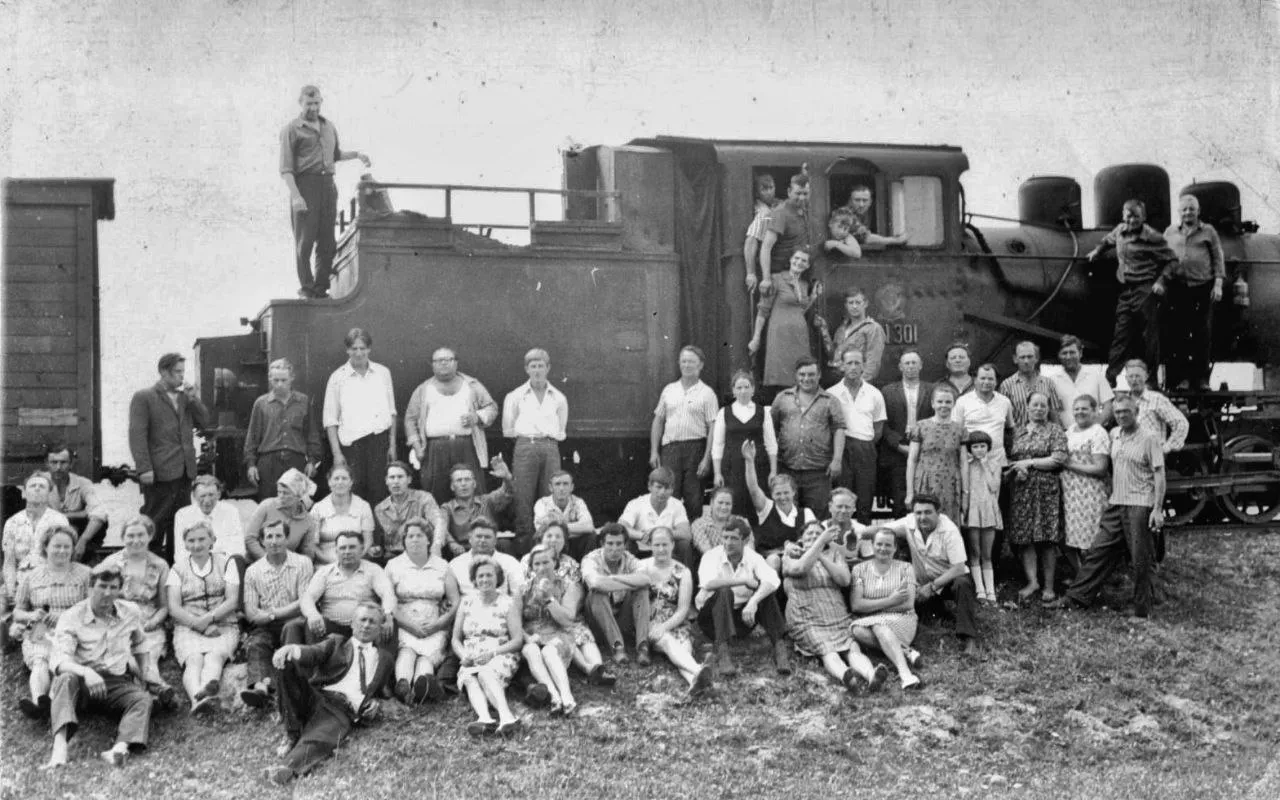
The railway workers' collective setting off on a May outing
The system also had its "safety magic" — the token: at the junction near Polovyi Tik, the driver received a ring about 40 cm in diameter with a miner's lamp, which served as a pass for the section and a guarantee that the oncoming track was clear. On reaching the broad-gauge station of Kornilivka, the train transferred the spirits and unloaded the sugar, then returned with the empty carriages and exchanged the token.
A separate branch led to Kodnia, and it has a tragic date of birth: the narrow-gauge line from Polovyi Tik to Kodnia (about 30 km) was built during the Holodomor of 1932–33. Unlike the "export" Berdychiv direction, the Kodnia line carried beets for processing to Chervone. A whole dynasty of the Petrovskyi family — Frants, Mykhailo, Mykola, Volodymyr — worked here as drivers, so for Chervone the railway was a family affair across generations.
The end came in independent Ukraine: the Kodnia direction was closed soon after the collapse of the USSR (the rails were sold to mines — their gauge suited mine workings), the Berdychiv line lasted until 2002 and was dismantled in the spring of 2003, and internal traffic between the plants ceased in 2004. Today the sugar refinery hauls beets and produce by truck, and of the railway only embankments and memory remain.
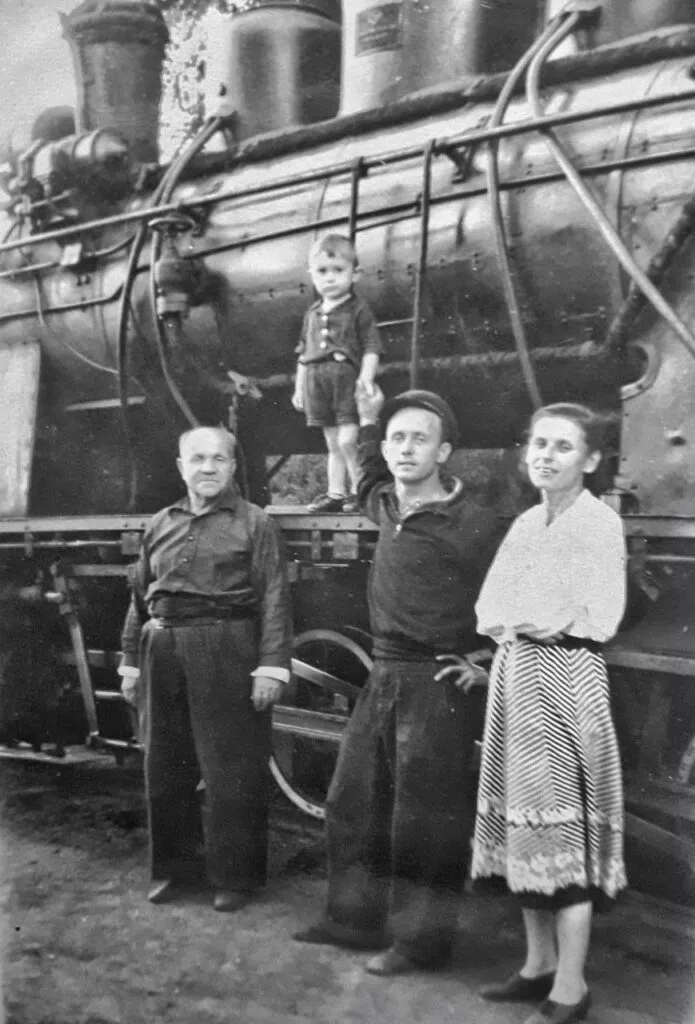
Mykola Frantsovych Petrovskyi (junior driver) and Volodymyr Frantsovych Petrovskyi (as a child), 1957
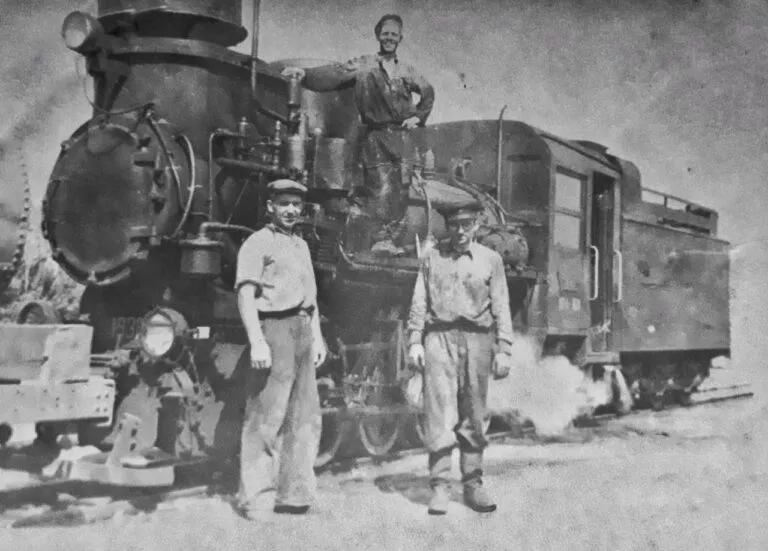
Photographs — Olena Volodymyrivna Tsarenko
What to see in Chervone today
The main reason to stop in Chervone is not the traces of the line but the neo-Gothic Hrocholski–Tereshchenko palace, which still rises with its two towers above the beet fields. It was built by the Polish nobleman Adolf Hrocholski (around 1861), and after the estate was sold, rebuilt by the Tereshchenkos; above the main entrance their coat of arms still survives, with the motto "Striving for the public good." Later Fedir Tereshchenko the younger even set up an aviation workshop in the palace — a rare touch for a rural estate.
The palace's condition is perilous: the building belongs to the women's Nativity of Christ convent, no restoration is under way, and with each passing year the landmark decays further. But it is precisely this "preserved ruin" among the fields that makes Chervone one of the Zhytomyr region's most atmospheric locations — and a logical finale to a route tracing the Tereshchenkos' narrow-gauge line.
Zhytomyr–Korostyshiv: a dead-end branch killed by coal's decline and COVID-19
Another line in decline is the Zhytomyr–Korostyshiv railway. It was laid comparatively late, in 1957, and not without reason: in 1946 a brown-coal deposit was opened near Korostyshiv, and the railway was meant to serve its extraction. Korostyshiv station is a dead end, on the western edge of the town near the village of Mamryn.
When the coal industry faded, the line was left barely used. Until March 2020, a suburban diesel train, the Zhytomyr–Korostyshiv, still ran along it — twice a week, on Thursdays and Saturdays — but it was cancelled because of the COVID-19 pandemic, and passenger traffic effectively died out. It is a telling example of a "single-resource railway": when the reason it was built disappears, the line slowly turns into a ghost.
Bilokorovychi–Vozliakove: the railway the people defended
This is perhaps the region's most dramatic railway story — and, unlike the rest, it is about a fight for a line, not its quiet disappearance.
It concerns a barely-used broad-gauge branch 21 km long, between Bilokorovychi station (Olevsk district) and Vozliakove (Ovruch district). It runs through remote Polissian old-growth forest and connects a dozen and a half lost villages — Voloshyno, Bobrychi, Krasnosilka, Moshchanytsia and others — to the outside world, villages with practically no proper roads, "only directions." Another reason for the line's value is the granite reserves surveyed nearby. At one time suburban traffic here was cancelled as unprofitable, but the former authorities did not dare to dismantle it.
The new ones did dare, choosing the longest night of the year, from 21 to 22 December 2014, while the country was consumed by war, and without obtaining the consent of the local communities. But the villagers found out. Before dawn on 22 December, from five in the morning, about half a hundred men and women from the villages of Zherevtsi, Chervona Voloka and others came out to the crossing at the 10th kilometre near Rudnia-Zherevetska. Recalling the experience of the Maidan, they brought tyres, lit a bonfire on the track and settled in to wait. When a diesel locomotive with a crane for dismantling arrived at around nine, the determined group forced the railway workers to stop.
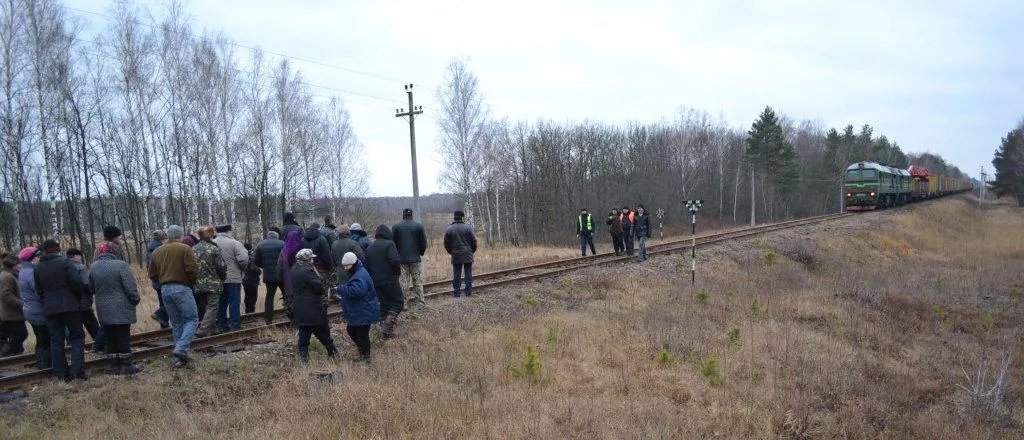
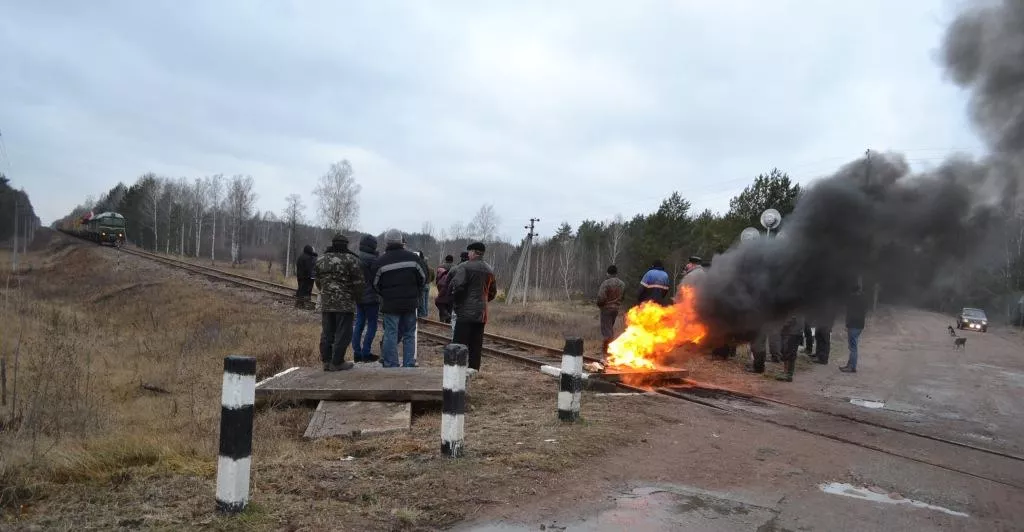
Difficult negotiations began. The community's position was defended by the Chervona Voloka village head, Mykhailo Kostiuk, who demanded that local opinion be taken into account, as the law requires. One resident, Nadiia Drapei from Zapillia, told the railway workers that her late mother had helped build this very railway back in 1936, carrying gravel onto the embankment — and that no one would allow outsiders to take apart what they had not built. Deputies and the district leadership got involved, and in the end the demolition train was made to withdraw to Bilokorovychi, while the villagers organised round-the-clock watches at the crossing. The question of preserving the branch (which had once been built partly for defence needs) was referred to the relevant committee of the Verkhovna Rada.
This story is a telling example of how a railway in the Polissian backwoods becomes not transport but a matter of the communities' survival, and even an object of civil resistance. Bilokorovychi station itself is a historic junction from the early 20th century, on the Korosten–Olevsk–Sarny line with a branch to Ovruch, so the district is interesting not only for its abandoned arteries but for its still-working ones.
Forest and peat narrow-gauge lines of Polissia: a vanished layer
A separate, almost erased layer of the region's railway history is the 750 mm narrow-gauge tracks on which, for decades, Polissia hauled out timber and peat. This was a mass phenomenon of the Soviet era: the Polissian bogs and forest tracts could not be worked without such transport. With the economic crisis of the 1990s and falling profitability, most such lines were pulled up and the metal handed in as scrap.
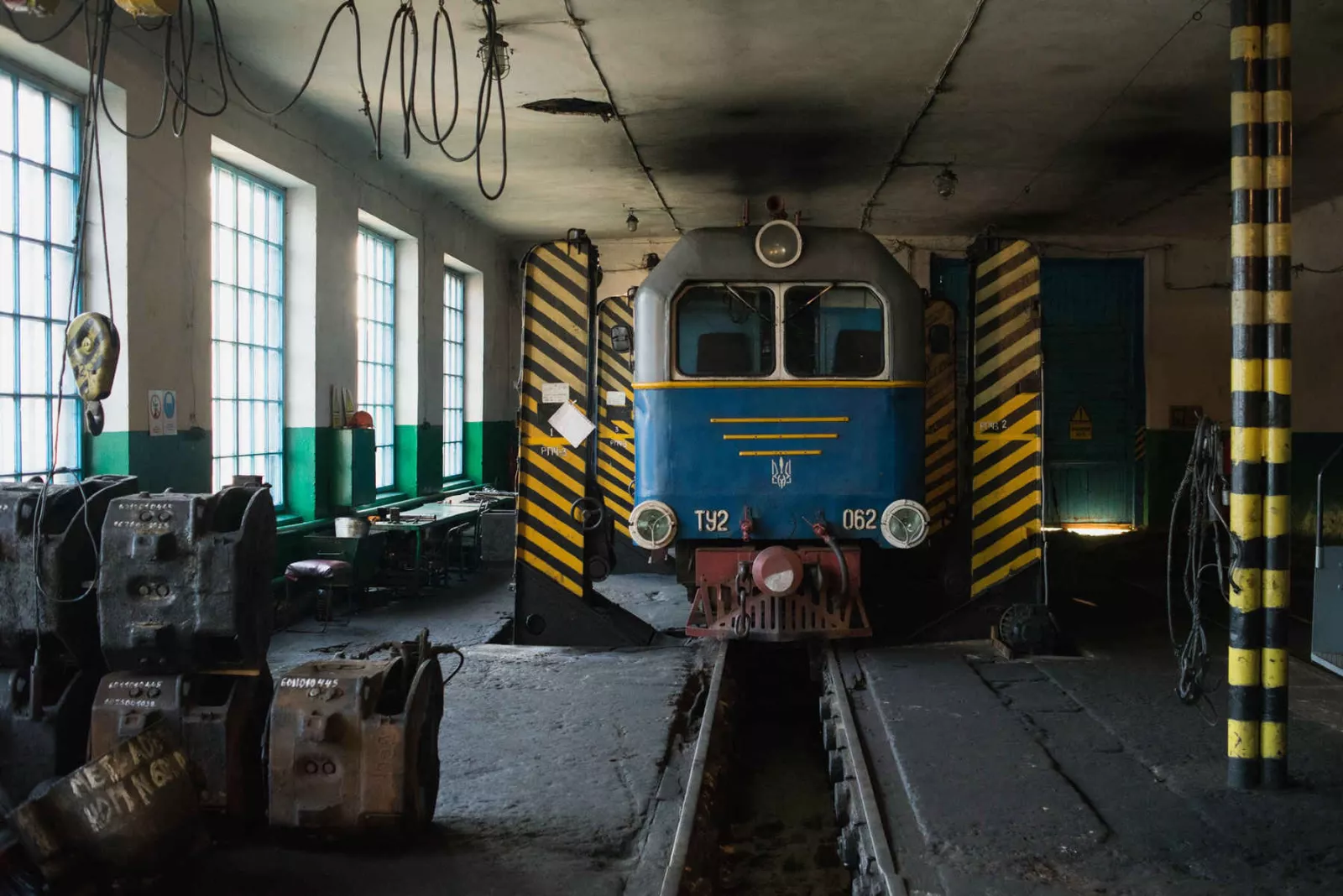
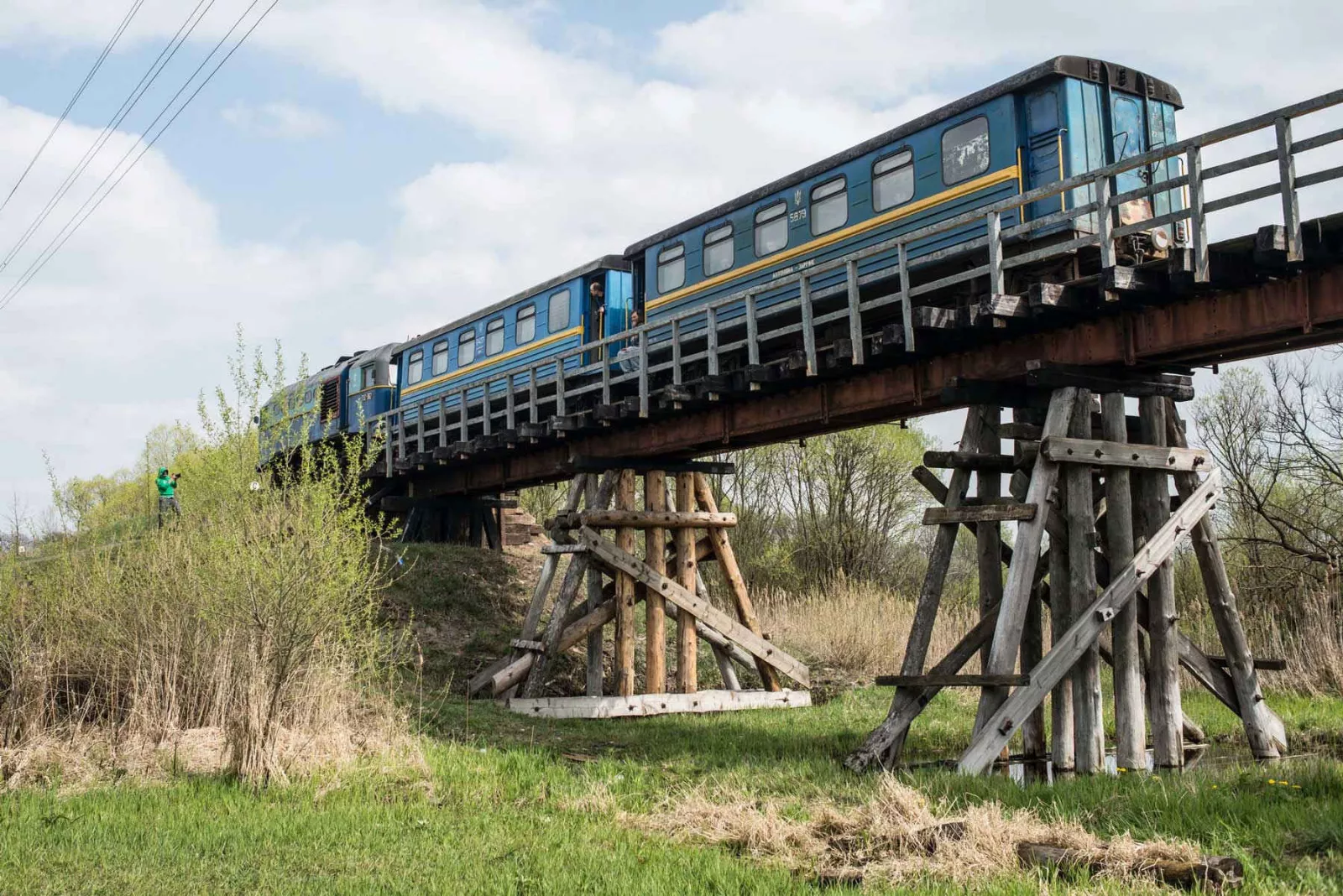
The Antonivka–Zarichne narrow-gauge railway, which locals affectionately call the "little train," "the narrow one," "the Polissian tram" or the "cuckoo," has for more than 115 years remained an inseparable part of Polissian life.
At first the line was laid to carry out timber, and later peat too began to be transported along it. During the First World War the narrow gauge took on major strategic importance. Through the hard-to-cross Polissian bogs it was one of the few routes that allowed troops, ammunition and equipment to be moved quickly. That is precisely why fierce battles were fought for control of it.
During the Second World War the railway suffered considerable destruction. The line's revival began only decades later. In the 1970s–1980s it was substantially modernised: steam engines gave way to diesel locomotives, the passenger carriages were renewed, a new locomotive depot was built and the infrastructure was improved. It was then that the narrow gauge took on its modern appearance and went on connecting Polissian settlements, providing a transport link between the Volodymyrets and Zarichne districts.
The specific routes of most of these narrow-gauge lines in the Zhytomyr region are poorly documented in open sources and live rather in the memories of old-timers. So the scale of the phenomenon can be stated with confidence, but the exact lines — for the most part, cannot. Today what remains of them are the characteristic traces hunted by seekers of industrial antiquity: level embankments that have turned into forest roads, overgrown clearings, rotted bridges over forest rivers and rusted "crutches" (railway spikes) in the boggy ground. This is more a field for separate local-history research than a subject for confident assertions.
Practical tips for the "railway" traveller
The most accessible location is Chervone with the Tereshchenko palace: it is easy to reach and there is something to see even without hunting for embankments.
Dead-end branches (like Zhytomyr–Korostyshiv) are interesting for the station itself and its history, but regular passenger traffic may no longer exist — plan it as a car trip.
Safety: abandoned bridges and embankments can be ruined and unreliable; you shouldn't walk on old trestles.
Perilous buildings (the palace in Chervone) should be viewed only from the outside — the walls and floors of such landmarks are dangerous.
Respect for working tracks: branches like Bilokorovychi–Vozliakove may still be alive; do not walk on tracks where trains run.
Wartime: restrictions apply near railway infrastructure and in the border areas of Polissia — plan your trip with the security situation in mind.
FAQ
When did the railway appear in the Zhytomyr region? The first major junction arose in Berdychiv: the station was founded in 1870, and in 1873 the Berdychiv–Brest section came into service.
What was the first railway in Zhytomyr? The narrow-gauge Zhytomyr–Berdychiv line, about 53 km long, opened in 1896; Zhytomyr station opened the same year.
What became of it? In 1915, during the First World War, the section was re-laid to broad gauge; it still works today as an ordinary railway.
Who built the narrow-gauge line in Chervone? It was laid in 1914 in the time of the Tereshchenko sugar producers, to carry sugar and spirits to Berdychiv, with the involvement of German specialists.
Why were the steam engines called "Germans"? Because the first locomotives were German-made; later Soviet steam engines took to the track.
When was the branch to Kodnia built? During the Holodomor of 1932–33; the route was about 30 km long and carried beets to Chervone.
When was the Chervone narrow-gauge line closed? The Kodnia direction — soon after the collapse of the USSR; the Berdychiv line lasted until 2002 and was dismantled in 2003, and traffic between the plants ceased in 2004.
What can you see in Chervone now? The neo-Gothic Hrocholski–Tereshchenko palace with its two towers and the Tereshchenko coat of arms over the entrance; the building is derelict and belongs to a women's convent.
What is the Zhytomyr–Korostyshiv line? A dead-end railway from 1957, built to carry brown coal; a passenger diesel train ran until March 2020, when service was cancelled because of the pandemic.