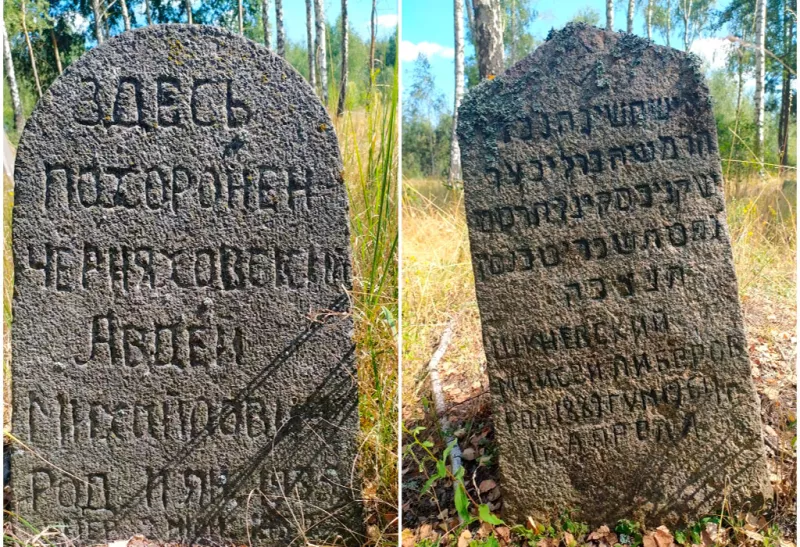

Today, Chopovychi is a quiet settlement in the Polissia region, best known for its Orthodox monastery complex. On January 26, 2024, it lost its former status as an urban-type settlement when the law abolishing this category came into force. According to a 2022 estimate, the settlement had a population of 1,770. This figure refers to Chopovychi itself. In the nineteenth and early twentieth centuries, Chopovychi was the centre of a volost (an administrative district), so historical population statistics often cover a much larger area, including surrounding villages.
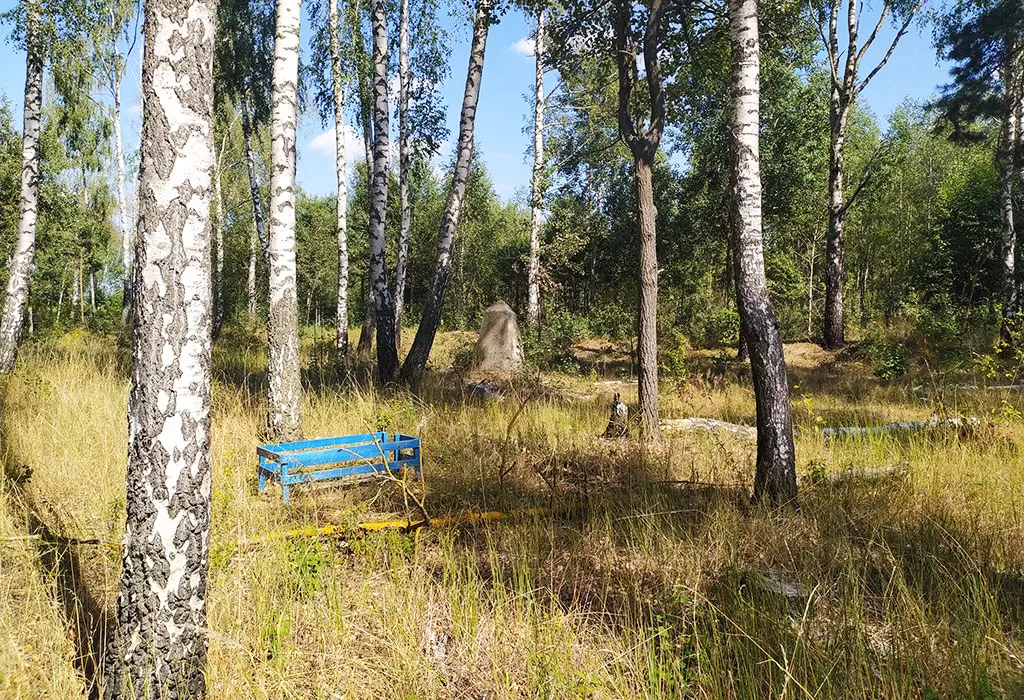
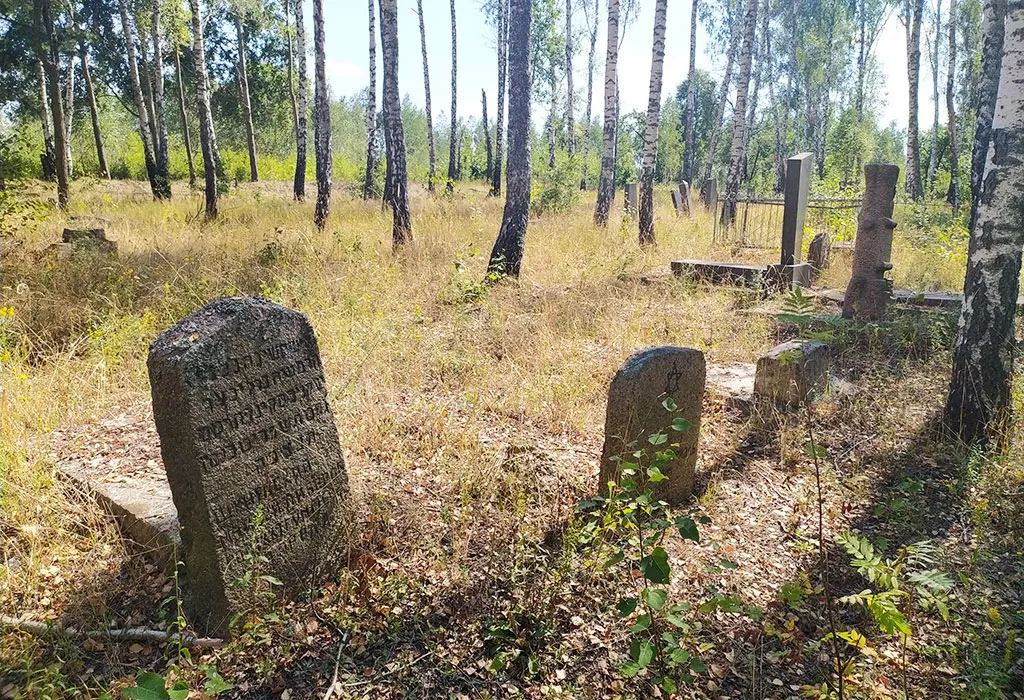
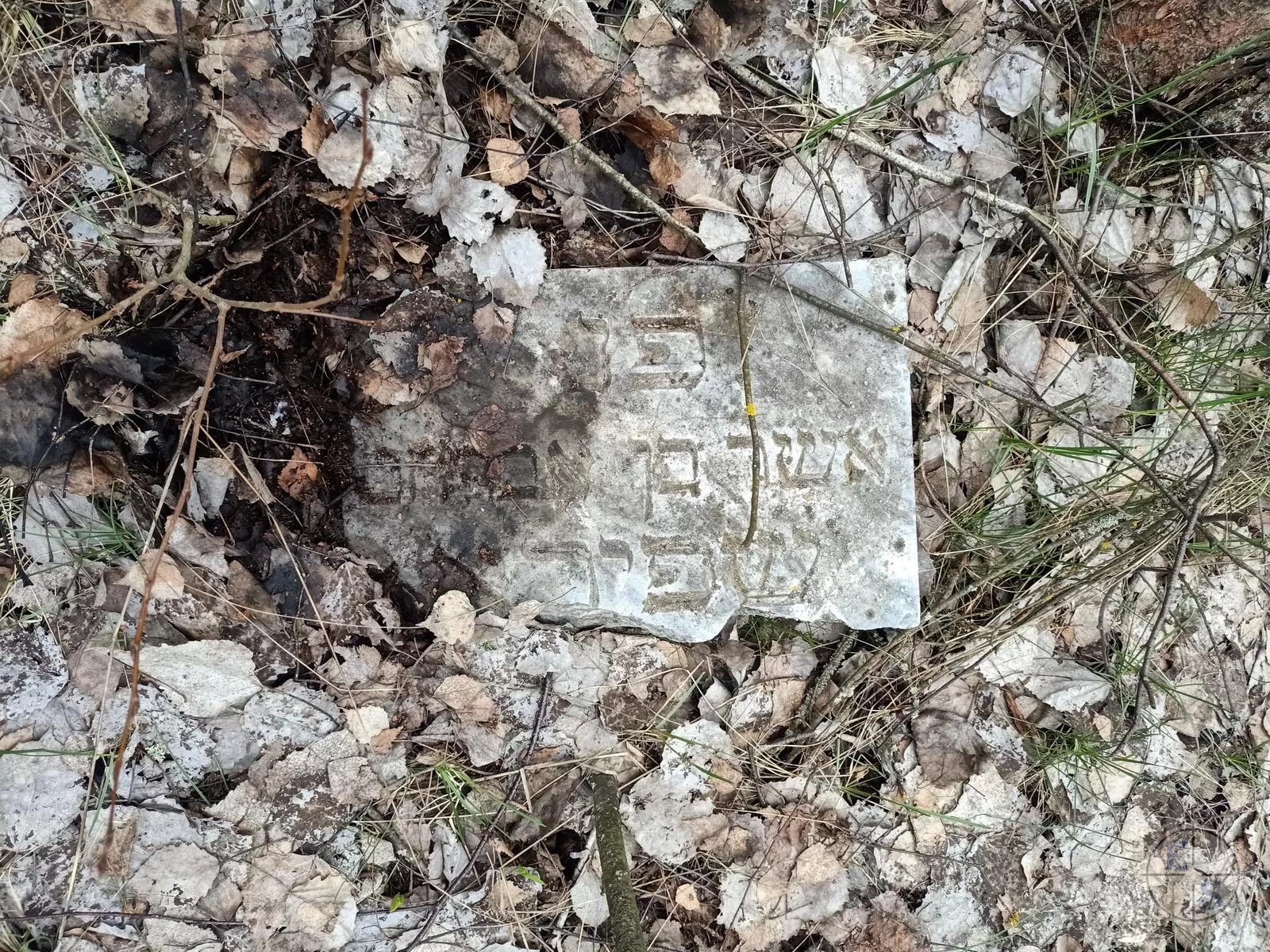
The old Jewish cemetery in a birch grove on the outskirts is one of the few remaining reminders that a Jewish community lived alongside Ukrainians here for more than two centuries.
Historical documents record the settlement under different names: Czopowicze in Polish and Chopovitch in Yiddish. In the nineteenth century, it belonged to Radomyshl County in Kyiv Governorate. Chopovychi is approximately 42 kilometres from Korosten and 25 kilometres from Malyn.
A Jewish Community with Little Surviving Architectural Heritage
Like many Jewish communities in Polissia, the Jewish community of Chopovychi was not wealthy and left few masonry buildings behind. Synagogues, schools and residential buildings in the shtetl were generally made of wood, and even some gravestones were wooden. Because these materials deteriorate over time, little physical evidence of the former Jewish community has survived.
The Earliest Records: From One Kahal to Another
The earliest records date back to the Polish–Lithuanian Commonwealth. In 1765, Chopovychi belonged to the Korostyshiv kahal in Zhytomyr County, Kyiv Voivodeship, and had only six Jewish residents. By comparison, Malyn had five, while Korostyshiv, the centre of the kahal, had 316.
According to Polish tax records from 1775, Chopovychi had 17 Jewish residents, Malyn had 28, and Korostyshiv had 509. This increase has been linked to migration following the First Partition of the Polish–Lithuanian Commonwealth in 1772, when Jews left territories that had come under Russian, Prussian and Austrian rule.
Subsequent records show fluctuations: 21 people in 1778, 16 in 1787 and 33 in 1791. Following the Third Partition, from the late 1790s onward, the village was assigned to the newly established Malyn kahal.
Innkeepers in the Early Nineteenth Century
In January 1808, the county marshal of the nobility compiled a list for the Kyiv governor of tenants operating taverns, inns and roadside establishments in Radomyshl County. The list shows that five Jewish families in Chopovychi were engaged in this business:
- Faibysh Moshkovych Volodarsky, with his wife Esther;
- Shmunia Leizorovych Raihorodsky, with his wife Khaya and daughters Rivka and Sura;
- Leibko Vihderovych Chopovsky, with his wife Leia and son Hershko;
- Shlema Ovsiivych Polovynchyk, with his wife Mynda, son Shmunia and daughter Sura;
- Avrum Aronovych Lubernsky, with his wife Esther.
In Rudnia-Chopovska, which is now part of the settlement, the inn was leased by Aron Leizorovych Rudensky, his wife Leia and their daughter Ete.
Because Chopovychi was classified as a village rather than a town, population revision records for 1814–1858 have not survived, unlike those for neighbouring Malyn. As a result, the community’s development during these decades cannot currently be reconstructed from the available documents. The village had no state-appointed rabbi, so Jewish residents travelled to Malyn to register births, marriages, divorces and deaths.
Shops, Crafts and a Heder
According to Lavrentii Pokhilevych, in 1864 the village had 221 Jewish residents out of a total population of 3,660.
An inspection of commercial establishments in the county in 1880 indicates that Jews played a significant role in local trade and crafts. Grocery shops belonged to Itsk Taft, Rakhman Ushomyrsky, Hinekh Kyselovych and Shmul Shknevsky. Shevel Hutniansky worked as a shoemaker, Yankel Kushnyrovsky sold flour, Zurakh Ushomyrsky owned a leather-goods business, and Hinekh Ushomyrsky ran an ironmonger's shop. Khan Zaidmanovsky operated a dairy shop, Ruven Goldman a blacksmith's workshop, and Berko Braiman was the village's only tailor.
In 1885, only two melameds—traditional Jewish religious teachers—held official permission to teach. Leiba Yosypovych Friedman taught the Torah and Talmud, while Meyer Yosypovych Lozhansky taught elementary subjects. Both renewed their permits in 1891, when each had ten pupils. There were no other officially recognised teachers in the village.
By the end of the nineteenth century, the local economy had expanded. Chopovychi had seven watermills, seven windmills, one steam-powered mill, a pharmacy and two inns. Stalls run by Jewish craftspeople stood on the site of today's park, and many of the artisans specialised in leather goods.
1894: The Election of a State-Appointed Rabbi
In 1894, Jewish residents of Chopovychi who were eligible to vote took part in the election of the state-appointed rabbi for Radomyshl County. Records from the election show that two prayer houses operated in the village.
The newer one, known as the Kloyz, had 60 male congregants eligible to vote. Its wardens were Itzhak Toft, Moshko Shvartsman and Moshko Yurovsky. Pesakh-Elya Itskovych Kushnyrovsky and Khaim-Nukhim Moshkovych Kai were elected as delegates. The word kloyz refers to a small house used for prayer and religious study.
The older prayer house had 76 congregants. Its religious governing body included Borukh Rappoport, Elya Feldman and Hinakh Ushomyrsky. It elected Elya Yosypovych Korytnyk and Mikhel Yankelevych Kushnyrovsky as delegates to the election in Radomyshl.
The Railway and an Antisemitic Accusation
According to the Russian Empire's 1897 census, the Chopovychi volost had 6,654 residents, including 919 Jews, or 14 per cent of the population. These figures most likely refer to the entire administrative district and its surrounding villages, rather than Chopovychi alone, and therefore should not be compared directly with the settlement's modern population.
The railway line between Kyiv and Kovel, built in 1902 approximately five kilometres to the north, made the area more accessible.
On March 17, 1906, the newspaper Obshchestvennaya Mysl reported an extraordinary incident. A local priest wrote to an official in Malyn alleging that Jews in Chopovychi were digging tunnels beneath the church to blow it up during a major religious holiday. The official travelled to the village, conducted an investigation and searched Jewish homes, but found no evidence to support the accusation. The episode illustrates that relations between the communities were not always peaceful.
Chopovychi in 1913
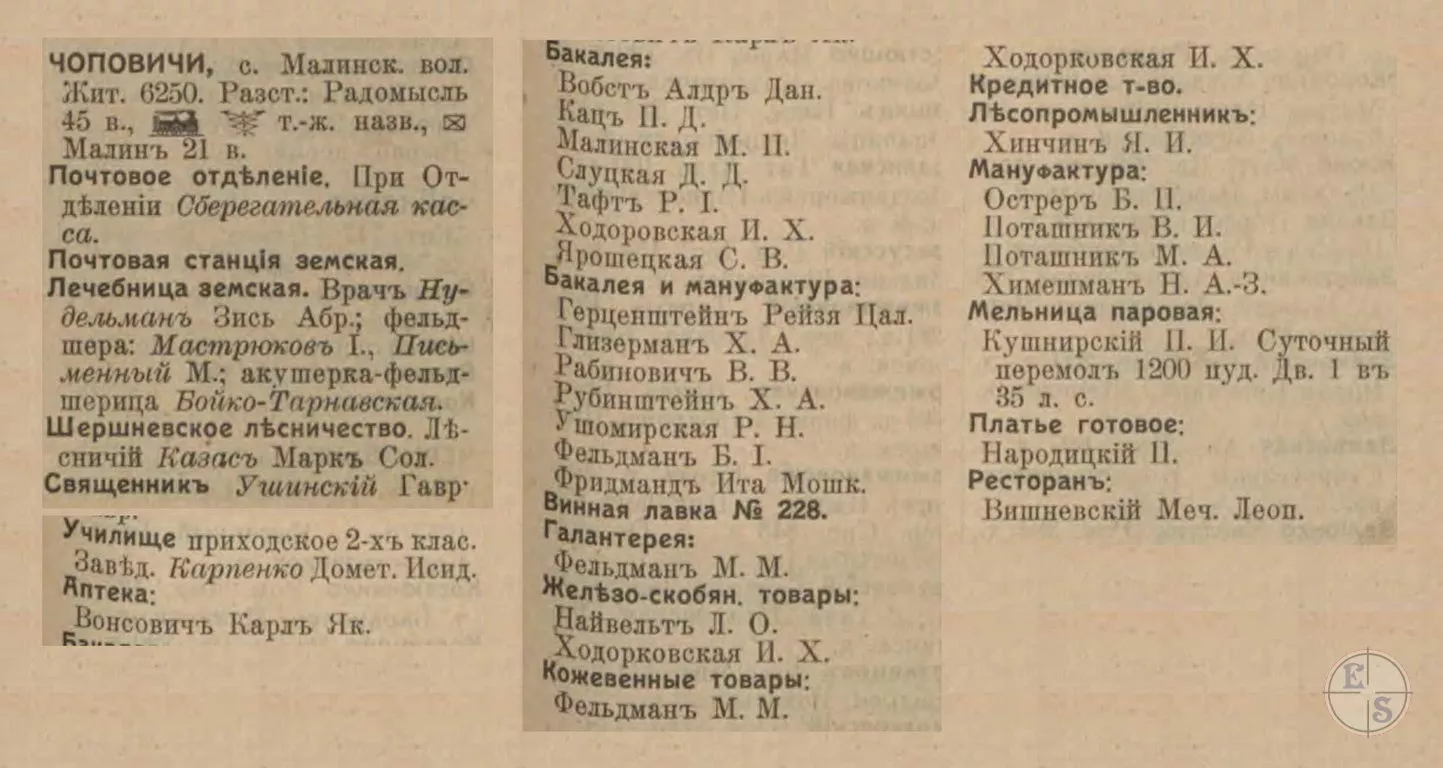
The 1913 reference book Ves Yugo-Zapadny Krai provides a picture of the Jewish community's economic role. According to the material cited in the original research, Jewish residents accounted for approximately 70 per cent of economic activity in the village.
The only doctor was Zis Abramovych Nudelman. Of the seven grocery shops, four belonged to Jews: the businesses of Kats, Mylinska, Taft and Khodorovska. All seven textile and general-merchandise shops were run by Jewish families: Herzenstein, Glizerman, Rabinovych, Rubinstein, Ushomyrsky, Fuldman and Friedman. Both ironware shops belonged to Naivelt and Khodorkovska. Kushnyrsky owned a steam-powered mill with a capacity of 1,200 poods per day, while Narodytsky operated a clothing shop.
Ninety-four residents of the village took part in the First World War, including seven Jewish men: Nusim Shmulevych Markman, Khaim Elevych Roitenberg, Veniamin Moiseiovych Geikhman, Noakh Moiseiovych Geikhman, Moisei Hirshovych Geikhman, Inakh Hershkovych Chepovsky and Simkho Moiseiovych Belokrenytsky.
Revolution and the Soviet Period
Few records survive about the revolutions, the collapse of the Russian Empire, the German occupation and the civil war in Chopovychi. Its distance from the main theatres of fighting may have spared the village the large-scale pogroms that affected neighbouring Malyn, Radomyshl, Korosten, Narodychi and Khabne. However, the available information does not establish that the village was entirely unaffected by violence.
In 1926, a seven-year Jewish school opened in the village, and a Jewish village council was established under a resolution adopted by the All-Ukrainian Central Executive Committee on February 24, 1926, concerning national self-government bodies.
The Jewish population of Chopovychi and nearby villages is estimated in the available sources at approximately 1,200–1,500 people, although the figures differ. The European Jewish Cemeteries Initiative (ESJF) gives a figure of 1,533, representing 16 per cent of the population. JewishGen records 1,302 Jewish residents in the 1926 census.
The Jewish council operated alongside the Ukrainian village council. Its responsibilities included taxation, cultural activities in Yiddish, the Jewish school and political education for Jewish workers. By the end of the 1930s, Soviet authorities had dismantled these experiments in national autonomy, and both the school and the council were disbanded. The 1939 census recorded 673 Jewish residents in Chopovychi.
Oral testimonies collected by the Yahad – In Unum project provide further details about everyday life. According to witnesses, the village had a Jewish school, but it could not accommodate all Jewish children, so some attended the Ukrainian school. Intermarriage was common, and Jewish residents worked in shops, as drivers and as blacksmiths on collective farms.
The witnesses also stated that the village had no separate synagogue and that Jews gathered for prayer in a private home. This account differs from earlier sources documenting two prayer houses in Chopovychi before the Soviet period. The available evidence therefore points to a change over time, but does not establish precisely when or how the earlier religious buildings ceased to function.
The Jewish Community of Chopovychi Before World War II
According to the 1897 census, 919 Jews lived in Chopovychi, accounting for approximately 14% of the village’s total population.
The community had a Jewish school, but it could not accommodate all the children, so some attended the Ukrainian school. There was no separate synagogue in Chopovychi; Jews gathered for prayer in a private home. The community’s religious life was supported by a rabbi surnamed Neiman.
Local Jews were primarily engaged in trade and also worked as drivers and blacksmiths, including in collective farms. Intermarriage between Jews and non-Jews was also common.
In early August 1941, German troops occupied Chopovychi. Initially, Jewish families remained in their homes, but arrests, torture, and deportations to Korosten began later.
According to historical accounts, 15 Jews were tortured and killed in Chopovychi, while another 165 Jews from the Chopovychi district were taken to Korosten to be executed. Eyewitness testimonies and archival documents preserve the memory of the destruction of Chopovychi’s Jewish community during the Holocaust.
August 1941: The Destruction of the Jewish Community
German forces occupied Chopovychi in early August 1941. Initially, Jewish families remained in their own homes. Some had been unable to afford to flee, while others believed they would not be harmed because the occupying authorities had not persecuted them at first.
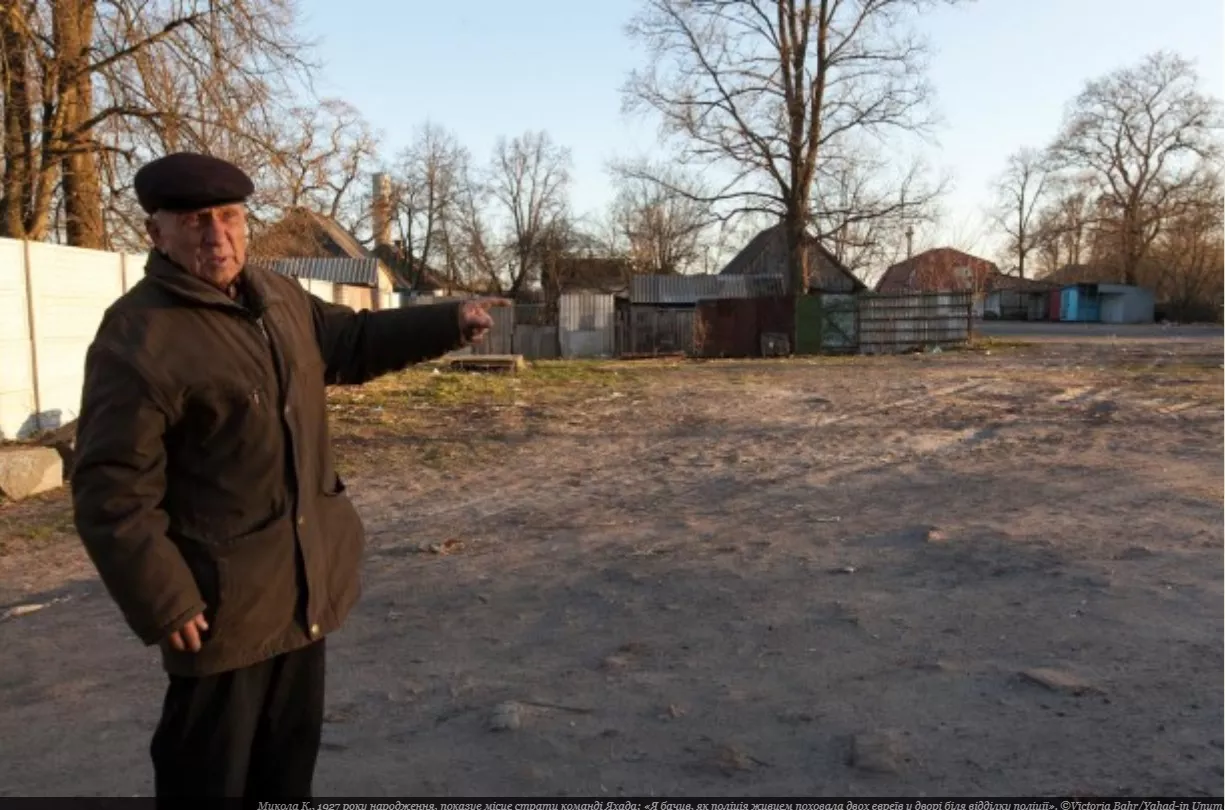
Local Jews continued to work and live in their homes. One of them, for example, worked as a blacksmith, shoeing horses for the Germans. However, an order was eventually issued to arrest the Jewish population. According to a witness, the operation was carried out in secret: within 24 hours, people were taken from their homes and locked in the cells of the former police station.
Mykola K. also recalled the arrest of a young girl from a family he knew well. When the police came for her relatives, the approximately eight-year-old child tried to escape through a window, but a policeman caught her. According to the witness, the family’s eldest son was among the partisans.
Mykola K., born in 1927, recalled:
“The Jews who did not have the financial means to leave remained in the village. They believed until the very end that nothing bad would happen because, at first, no one had bothered them. For example, a Jewish man who worked as a blacksmith shoed horses for the Germans, and the other Jews also lived quietly. Then an order came to gather them. Everything was done in secret; no one talked about it. But within twenty-four hours, all the Jews had been arrested. They were gathered in the former police station building and locked in the cells. The Jews had not expected this at all. They were taken straight from their homes. A policeman caught a Jewish girl. This happened right before my eyes. I knew the family well. When the police came to arrest them, the little girl, about eight years old, escaped through a window. The policeman caught her. The eldest son in that family was among the partisans.”
Testimony No. 1627 was recorded on April 21, 2013, in Barvinky.
Soviet Archives: Testimony of Torture and Deportation to Korosten
An act drawn up by the State Extraordinary Commission on May 26, 1945, describes the arrests of the Jewish population in August 1941. According to the document, a German punitive unit and the police detained Jews, gathered them in the square near the church, and surrounded them with policemen.
The detainees were then subjected to brutal humiliation and torture. Elderly people, women, and children were reportedly forced to dance and eat iron nails, which the policemen called “Soviet nuts.”
After the abuse, the detainees were sent to Korosten, where they were shot.
Source: Act of the State Extraordinary Commission dated May 26, 1945; archival reference RG 22.002M; 7021-60-313.
German Archives: 165 Jews Deported to Korosten
A German archival document, B162-7321, also records the persecution of the Jewish population of Chopovychi and the surrounding settlements.
According to this document, in August 1941, police deported 165 Jews from the Chopovychi district to Korosten to be executed. The document also states that 15 people were tortured and killed in Chopovychi itself.
These records testify to the scale of the persecution of the district’s Jewish population during the first months of the German occupation.
The Cemetery in the Birch Grove
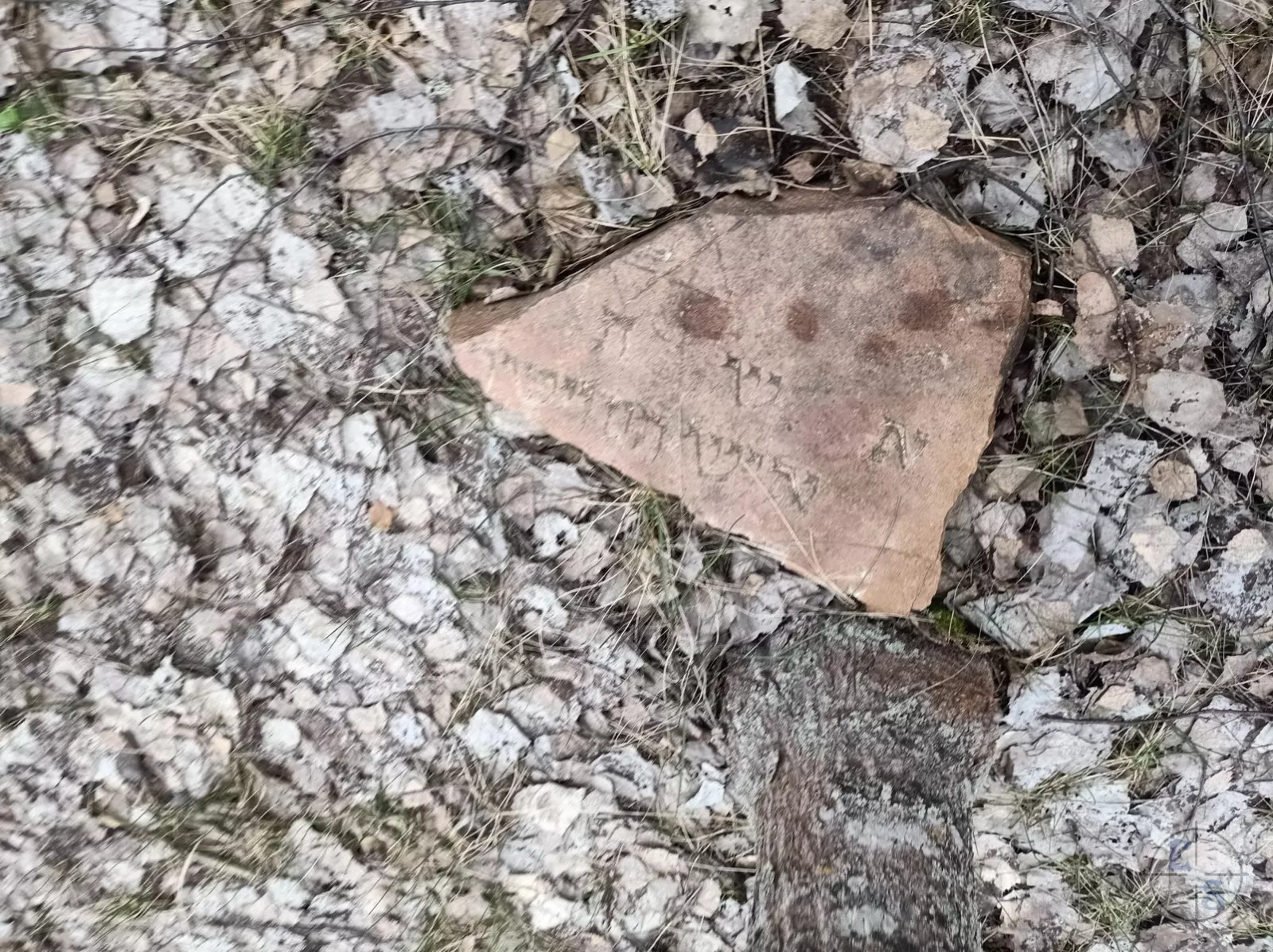
A Jewish cemetery remains on the western outskirts of the settlement, about two kilometres from the built-up area. According to Pavel Zeldich’s description, it contains around thirty graves. The oldest tombstone is dated 1913, and the most recent one dates from 1991.
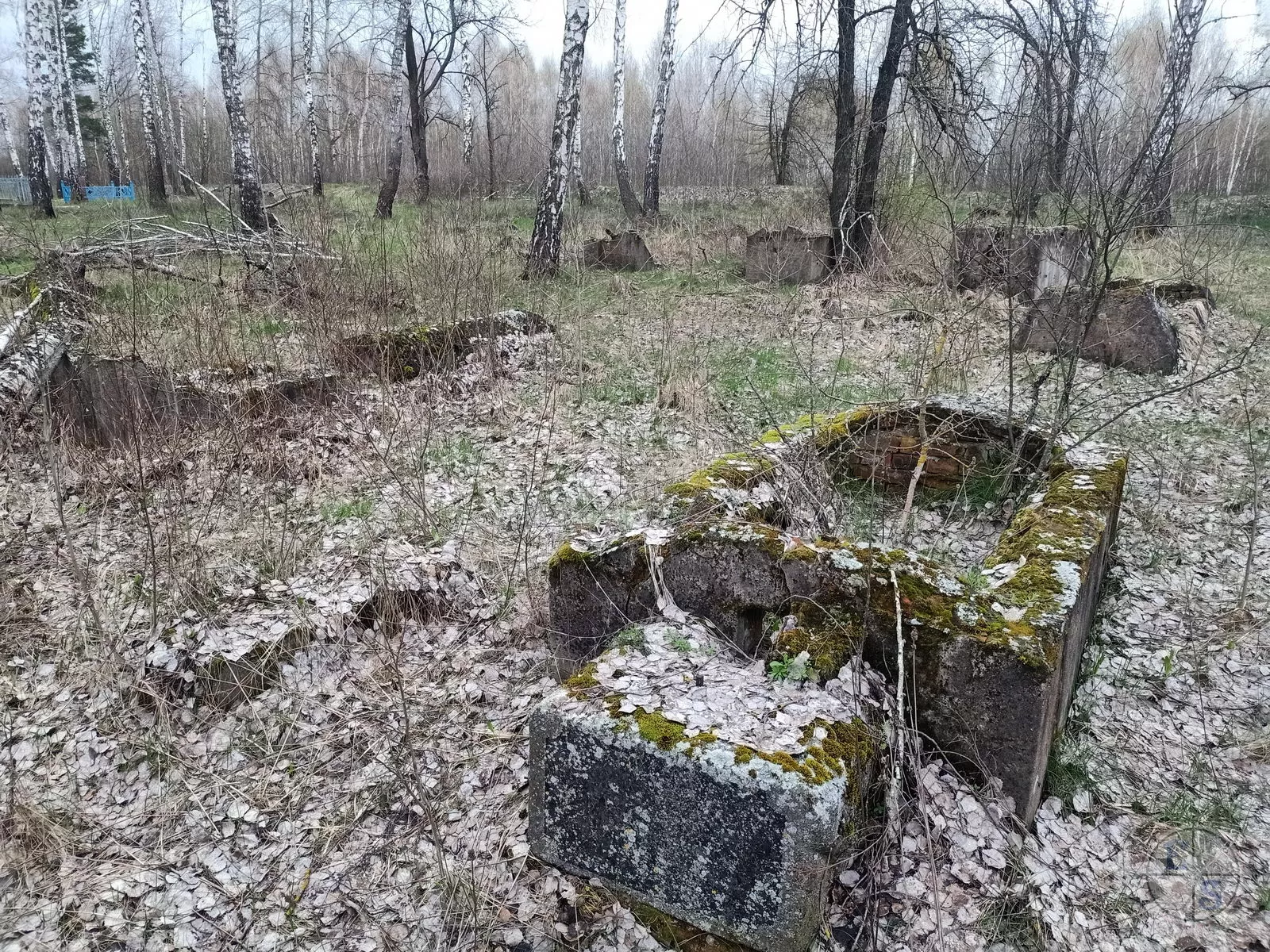
Several vertical brick tombstones can also be found there, a type characteristic of Polissia. Similar monuments exist in Poliske, Ovruch, and Chornobyl and may have developed from wooden horizontal structures resembling false vaults.
A comparison of a 1931 Red Army map with the present-day landscape suggests that the western part of the cemetery was destroyed during the construction of the Chopovychi–Meleni road.
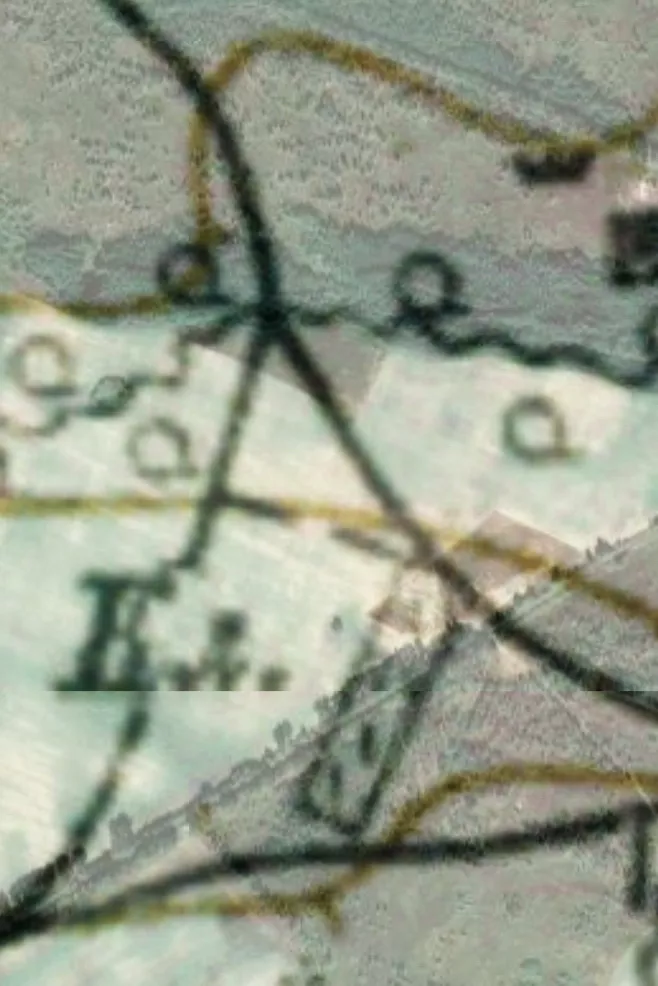
The ESJF survey records approximately 40 tombstones, the oldest dating from 1916 and the most recent from 1989. The cemetery is unfenced, but its boundary ditch is clearly visible. There is one mass grave on the site, and the need for a fence has been assessed as high. According to JewishGen, the cemetery contains marked mass graves, and portraits have been preserved on some of the tombstones.
Sources
This article is based on research by Pavel Zeldich, the 1913 reference book Ves Yugo-Zapadny Krai (The Entire Southwestern Region), archival documents, and information from ESJF, JewishGen, and Yahad – In Unum.