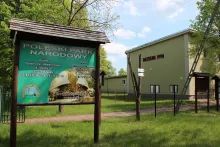
The PTTK Red Partisan Trail is one of the longest hiking routes in the Łęczna-Włodawa Lake District. According to the town of Parczew, it is 104.7 km long from the bus station in Urszulin to the railway station in Parczew (our track is about 100 km). The trail connects Polissia National Park with the Parczew Forests, where partisan units of various underground movements operated during the Second World War — hence the name. The route is linear, marked with a red stripe between two white ones; you should budget four to five days for it.
Through Polissia National Park
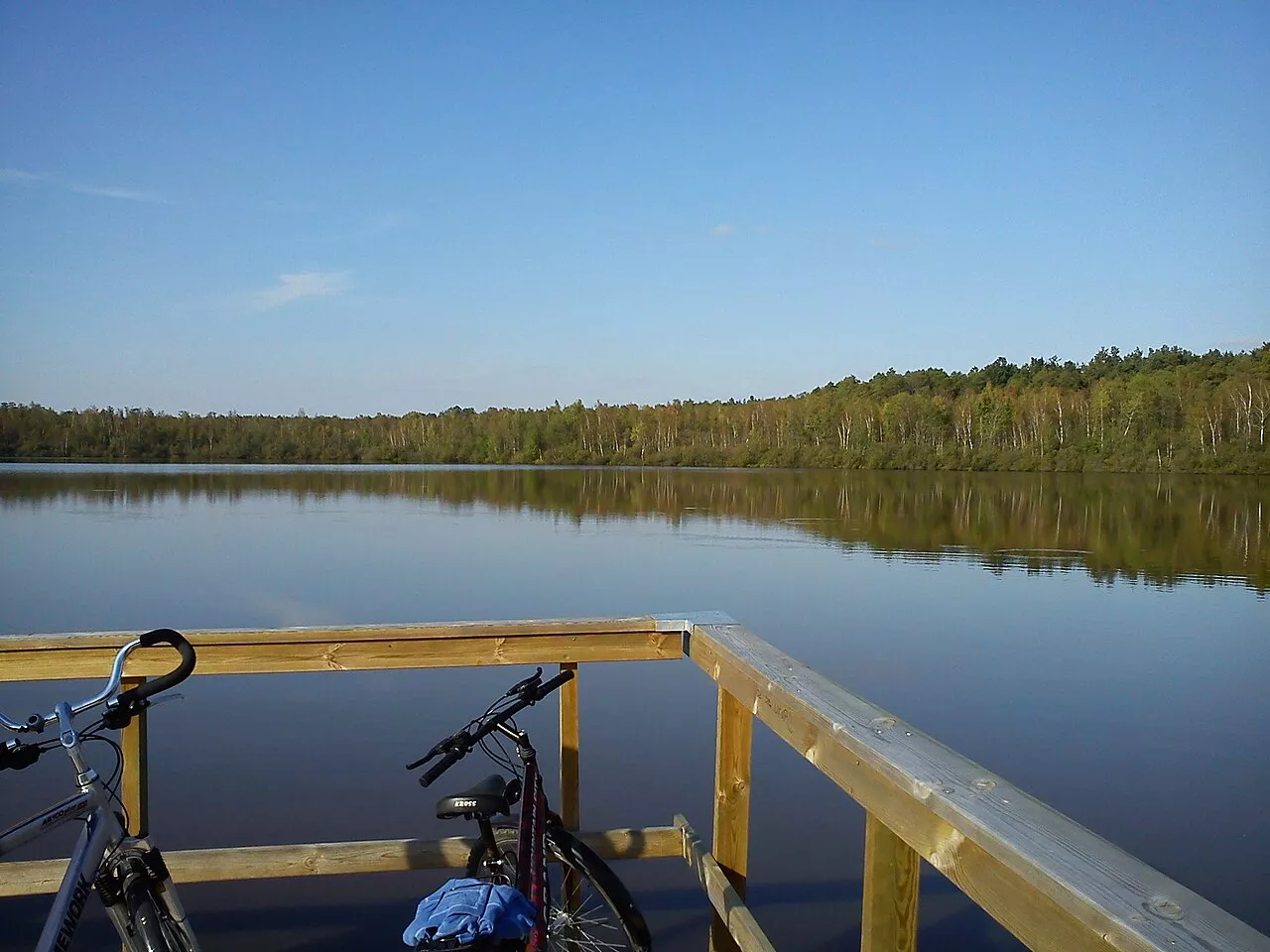
From Urszulin, the trail heads north through Michałów to Wola Wereszczyńska — a village that was described back in the 19th century as surrounded by a wreath of lakes amidst marshes — and further to Jamniki, Łomnica, and Zawadówka. Beyond the forest lies Lake Łukie, the largest in the park, and in the Łomnica colony begins the „Dąb Dominik” trail to Lake Moszne, which is overgrowing with a floating carpet of sphagnum moss with sundew and cranberries. Near Zawadówka, by the road to Stare Załucze, stands an old windmill. Stare Załucze remembers February 22, 1944, when Captain Józef Milert „Sep”, commander of the Włodawa district of the Home Army, died here in an ambush.
Lakes Uściwierz, Roguźno, and Krasne
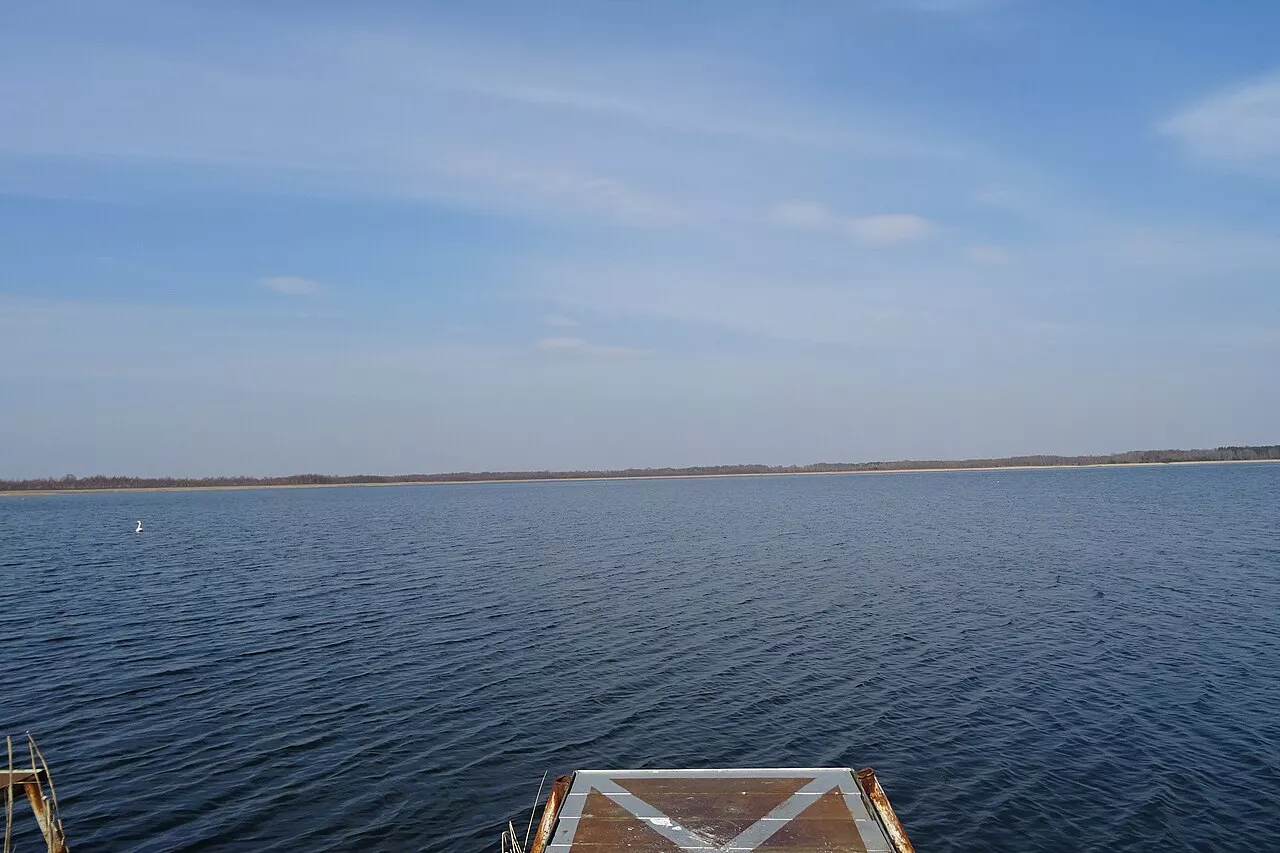
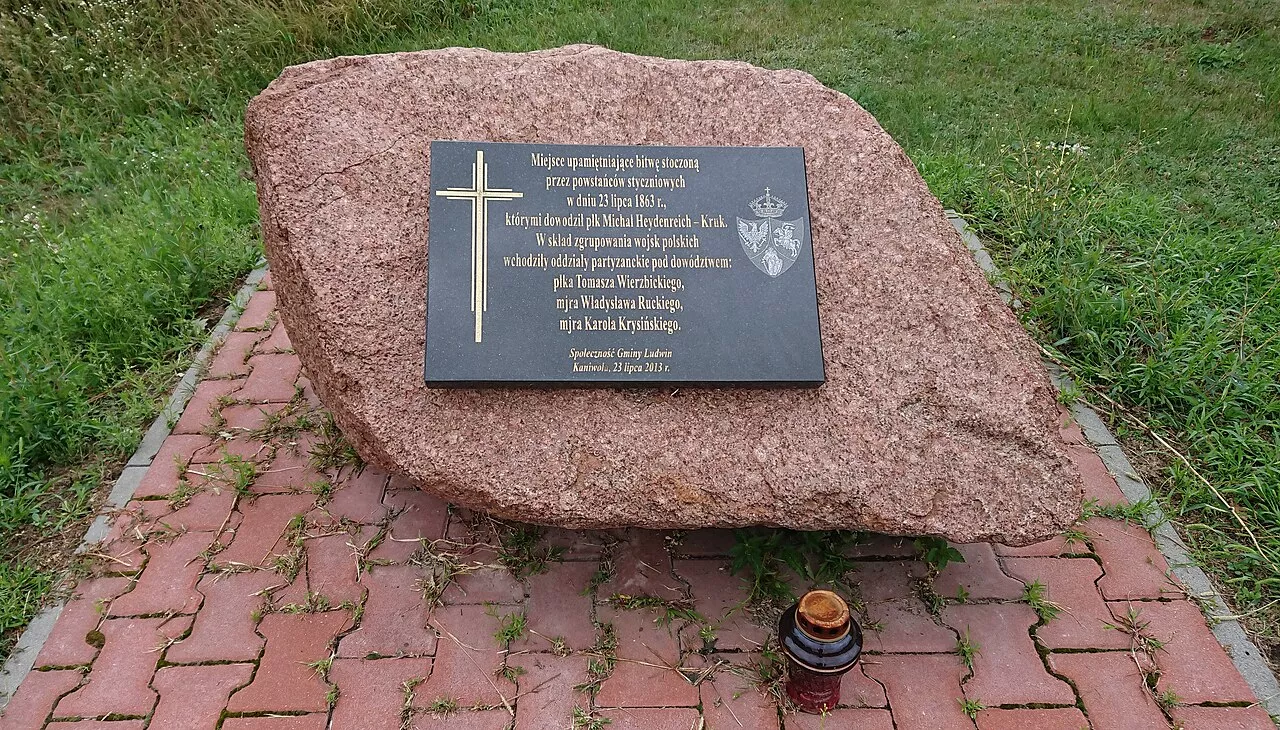
Further west is the most lake-rich part of the route. Uściwierz, with an area of 284 ha, is the largest lake in the Łęczna-Włodawa Plain: a karst endorheic water body with a wide belt of reeds, where the European pond turtle has one of its largest nesting sites in Europe, and flocks of cranes rest on the island. Near Kaniwola on July 23, 1863, the insurgents of Colonel Michał Heydenreich „Kruk” fought with Russian troops — a memorial stone reminds us of this. Roguźno is a summer village between Lakes Roguźno and Łukcze with resort facilities, and Krasne, an ancient royal village, stands by the lake of the same name. Through Uścimów, the trail leads to the town of Ostrów Lubelski on the Tyśmienica River, with a town lake on the outskirts.
Parczew Forests
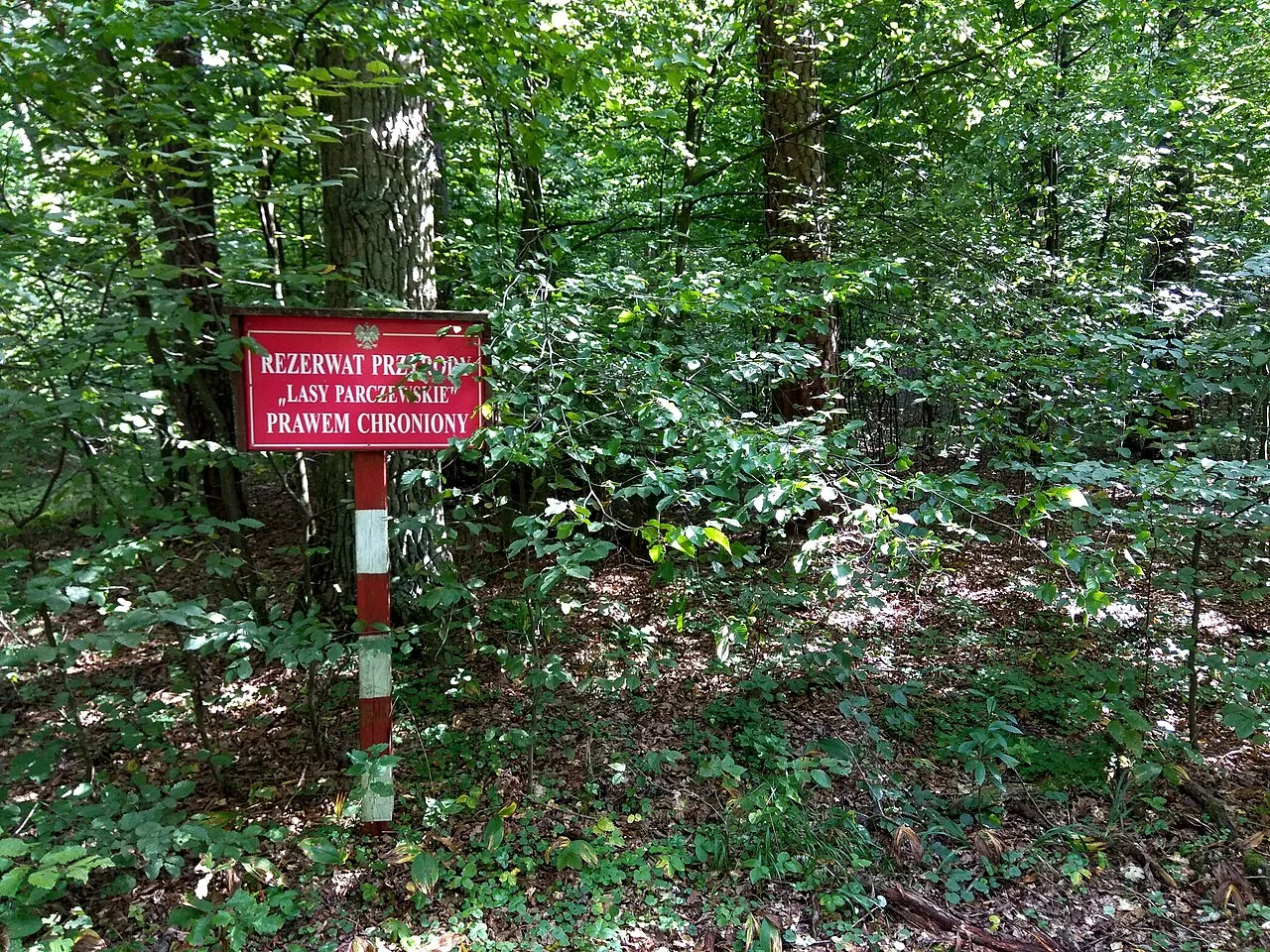
The last few dozen kilometres are the Parczew Forests, a massif of about 136 km² between the Wieprz–Kisna Canal and the Tyśmienica River. During the occupation, units of the Home Army, the People's Guard and Army, the Peasant Battalions, and Soviet partisans operated here; from July 18 to 21, 1944, fierce battles with the Germans took place in the forests. Today, the massif is recognized as an important bird area: the black stork, white-tailed eagle, and lesser spotted eagle nest here. The trail runs near the „Jezioro Obradowskie”, „Królowa Droga”, and „Las Parczewski” nature reserves, leading through Makoszka and Laski to Parczew.
How to get there and what to consider
This is Poland: Ukrainian citizens need a foreign passport. Buses run to Urszulin from Lublin and Włodawa; Ostrów Lubelski and Parczew have bus connections with Lublin, so the route can easily be divided into sections. Overnight stays are available in the agritourism guesthouses of Stare Załucze, in recreation centers by Rogóźno, in Ostrów Lubelski and Parczew; in season, accommodation near the lakes should be booked in advance. The trail itself is free, while the national park's nature paths are paid. The best time is May–June and September; in summer, there are many mosquitoes near the lakes and ticks in the forests. In the Parczew Forests, there are no stores for tens of kilometers, so bring a supply of water with you.