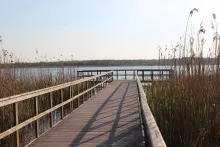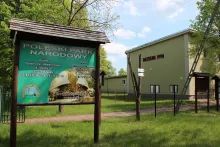
«Spławy» is a nature trail of Polissia National Park that starts in the village of Stare Załucze in Polesie Lubelskie, next to the park museum. This is a route for those who love walking on wooden boardwalks: they make up almost 4.5 km here. The trail leads through meadows, open peat bogs, and swamp forests to Lake Łukie, the largest lake in the park. According to the park, the length is about 7.5 km (our track is 6.5 km, start and finish are nearby), and the time is 2.5–3 hours.
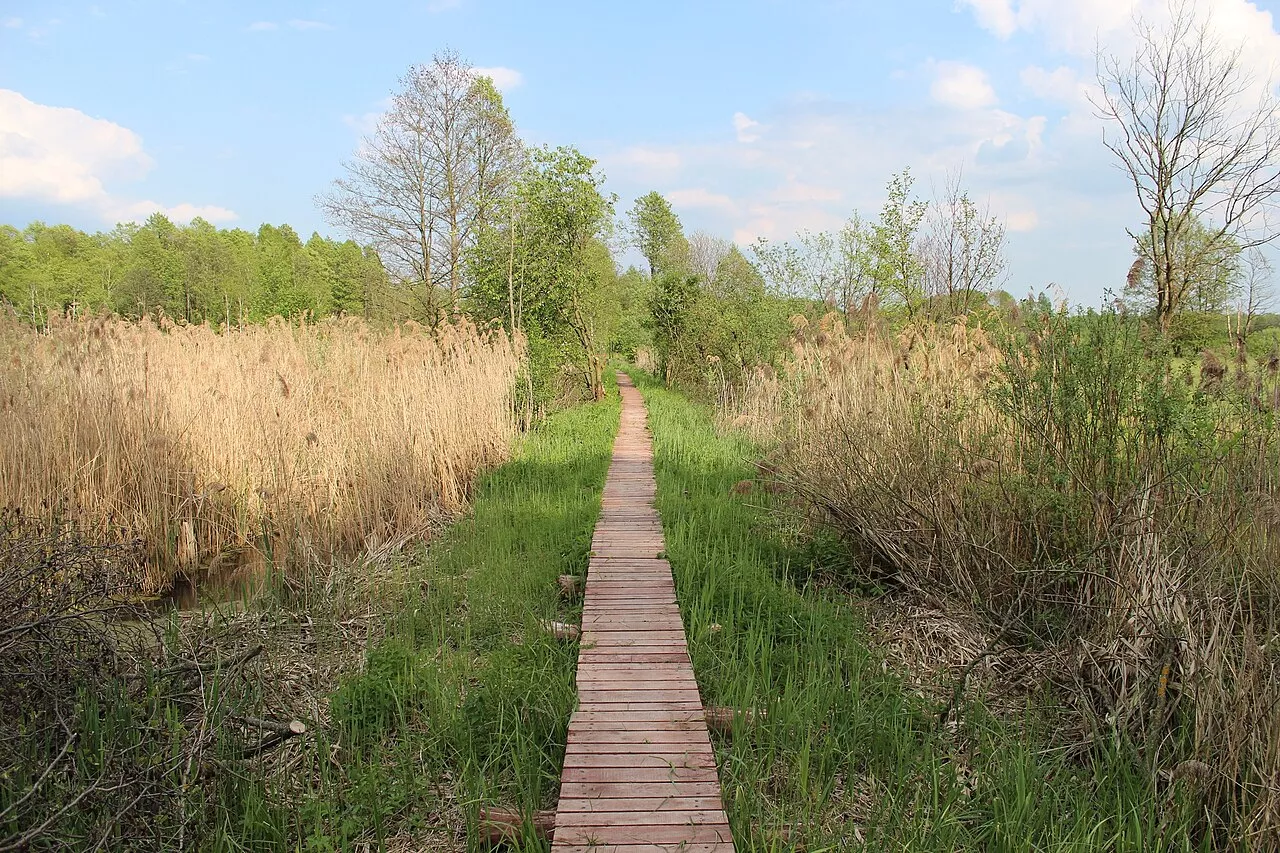
Spławy Peat Bog
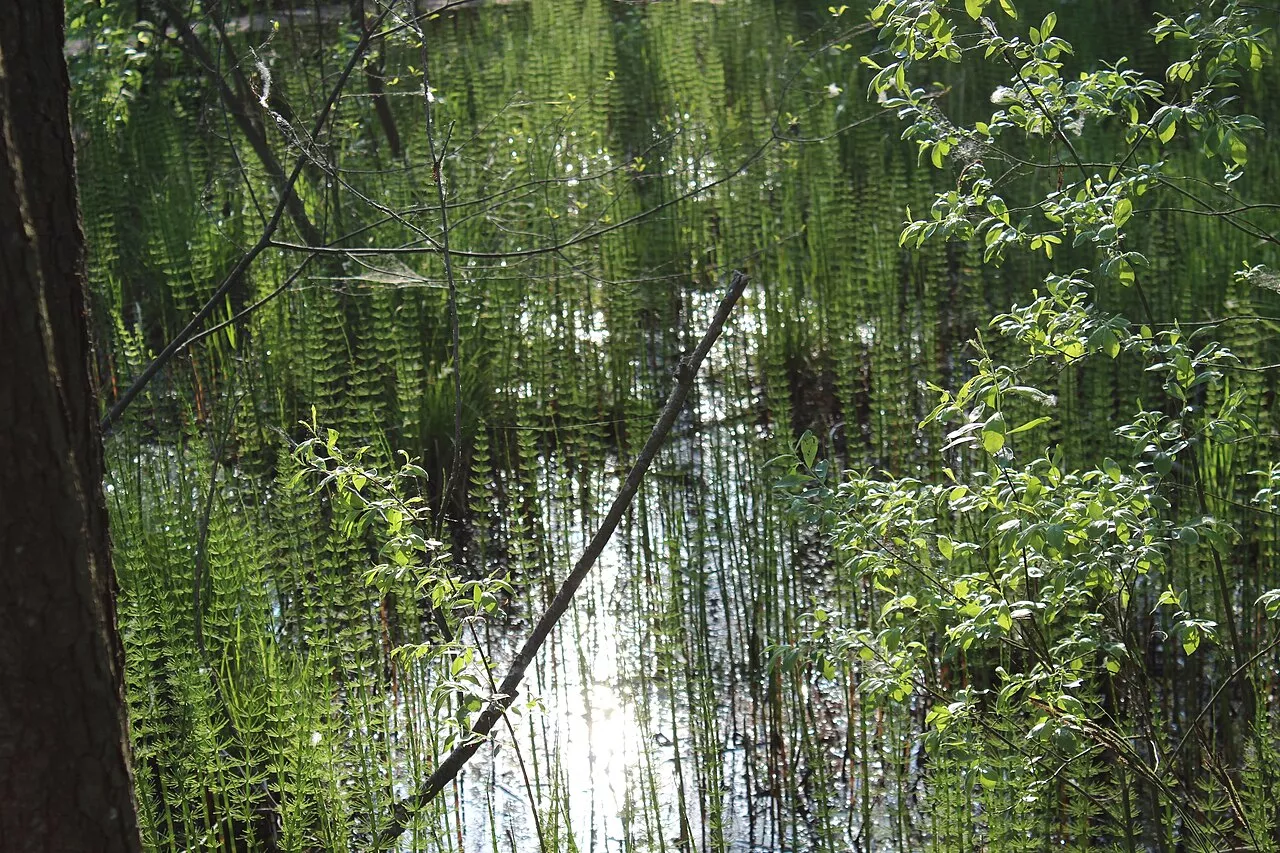
The first part of the route is the transitional peat bog «Spławy», from which the trail got its name, swampy birch forests, tussocky alder forests, and sedge meadows. The boardwalk stretches through reeds and horsetail thickets growing right in the water. Here you can meet an elk, a crane, and beaver tracks. On warm days, a western marsh harrier circles above the peat bog.
Lake Łukie
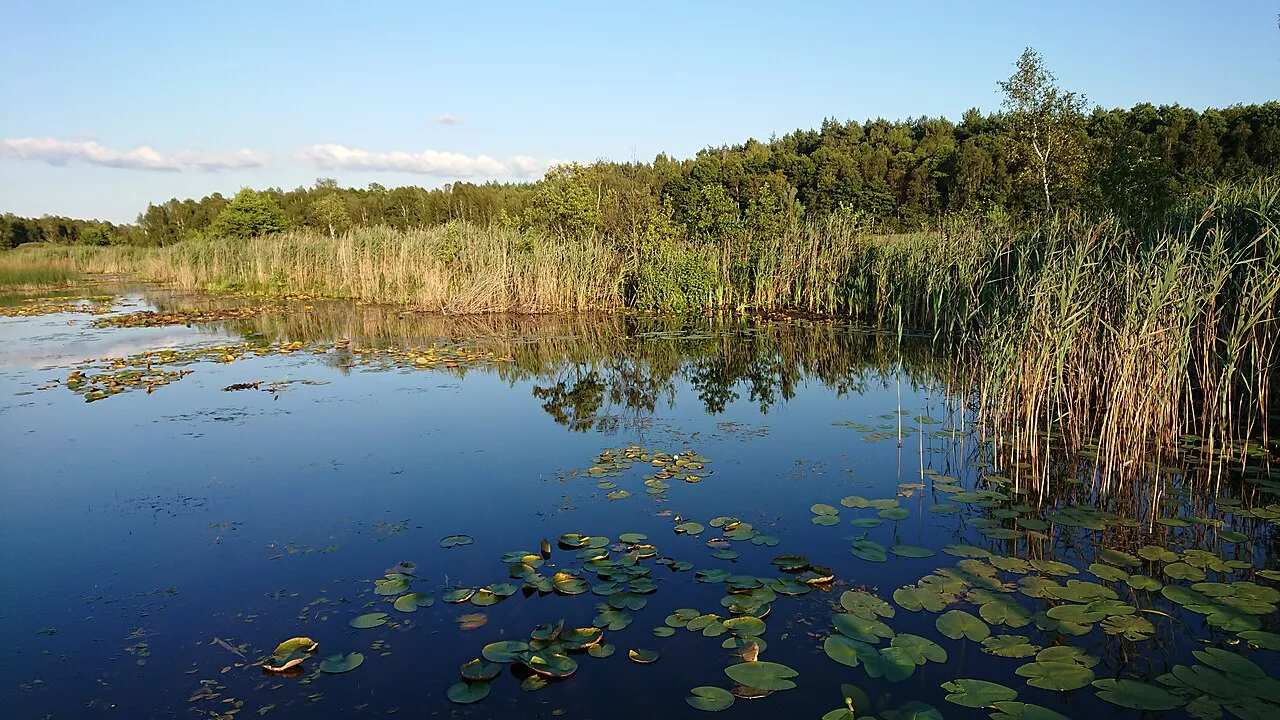
Łukie is a eutrophic lake with rich aquatic and reed vegetation, which is gradually turning into a dystrophic one. Studies have shown that from 1952 to 1992, it noticeably overgrown from all sides, and three vegetation islands formed in the northern part. Near the lake stands a floating observation platform: from it you can see mute swans, grebes, coots, and from above — a western marsh harrier or the largest predatory bird of the park, the white-tailed eagle. Ferruginous ducks sometimes appear, and pond turtles live in the bays. Nearby is a tourist shelter where you can rest.
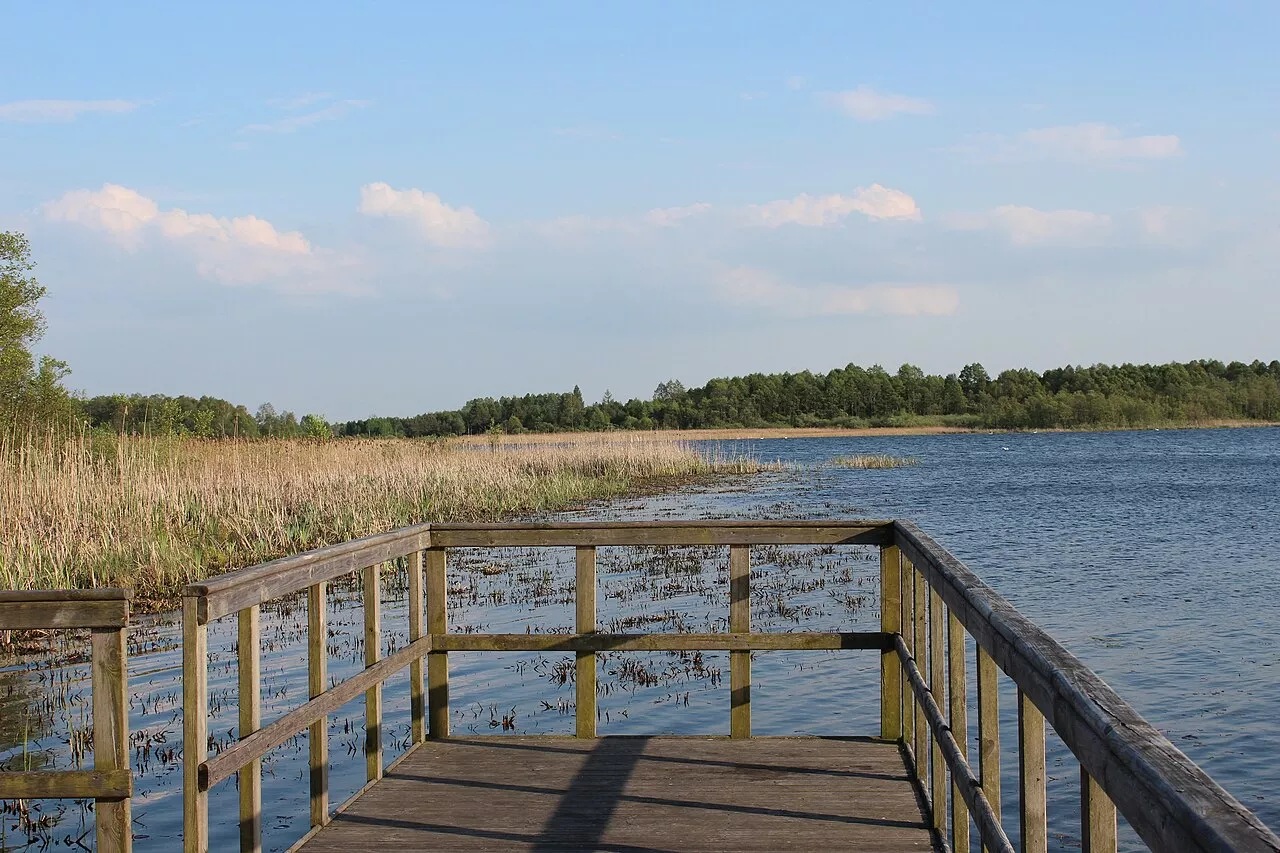
Further on, the trail follows the so-called «głaz dam» — the boardwalk crosses a picturesque alder forest, especially beautiful in early spring.
Stare Załucze
The name of the village is connected with the lake: for the residents of the northern shore, this was the land «behind Łukie». From the 16th century, it was owned by the Wereszczyński family, later by the Załuski family. From 1803, German tar-burner families settled here, and from the mid-19th century, the village was famous for cart production. The village is home to the «Wiszatel» oak with a girth of 416 cm and a preserved Polissian thatched-roof cottage (No. 48) that is about two hundred years old.
How to get there and what to consider
From road No. 82 Lublin — Włodawa (intersection in Urszulin) — head west to Stare Załucze, about 6 km. From Lake Piaseczno — via Rozpłucie and Czarny Las, about 7 km. Free parking is available near the park museum (Educational and Museum Centre). The museum itself is currently closed for repairs (until further notice from the park), but the trail is open.
Boardwalks can be slippery after rain, fog, frost, or leaf fall. In summer, there are many mosquitoes near the lake, and ticks in the grass.
Admission to the trail is paid. As of autumn 2026, a ticket for a single trail costs 7 PLN (discounted — 3.5), a daily ticket for all five paid park trails is 16 PLN, and for three days — 21 PLN. Tickets are sold online and at the park headquarters in Urszulin (3a Lubelska St.). You can walk the trails from dawn to dusk, only on the marked route; groups of more than 10 people must coordinate their visit with the park in advance.
This is Poland: Ukrainian citizens need a foreign passport.