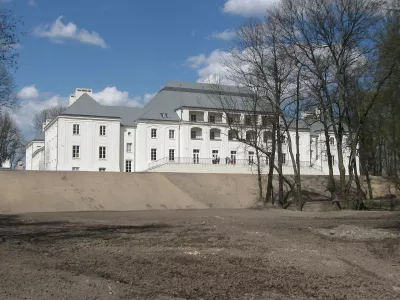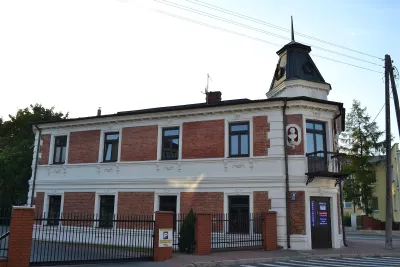
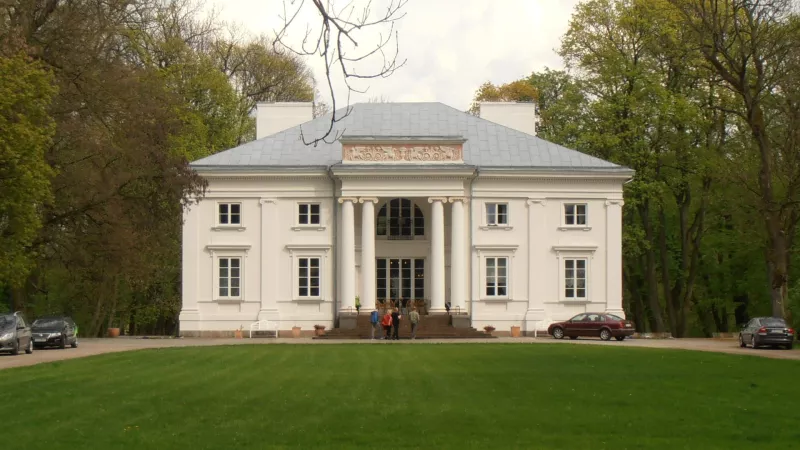
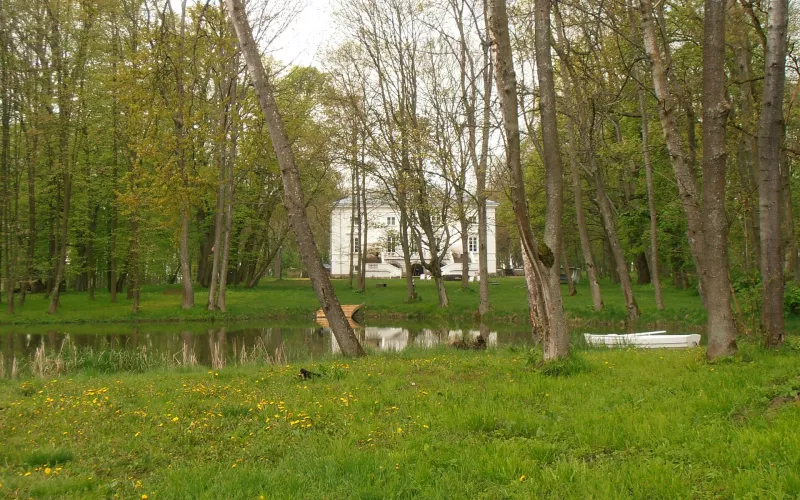
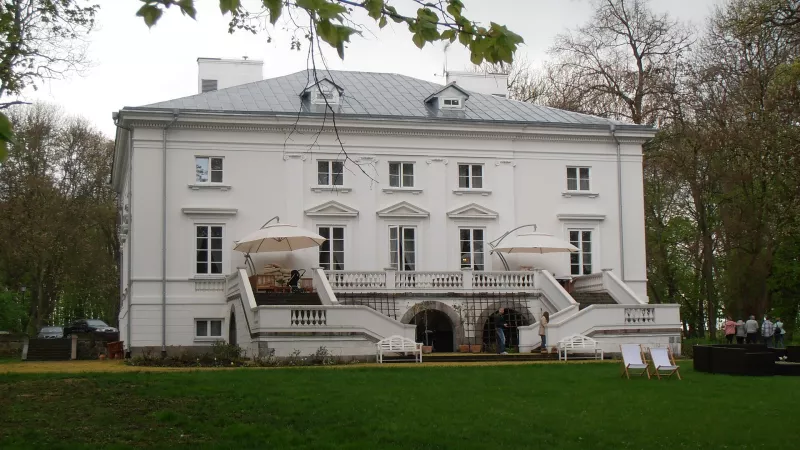

The palace in Cielesnica is a classicist estate set within an English park in the Rokytno commune, just a few kilometers from the Bug River. The house, dating from the 1830s, has survived innovative owners, war, state farming, and neglect, and after restoration in 2013, it reopened to guests as a hotel and a venue for concerts and exhibitions.
Serviński and Radziwiłł
The lands around belonged to the Andrushkevych family in the 15th century, and in 1526 passed to the Cielesnicki family, who established a folwark and gave it its name. In 1630, the estate was purchased by Aleksander Ludwik Radziwiłł and incorporated into the Biała County. In 1810, the last owner of the Biała palace, Dominik Radziwiłł, sold Cielesnica to Andrzej Serviński.
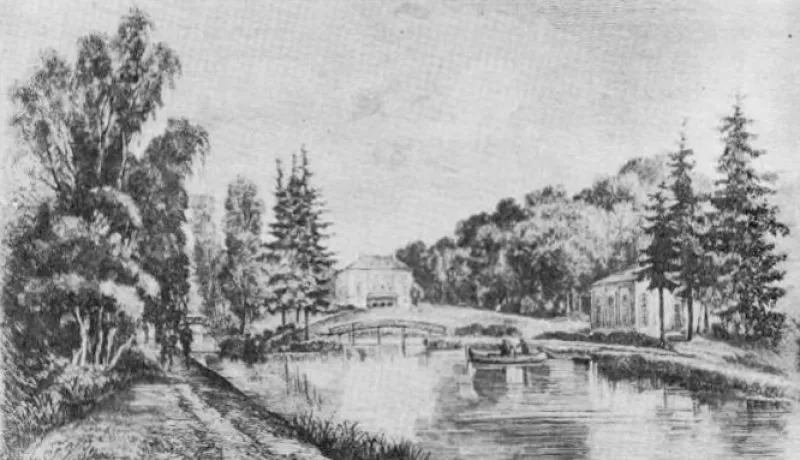
The new owner expanded the folwark: an oil mill, brewery, mill, brickyard, gardens with foreign varieties, select livestock, and even a mulberry plantation with silkworms. At the same time, he laid out the English park, and between 1832 and 1835 built the classicist palace—either following his own design or that of Antonio Corazzi.
Rosenwert and airplanes
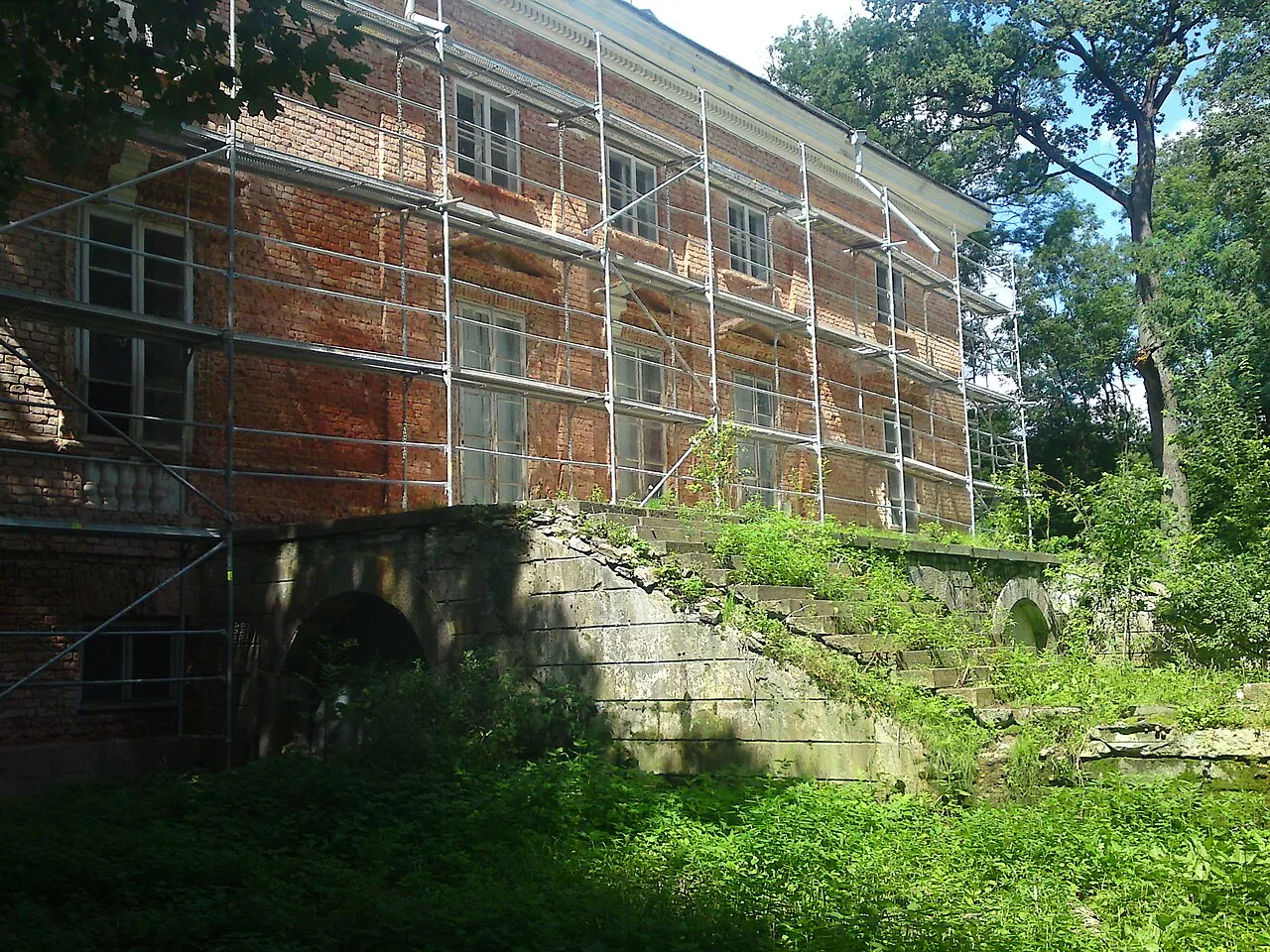
Around 1880, Maria Servińska married Henryk Ruziczka de Rosenwert, and the estate passed to this family. Their son Stanisław modernized the farmstead in the 1920s—a distillery, steam mill, power plant, fishery—and between 1921 and 1928 rebuilt the palace with the participation of architects Kazimierz Skurewicz and Romuald Gutt. He was also one of the initiators and shareholders of the Podlasie Aircraft Factory in Biała Podlaska. The family lived in the palace until 1945, after which the estate was taken over by the state: it housed the Warsaw Polytechnic creative house, later a club, cinema hall, and medical station of the state farm.
Park and legend
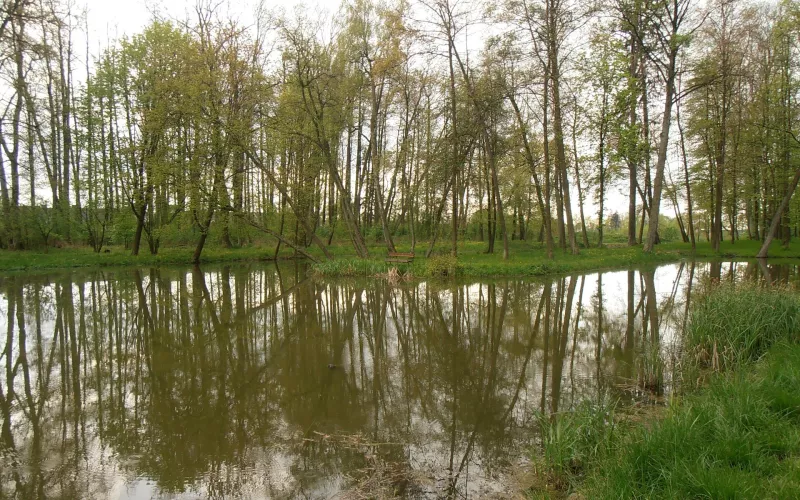
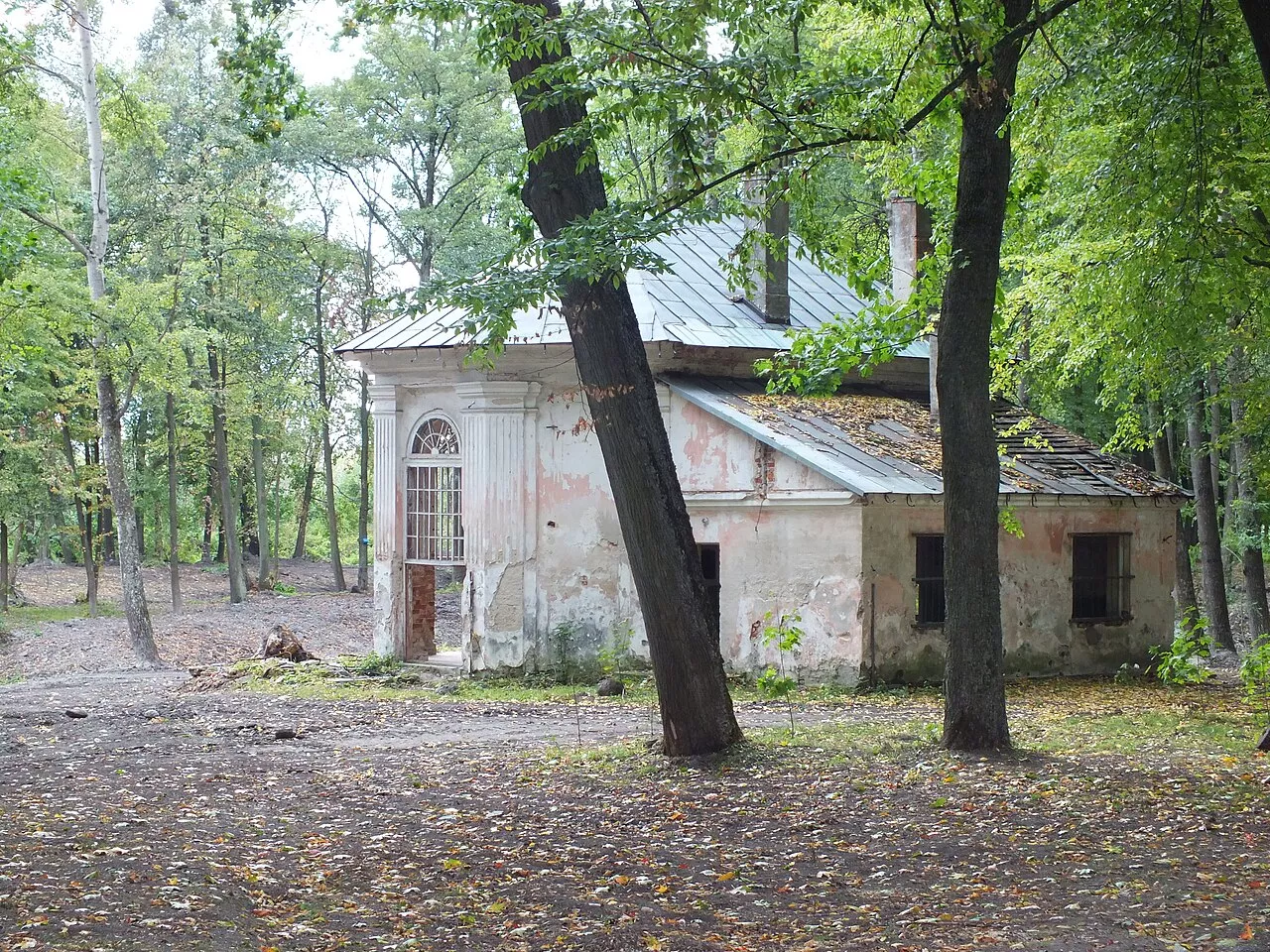
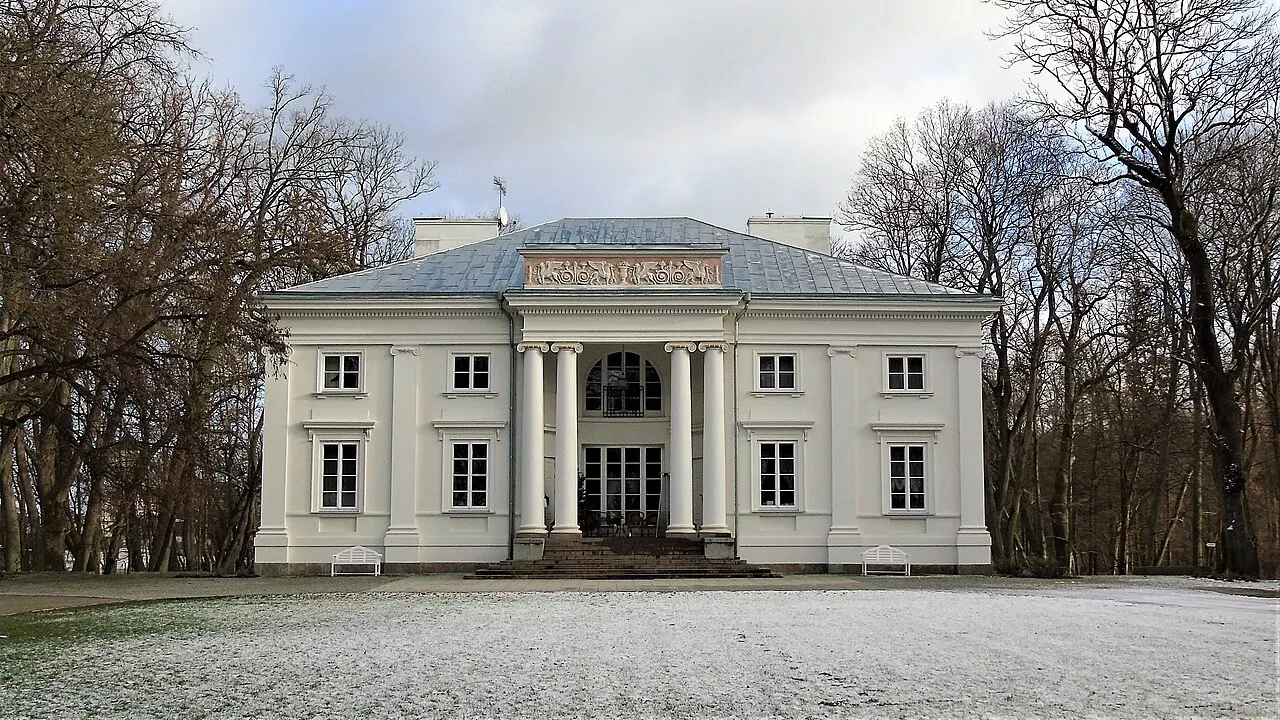
The palace is rectangular, facing west, with a round hall on the axis. The facade features a recessed portico with two pairs of columns, above which is an attic with a frieze: vases, griffins, cornucopias, acanthus shoots. The park contains notable ashes, black pines, and oaks, a pond and ponds, as well as a classicist orangery from the second quarter of the 19th century. A legend is associated with the palace, known since the time of ethnographer Oskar Kolberg: on an island in the pond beneath the Holobud pine forest stood a church that sank underground during a wedding along with the bridegroom and guests. A white dove that cooed every night on an old poplar is said to be the bride’s soul. Older residents say that on Sundays the bells can be heard over the pond.
How to get there
Tselesnytsia is located about 10 km east of Janów Podlaski and approximately 22 km northeast of Biała Podlaska. For Ukrainians, this is Poland, so a passport is required; nearby are the Bug River and the border with Belarus, so document checks are possible. The palace operates as a hotel, so the park and exterior can be viewed, and guests also have access to the interiors. Nearby is a shrine in Pratulin, and in Janów there is the bishop's castle and the Basilica of the Holy Trinity.