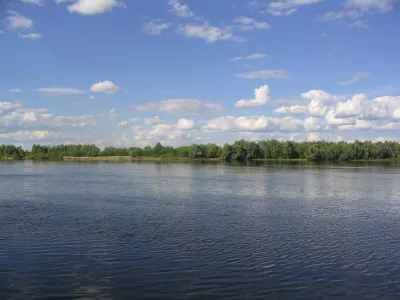
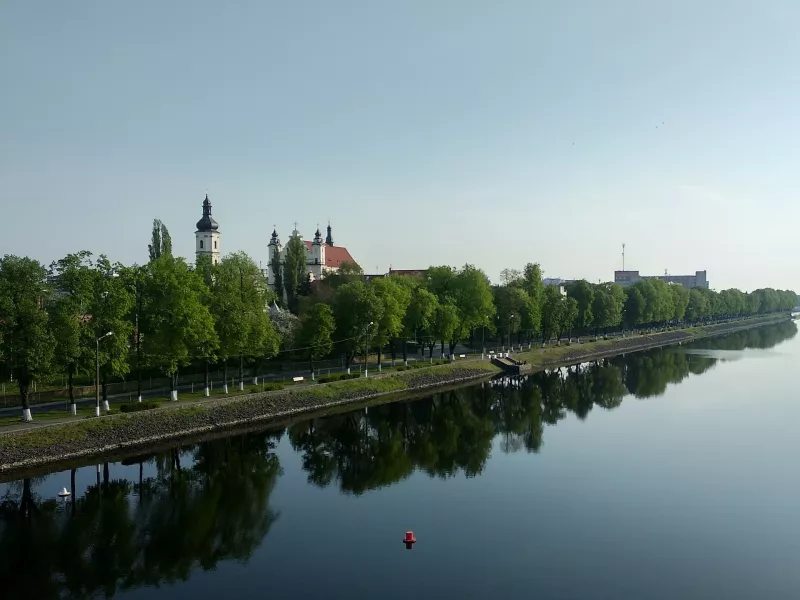

Pinsk stands at the confluence of the Pina River and the Pripyat River, in the Brest Region of Belarus. It is one of the oldest cities of Polissia: it was first mentioned on November 5, 1097, in the Primary Chronicle. In the 12th century, Pinsk was the capital of its own principality. According to the 2009 census, 130,355 people lived here.
Principality and Lithuania
In 1174, Pinsk became the capital of the independent Principality of Pinsk. In the first half of the 13th century, the city was a stronghold of the Galicia-Volhynia Principality against Lithuanian raids, and in 1323 it passed to the Grand Duchy of Lithuania. In 1521, Sigismund I handed Pinsk over to Queen Bona, who began agrarian reforms here. In 1527, the last Tatar attack was repelled at the castle walls.
In 1556, the Principality of Pinsk was abolished, and Pinsk became the county center of the Brest Voivodeship. On January 12, 1581, the city obtained Magdeburg rights and a coat of arms.
Jesuit Collegium and Leshchynskyi Monastery
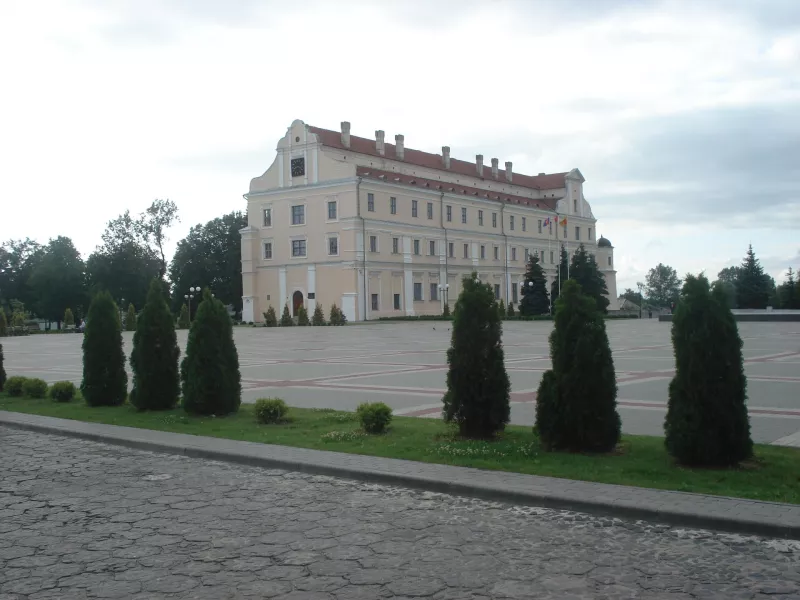
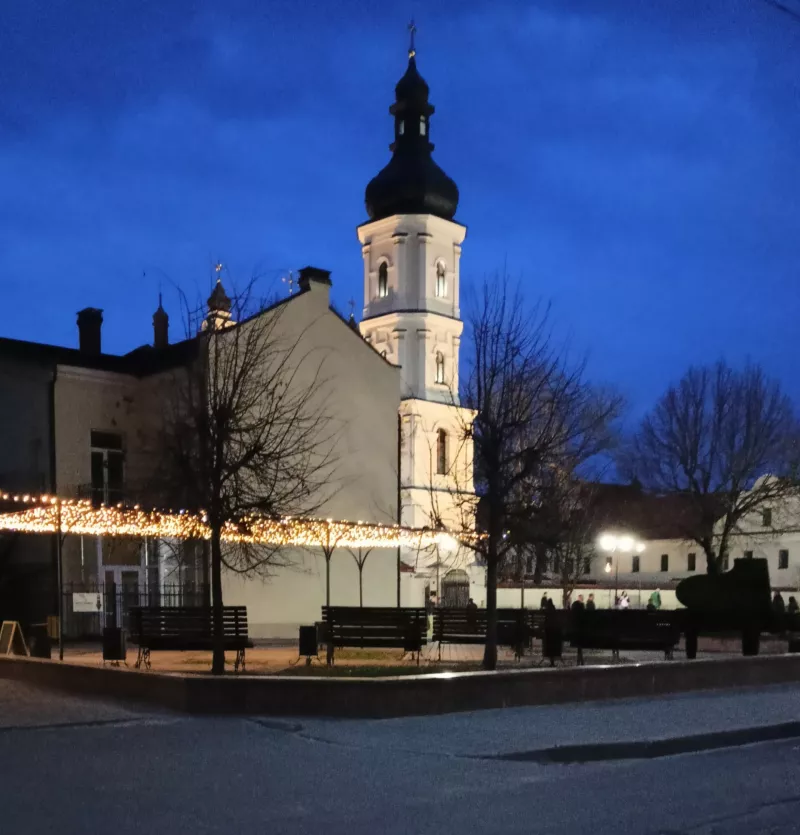
The most famous building in the city is the brick Jesuit Collegium, which was built from 1630 to 1675. Today it houses the Museum of Belarusian Polissia. The Church of the Assumption of the Blessed Virgin Mary was constructed between 1712 and 1730, and the Church of Saint Charles Borromeo in Karolina was built from 1770 to 1782.
The Butrymowicz Palace was built between 1784 and 1790, and King Stanisław August Poniatowski was present at the laying of the first stone in 1784. On the outskirts of Leshch, there is the Leshchynskyi Monastery with an 18th-century park. The first Orthodox temple at the monastery in Leshch was mentioned as early as 1263.
Wars of the 17th–18th Centuries
In 1648, an uprising in support of Khmelnytsky broke out in Pinsk. On September 25, 1655, Voivode Fedir Volkonsky captured and destroyed the city, and from 1655 to 1659 Pinsk was the center of the Pinsk-Turiv Cossack Regiment. In 1706, Charles XII captured, plundered, and burned the city.
In 1710, by order of Peter I, Vasyl Tatishchev established production of 30 cannons and 7 ships here.
Jewish City
In the 19th–20th centuries, Pinsk was predominantly Jewish. In 1887, of 22,967 inhabitants, 19,017 practiced Judaism; in 1910, 26,626 out of 36,409; and in 1931, Jews made up 73.5% of the population. The Nazi occupation from 1941 to 1944 destroyed the Jewish community, and according to the 2009 census, Jews made up 0.11% of the city’s population.
In 1837, the Skirmunt wool factory began operating; in 1884, the railway from Luninets reached Pinsk; and in 1885, a ship repair plant opened.
20th Century
In 1921, under the Treaty of Riga, Pinsk became part of Poland and became the county center in the Polissia Voivodeship. On September 7 of that year, a fire destroyed almost the entire city center. From September 1939, the city was part of the BSSR. In 1954, Pinsk Region was abolished, and the city became a district center of Brest Region. In 1956, the Church of Saint Stanislaus, the market square, and the Great Synagogue were destroyed.
The Pina River within the city limits is 35–55 m wide.