
Bog bilberry in Polissia
Vaccinium uliginosum
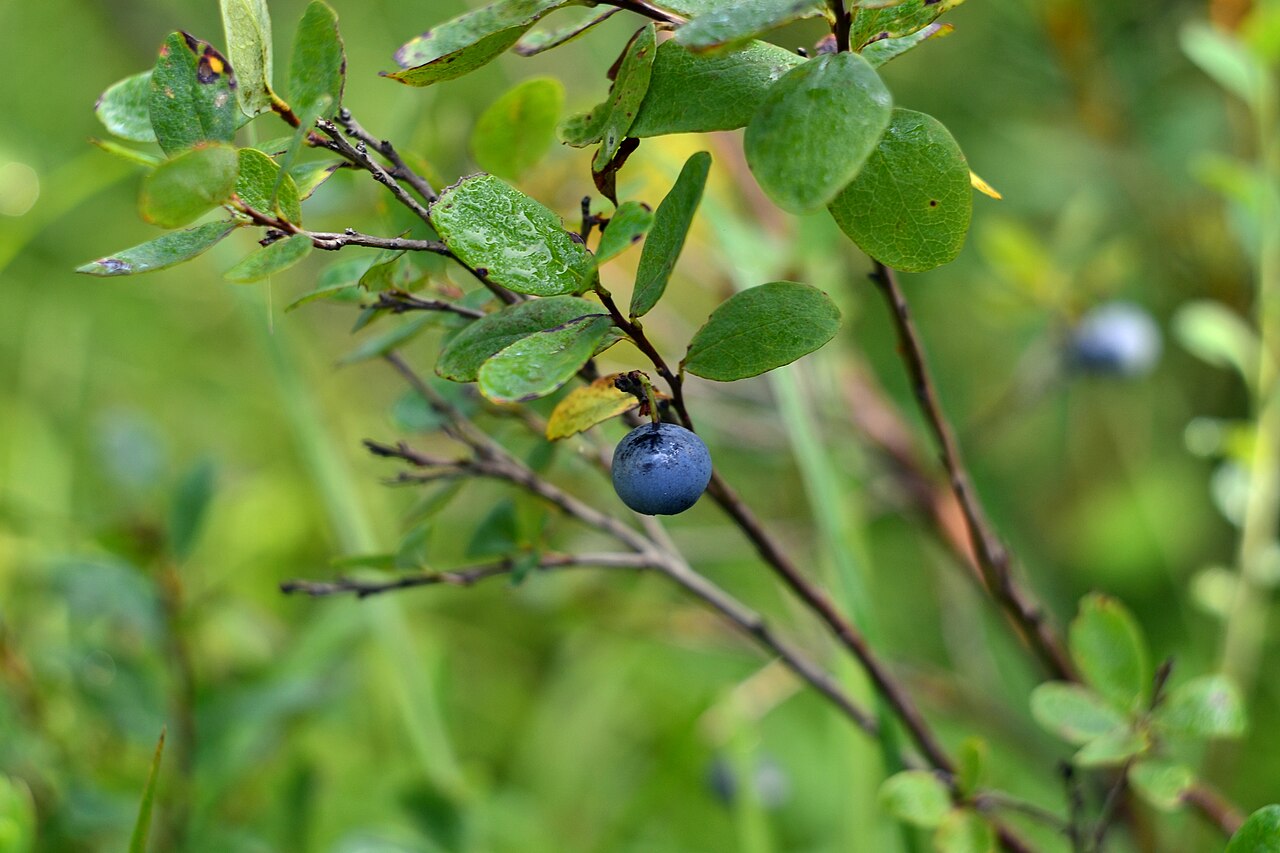
The bog bilberry, also called bog blueberry, is a shrub up to a metre tall with brown round branches and bluish-green oval leaves. Its berries are blue with a waxy bloom like bilberries, but larger, with colourless juice and white or greenish flesh, so they do not stain the hands.
The bog bilberry grows on raised and transitional bogs, in swampy pine woods and on the edges of peatlands. In Polissia it occurs on the bogs of Rivne, Volyn and Zhytomyr regions, including in the Rivne and Polissia reserves.
The berries ripen in July–August. The bog bilberry often grows together with marsh Labrador tea, whose strong smell can cause headaches. For this reason it was popularly called the “drunkard” or “fool's berry”, although the berries themselves are edible.
The cultivated blueberries grown on plantations in Polissia derive mostly from North American species. The wild bog bilberry is a different plant. When picking it, do not linger long in thickets of marsh Labrador tea.
When to see: berries in July–August
Where it was seen in Polissia
Observations from the open scientific database GBIF since 1990.
More in “Plants”
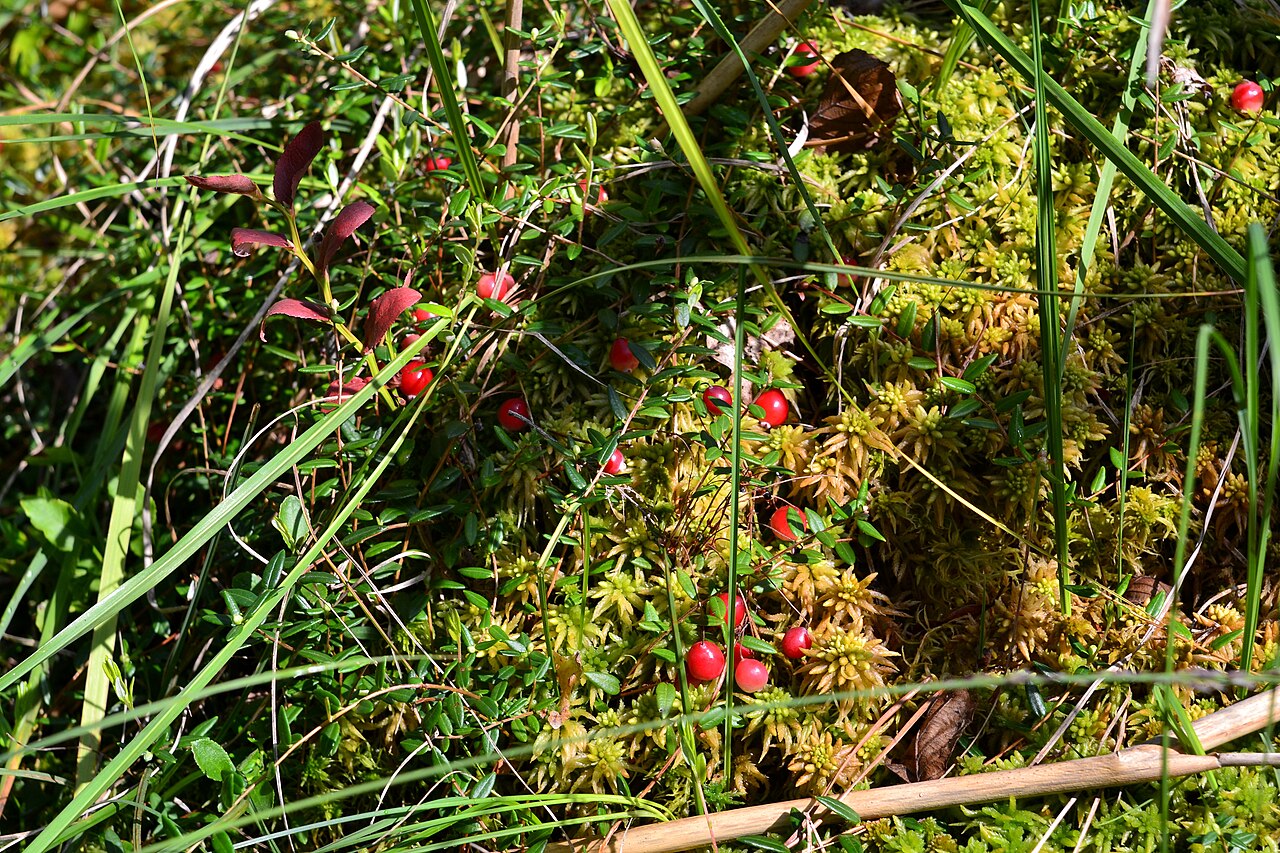 Lingonberry
An evergreen dwarf shrub of Polissia's dry pine forests with glossy leaves and red, bitter-sour berries.
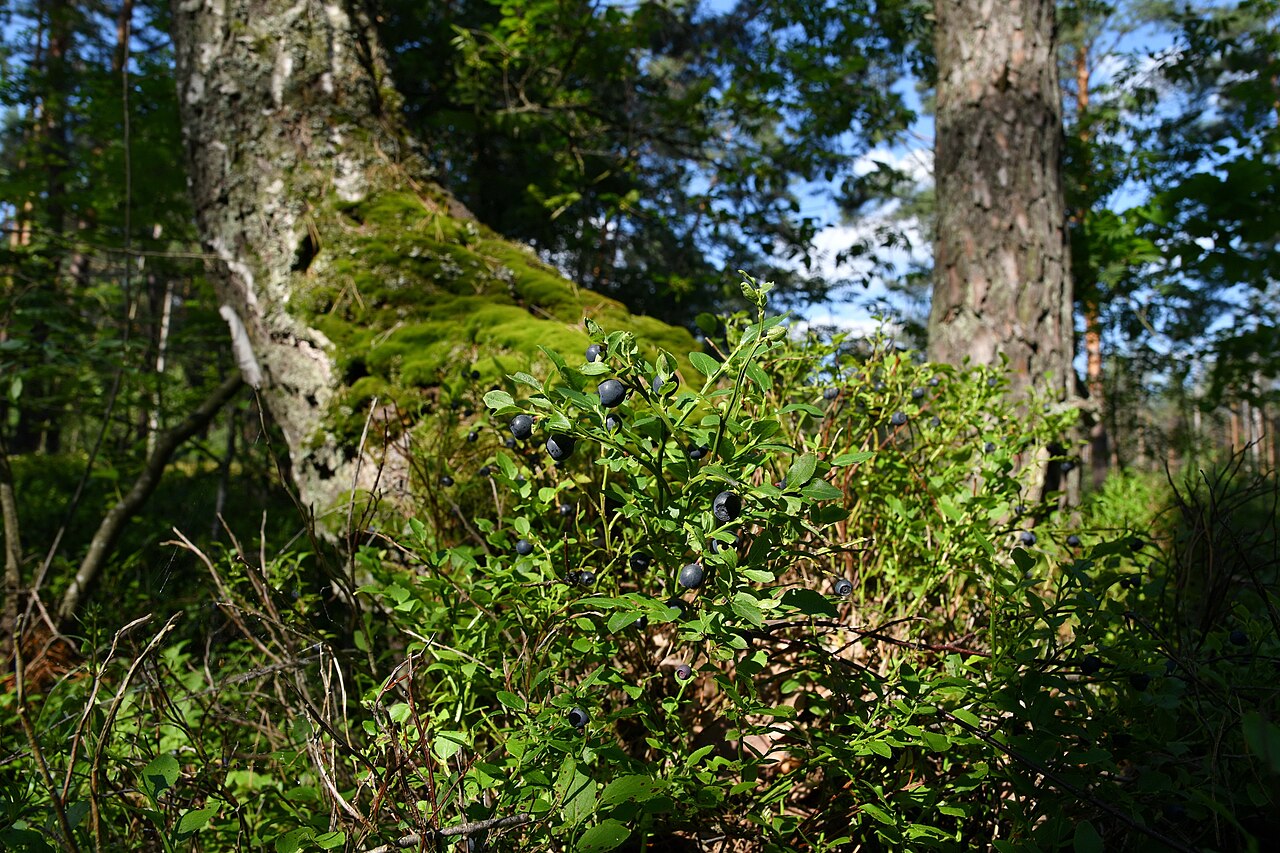 Bilberry
Polissia's most widespread forest berry, forming continuous carpets under the pines.
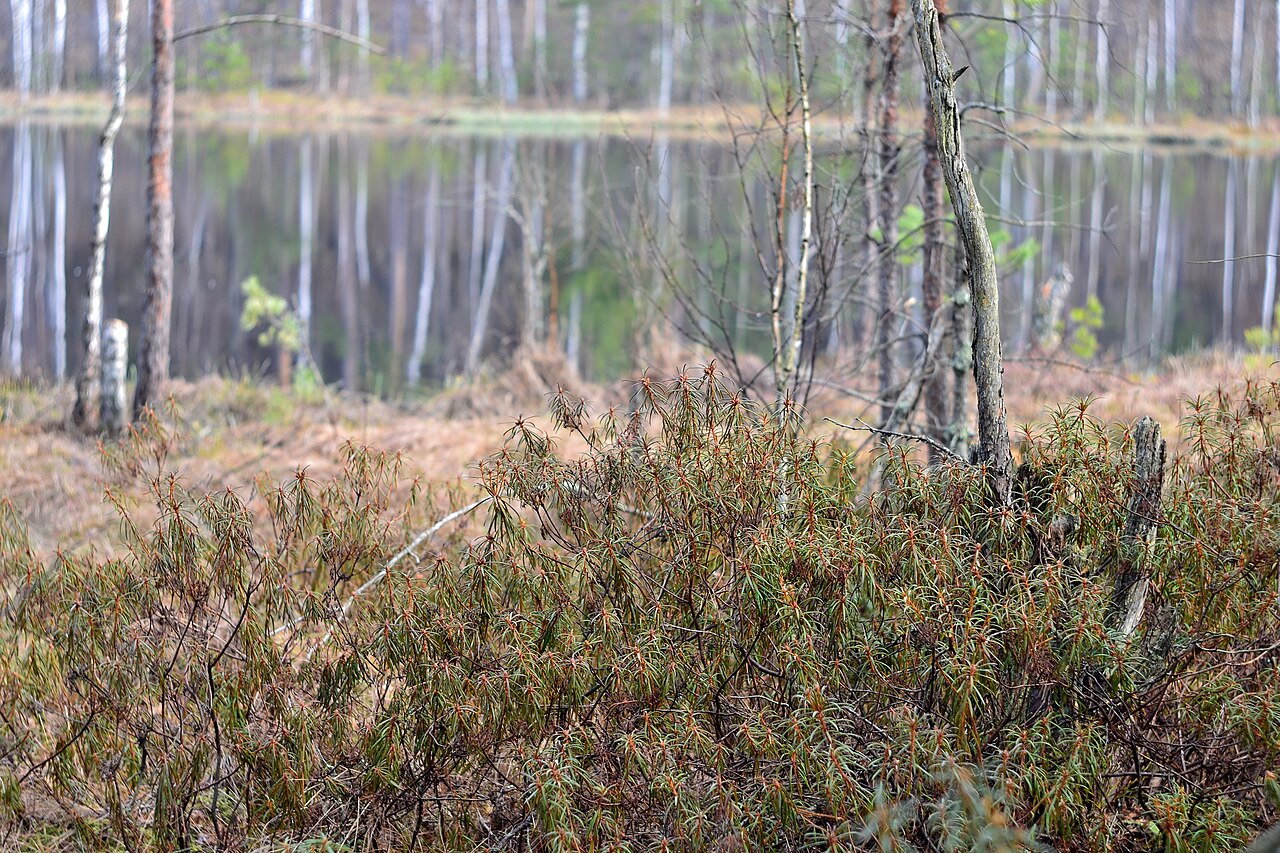 Marsh Labrador tea
A strong-smelling evergreen shrub of Polissia's bogs that can give you a headache in hot weather; the whole plant is poisonous.
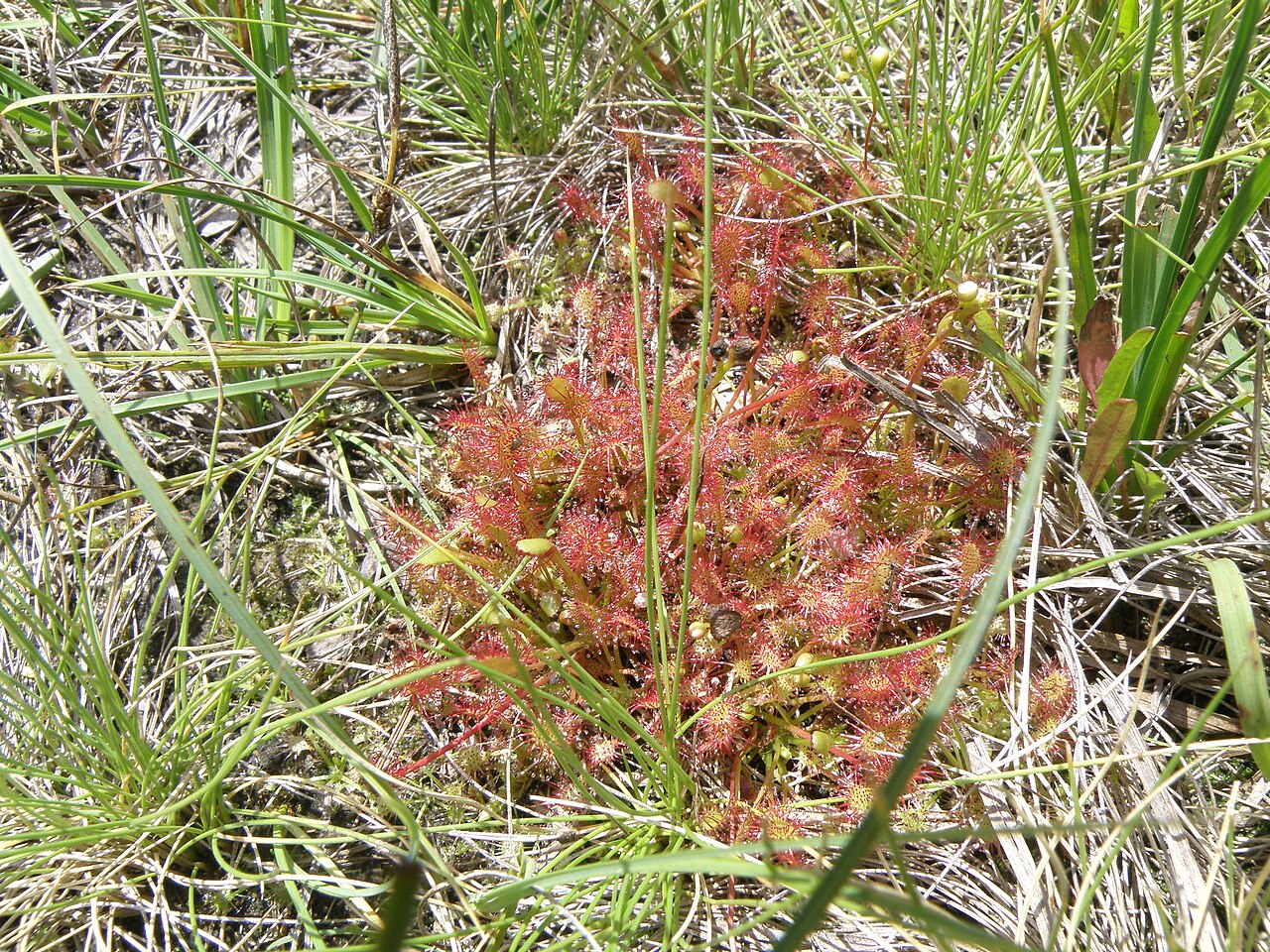 Round-leaved sundew
A small insect-eating plant of sphagnum bogs whose leaves are covered in sticky droplets.