
Stag's-horn clubmoss in Polissia
Lycopodium clavatum
Caution: poisonous; do not consume
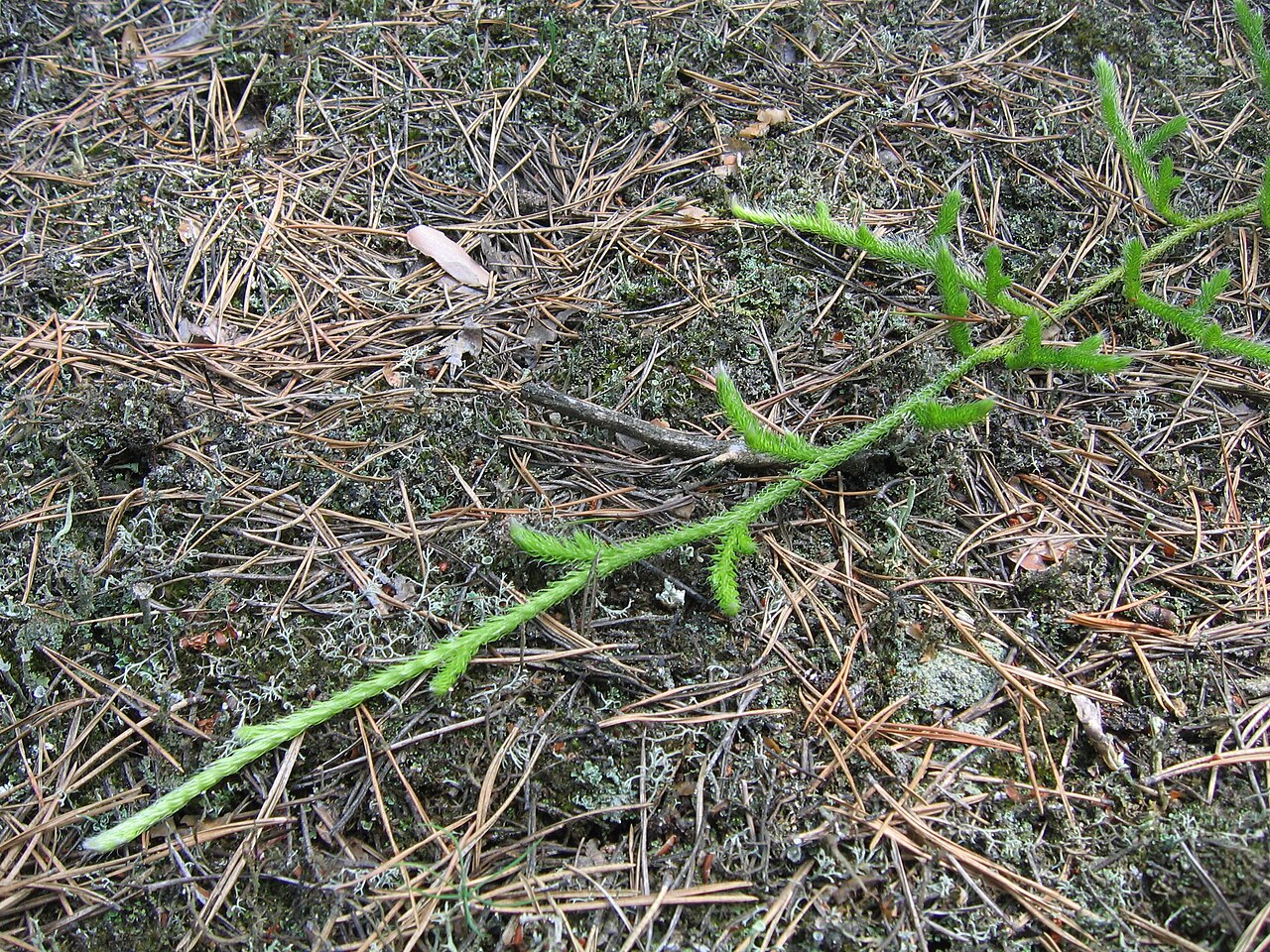
Stag's-horn clubmoss is an evergreen plant with long creeping stems densely covered in small, narrow leaves ending in a fine hair. Branches rise from the stems on long stalks bearing yellowish spore-bearing cones.
The clubmoss grows in pine and mixed forests on poor sandy soils, on forest edges and old clearings. In Polissia it occurs in the pine forests of all regions, including the Polissia and Cheremskyi nature reserves.
Clubmosses are descendants of ancient plants that grew hundreds of millions of years ago. They reproduce by spores, and many years pass from the germination of a spore to an adult plant. The fine yellow spore powder was once used in pharmacies and for special effects because it flares up.
The clubmoss grows very slowly, so do not tear off its long stems for decorations and wreaths. The plant is poisonous.
When to see: all year; spore-bearing cones in July–August
Where it was seen in Polissia
Observations from the open scientific database GBIF since 1990.
More in “Plants”
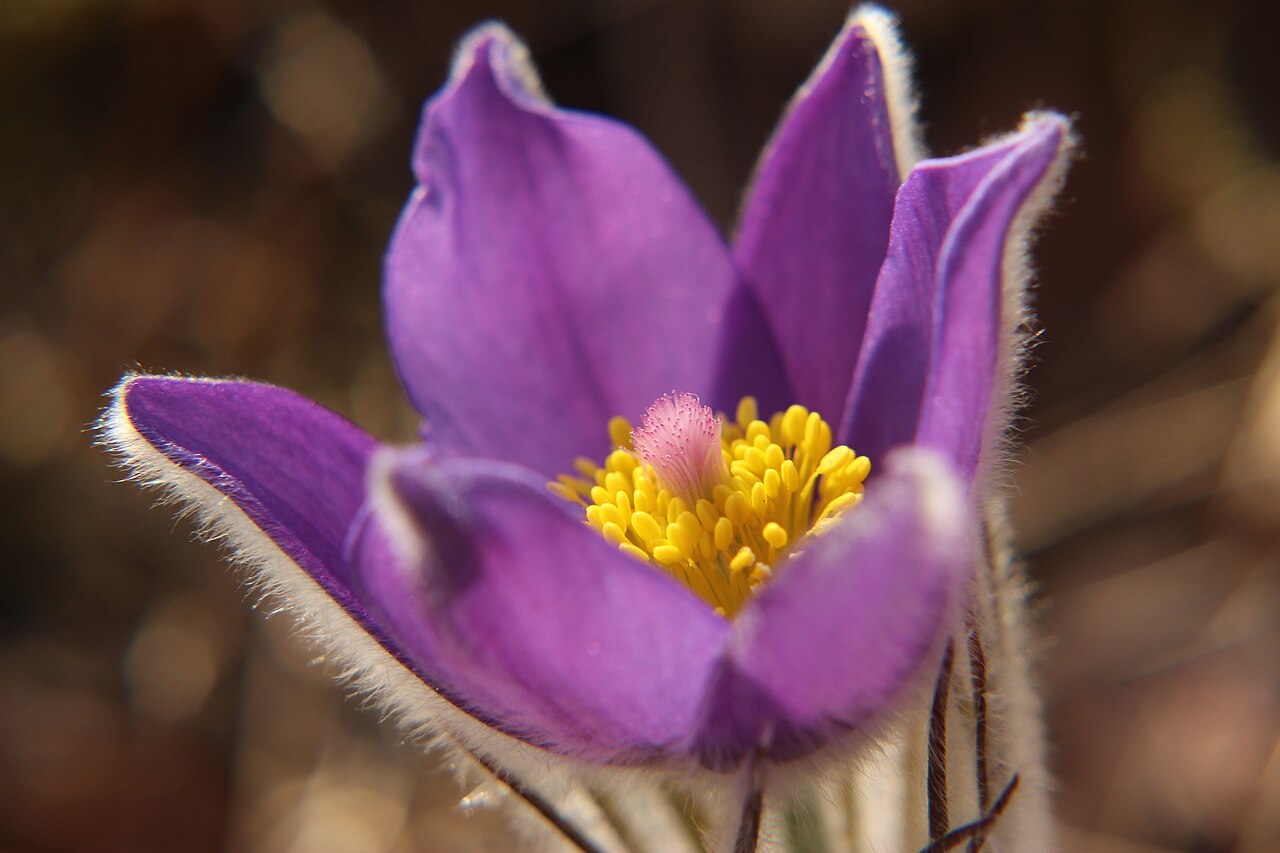 Eastern pasqueflower
An early spring flower of Polissia's pine forests with fluffy violet bells; it is protected.
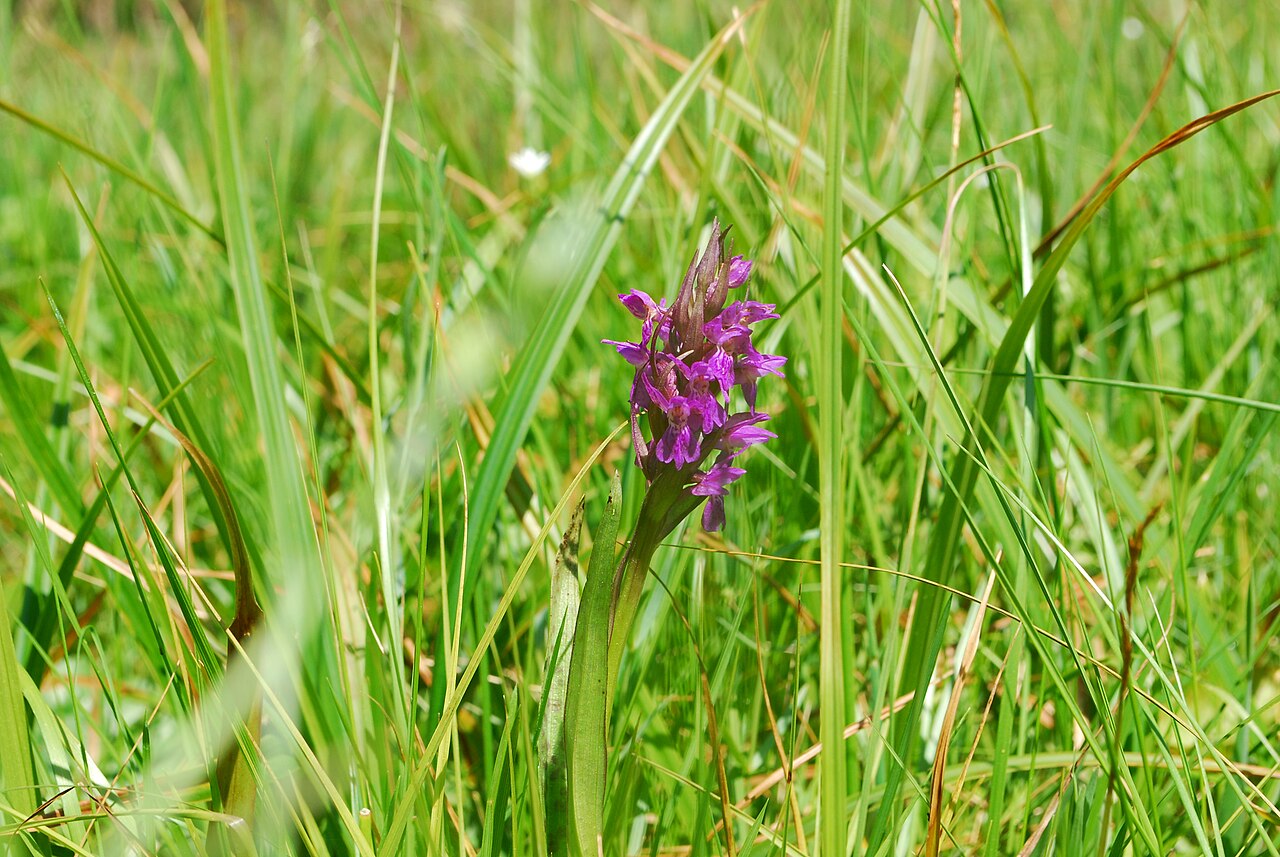 Broad-leaved marsh orchid
A wild orchid of Polissia's wet meadows with dense purple flower spikes and spotted leaves.
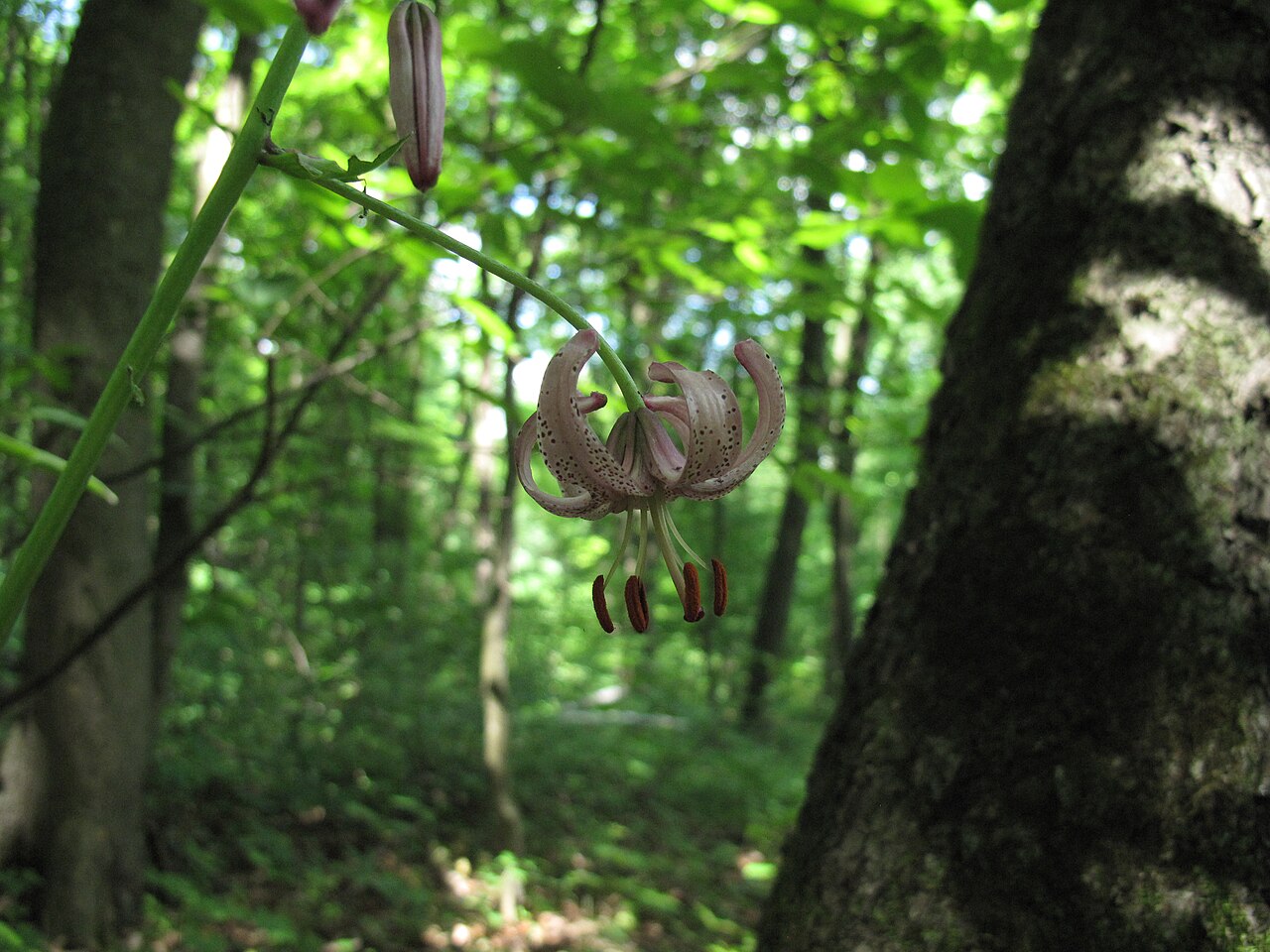 Martagon lily
A tall forest lily with nodding pinkish-lilac “turban” flowers, found in Polissia's broadleaved forests.
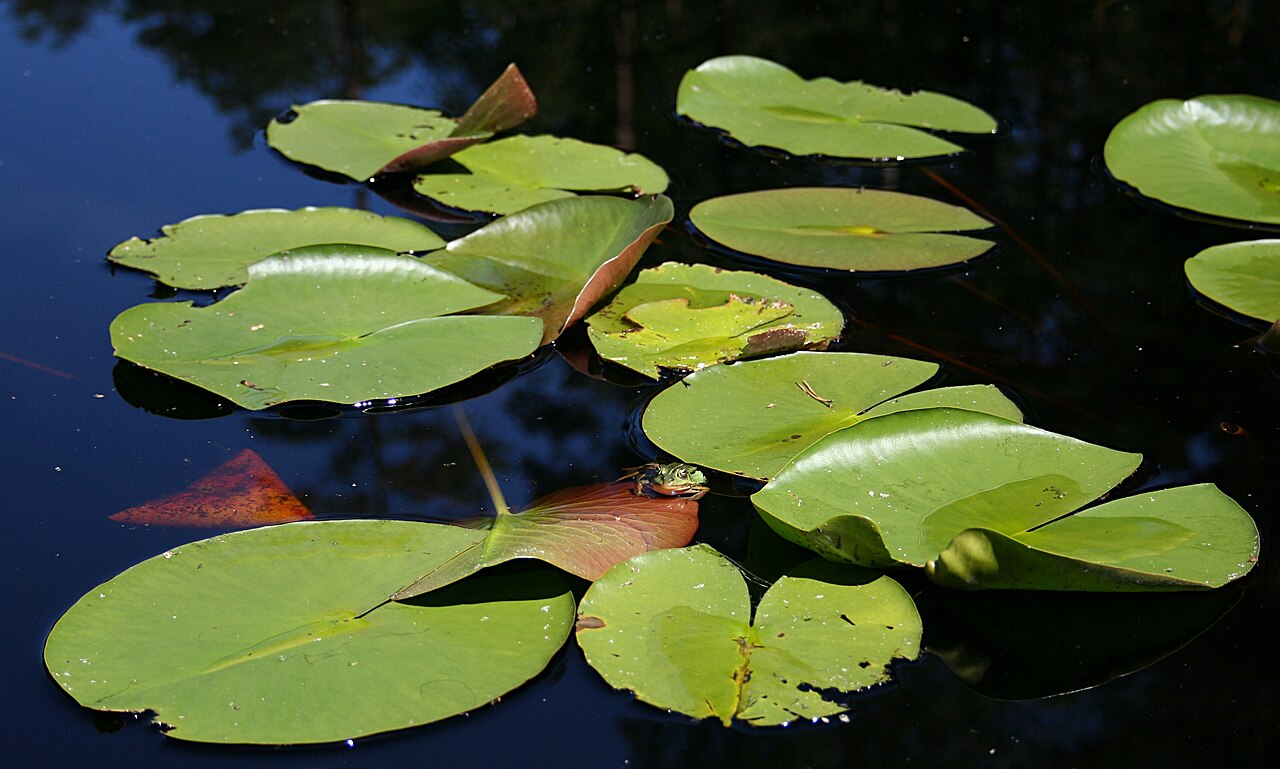 White water lily
The white water lily, with large flowers among floating leaves, adorns the lakes and oxbows of Polissia.