
Vysotsk is a village on the Horyn River in the very north of the Rivne region, the center of the Vysotsk hromada in the Sarny district. About 1,700 people live here. Today it is a quiet Polissia village, but once Vysotsk was a town with a castle where princes, a hetman, and one of the most famous Ukrainian writers of the 17th century lived.
Vyshhorod on the Horyn
The ancient name of Vysotsk is Vyshhorod, or Vysochko. They say it comes from the high artificial hill on which a castle once stood. Vysotsko is mentioned among the towns given to the Turov eparchy, along with Pinsk and Dubrovytsia. The surroundings were inhabited as early as the Stone Age: beads made of red slate are found here. Vysotsk lay on the border of the lands of the Drevlians and Dregoviches, and from the end of the 12th century it belonged to the possessions of the princes of Dubrovytsia.
The Horyn was then the main route between Lithuania and Volhynia. Roman coins have even been found near Vysotsk. In 1486, the ambassadors of the Wallachian voivode traveled down this river to the Moscow tsar.
The Holszański and Sołomarecki Princes
At the end of the 15th century, Vysotsk passed to the Holszański princes. Prince Yurii Holszański-Dubrovytskyi built a castle here and named it Vyshhorod. He fought against the Tatars under the leadership of Hetman Kostiantyn Ostrogski, and in his old age settled in the Vysotsk castle, where he drew up his will in 1537. Later, Vysotsk passed to the Sołomarecki princes.
In 1593, the town was devastated by the Cossacks of Severyn Nalyvaiko, and in 1613, by a five-thousand-strong Cossack detachment. In 1639, Princess Sołomarecka, together with her son Jan-Władysław, built an Orthodox church in Vysotsk. Jan-Władysław studied at German universities along with Meletii Smotrytskyi, and the latter lived in Vysotsk for some time. In his „Threnos”, Smotrytskyi lamented the noble families that had departed from Orthodoxy, and mentioned the Sołomareckis among them.
Hetman Teteria in Vysotsk
In 1654, the Tatars destroyed the town. In 1664, Vysotsk was bought by Hetman Pavlo Teteria. He repopulated the deserted town and rebuilt the castle on the old foundation. Teteria even asked the king to intern Yurii Khmelnytskyi here, who was by then a monk. Having renounced the hetmanate, Teteria fled to his Polissia estates — Vysotsk, Kolky, and Rafalivka. In 1668, he deeded Vysotsk to the Jesuits, and they owned it for more than a hundred years, until 1773.
The Assumption Church
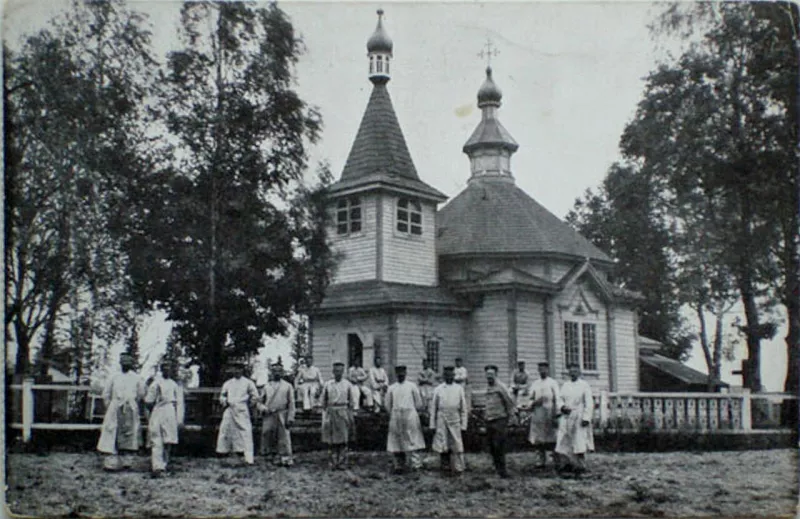
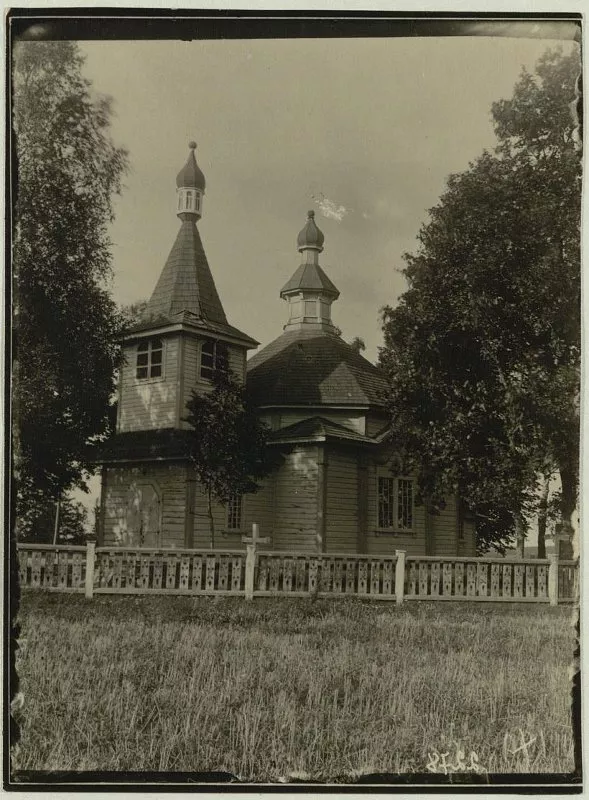
The researcher Edward Rulikowski described the Vysotsk church in 1895 as made of hewn wood, covered with shingles, with five domes and a bell tower nearby. Later, a wooden church of the Assumption of the Blessed Virgin Mary stood in the village — in the 19th century it was first Greek Catholic, and from the 1840s Orthodox. On January 19, 2025, it burned down.
The Legend of Lake Pochaivske
Near the neighboring village of Verbivka, there are two large lakes connected by a canal. According to local legend, the village of Pochaiv once stood here, which for the sins of its residents sank underground along with the church. Every year at Easter, church bells supposedly ring out from the depths.
Nature
Vysotsk is surrounded by protected areas. Nearby are the Pochaivskyi landscape reserve with an area of 905 hectares and the Vysotskyi forest reserve with an area of 110 hectares, where an oak tree that is estimated to be about six hundred years old grows on the bank of the Horyn. In the village itself, there is a small arboretum. In the surrounding forests and swamps live the black stork, grey crane, great egret, beaver, and otter.
Vysotsk on Video
When to Go
The best time is in late spring and summer, when the Horyn is warm and birds nest in the marshes. Vysotsk is remote, so it is better to go for the whole day.
Nearby
Dubrovytsia is to the south. More can be found in the article Sarny Raion.
How to get there
Buses run from Dubrovytsia and Sarny; by car from Dubrovytsia it takes about an hour along a forest road.