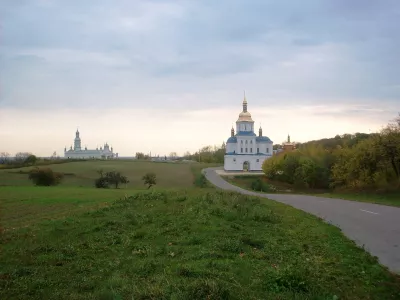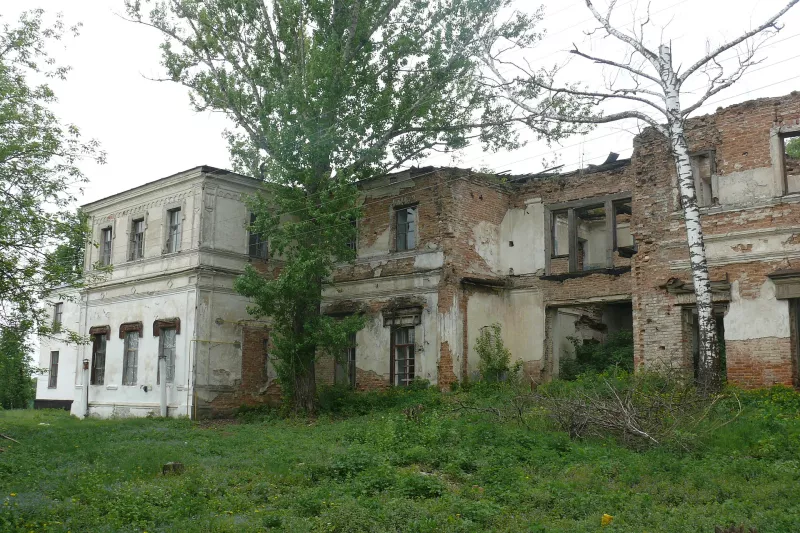
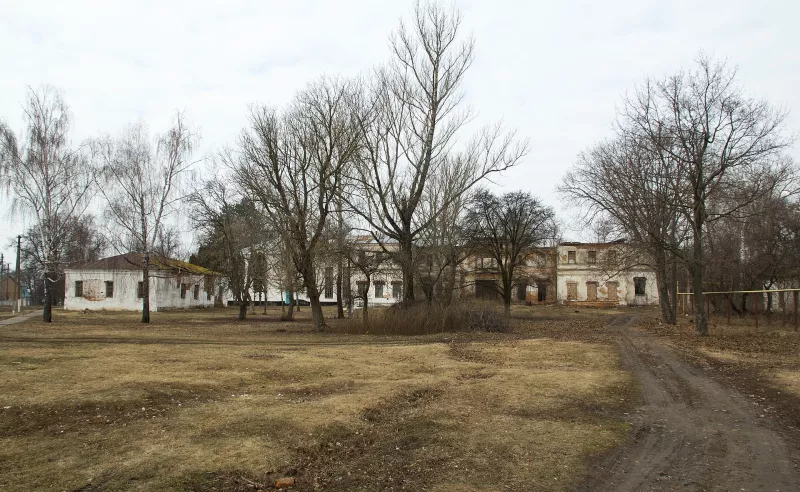
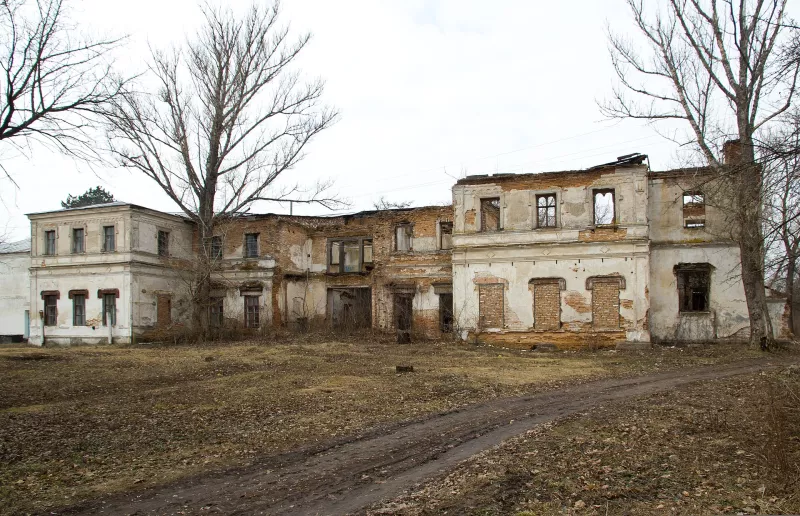
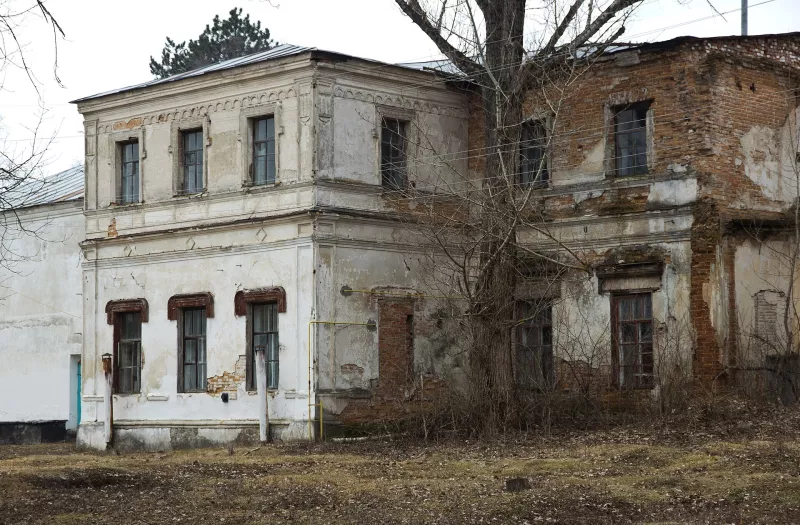

On the outskirts of the village of Kuianivka in the Bilopillia region lies the Kukol-Yasnopilsky Estate, an architectural landmark of national significance. Its main building is an example of classicism and part of a former palace and park ensemble, which also included the Church of John the Warrior and a park.
History
In the late 18th century, Kuianivka belonged to Bilopillia sotnyk Stepan Kukol. In the early 19th century, members of the Kukol-Yasnopilsky family developed their ancestral estate here.
The dating of the main building varies in sources. The State Register of Monuments designates 1814, whereas researcher Olha Zhukova notes in a scholarly publication that descendants of Stepan Kukol built the two-storey palace in the 1840s.
The estate complex included a park laid out in the late 18th century and a brick Church of John the Warrior. In 1803, Fedir Kukol-Yasnopilsky submitted a petition for the construction of the church. Construction began in 1805 and was completed in 1814.
In 1842, landowner Ivan Kukol-Yasnopilsky founded a sugar factory in Kuianivka. Following the nationalisation of the enterprise in 1918, the former manor house was gradually adapted to new needs. In 1822, it was repaired by factory workers and fitted out as a factory-plant training school. After its transfer to Trostianets in 1926, part of the premises was left for a primary school and employee housing.
Architecture
The building is made of brick, has two storeys, and is rendered and whitewashed. Its architecture is distinguished by the restraint characteristic of classicism. The layout is corridor-style, with bilateral room placement.
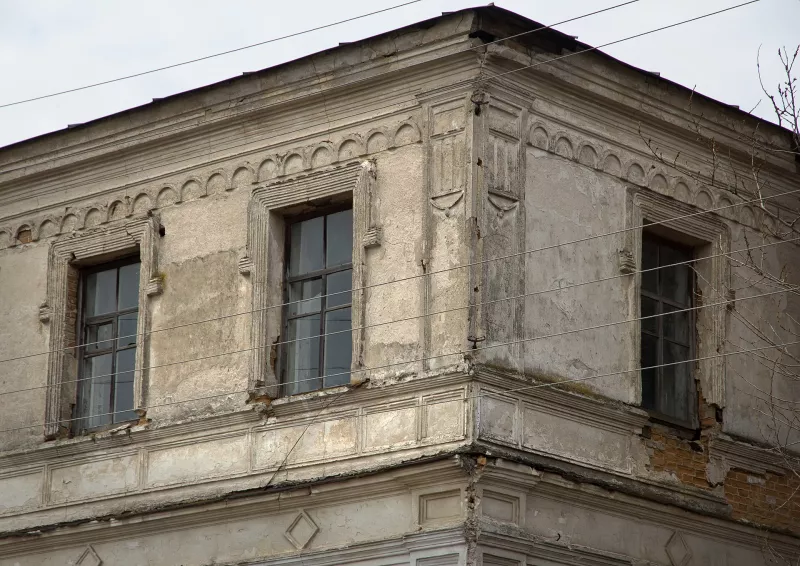
On the main facade, there is a four-column Doric semi-rotunda oriented towards the church. The facades are decorated with risalits and a simple cornice.
Of special value is the interior of the large hall, which an arcade divides into two parts. Stucco decoration and paintings with geometric and floral motifs have been preserved here.
The estate today
The Kukol-Yasnopilsky Estate is an important monument of the architectural heritage of the Sumy region. It serves as a reminder of the history of the local landed gentry and the former scale of the region's estate ensembles. The building is in need of proper preservation and restoration.
Important regarding visits: Kuianivka is located in the border zone of the Sumy region, where military danger persists. Before your trip, check the current announcements of the Sumy Regional State Administration and local authorities, current restrictions, and evacuation orders. Pay attention to air raid alerts and do not travel to the village if bans are in effect or there is a threat of shelling.
Nearby
Sumy Regional Local Lore Museum, Spaso-Preobrazhensky Cathedral — in the centre of Sumy.