
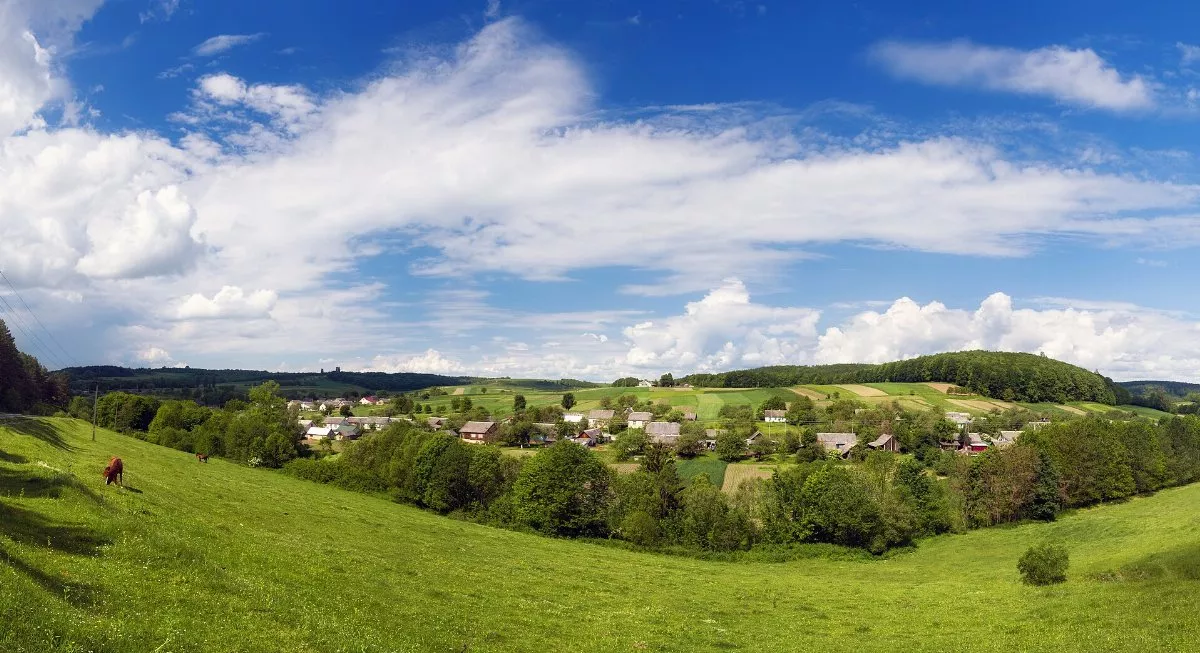
«From Volhynia to Podolia» is an educational hiking trail of the Derman-Ostroh National Nature Park in the south of Rivne Oblast. Over the course of a few kilometres, it crosses three natural regions: it begins on the hills of the Mizoch Ridge (Volhynian Upland), descends into the marshy valley of the Zbytynka — the narrowest part of Mal Polissia, the Ostroh Gateway Valley — and emerges onto the spurs of the Kremenets Mountains, which already belong to the Podolian Upland. Hence the name.
According to the park, the trail is 5.5 km long, and with stops, about three hours should be allowed for it. The route is linear, connecting the village of Bushcha in the Mizoch hromada and the Zinkiv Kamin tract near the village of Mosty. The track is marked with a yellow stripe. In the park guide, the trail is described starting from Bushcha; on the map, it is plotted in the reverse direction, from Mosty — you can walk in either direction.
Seven Stops
1. The village of Bushcha. First mentioned on 8 December 1322 in a charter of Prince Liubart Gediminovych. Findings of stone tools — chisels, knives, scrapers, axes — indicate that people lived here back in the Stone Age. The village stands on the left bank of the Zbytynka among the hills of the Mizoch Ridge. In Bushcha, there is a monument to Semen Kotyk («Doks»), one of the UPA commanders who died after the battle near Hurby in 1944.
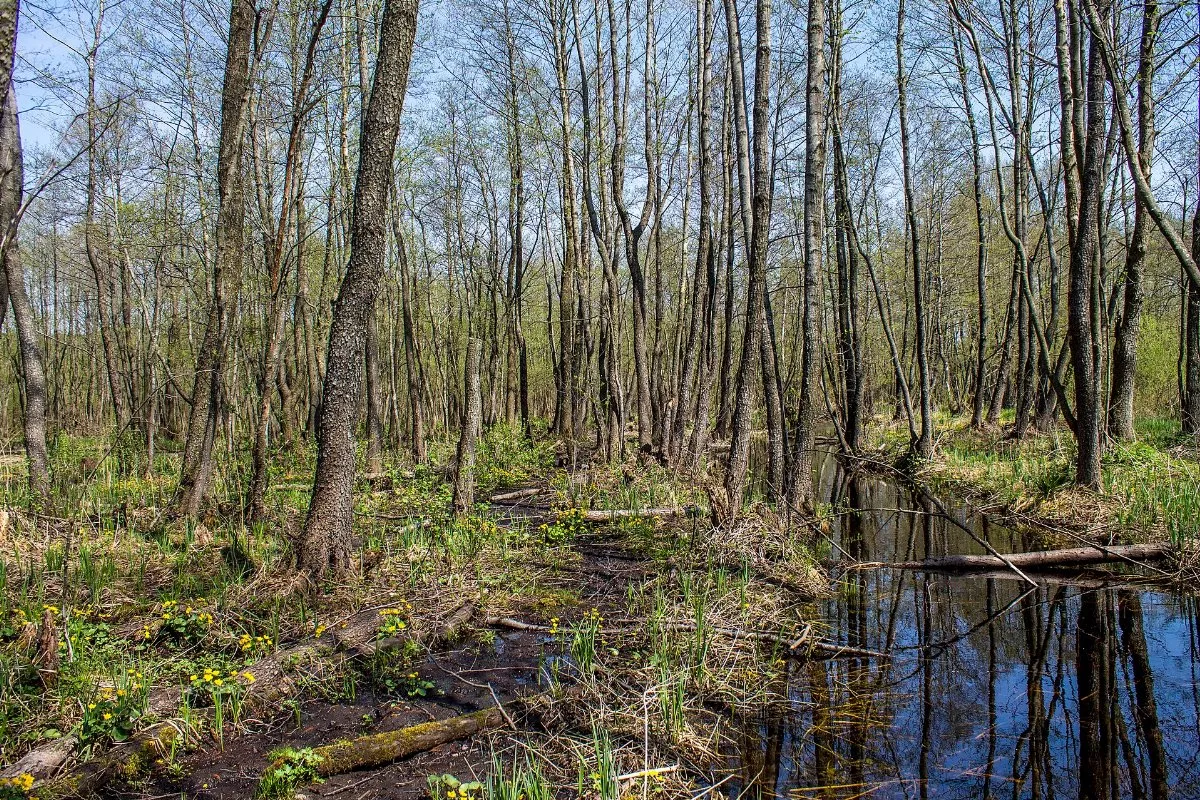
2. The Zbytynka River. It is also called Svytenka. The 56 km long river belongs to the Horyn basin; in the village, the Bushchanka, which locals call Dzherelytsia, flows into it. Near the small bridge, you can see a beaver dam.
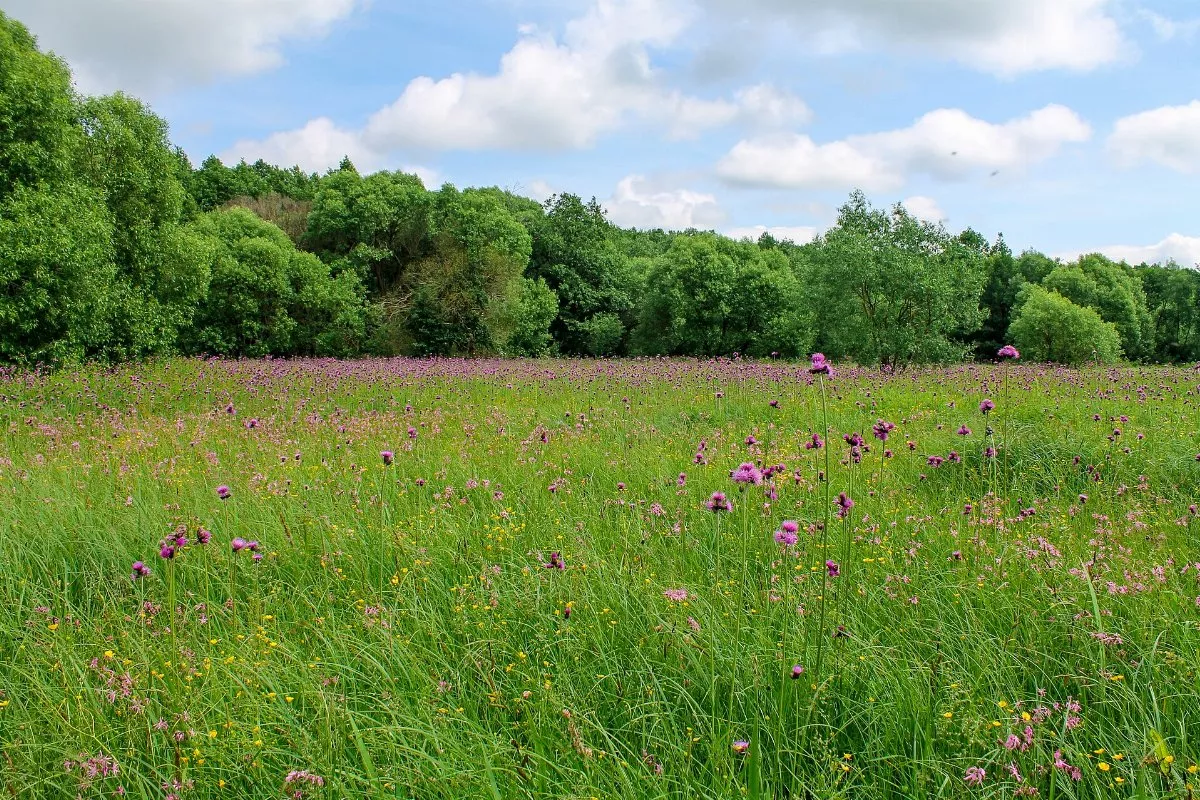
3. Bushcha Marsh. The trail leads through a swampy alder forest to a marsh that locals call Peretoky. This is a lowland carbonate marsh with sedges and hypnum mosses — in the Bushcha Botanical Reserve (385 hectares, established in 1984), the red-listed rusty sedge, marsh Swertia, common butterwort, English sundew, and Lesueur's bog orchid grow. In places, it is difficult to pass here, so after rains, you should have rubber boots.
4. Mal Polissia pine forest. On sandy hill ridges, there is a typical Polissia pine forest with a small sedge-sphagnum bog, marsh Labrador tea, and bog bilberry — an unexpected piece of Polissia in the middle of the forest-steppe.
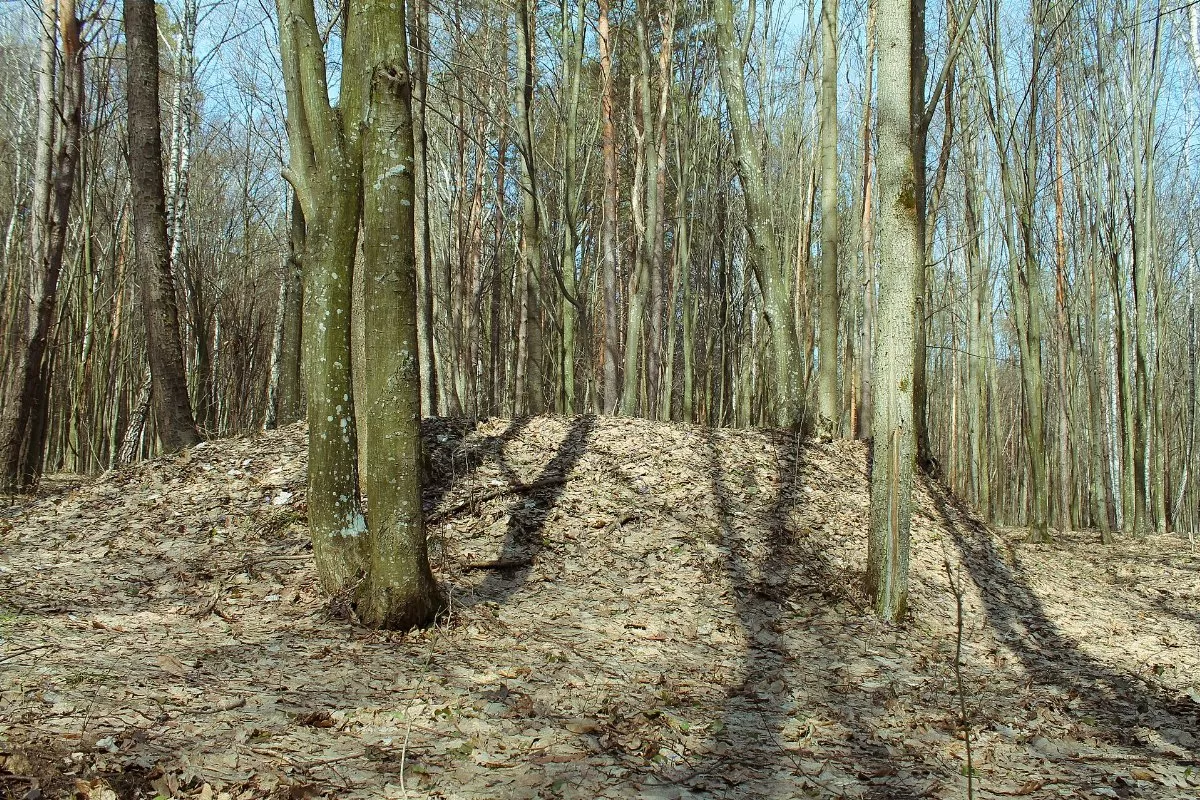
5. Turova Mohyla. According to legend, Cossacks fought with the Turks here, and the fallen Turkish military commander was buried on horseback. Today, this is an embankment about one and a half metres high.
6. Spring in the Zinkiv Kamin tract. Water flows down a wooden trough; all around is a hornbeam-birch forest with maple and ash. The spurs of the Kremenets Mountains begin from this place.
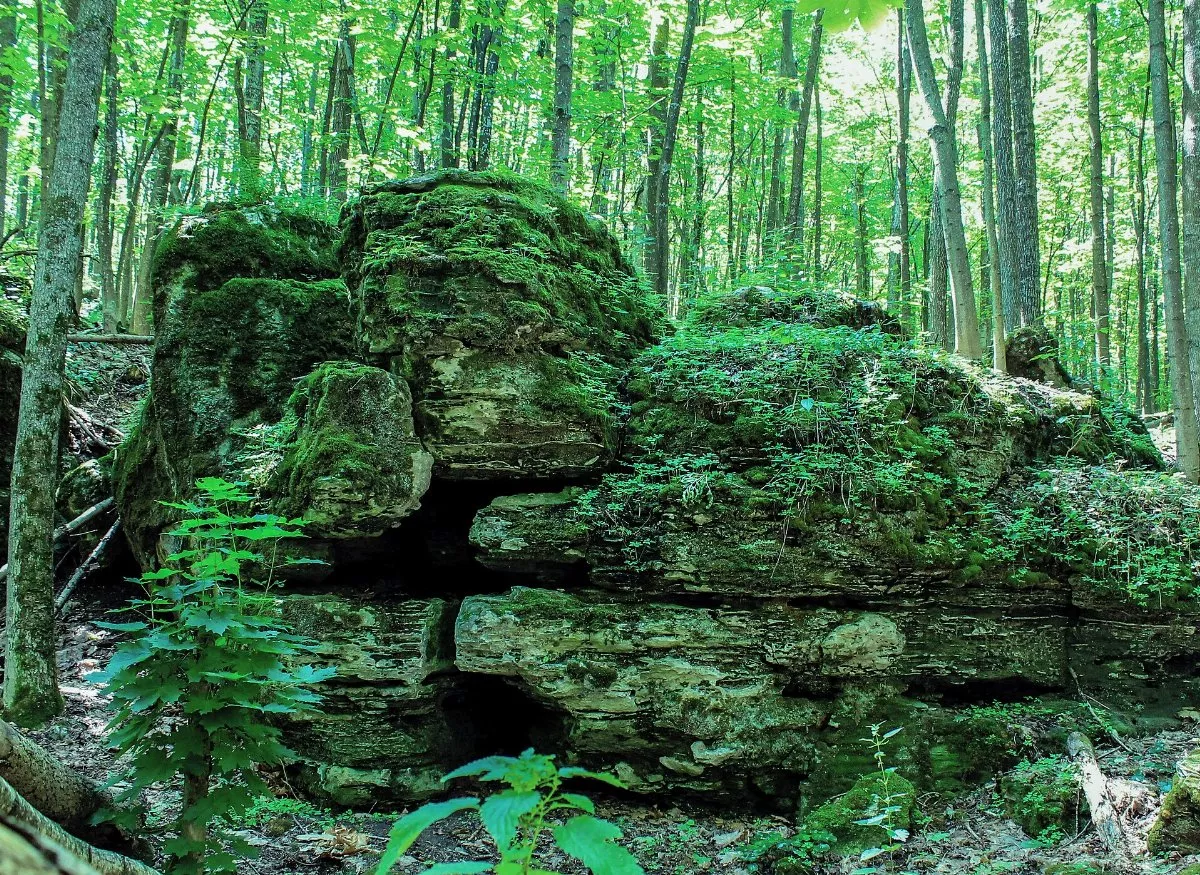
7. Zinkiv Kamin. The largest boulder among the accumulation of stones on the slope — over 2 m high and about 5 m in diameter. The legend tells of the young military commander Zinko, who fought in the Zbytynka valley against the Mongol-Tatars and hid under this stone with a few warriors.
Dermansko-Ostrozkyi Park
The national park was established on December 11, 2009. It stretches along the Zbytynka valley between the Mizoch ridge and the Kremenets mountains, and consists of several dozen separate sections. The park's flora includes 954 plant species, 51 of which are listed in Ukraine's Red Data Book; there are 68 species of animals from the Red Data Book. The park's camera traps have recorded roe deer, wild cats, and wolf tracks.
Nearby is another park trail — the Vilkhava tract near Mosty (2 km), adapted for people with visual impairments, as well as the Hurby tract with a monastery and a memorial at the site of the largest battle between the UPA and NKVD troops in April 1944.
How to get there
Bushcha lies about 35 km from Rivne; by car — via Zdolbuniv and Mizoch. By public transport, the easiest way is to get to Mizoch, then take a taxi. Since the route is linear, returning to the start should be planned in advance: between Bushcha and Mosty there are several kilometers of country road. The "How to get to the start" button on this page will plot the route to the beginning of the track.