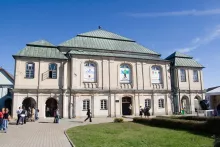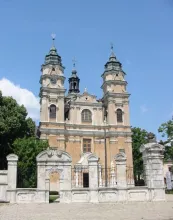
The Trail of Three Cultures (Szlak Trzech Kultur) is a short walking route through old Włodawa laid out by the city authorities. It highlights what makes the town stand out in Polissia: just a few hundred meters from one another stand a Catholic church, an Orthodox church, and a synagogue. Włodawa lies on the Bug River, right on the border with Belarus, and for centuries it was inhabited by Poles, Ruthenians, and Jews. The route is a loop, according to OpenStreetMap about 2.4 km, while our track is 2.6 km. You can walk it in an hour, but with the museum and the shrines, allow half a day.
The Pauline Church and the Orthodox Church
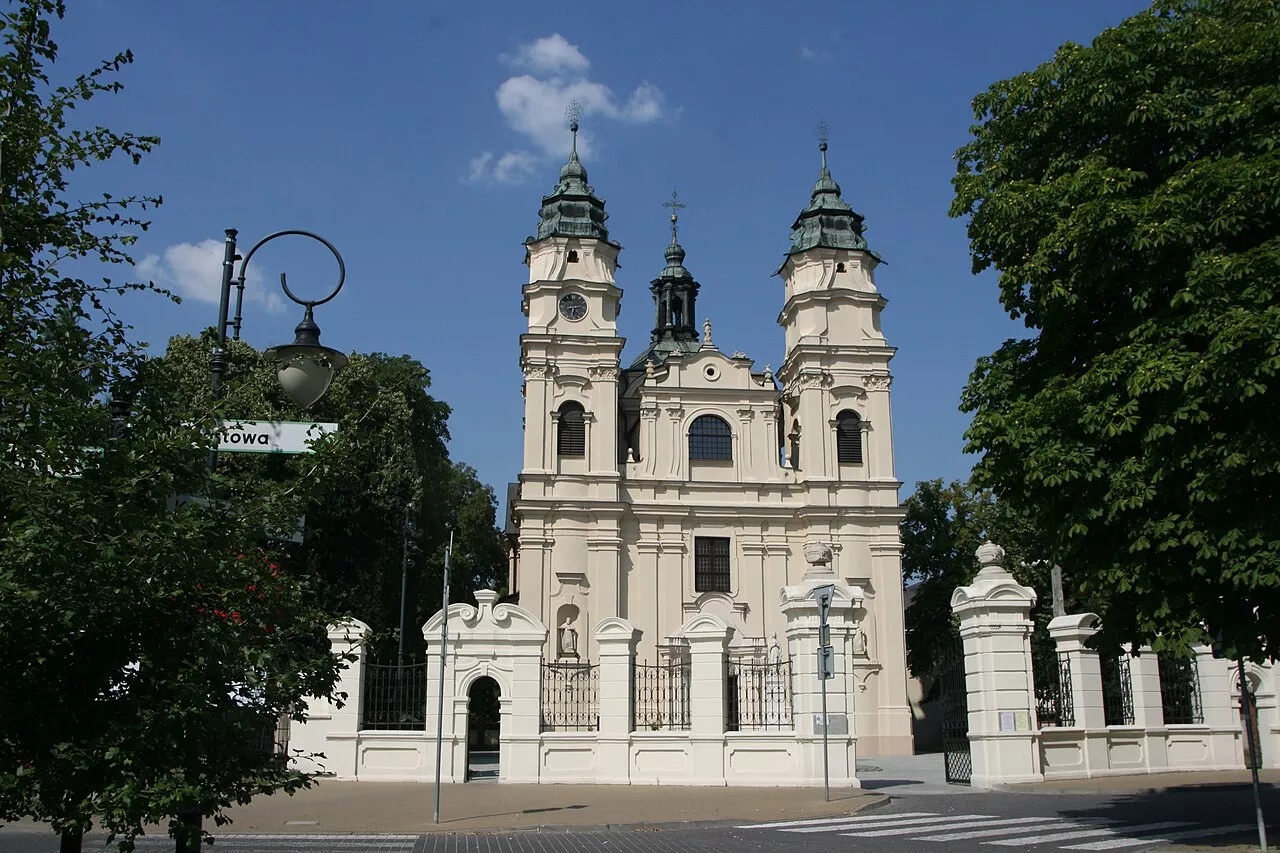
The most prominent building in the town is the Church of St. Louis at the Father Paulines monastery. It was erected between 1739 and 1752 at the expense of the Grand Hetman of Lithuania Ludwik Konstanty Pociej, designed by Paweł Antoni Fontana, who also built late Baroque churches in Chełm and Lubartów. Inside, late-18th-century paintings have been preserved, and near the monastery gate stands a Rococo figure of St. John of Nepomuk. Local legend says that passages led from the church's dungeons to Różanka, Orchówek, and even under the Bug River.
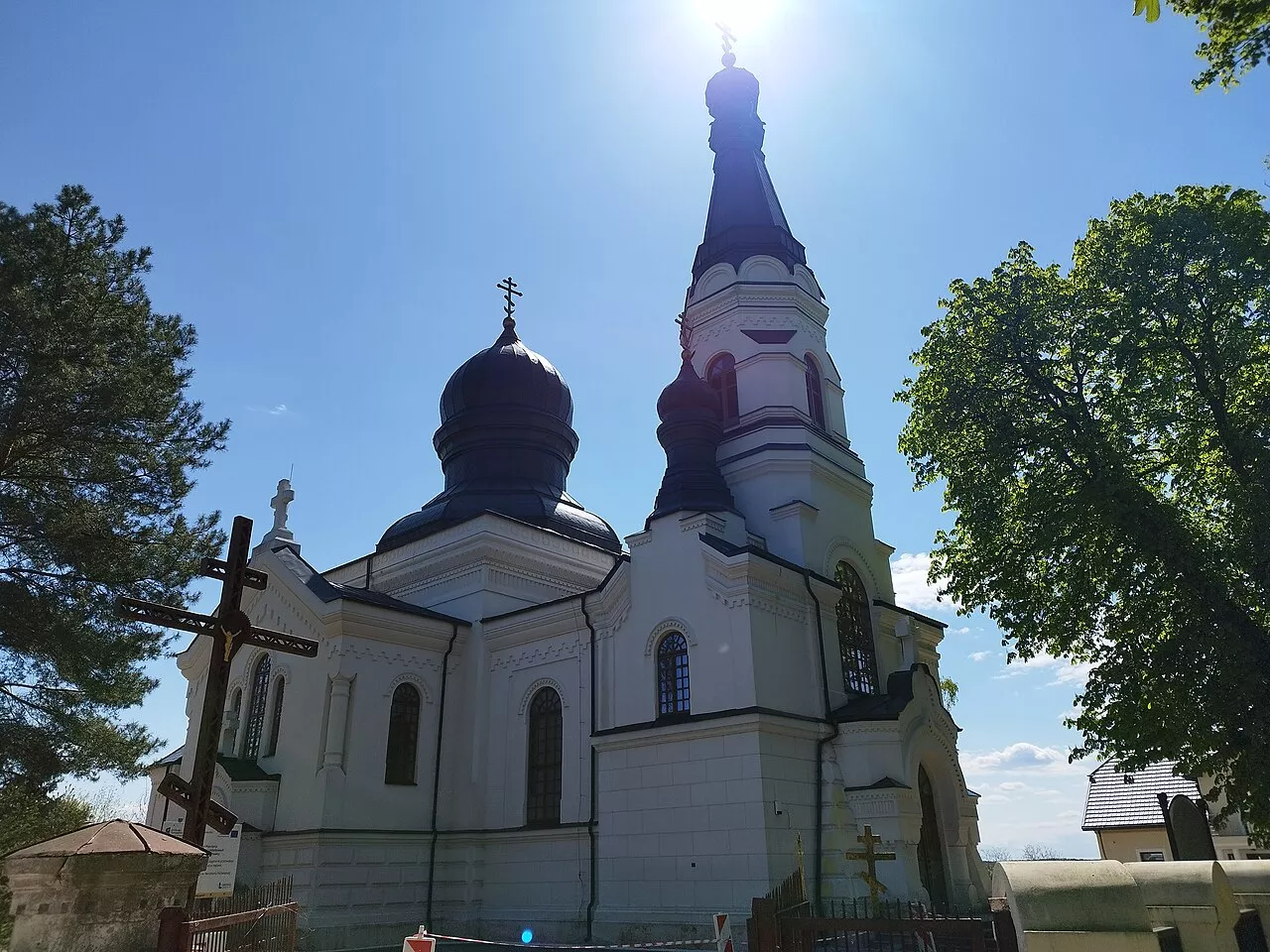
Via Kościelna Street you come to the Orthodox Church of the Nativity of the Blessed Virgin Mary, built in 1840–1842. This is a cross-shaped building with a western tower; inside, there is an 1843 iconostasis with carved Royal Doors and late-19th-century paintings. The church is active, so please enter quietly and in appropriate attire.
Synagogues, Now a Museum
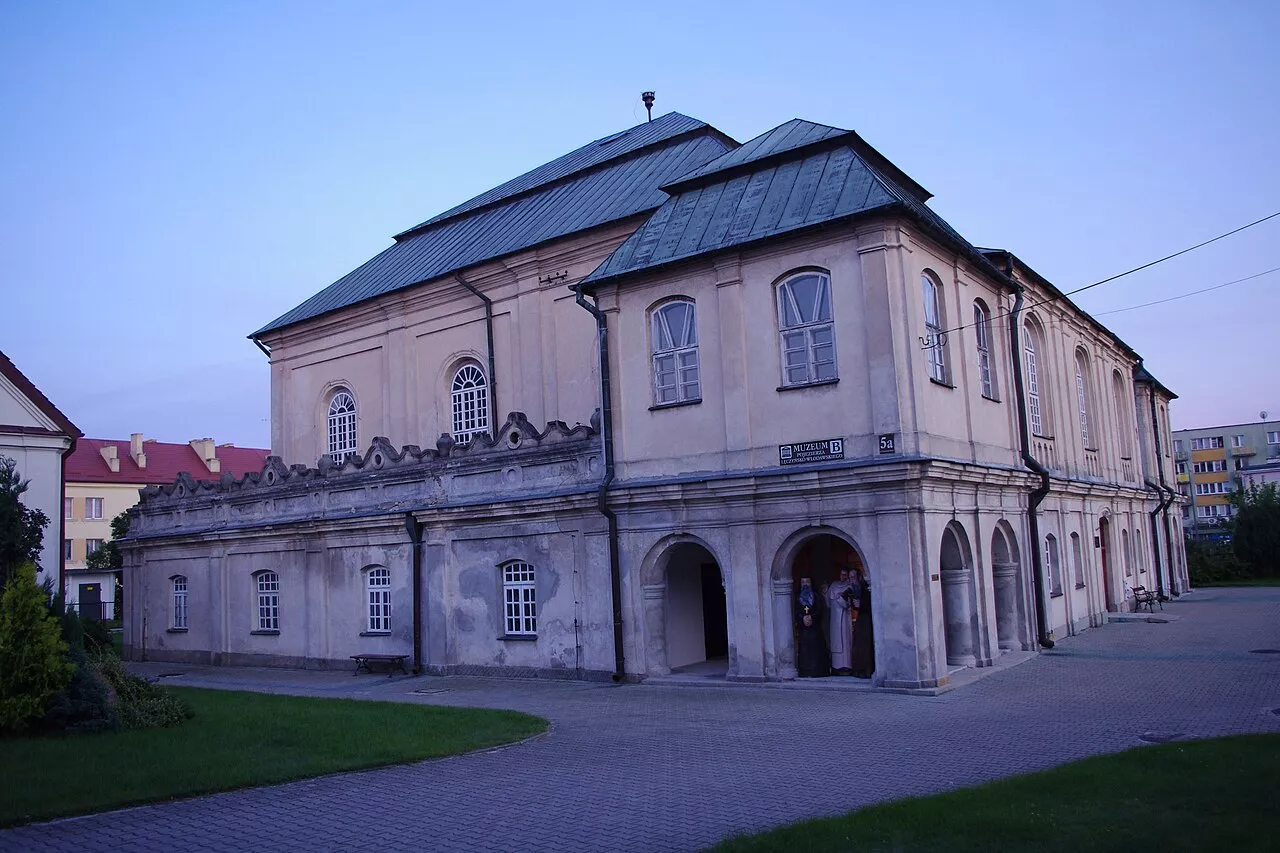
The Great Synagogue was built in 1764–1774 at the expense of the Jewish community and the Czartoryskis, the then owners of Włodawa. The prayer hall preserves a stuccoed, painted Torah ark from 1936. Nearby stand the Small Synagogue and the mid-19th-century kahal building. Together they form the Museum „Synagogue Complex in Włodawa”: here they display Judaica, the history of the town, and the daily life of the surrounding villages. After the war, the buildings were used as warehouses, and the fact that the complex survived is a rarity for these parts. Near the synagogues stand memorial markers dedicated to the Jews of Włodawa who perished during the Holocaust.
The Market Square and the „Czworobok”
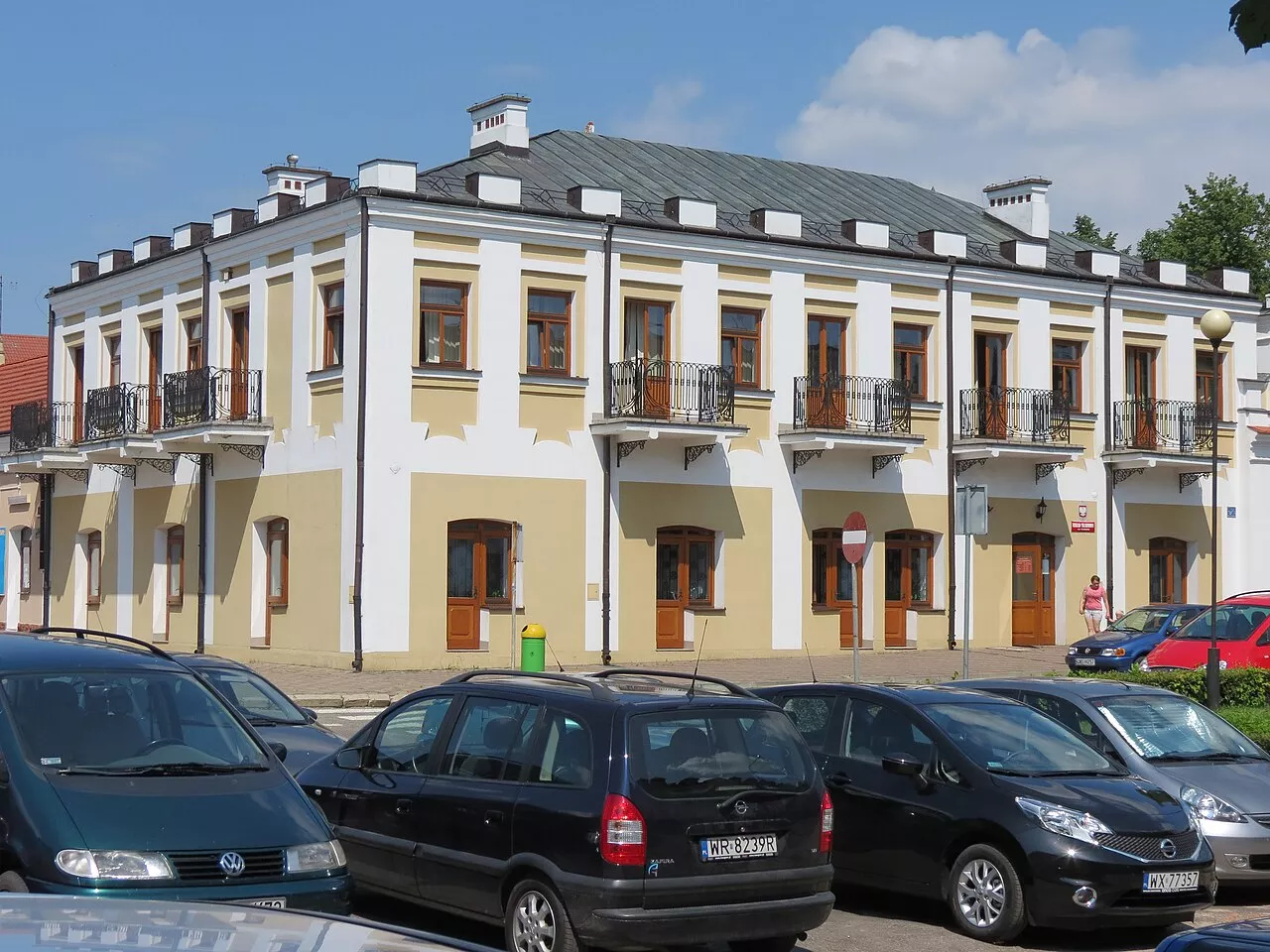
The route passes through the market square, which has retained its 18th-century layout. In the middle stands the Czworobok („Four-sided building”) — a square of trading stalls from the second half of the 18th century featuring an inner courtyard and two gates. For market buildings, this is a rare solution. Every autumn since 1996, the museum has hosted the Festival of Three Cultures in the town.
How to Get There and When to Go
Włodawa lies approximately 90 km from Lublin and 50 km from Chełm, with buses running from both cities. It is convenient to leave the car near the centre. The museum is open daily in July and August (weekdays 9:00–17:00, weekends 10:00–17:00), operates for shorter hours in May, June and September, and from October to April only on weekdays, 9:00–15:00; please check ticket prices before your trip. Churches are most often open before services. The border with Belarus runs along the Bug here: it is closed, there are no border crossing points nearby, and document checks by the Polish Border Guard are possible in the border zone. For Ukrainians, this is a trip to Poland — a foreign passport is required.