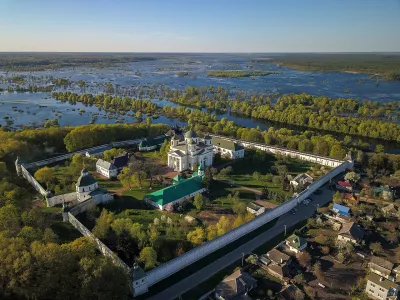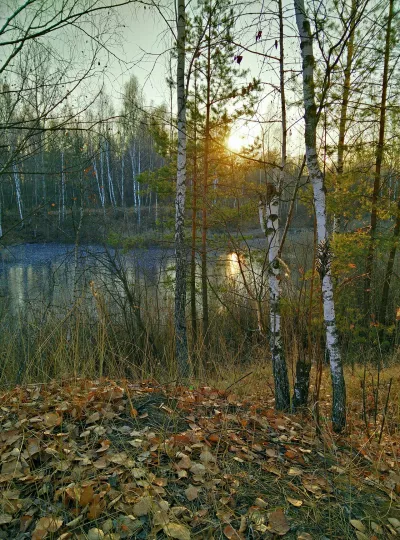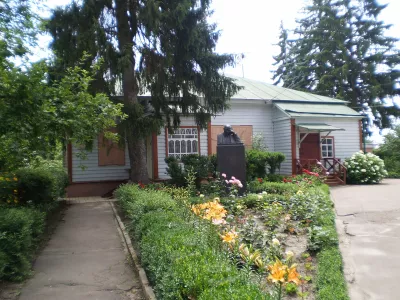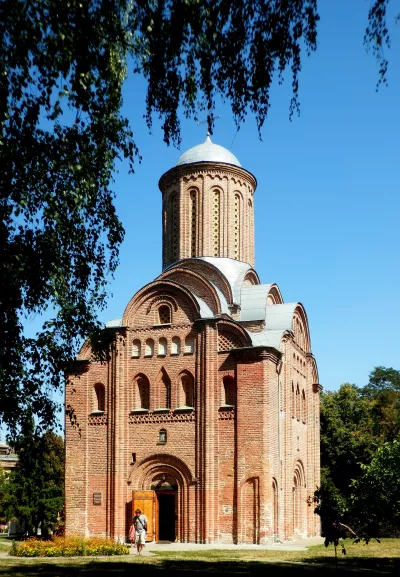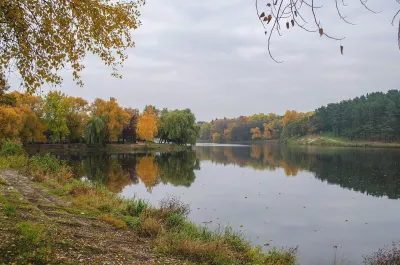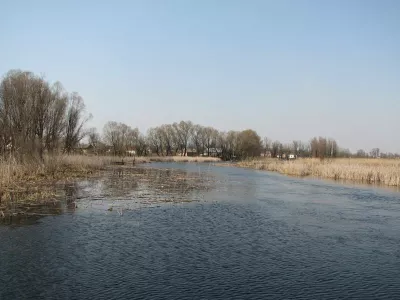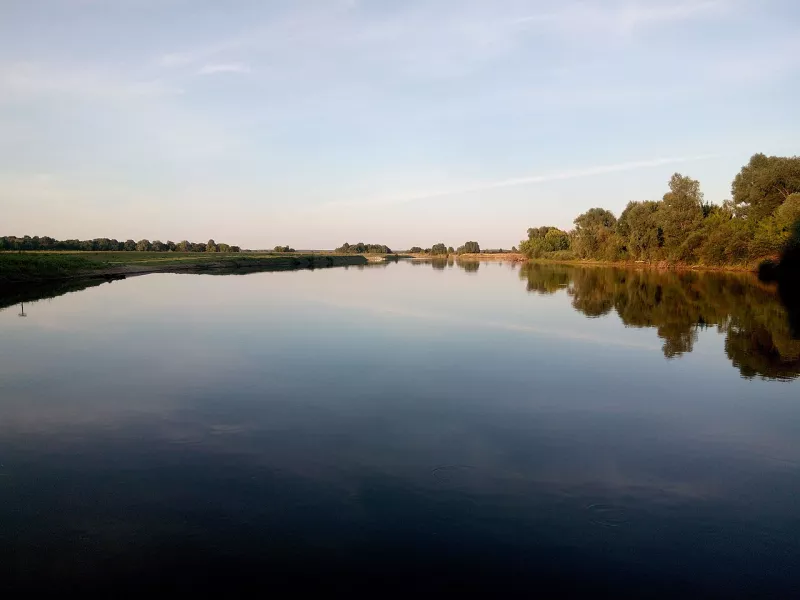

Mezyn National Nature Park is one of the largest protected conservation areas in Chernihiv region: 31 thousand hectares along the right bank of the Desna in Novhorod-Siverskyi district. The park was established in 2006 on the basis of several reserves. It combines chalk cliffs, oak forests with trees 200–300 years old, floodplain lakes, and one of the most famous Paleolithic sites in Europe — the Mezyn site.
What the park protects
The park includes the national-significance reserve „Rykhlivska Dacha”, which features oak, linden-oak, and hornbeam-oak forests with 200–300-year-old trees that are unusual for Polissia, as well as „Mezyn Switzerland” with chalk outcrops, the „Krynychne” tract with springs near the Desna, „Zhukiv Yar”, „Zmiivshchyna”, „Dubravka”, and others. The climate here is more continental than in the rest of Polissia: colder snowy winters and warm summers.
The Desna and lakes
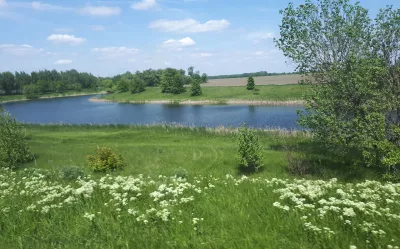
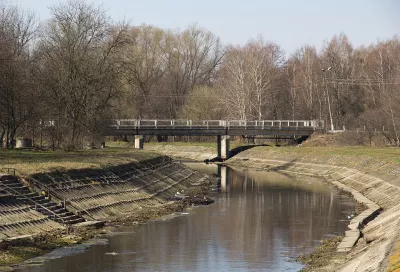
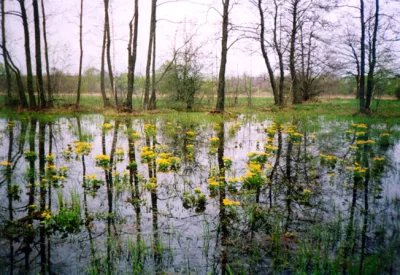
The Desna flows through the park with small tributaries — Studynka, Holovesna, Khvostynka. There are 17 oxbow lakes scattered across the floodplain; the largest is Khotyn opposite the village of Radychiv, covering an area of over 40 hectares, connected to the Desna by a narrow channel. In spring, these lakes are flooded and become spawning grounds for fish. The banks are overgrown with club-rush, sedges, reed mace, and common reed.
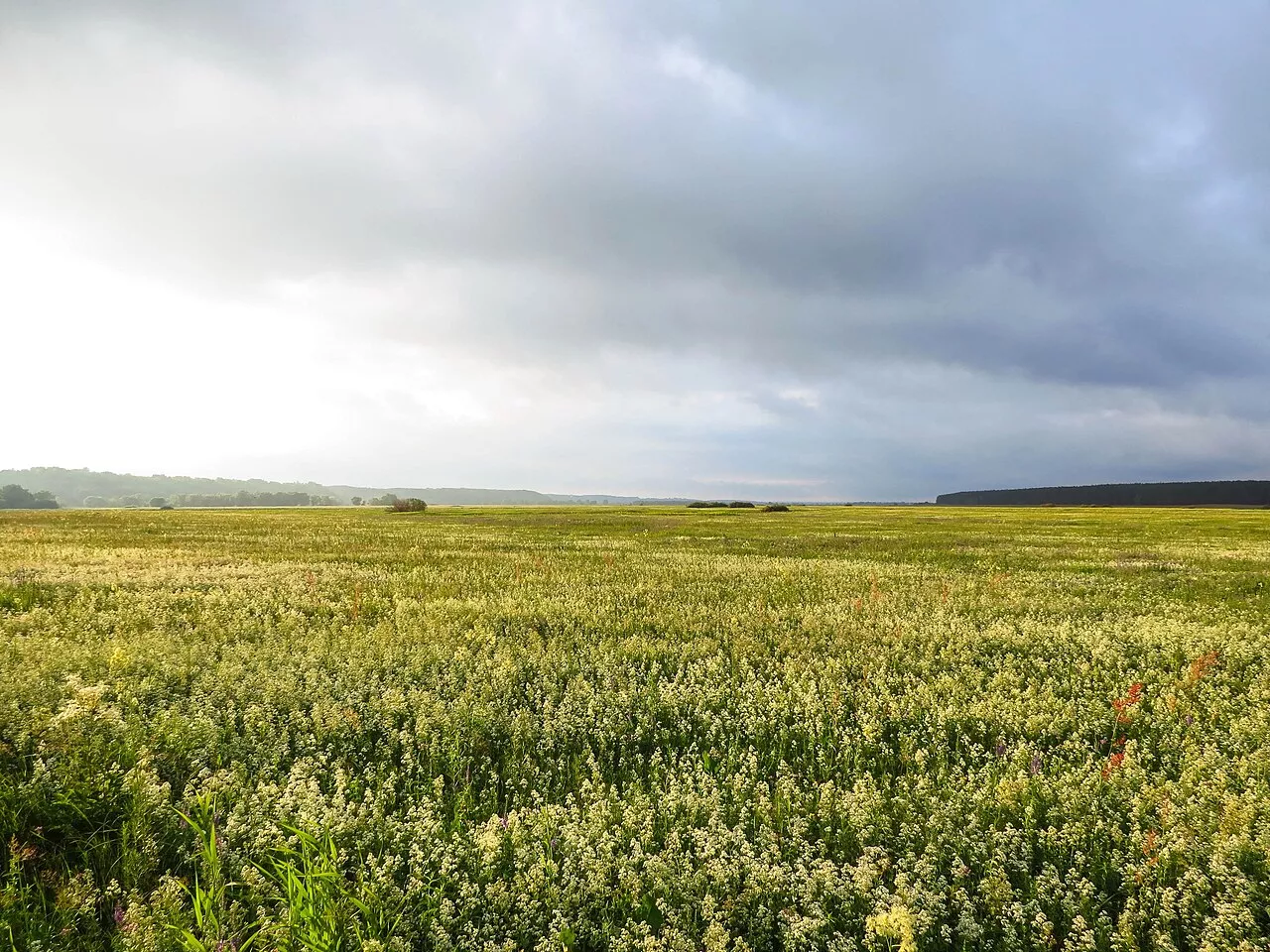
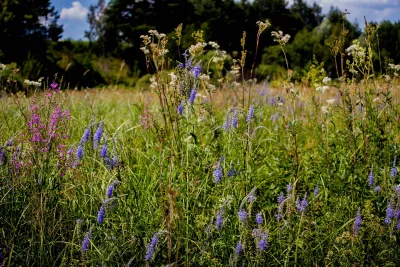
The park is home to 143 species of birds, 30 species of fish, 19 species of mammals, and over a hundred species of mosses among the flora.
The Mezyn site
There are about 50 archaeological sites on the territory of the park, and the most famous of them is the Mezyn site near the village of Mezyn. In the autumn of 1907, large bones were found in the courtyard of the Cossack Koshel — thus discovering a late Paleolithic hunter settlement dating back about 20 thousand years. Archaeologists excavated five round dwellings about seven meters in diameter: a pole frame was covered with hides and surrounded with animal bones and horns, particularly those of mammoths.
Sculptures, stylized female figurines, animal and bird figures, and mammoth ivory bracelets were found here. One of them features the oldest known depiction of a meander. There are also bone products considered to be the world's first collection of musical instruments, and a „shaking” bracelet made of five rings, a kind of castanets. The Mezyn archaeological culture is named after this site. People lived here in winter and hunted, and two wolf skulls from Mezyn may be evidence of early domestication.
Tip
The park is located in the border zone of Novhorod-Siverskyi district, so check the security situation and restrictions before your trip. For walks, there is a ready eco-trail „Rykhlivska Dacha”.
How to get there
The park is located on the Desna between Novhorod-Siverskyi and Korop. Nearby are Novhorod-Siverskyi and Sosnytsia.