Desna is the longest tributary of the Dnipro and the main river of Chernihivshchyna. It begins on the Smolensk Upland in Russia, flows through Bryanshchyna, and in Ukraine passes through Sumshchyna, Chernihivshchyna and Kyivshchyna, flowing into the Dnipro just above Kyiv. Novhorod-Siverskyi, Chernihiv and Oster stand on the Desna. For Polissia, this is a symbolic river: it was eulogised by Oleksandr Dovzhenko in „The Enchanted Desna” („Zacharovana Desna”).
A Great River
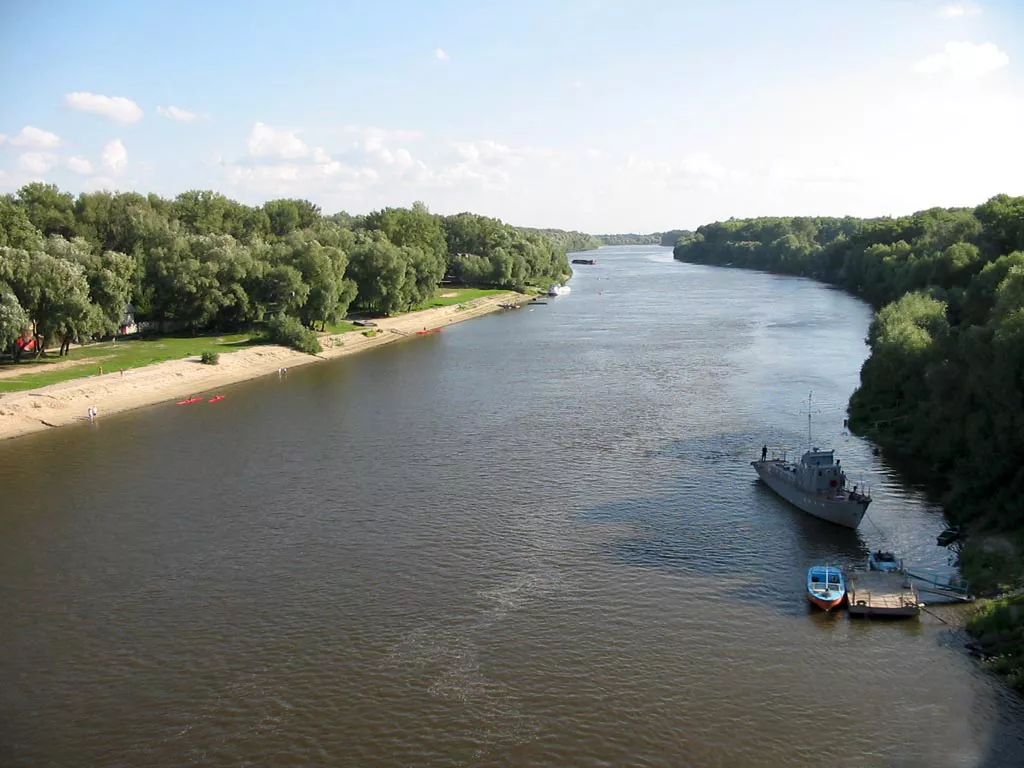
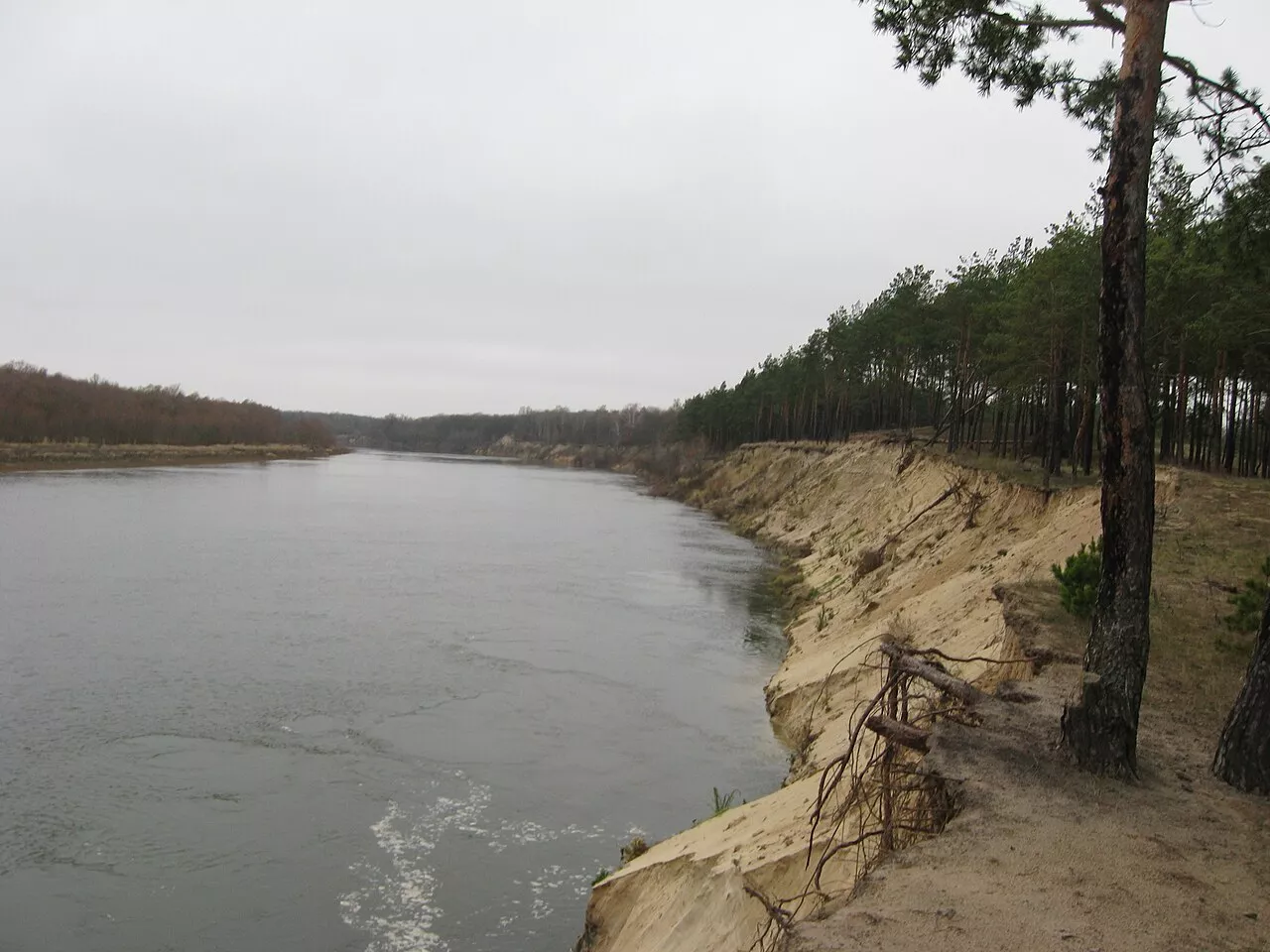
The length of the Desna is 1,130 km, of which 591 km are in Ukraine. The basin area is 88.9 thousand km²: by this indicator among the tributaries of the Dnipro, the Desna is second only to the Prypiat. The riverbed is winding, averaging 200 metres wide, and in places up to 450 metres. The depth is mostly 2–4 metres, and in pools reaches 17 metres. In spring there are major floods, and in summer the level drops by 3–4 metres. In the upper and middle reaches, the right bank is high, the left is low, and further down the banks are gently sloping and sandy. The floodplain is marshy, with a multitude of channels, oxbow lakes and lakes.
The Desna receives 17 right-bank and 13 left-bank significant tributaries. The largest are Sudost, Snov, Seim and Oster. Among the smaller ones are Ubid, Stryzhen, Bilous, Mena, Shostka.
What to See on the Banks
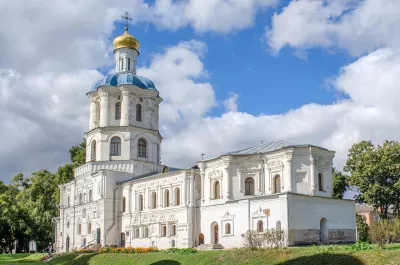
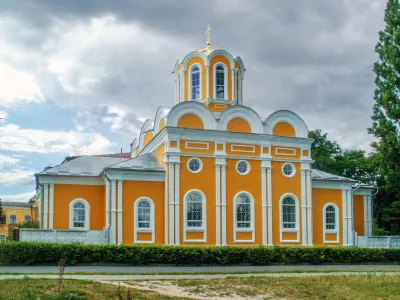
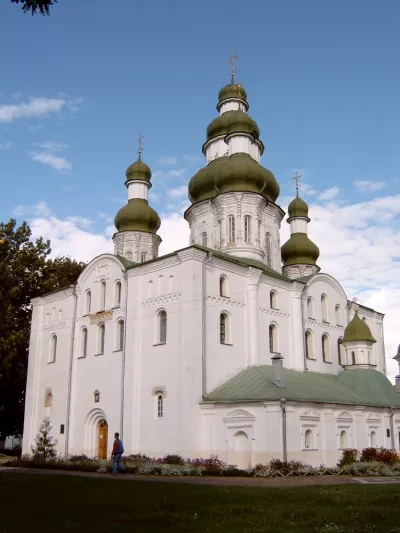
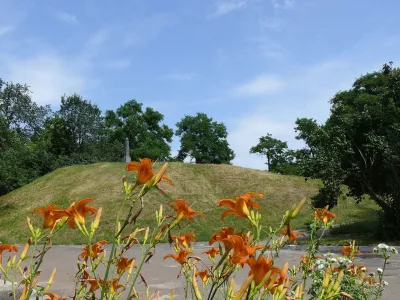
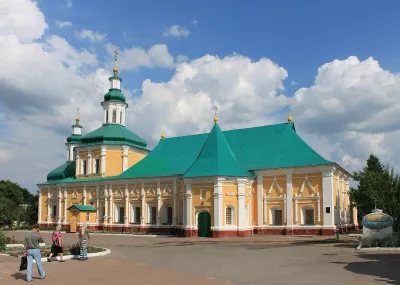
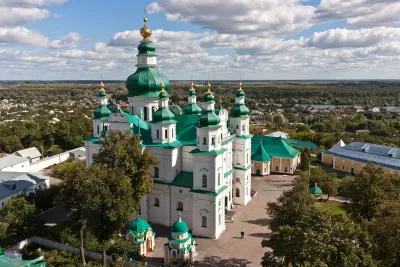
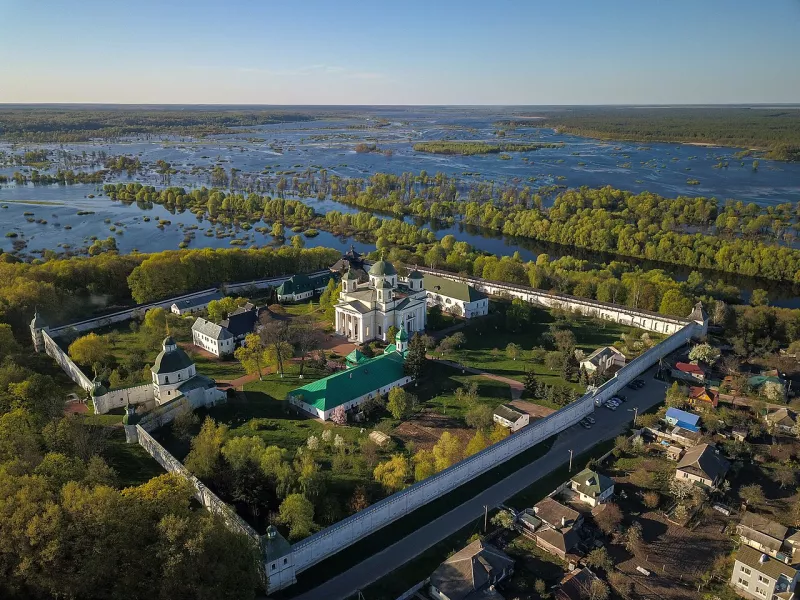
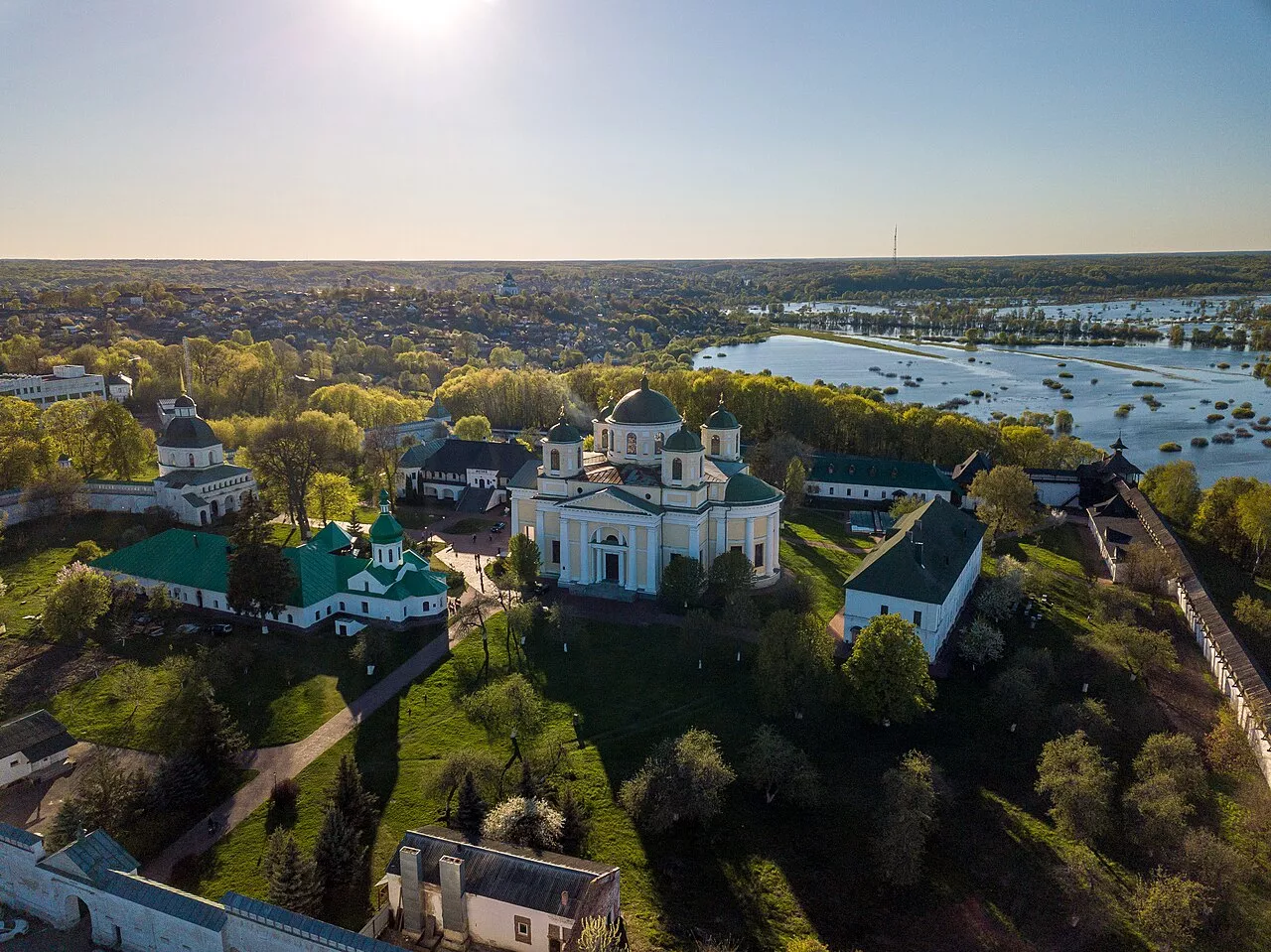
In Novhorod-Sivershchyna, the Desna flows among the chalk cliffs of the Mezynskyi National Park, where the site of mammoth hunters was found. Novhorod-Siverskyi looks out at the river from a high bank crowned by the Spaso-Preobrazhenskyi Monastery. Further down lie Korop with its fortress-church and Sosnytsia. Chernihiv stands on a high right bank: a view of the floodplain opens up from the Val and from the Yeletskyi Monastery. In Kyivshchyna, the Desna passes by the Desnyanskyi Oak in Pirnove, the church in Zazymia and the pine forests of the Zalissya National Park.
Steamboats and Ferries
In the second half of the 19th century, the Desna was a bustling water route from Novhorod-Siverskyi to Kyiv. A pier was rebuilt in Chernihiv, steamboats appeared, and in the early 1880s, over 3 million poods of cargo were transported annually along the river: timber, iron, glass to Kyiv, and back grain, sugar and salt. In the 1890s, the steamboats Suvorov and Varvara ran between Novhorod-Siverskyi and Makoshyne.
In 1956, the Oleksandr Dovzhenko motor ship was launched, which for decades ran the Kyiv — Chernihiv route. Since the 1990s, the fairway has ceased to be dredged, and the Desna has lost its transport significance. However, ferries that connect coastal villages still operate on it.
Nature
The banks of the Desna feature floodplain meadows, oak groves, alder forests, and pine woods. White and snow-white water lilies and yellow water-lilies bloom on the oxbow lakes, while floating fern and water chestnut — rare plant communities from the Green Book of Ukraine — can also be found. Gladioli grow in the damp meadows. The Desna supplies Kyiv with drinking water, which is why its floodplain is especially protected.
Paddling and Recreation
The Desna is one of the most popular kayaking rivers in Ukraine, offering a fast current, sandy beaches, and convenient campsites along the banks. There are many recreation centres and guest houses along the river, especially near Chernihiv and in the Kyiv region. Swimming is best done on established beaches: the current is strong for a lowland river, and the depth near the shore changes.
Fishing
More than 35 species of fish live in the Desna and its tributaries: pike, zander, catfish, asp, chub, ide, bream, silver bream, sabrecarp, roach, perch, crucian carp, common carp, tench, and even sterlet, eel, and Ukrainian brook lamprey. In spring, roach are successfully caught with a feeder near reed beds and in areas with a weak current — we wrote about one such trip in the article «Spring bite has started on the Desna». Pike, zander, and asp are targeted with spinning gear near holes and river bends, and catfish with bottom lines. Due to poaching, fish populations have declined in recent years. Sterlet, lamprey, and other Red Data Book species must be released. General fishing regulations apply.
How to Get There
The easiest way to reach the Desna is in Chernihiv: the embankment and beaches are within walking distance of the centre. Beautiful stretches can be found near Novhorod-Siverskyi, in the Mezyn National Park, and near Oster. In the borderland upper reaches of the Novhorod-Siverskyi district, martial law restrictions are in effect, so be sure to check the rules for visiting before you go.