Krasnopil is a village in the Berdychiv district of the Zhytomyr region, on the lands of historical Volhynia, and the center of the Krasnopil hromada. According to the 2001 census, 1,226 residents lived here. Once it was a prominent trading town: under the princes of Ostrog, at the turn of the 15th and 16th centuries, Krasnopil "was famous for trade," and according to legend, there were 12 Orthodox churches operating here. However, Tatar raids caused serious destruction to the town — after one of them, it never regained its status as a trading center and gradually turned into a village.
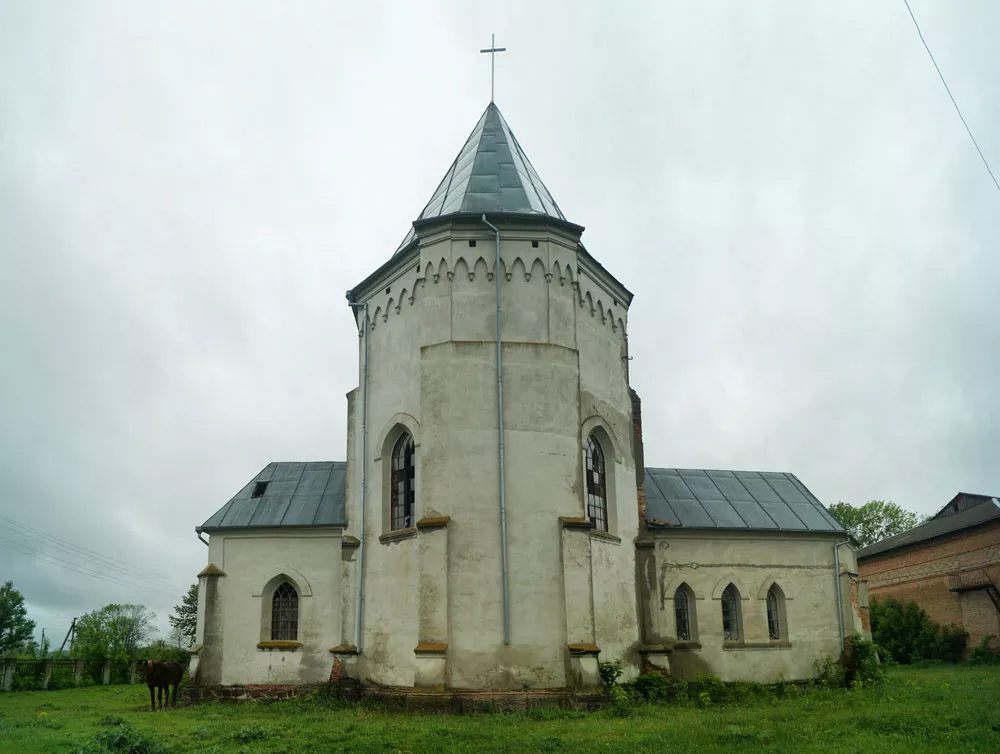
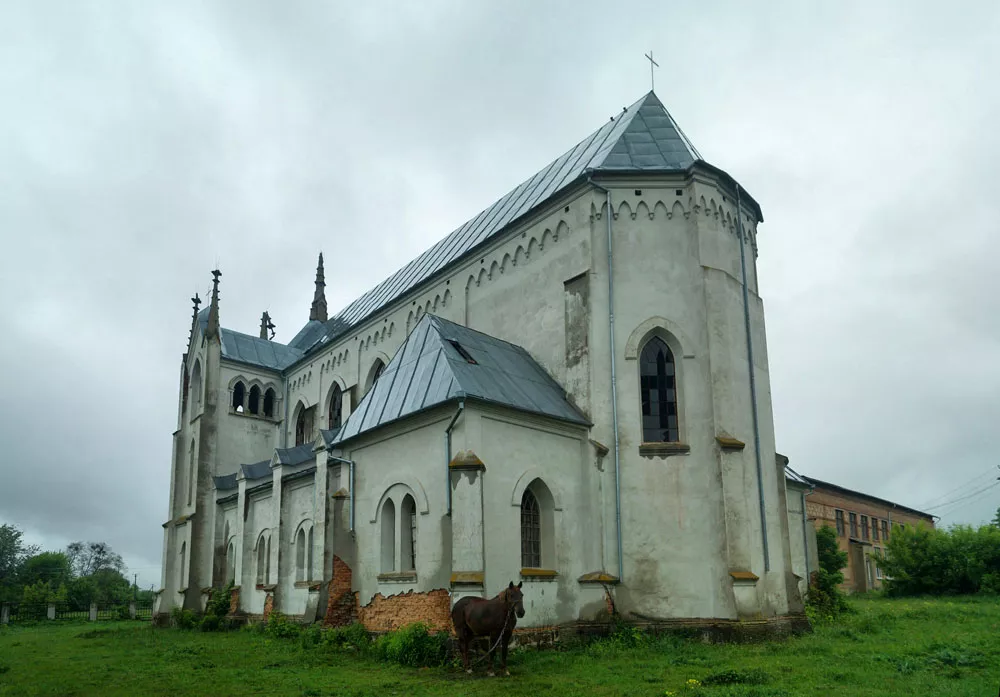
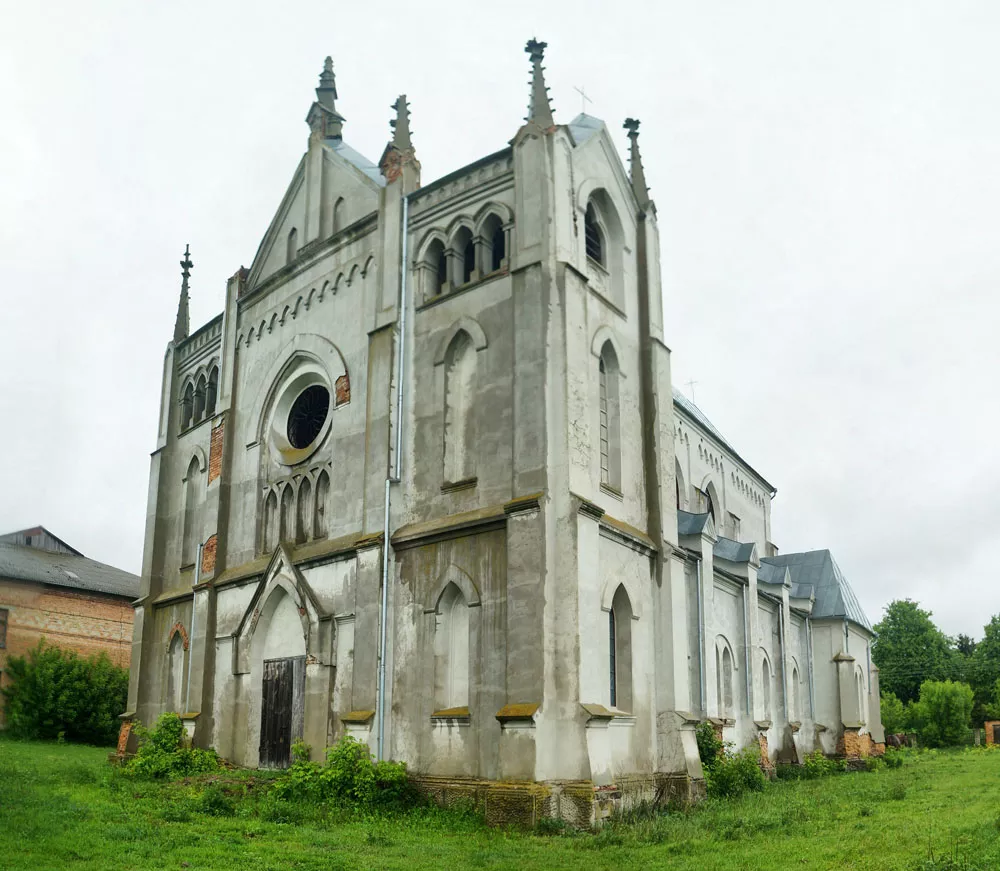
Today, Krasnopil is known not for its population, but for the Church of Saint Michael, which stands in the very center of the village. This Neo-Gothic building is an architectural pearl of the region and a potential tourism magnet that, unfortunately, remains little-known.
Historical Roots of Krasnopil
Over the centuries, Krasnopil passed from one noble family to another. It was owned by the Ostrogskis, Zaslavskis, Lubomirskis, Sangushkos, and in 1717 the Sangushkos transferred the town to Bartłomiej Gizycki.
The Gizyckis are considered the initiators of the construction of the first Catholic church. In 1751 (according to other sources, 1754), at the expense of Bartłomiej Gizycki, a church dedicated to the Virgin Mary was built here. A popular legend exists: the wife of Bartłomiej Gizycki, who suffered from paralysis, was healed after prayers before the icon of the Mother of God, which was considered miraculous.
Church of Saint Michael — Architectural Highlight of the Village
The current brick church was built at the beginning of the 20th century: construction began in 1902 at the expense of Wacław Mazaraki, a representative of an influential family of Greek origin who purchased the estate around 1880. The church was consecrated on September 29, 1906.
The Church of Saint Michael was built in the Neo-Gothic style — a style rarely found in rural areas. High pointed arches, stained glass windows, vertical lines of the facade, and decorative details resemble majestic European cathedrals, but the scale of the structure corresponds to rural conditions. This is one of the brightest examples of Neo-Gothic architecture in the region.
Owners of the Estate
After the Gizyckis, the estate passed to their relatives, the Oskierkos. Later, Wacław Mazaraki became the owner, under whom the church acquired its modern appearance.
At the end of the 18th century, Kajetan Gizycki built a palace in Krasnopil that combined Venetian and Gothic motifs. In 1917, the palace was burned down, and today it remains only a mention in historical sources.
The Church in the Soviet Period
In Soviet times, the church lost its purpose: it was adapted for economic needs. A mill, a forge, a tractor brigade, and warehouses were housed in the building. The structure underwent significant changes and later stood empty, gradually deteriorating.
Current State and Restoration Plans
After the restoration of Ukraine's independence, the church was returned to the Roman Catholic Church. Now it is cared for by the local parish, and the first restoration works have already begun. Due to limited funding, the process is slow, but there are plans to fully restore the structure for worship and cultural events.
This can become a noticeable step for the development of tourism: the architecture of the Church of Saint Michael is capable of attracting travelers, researchers of sacral architecture, and pilgrims.
Tourist Potential of Krasnopil
Krasnopil is an example of a village with incredible history: from an ancient trading town to a modern small settlement that has preserved historical layers of the past. The Church of Saint Michael combines:
- unique Neo-Gothic architecture;
- historical value;
- legends and folk tales;
- potential for religious tourism.
The restoration of the church and the development of tourist infrastructure can make Krasnopil a bright spot on the tourist map of the Zhytomyr region.
How to Get There
Krasnopil lies about 40 km west of Berdychiv and 25 km south of Chudniv. It is most convenient to travel by car: public transport runs here infrequently. The church is visible from afar — it stands in the very center of the village, so it is easy to navigate.
A trip to Krasnopil can easily be combined with other sights of the Berdychiv region — for example, with the Monastery of the Discalced Carmelites in Berdychiv or with the villa of Mechyslav Mazaraki in Rayhorodok, another estate of the Mazaraki family.
Photos by Roman Malenkov, Serhii Shcherbii.
Frequently asked questions about Krasnopil
1. Where is Krasnopil located?
In the Berdychiv district of Zhytomyr region, on the lands of historical Volhynia. Once it was a trading town.
2. What is Krasnopil famous for?
First of all, for Saint Michael's Church — a neo-Gothic landmark of the early 20th century.
3. When was Saint Michael's Church built?
The masonry temple was built starting in 1902 and consecrated in 1906. A mid-18th-century church previously stood on its site.
4. What is the architectural style of the church?
Neo-Gothic: lancet arches, stained-glass windows, and vertical lines of the facade.
5. Who owned Krasnopil?
The Ostrozkys, Zaslavskys, Lubomirskys, Sanguszkos, Gizyckys, Oskerkos, and Mazarakis. The modern church was built by Wacław Mazaraki.
6. Can the church be visited?
Yes, the temple belongs to the Roman Catholic Church and has been partially restored. Tourists can view the building and the surrounding area; restoration is ongoing.
7. What legends are associated with the church?
The most famous is about the healing from paralysis of Bartholomew Gizycki's wife after prayers before the miraculous icon of the Mother of God.
8. What else is interesting in Krasnopil?
The village has preserved traces of its trading and gentry past. The church is the main highlight for tourists and pilgrims.
9. Is there tourist infrastructure?
It is still limited, however, the restoration of the church opens up potential for cultural and religious tourism.
10. Travel tips
- plan your trip in advance due to limited transport connections;
- be sure to visit Saint Michael's Church;
- learn about local legends to make your visit more insightful.