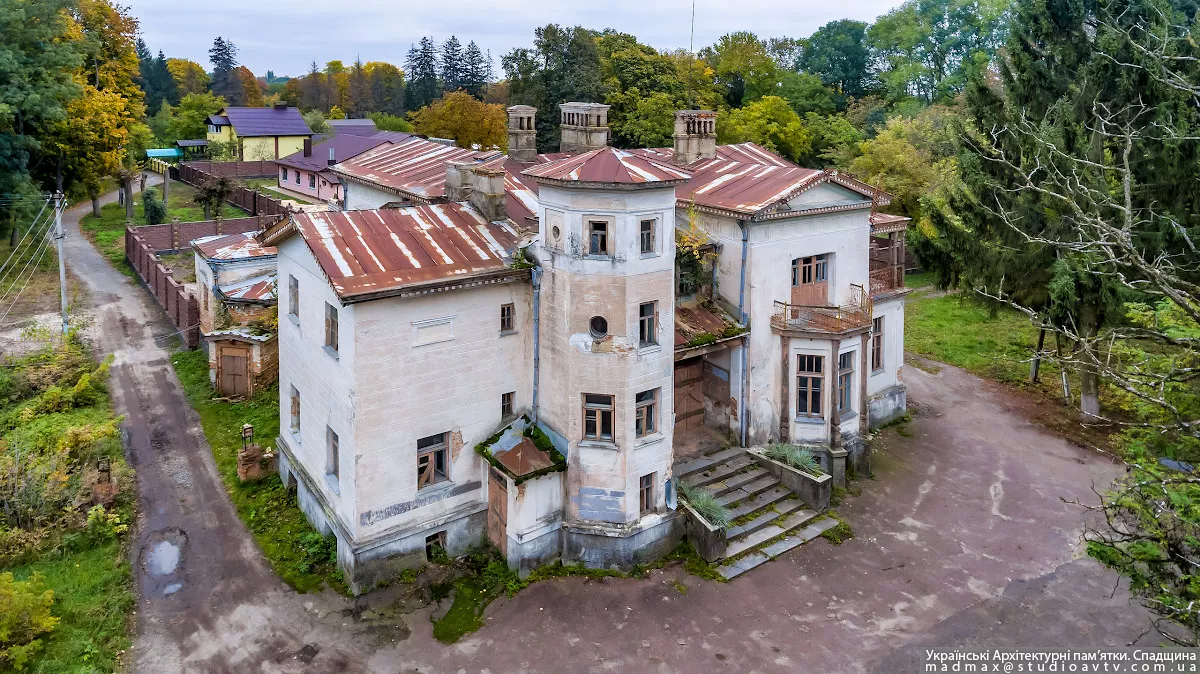
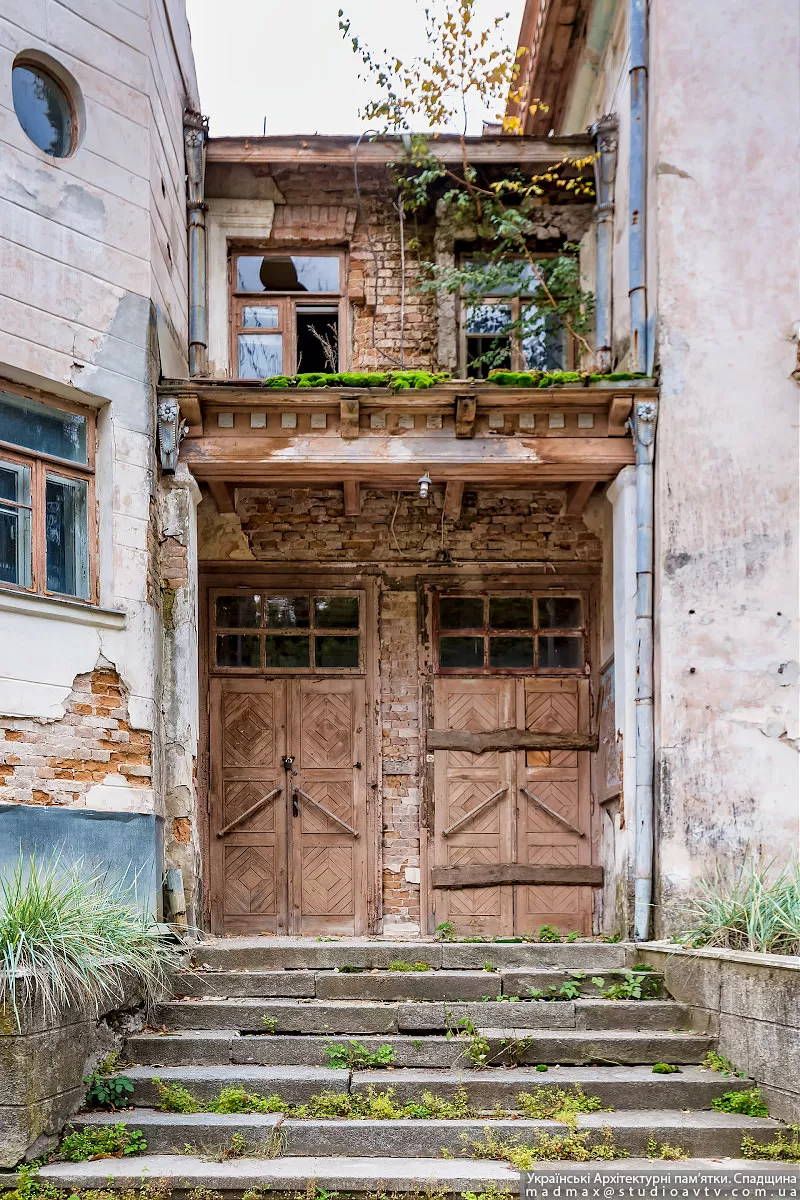
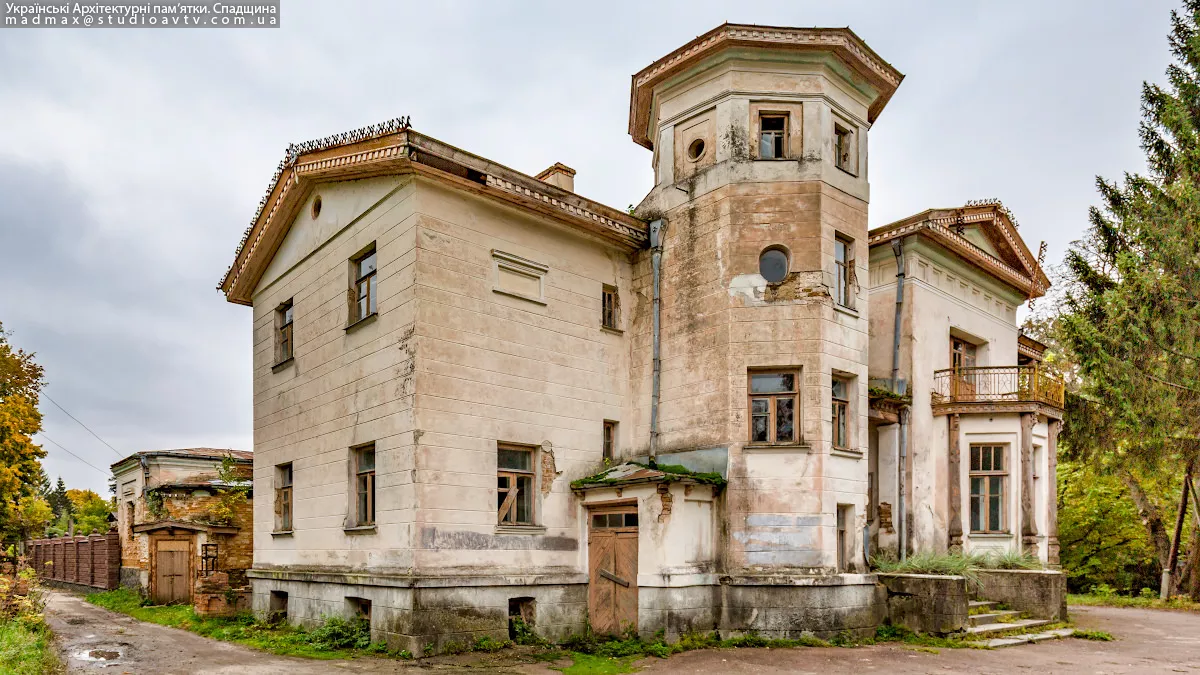
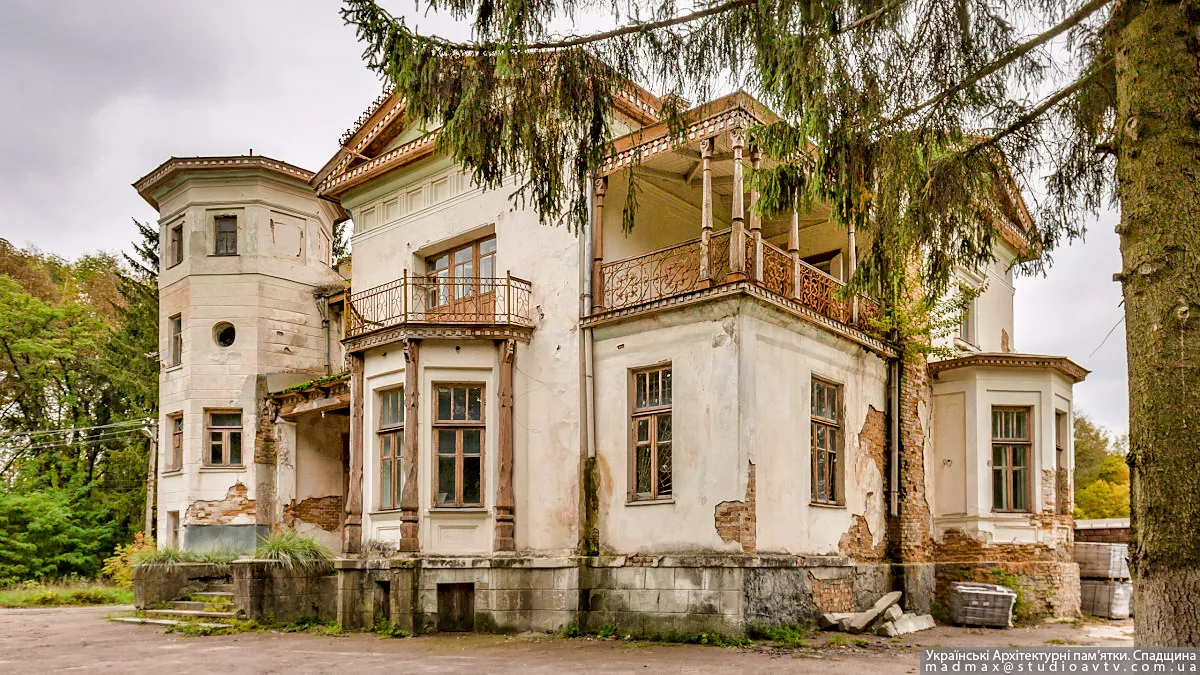
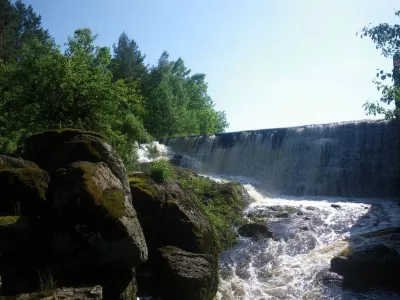
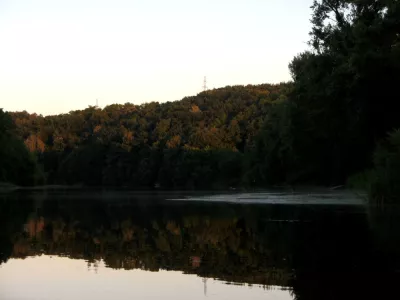
In the village of Rayhorodok in the Berdychiv district of the Zhytomyr region, amidst an old park, stands a building that still holds on despite decades of decay — the Mazaraki Villa. This is one of the most famous architectural heritage sites of the Berdychiv region, the fate of which in recent years arouses both curiosity and alarm: the estate was sold to a private investor, yet no real restoration is visible as of yet.
Where the Mazaraki Estate is Located
The residence is located in the village of Rayhorodok on the Prydniprovske Upland, approximately 19 kilometers west of Berdychiv, on the road to Khmilnyk. The villa stands almost in the center of the village, on an ancient castle site, near the road leading to neighboring Martynivka.
History: From an Ancient Castle Site to a Tuscan Villa
The history of Rayhorodok is much older than the estate itself. The dimensions of the settlement site on which the villa stands reach about 300 m from north to south and about 100 m from west to east, and pottery ceramics and tiles from the 16th and 17th centuries are still found there. According to legend, the name of the village comes from the picturesque area — a unique "paradise corner".
According to legends, a castle belonging to Count Tyshkevych once stood here — he allegedly failed to repay a debt, and the town passed to other owners. Before the revolution, the ruins of the so-called "robber castle" could still be seen in the village, where the Polish nobleman Zakhariy Yaroshynsky married Marianna Sheniovska. In the mid-18th century, Rayhorodok belonged to Princess Varvara Radziwill, and in the 19th century, it became a bustling town with fairs, a synagogue, a church, and a cathedral.
At the end of the 18th century, a new residence belonging to the Sarnetsky or Melenevsky families was built in Rayhorodok — only a single-story classicist-style outbuilding with a small portico has survived to the present day.
Its true heyday came in the second half of the 19th century. Through marriage, Rayhorodok came into the possession of Mieczysław-Ludwik Mazaraki (1837–1894), a nobleman of the Newlin coat of arms, a representative of the Kyiv branch of the ancient Mazaraki family of Greek origin. He built the main palace building in 1887 according to the design of the Polish architect Stanisław Borecki.
Architecture and Interiors
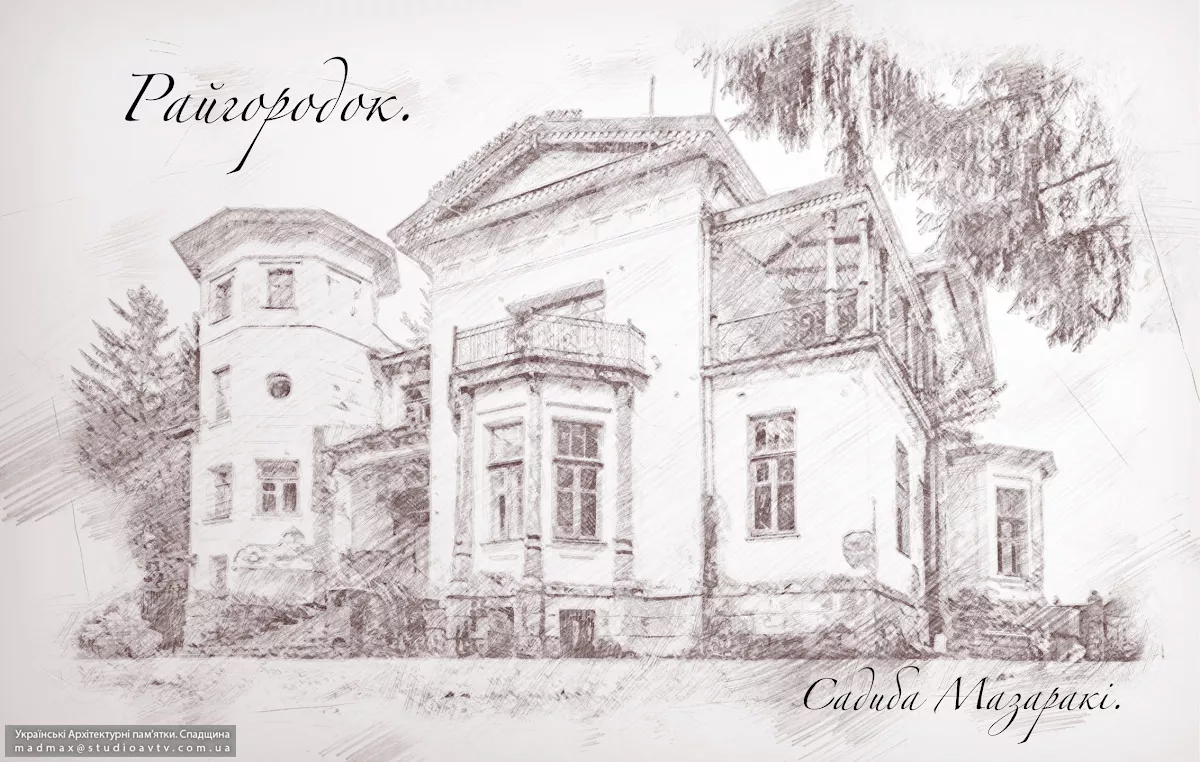
The villa is built in the Tuscan style: an asymmetrical composition with a multi-sided tower, risalits, loggias, balconies, and terraces makes the facade particularly expressive. Inside, the house was famous for its luxurious decoration — oak panels, parquet flooring, wall paintings by Warsaw masters, rare furniture in the Gdańsk style, and a collection of paintings. Decorative marble figures once stood near the entrance, which are no longer there today.
A Garden That Amazed Guests: Palms and Oranges
The most touching detail of the estate's history is its botanical garden. Under the watchful eye of Octavia Mazaraki, palms, pineapples, orange and lemon trees, various subtropical plants, and roses grew here. Imagining such a greenhouse in the Zhytomyr region today is not easy either — it was a true work of gardening art that demonstrated the status and ambitions of the family, and the park was considered one of the best in the region.
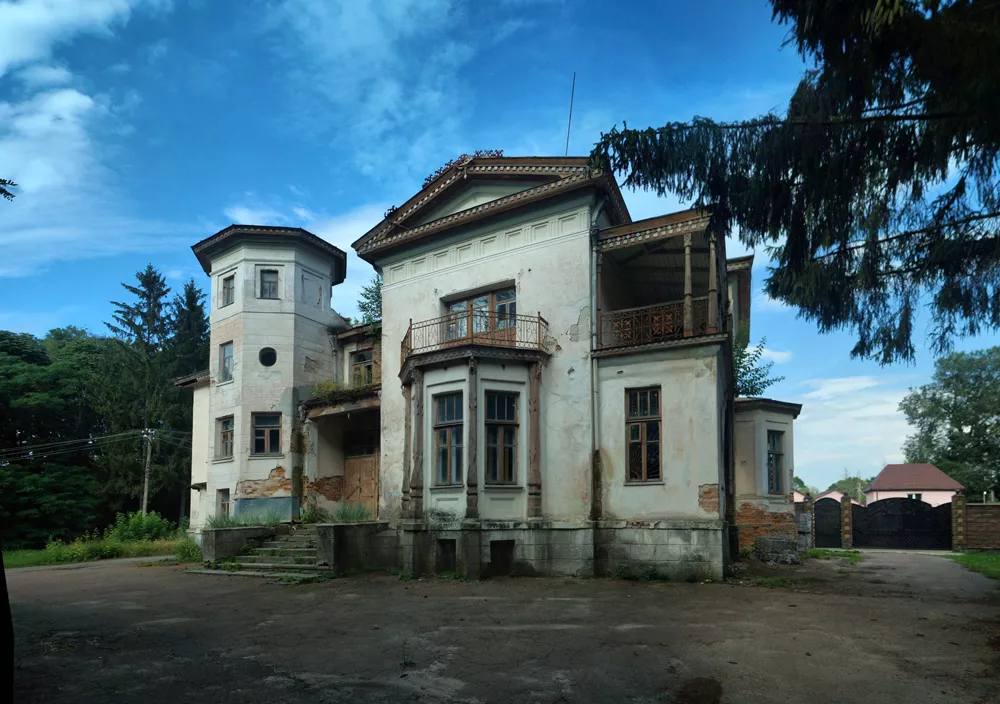
Photo by Roman Malenkov
Last Owners and the Fate of the Collection
Mieczysław Mazaraki had no male descendants, so the last owner of the palace became one of his four daughters — Ewelina-Maria Mazaraki (1880–1966). In 1917, when revolutionary sentiments swept the Berdychiv region, the estate's most valuable items were urgently moved to the cellars of the Monastery of the Discalced Carmelites in Berdychiv.
Under Soviet rule, the palace was nationalised: for a long time, it housed the office of the local Rayhorodok hop-growing state farm, and later the accounting department of one of the local enterprises.
Current State
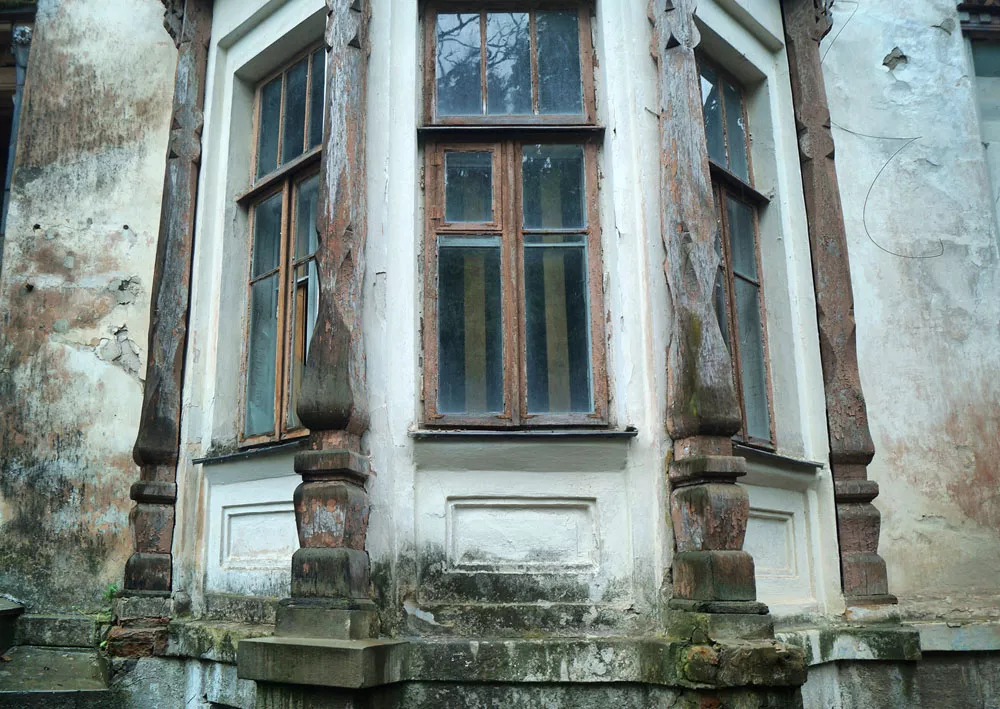
Researchers from the project "Ukrainian Architectural Monuments. Heritage" have repeatedly documented the condition of the estate. During an expedition in 2018, it turned out that the monument had been sold to a private investor who supposedly planned to restore it. Reality turned out differently: a brick fence was attached to the building from two sides of the rear facade, through which a newly built mansion and outbuildings could be seen. The villa itself continued to deteriorate: the facades and decoration are partially ruined, and the park is gradually turning into a forest.
The area around the estate is closely guarded by the new owners: as soon as the researchers launched a quadcopter for filming, several people immediately headed towards them from different sides, and the team had to curtail filming.
What Else Is Nearby
In the park near the villa, there is a grave of an unknown soldier, and opposite the estate is a mass grave of Soviet soldiers, where about 150 people are buried. The old park itself, although neglected, retains the atmosphere of a former gentry residence and is worth a walk even without access to the building itself.
How to Get to the Mazaraki Estate in Rayhorodok
From Berdychiv, you need to drive along the highway towards Khmilnyk to the village of Rayhorodok. There will be a sign to the right for the village of Martynivka. Drive along the road following this sign and immediately after the pond turn right — this will lead directly to the old park and villa. The building is barely visible from the road, so if necessary, you should ask locals for directions.
It is worth remembering: the estate is privately owned, and the area around it is guarded, so it is better to limit the inspection to an approach from the side of the central part of the village, without trying to enter the closed territory behind the new fence.
The Mazaraki estate in Rayhorodok is a monument with a double tragedy: first, the loss of the family collection during the revolution, then decades of inappropriate Soviet use, and now privatization without visible restoration. What began as a Tuscan villa with palms and orange trees is waiting today for a person or community ready to invest in its preservation, rather than just a fence around it.
Photo: "Ukrainian Architectural Monuments. Heritage" project