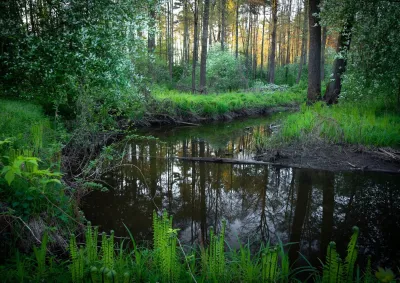
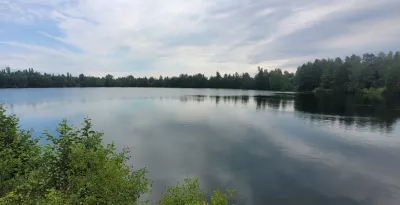
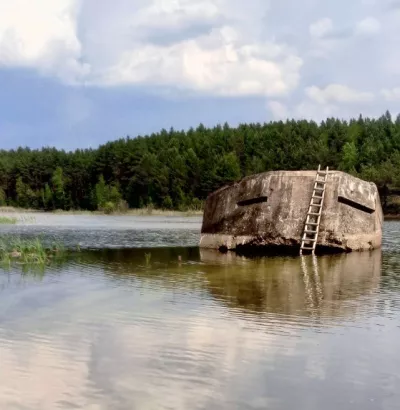
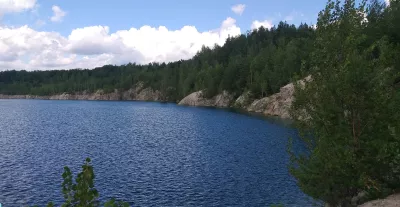
On the banks of the Sluch River, in the Romaniv hromada, lies the village of Vilkha (historical name — Ulkha). One of the most luxurious aristocratic residences of 19th-century Volhynia once stood here — the palace of the Prushynsky counts. Of the once majestic palace-and-park complex, separate buildings and fragments of the ancient park remain, but even they give an idea of how grandiose this estate was.
From a magnate estate to the Prushynsky family nest
The history of Vilkha is closely connected with changing owners. After the dissolution of the Ostrog Ordinance in 1753, the Chortoryisky key, which included Vilkha, passed to Prince Juzef Lubomyrskyi. Two years later, he sold the estate to Juzef Svejkovskyi, and later the estate passed to the Bratslav scribe Ignatii Kordysh.
After Kordysh's death, Vilkha was inherited by his sister Franciszka Prushynska, and since then the village has linked its history with the Prushynsky family for many decades.
The true heyday of the estate began in 1850, when it was inherited by Count Przemyslaw Prushynskyi. He was an ambitious man, traveled extensively in Europe and was passionate about architecture, so he immediately set out to build a residence that would combine European luxury with the skill of local Volhynian craftsmen.
A palace that changed for twenty years
Construction lasted for almost two decades. Prushynskyi constantly made changes to the project, added new elements, rebuilt individual parts, and strived to bring the residence to perfection.
At first, the architecture showed motifs of French Baroque and Romanticism, but over time the forms of English Neo-Gothic prevailed. What the palace looked like during its heyday can be seen from the drawing by Napoleon Orda and the later engraving by Volodymyr Zamarajev in Tygodnik Ilustrowany.
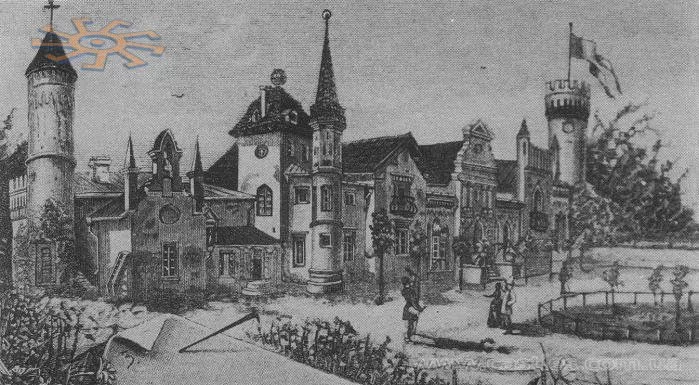
The structure had a fairytale appearance: towers, complex decorative facades, arches, and numerous details created the image of a medieval castle.
Luxurious interiors and unusual collections
The interior spaces aroused special admiration. The most famous was the dining room, the walls of which were decorated with the coats of arms of almost all well-known Volhynian families. A huge chandelier hung in the center, made by local craftsmen from parts of ancient knightly armor.
Windows and doors with colored glass were installed in the ballroom, expensive silk carpets lay in the private quarters, and some rooms were almost completely covered with mirrors purchased in neighboring Romaniv.
Prushynskyi sought to fill the palace with art. He could not afford to buy a large collection of famous canvases, so he commissioned local craftsmen to make copies of famous paintings and engravings in massive gilded frames. At the same time, the estate also had genuine valuables — bronze fireplace decorations, candelabras, ancient clocks, oriental carpets, knightly weapons, and works by professional artists.
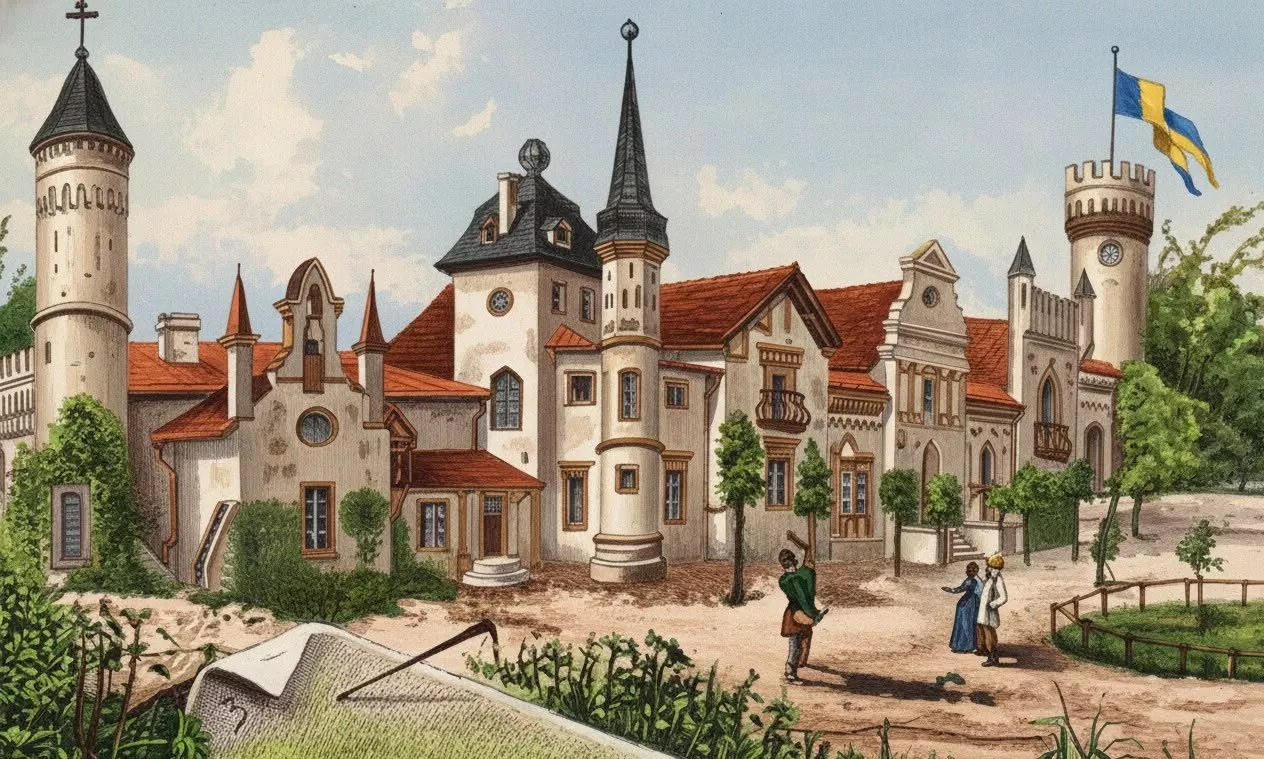
Visual reconstruction of the palace created using AI based on existing engravings.
A park that captivated all of Volhynia
No less impressive was the park, laid out simultaneously with the palace on the slopes above the Sluch. For it, Prushynskyi invited a gardener from Warsaw, who focused on the best examples of contemporary landscape art.
The Vilkha park was famous for its collection of roses, which the gentry gathered to see. The territory was decorated with romantic gazebos, a fountain in front of the main entrance, decorative flower beds, and camellias and rhododendrons exotic to Volhynia were grown in the greenhouse.
Outbuildings were covered with green vines, and the entire park composition created the atmosphere of a European noble residence.
What happened to the palace in the 20th century
How and when exactly the main palace perished has not been reliably established. Most likely, it did not survive the wars and revolutions of the early 20th century that swept through Volhynia.
The central building has not survived. However, in Vilkha one can see the former palace stables — a beautiful historic structure that today houses a village club and library. Part of the former estate's territory belongs to the St. Spaso-Pokrovsky Women's Monastery, while the ancient park has preserved individual trees and layout elements.
How to get there
Vilkha is located in the Romaniv hromada of Zhytomyr district, approximately 85–90 kilometres from Zhytomyr and about 15 kilometres from the Myropil railway station.
It is most convenient to travel by car via Romaniv or Myropil. The road runs through picturesque villages along the Sluch valley.
Is it worth visiting
Vilkha is not a place with a preserved palace where people go for luxurious interiors. It is a journey into the world of lost aristocratic Volhynia: you can walk along paths where counts once strolled, see the old stables, monastery buildings, and the remains of the park.
Only fragments remain of the "Volhynian castle", but the history of Vilkha is still striking. Once a palace towered here that could compete with the most beautiful residences of its time, and today it is one of the most interesting forgotten historical locations in the Zhytomyr region.