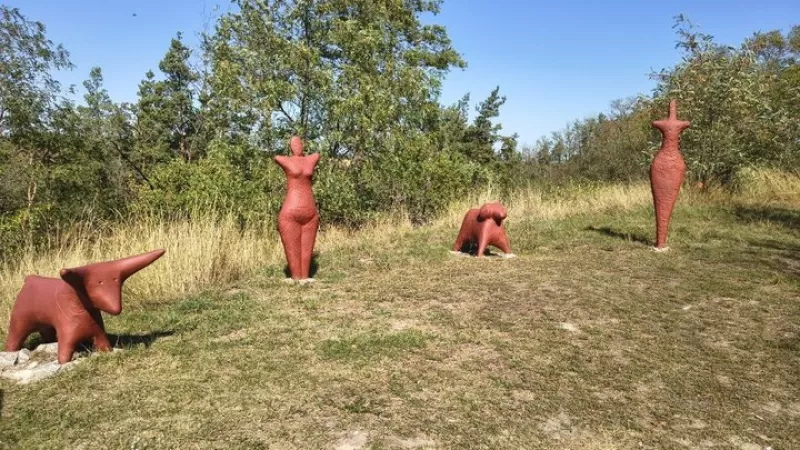

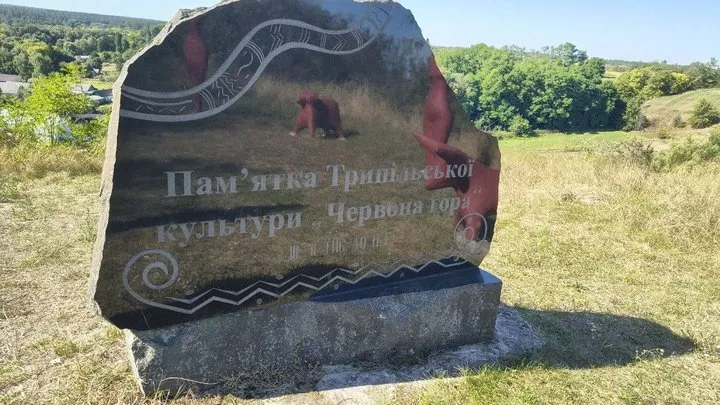
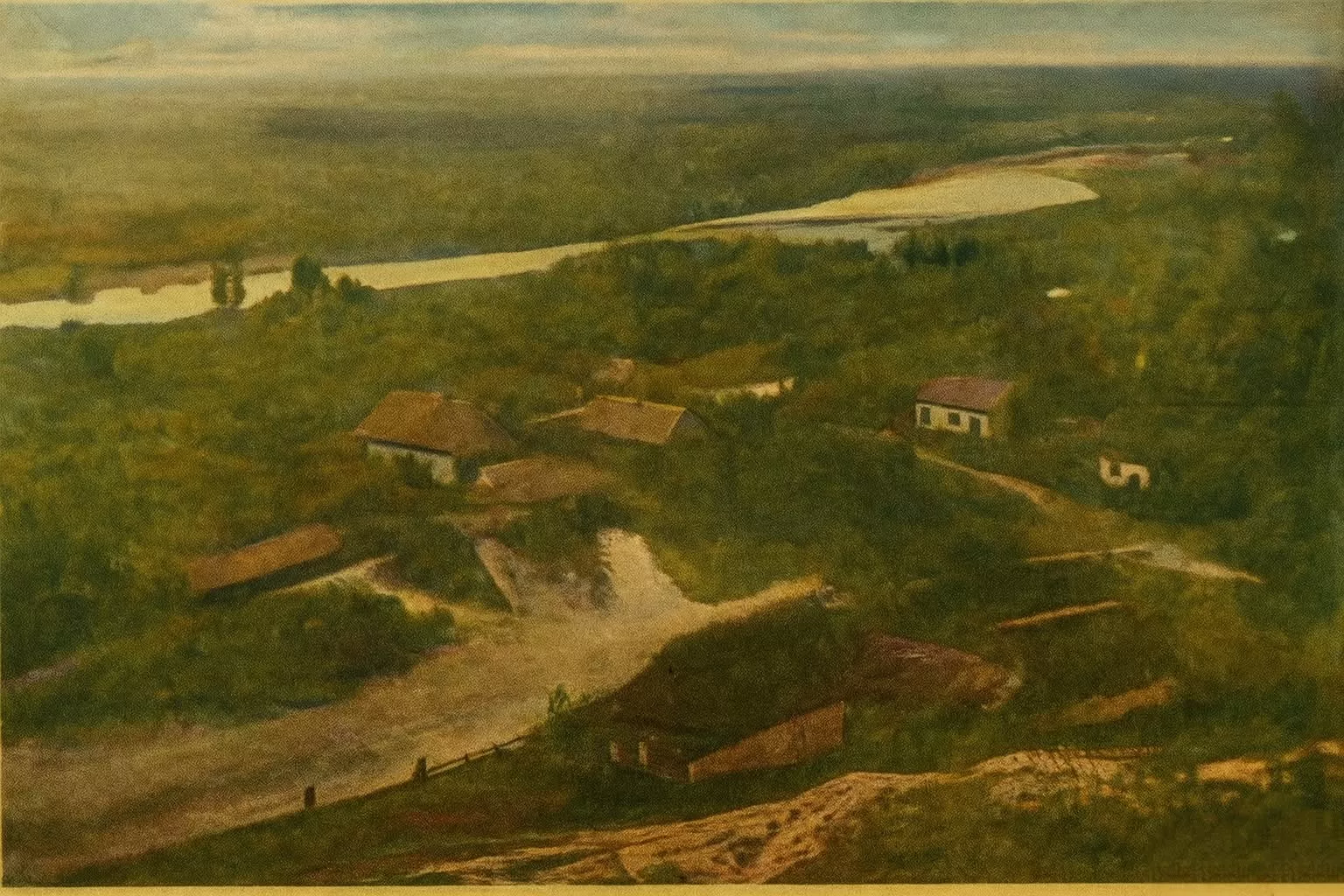
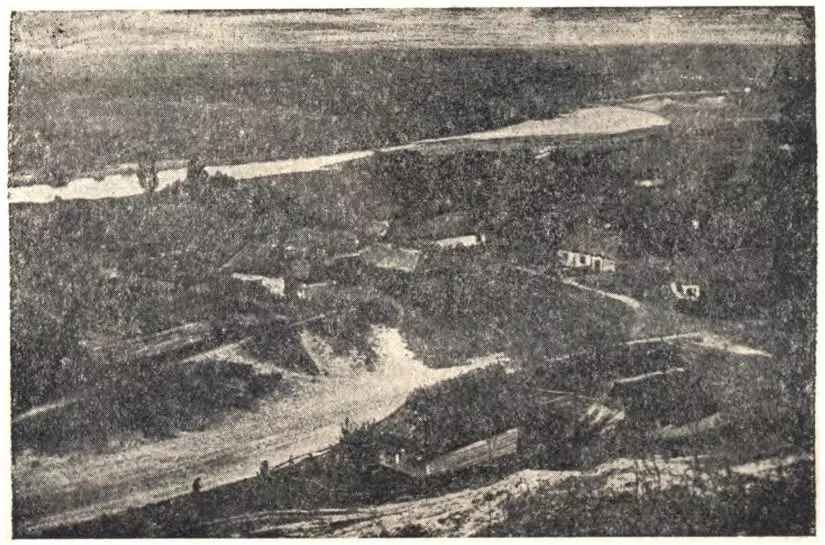
In the village of Horodske in the Zhytomyr region, on the high bank of the Teteriv River, lies the Chervona Hora tract. Here you will find an archaeological site associated with the late stage of the Trypillia culture.
This is not just a hill with modern sculptures. Traces of a settlement dating back several thousand years are preserved underground. Archaeologists began large-scale research of this area back in the 1930s, and today the site is gradually being transformed into a cultural and tourist space.
As of September 2026, 10 large sculptures inspired by the Trypillia culture have already been installed on Chervona Hora. Eventually, there are planned to be 12. Development of the space is still ongoing, with work scheduled for completion in 2027.
Ancient settlement on Chervona Hora
The late Trypillia settlement on Chervona Hora dates back to the 3rd millennium BC. This is the first known late Trypillia settlement on the banks of the Teteriv, and it became a benchmark for archaeologists: the village gave its name to an entire group of sites—the so-called Horodske-type sites belonging to the final stage of the Trypillia culture.
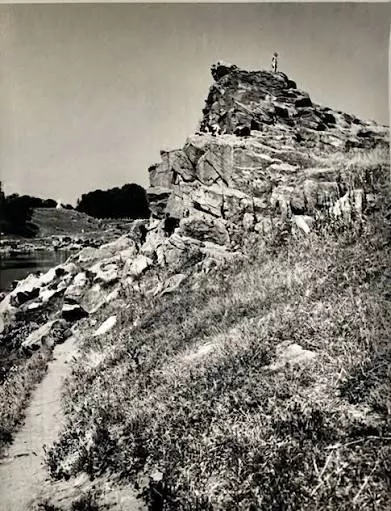
Chervona Hora is located on a naturally protected promontory above the Teteriv. The hill has steep slopes that provided natural defense for the ancient settlement on three sides.
The territory of the site covers about 2 hectares—making it the richest in finds among the three hillforts of Horodske. In 2004, Chervona Hora was added to the register of archaeological monuments.
Archaeological research
Exploratory excavations at the settlement were conducted in 1936, and research continued in 1937 and subsequent years.
Archaeologists studied the remains of ancient dwellings, farm buildings, furnaces, and other traces of the lives of people who lived here thousands of years ago.
Among the materials found during the excavations are pottery fragments and stone tools. Some of the archaeological materials from Horodske have entered museum collections.
Interestingly, traces of the ancient settlement can still be encountered today: fragments of ancient pottery and other objects related to the lives of the settlement's inhabitants are found in the surrounding areas.
Origin of the name Chervona Hora
The name of the tract is associated with the features of the hill itself.
The slopes of the mountain have clayey soil. According to local explanations, at certain times of the day, especially during sunset, the surface of the hill acquires a reddish hue.
This natural phenomenon likely became the basis for the name Chervona Hora (Red Mountain).
"Dyvosvit Trypillia"
The modern life of the archaeological site received a new development in 2016, when the educational, artistic, and tourist-information center "Dyvosvit Trypillia" was founded in Horodske.
The project's idea was to popularize the history of the Trypillia culture through art, reconstruction, and work with the local archaeological heritage.
As part of the project, reconstructions of Trypillian ceramics, artworks, and other materials were created to help people better visualize the culture of those who lived in this area several millennia ago.
It was around this idea that the modern space at Chervona Hora subsequently began to take shape.
Trypillian Sculptures on the Hill
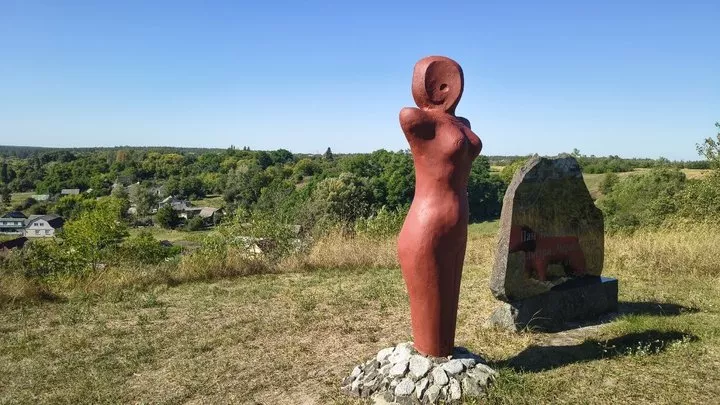
The first large modern sculpture on Chervona Hora was installed in 2017.
Later, the idea arose to create an entire open-air composition. The sculptures are crafted by Oleksii Markovskyi.
These are neither ancient statues nor archaeological finds. All of them are contemporary art works created based on the Trypillian culture.
The base of a sculpture is a metal frame. It is wrapped in mesh, after which cement mortar is applied, and the necessary elements and ornaments are manually shaped. Work on a single figure can take several months.
As of September 2026, 10 sculptures have been installed on the hill. The project authors plan to increase their number to 12.
Thus, Chervona Hora is gradually turning into a peculiar open-air museum where contemporary art tells the story of the ancient history of this territory.
Chervona Hora Today
Today, Chervona Hora combines an archaeological site and a modern tourism and art space.
The territory remains an open natural location with no operating hours: here you can climb the hill, see the sculptures, and take in the surrounding landscape.
At the same time, the development of the space is not yet complete. Work is ongoing, and the final formation of the tourist location is planned for 2027. Therefore, the current appearance of Chervona Hora is not yet final: new sculptures and landscaping elements will appear here gradually.
What to See in Horodske
A trip to Chervona Hora can be combined with a walk around Horodske itself.
The village is interesting not only for its Late Trypillian site. There are two more hillforts here — Mala Hora, stretching almost 600 m south of Chervona Hora beyond a deep ravine, and Dytynets with a rampart about five meters high. An ancient iron-smelting craft center also existed at the Horodske hillforts, where dozens of bloomery furnaces operated simultaneously.
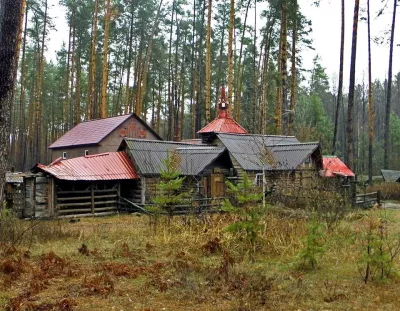
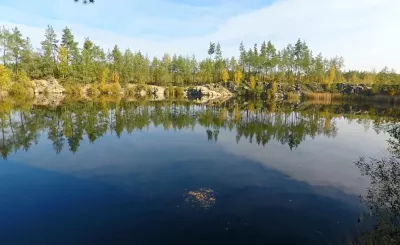
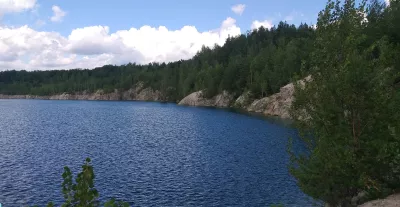
Not far from the village in the forest stands the Holy Spirit Men's Monastery, and the granite landscapes of the Teteriv continue toward Korostyshiv — to the Vysokyi Kamin Quarry and the Korostyshiv Canyon.
How to Get There
Horodske belongs to the Starosiletska hromada of Zhytomyr District and lies about 8 km from Korostyshiv, which is accessed via the M-06 Kyiv — Chop highway. Chervona Hora does not have a separate address, so for a car trip, it is most convenient to use the site's coordinates on the map: the tract is located on a cape above the Teteriv near the village.
When to Visit
The warm season — from late spring to early autumn — is best suited for a walk around Chervona Hora. During this time, it is more convenient to climb the hill, view the sculptures, and walk around the surroundings.
The location can be especially atmospheric closer to evening, when sunlight emphasizes the relief of the clay slopes.
However, the main value of Chervona Hora is not in the sculptures themselves. Here, a modern art space is being created directly on the territory of an ancient settlement that is several thousand years old.
For the Zhytomyr region, this is an interesting example of how archaeological heritage is not just being conserved, but made understandable to the modern visitor.