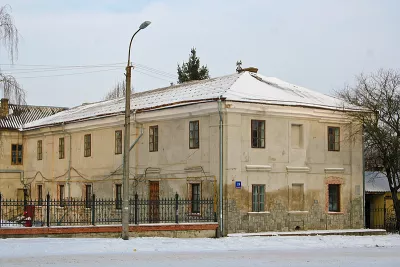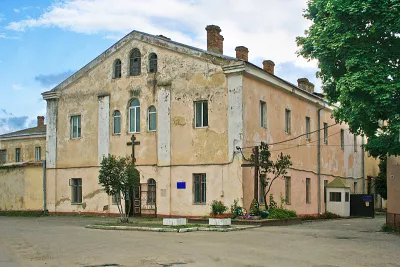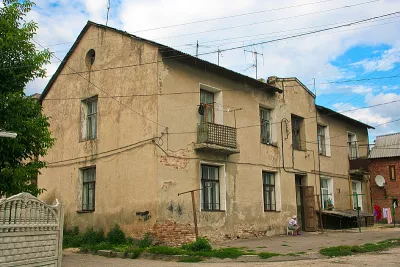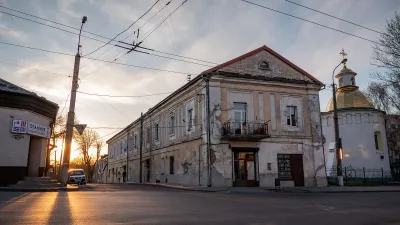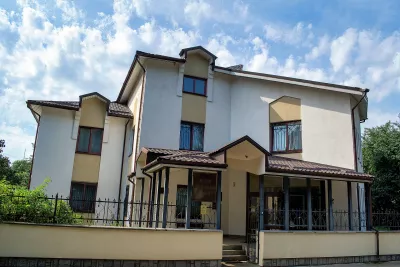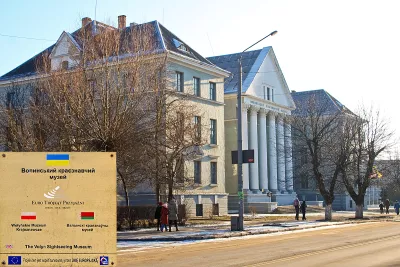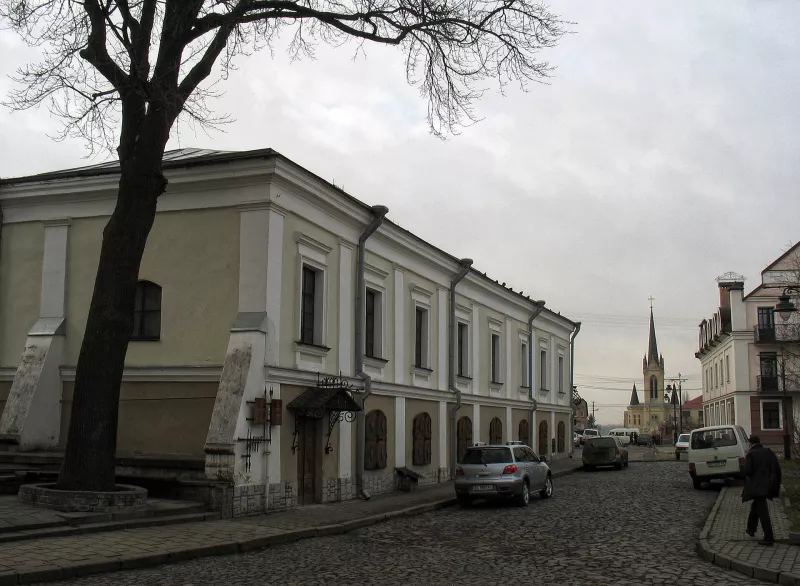
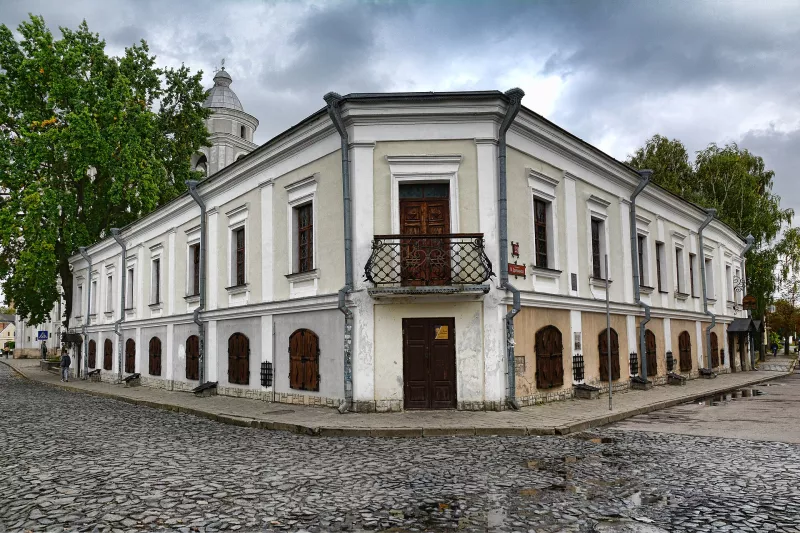
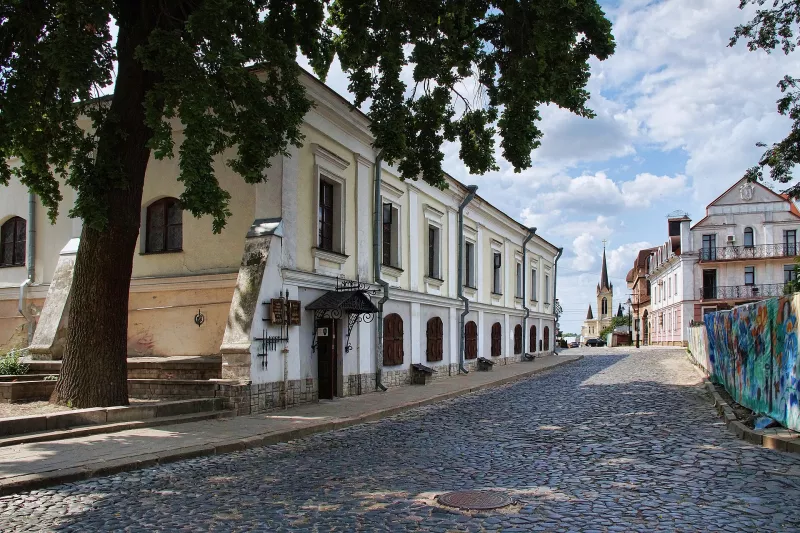
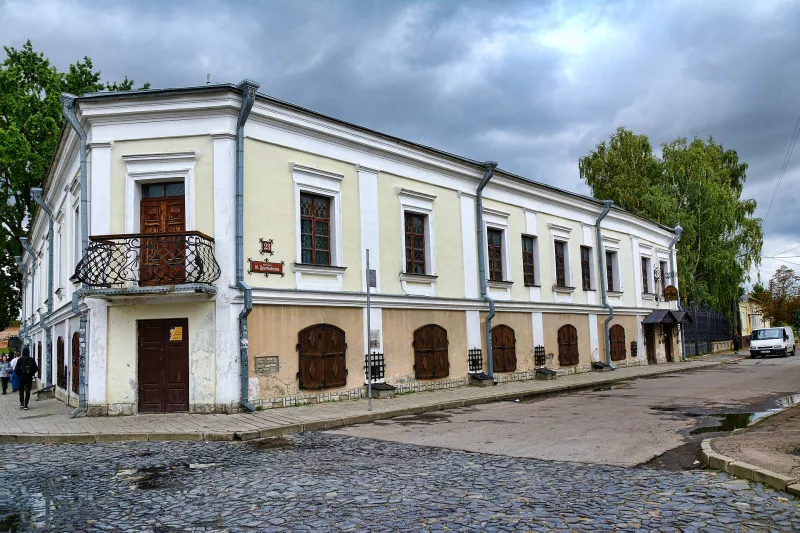
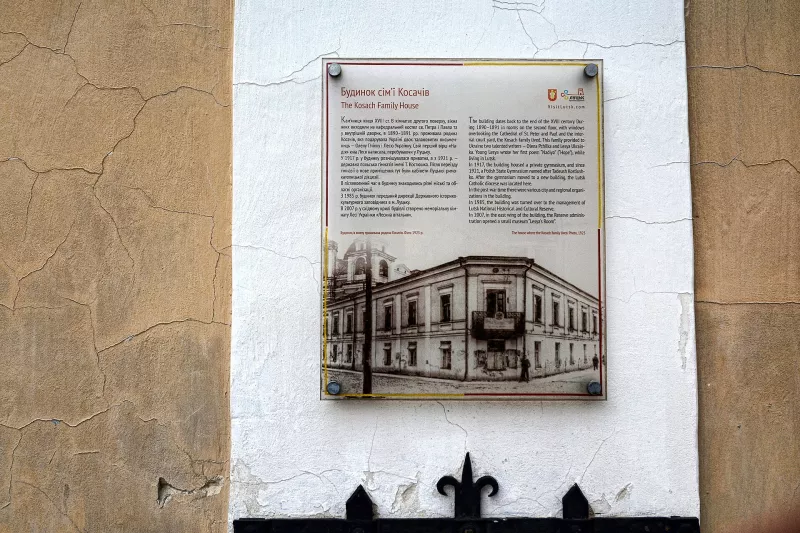

Lesia’s Parlor is a memorial museum in the Kosach family house in the historic center of Lutsk, at the corner of Drahomanova and Kafedralna streets. In 1890–1891, the Kosach family lived here, including the young Lesia Ukrainka. The house itself is an architectural monument from the late 18th to early 19th century, having served as a Jesuit hospital, a theatre, and a gymnasium.
History of the House
The house was built on the site of a filled-in defensive moat of the Okolny Castle. On the 1807 map, a burgher’s L-shaped house with a basement is already shown here. During the Russian Empire period, a second floor and cast-iron stairs were added, and the upper floor was rented out: in the 1870s, a private drama theatre performed here, and in 1890–1891 the Kosach family lived here. Petro Kosach, Lesia’s father, then headed the Lutsk-Dubno district tax administration.
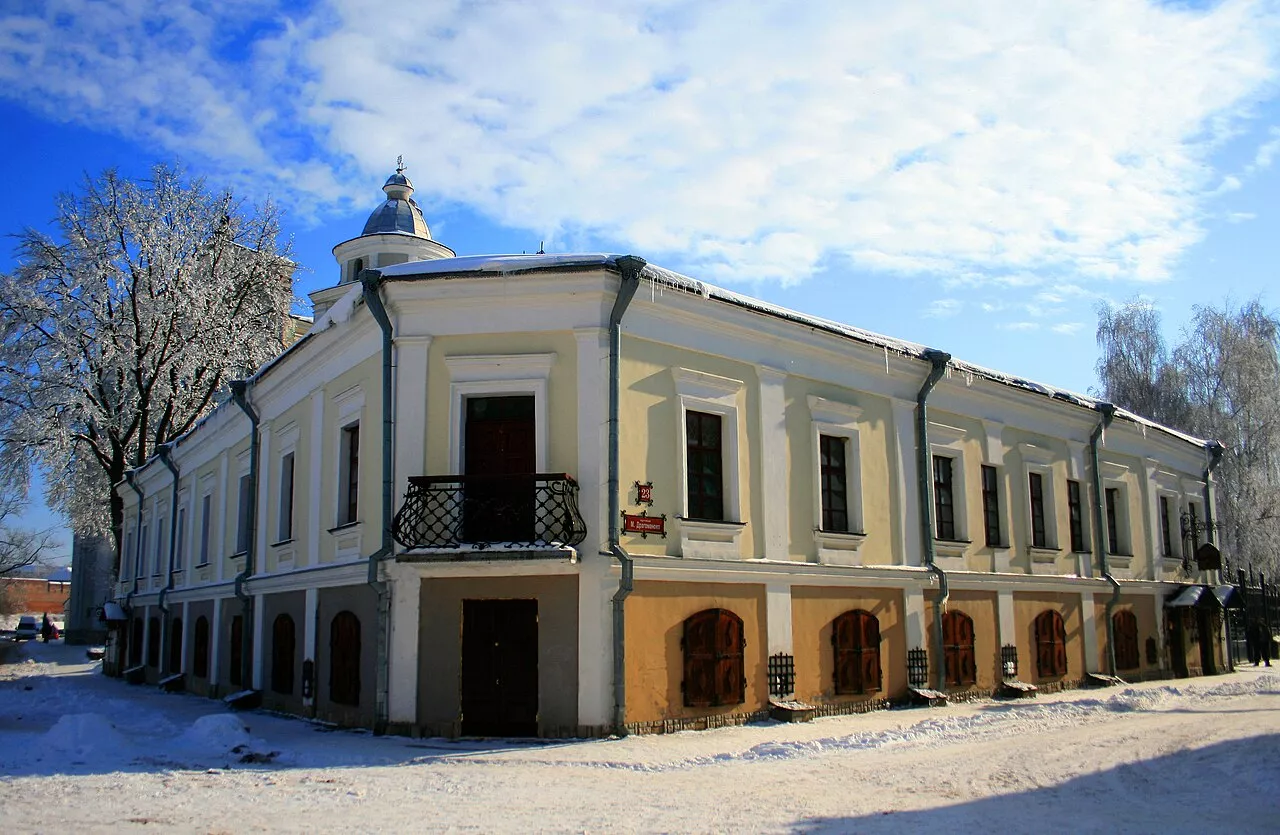
At the beginning of the 20th century, a Polish gymnasium was located here, which from 1921 became the state Kostyushko Gymnasium, and later the administration of the Lutsk Roman Catholic diocese. After World War II, the building housed a bank and various institutions, and in 1964–1965 a small exhibition about Lesia Ukrainka was opened on the first floor. In 1985, the house was granted protected status, and the administration of the “Old Lutsk” reserve was located here.
What to See
Today, the house hosts the memorial exhibition “Lesia’s Parlor,” dedicated to Lesia Ukrainka’s years in Lutsk and the Kosach family. The museum is being renovated, so it is best to check the opening hours before visiting.
Lesia’s Parlor on Video
Nearby
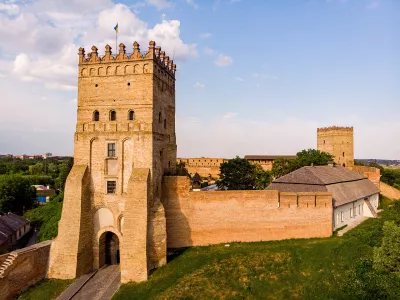
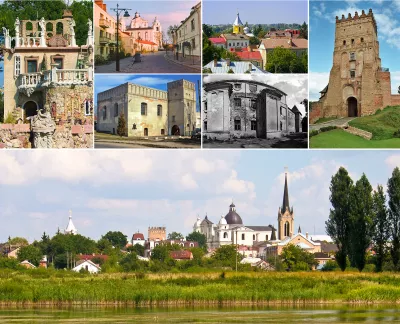
Lutsk — about the city and Lubart’s Castle, Lesia Ukrainka Museum in Kolodiazhne — the estate where the poetess spent her childhood.
How to Find
The house is located in Lutsk’s Old Town, just a few minutes’ walk from Lubart’s Castle.