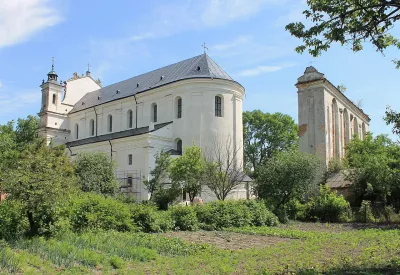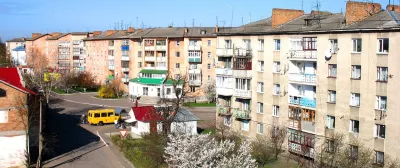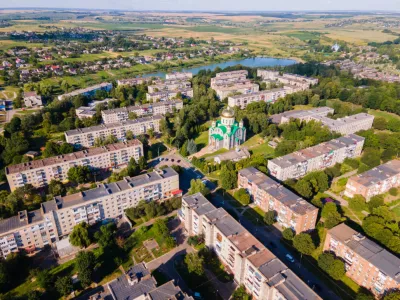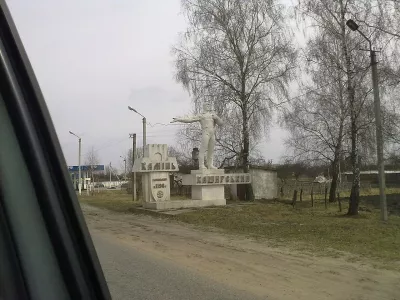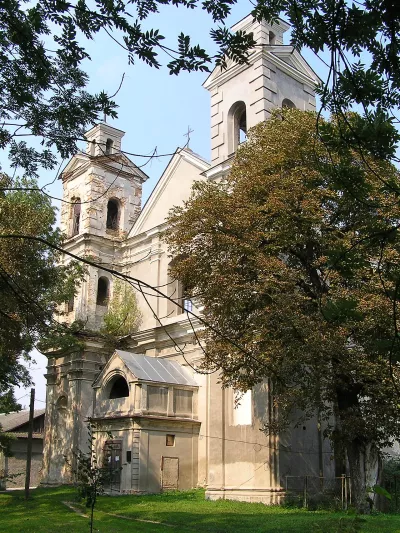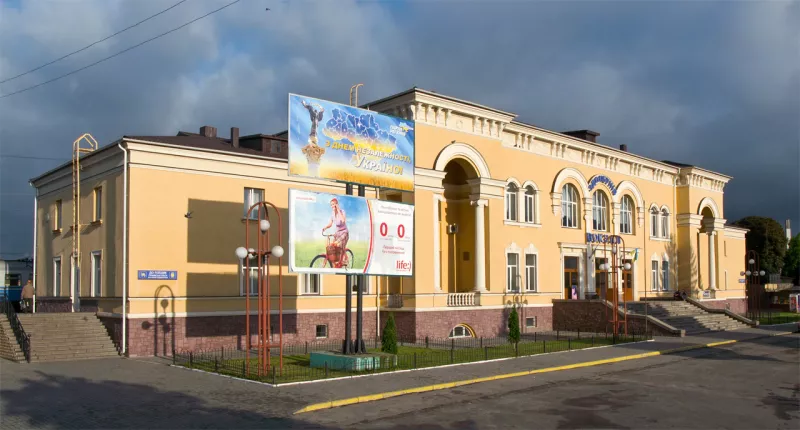

Zdolbuniv is a city 12 km south of Rivne, the center of the Zdolbuniv hromada. It is one of the main railway hubs of western Ukraine and the birthplace of Ukraine's oldest cement plant. Tourists are drawn here by the railway station, the history of the Volhynian Czechs, and the proximity to Ostroh, Derman, and Mezhyrich.
From Dolbuniv to a Junction Station
The settlement was first mentioned in 1497 as Dolbuniv, and the modern name has been used since 1629. After the Union of Lublin, the village passed to the Polish-Lithuanian Commonwealth; in 1570, there were only 9 homesteads here. In 1618–1619, Zdolbuniv suffered from Tatar raids, and in 1651, the headquarters of Bohdan Khmelnytskyi's army was located nearby, near the village of Taikury.
Everything changed with the arrival of the railway in the second half of the 19th century: Zdolbuniv became a junction station, and in 1884, a cement plant was founded here — now Volyn-Cement, the oldest in Ukraine. In 1903, Zdolbuniv received city status. Between the world wars, it was part of Poland, and from 1924, it was the county center of the Volhynian Voivodeship.
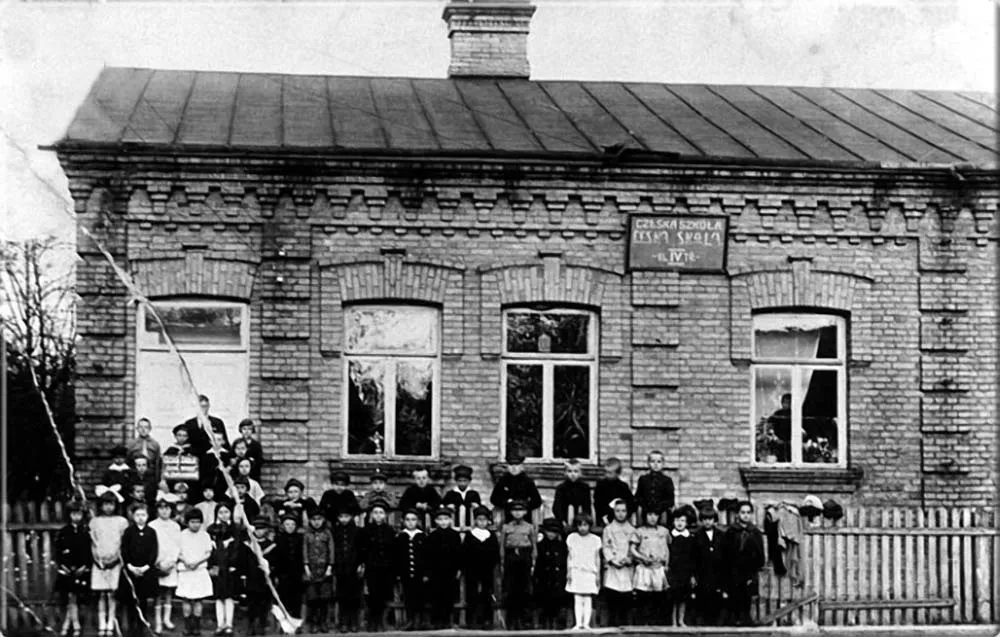
A special page of history is connected with the Volhynian Czechs, who resettled here in the 19th century. In 1917, a Czech school was opened in Zdolbuniv.
What to See
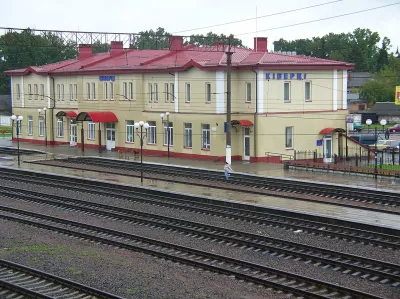
The railway station is the calling card of the city, from which its growth began. In the center stands the monument to Ulas Samchuk, a writer and the author of "Volhynia" and "Maria", who hailed from neighboring Derman.
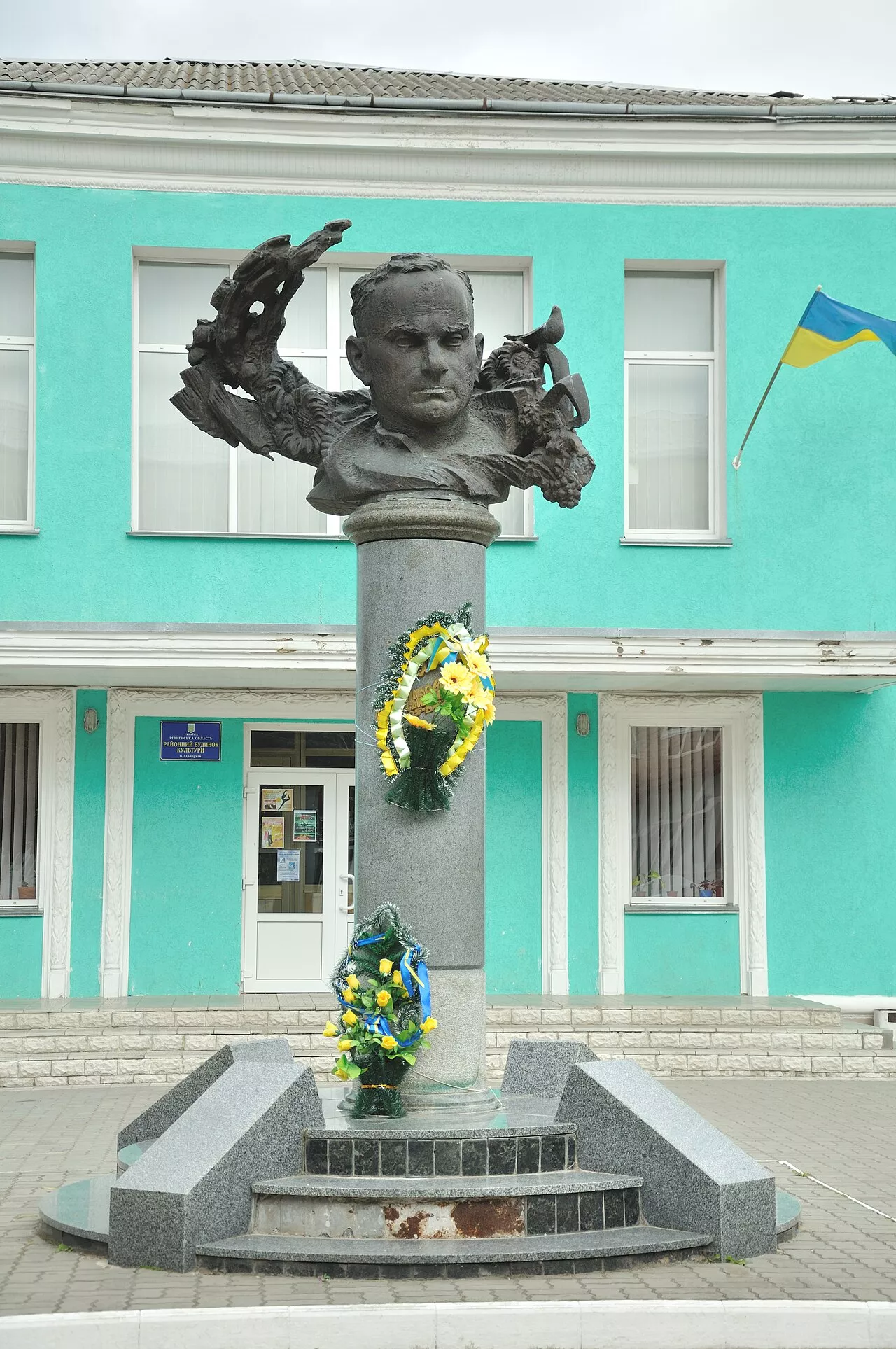
The city is small, and an hour or two is enough to explore the center. Afterwards, it is worth exploring the surrounding area.
Volhynian Czechs
In the second half of the 19th century, thousands of Czechs resettled in Volhynia. They bought land, founded homesteads and villages, and built breweries, hop farms, and schools. The Zdolbuniv region was one of the centers of this community: Czech families lived both in the city and in the surrounding villages. After World War II, most of the Volhynian Czechs returned to Czechoslovakia, but the memory of them remains in the architecture, names, and family stories.
Derman
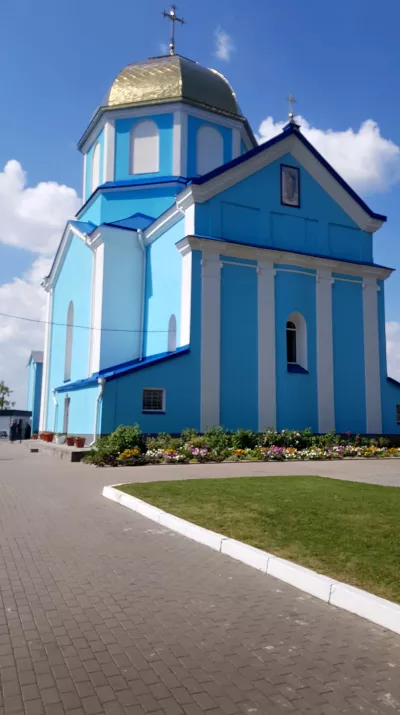
20 km from Zdolbuniv is the village of Derman, the birthplace of Ulas Samchuk. Here you will find the ancient Derman Monastery, where a printing press operated in the 16th and 17th centuries, as well as the landscapes of the Derman-Ostroh National Park — hills, marshes, and lakes. Derman can be conveniently combined with Ostroh and Mezhyrich in a single day.
Zdolbuniv on Video
Nearby
- Ostroh — castle and academy, about 30 km to the south.
- Mezhyrich Monastery — fortress of the Ostrozky princes near Ostroh.
- Derman — birthplace of Ulas Samchuk with an ancient monastery and the Derman-Ostroh National Park.
- Rivne — regional center 15 minutes away by transport.
How to Get There
Trains to Lviv, Kyiv, Ternopil, and Chernivtsi run through Zdolbuniv. From Rivne, suburban trains and minibuses (marshrutkas) are available, and the journey takes 15–20 minutes.