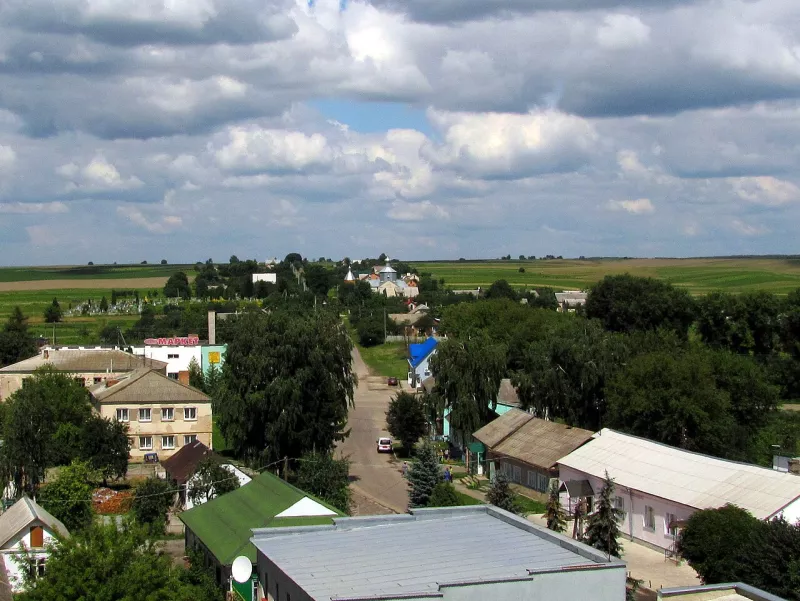
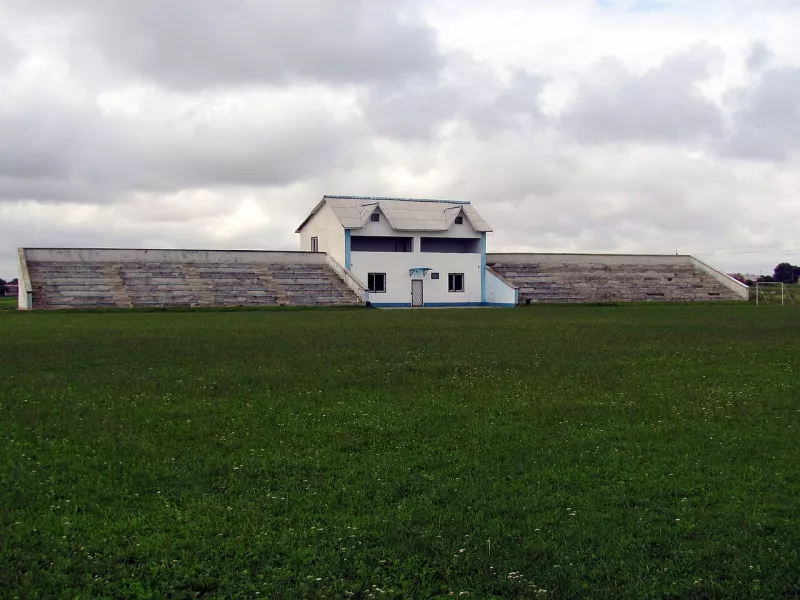

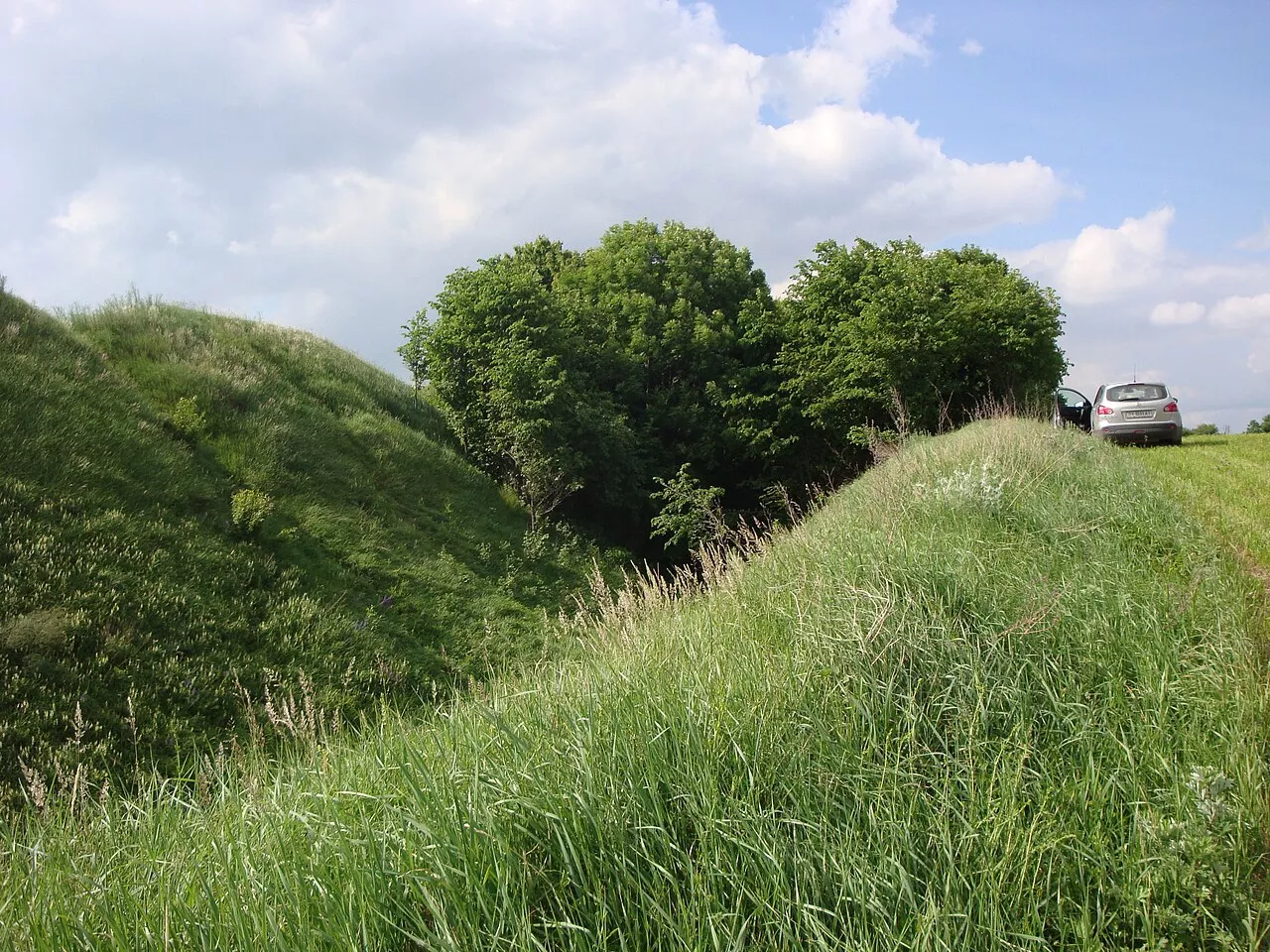
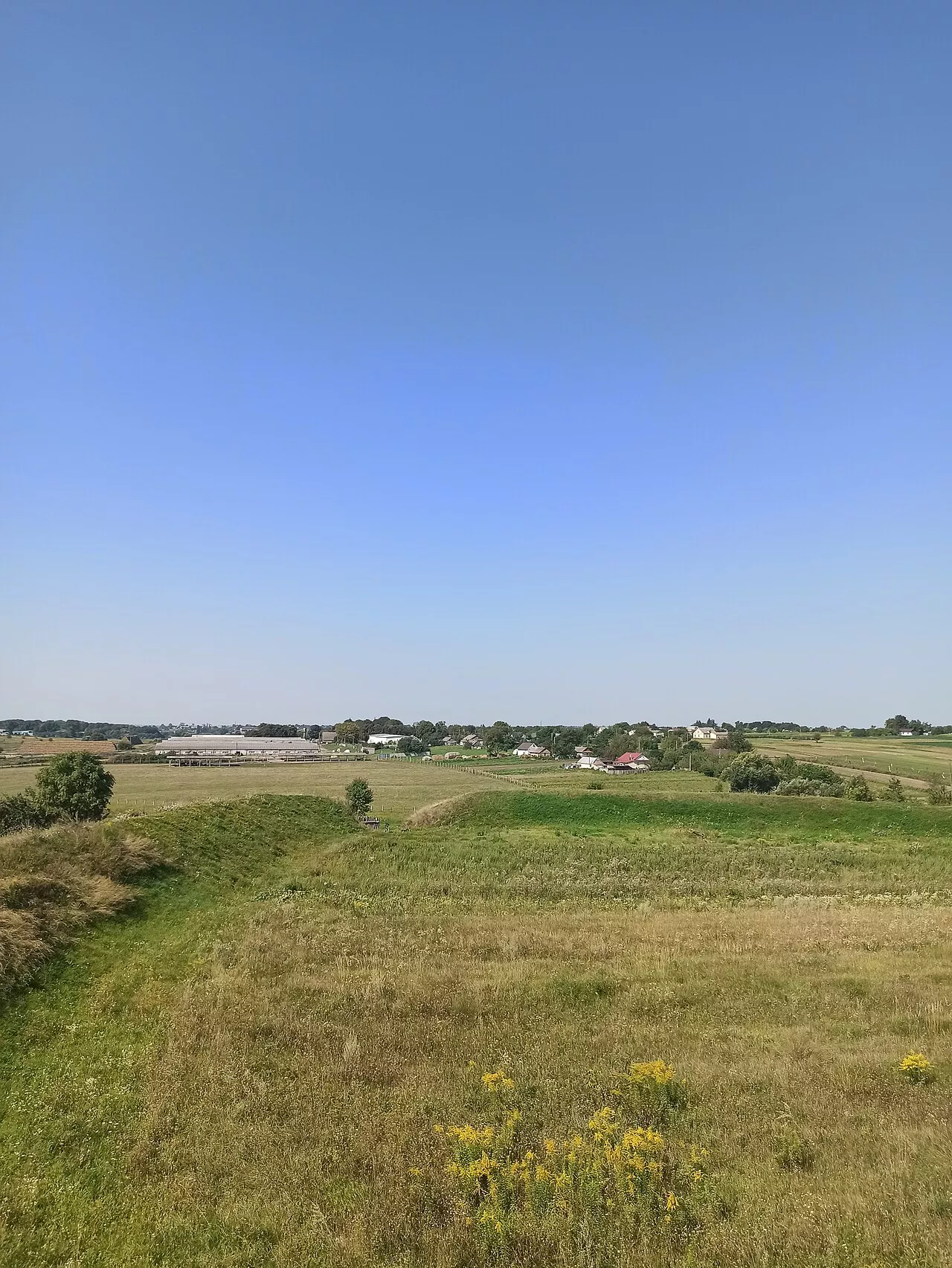
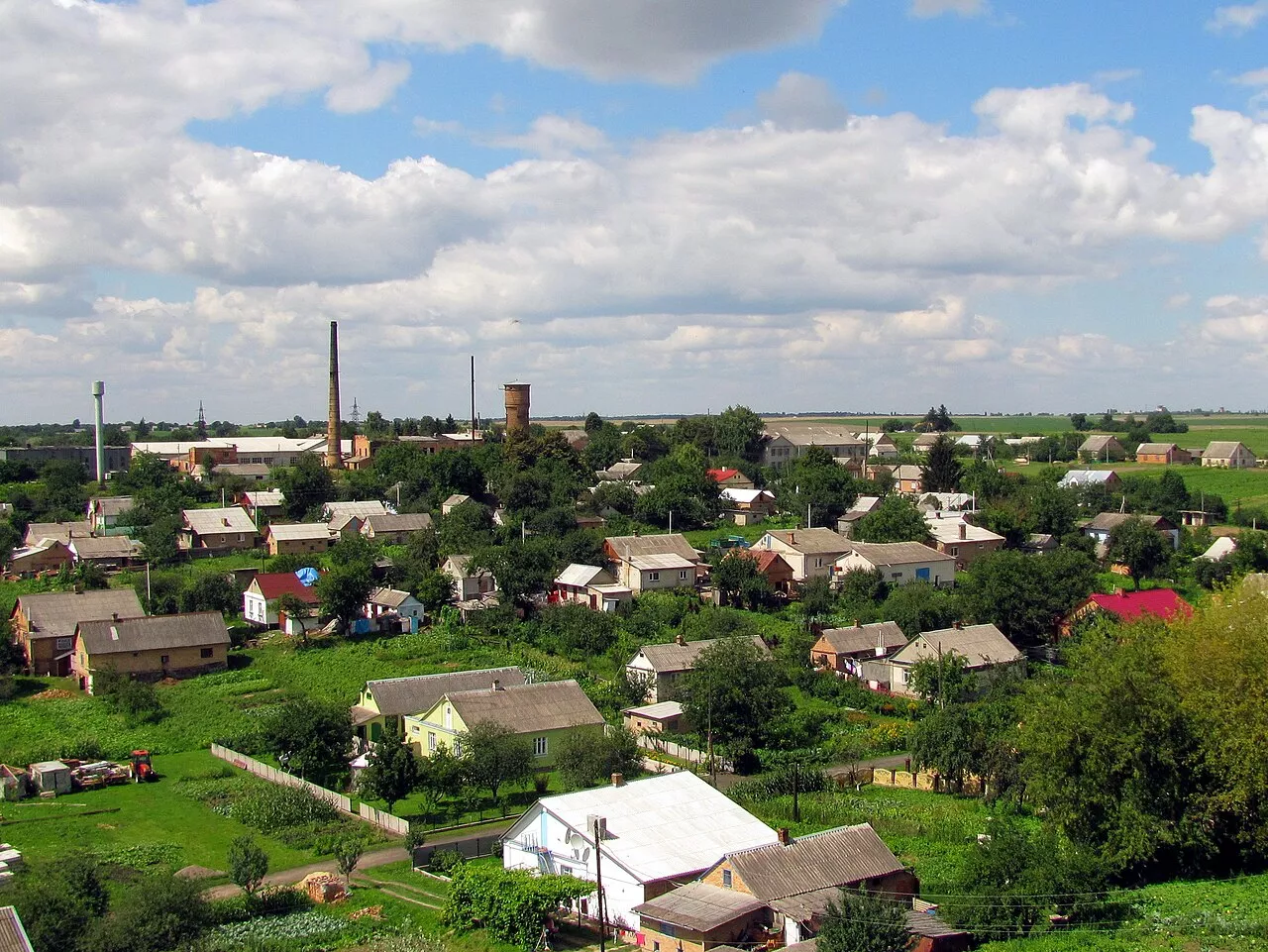
Ostrozhets is a large village on the Zboriv River, a right tributary of the Styr, and the center of the Ostrozhets hromada in Dubno Raion. About two and a half thousand people live here. Lutsk is less than twenty kilometers away, and Mlyniv is 28. Ostrozhets is the ancestral nest of the ancient princely family of the Ostrozhetskyis, and on the outskirts of the village, a castle site with ramparts under which underground passages once stretched can still be seen.
Where the Name Comes From
The name originates from the word "ostroh" in its ancient meaning: a low earthen protrusion amidst water and swamps that often became a fortress. This is precisely what the place where the settlement arose looked like.
The Princes Ostrozhetskyi
The official date of foundation is considered to be June 29, 1528, when King Sigismund I allowed the Trakai town-keeper Petro Mykhailovych to establish a town in his hereditary village of Ostrozhets. But researchers found an earlier date: in 1446, Prince Ivan Dmytrovych received Ostrozhets together with his sons for loyal service to Svidrigailo. From this family, which eventually died out, came the Princes Ostrozhetskyi. Later, the town was owned by the Semashkos: in 1602, the Lutsk starost Mykola Semashko sold Ostrozhets to Jan Kaszewski for 12 thousand kops of Lithuanian groschen. In the 18th century, Ostrozhets belonged to the Olizars.
Castle Site with Underground Passages
In the 1930s and 1940s, archaeologist Yuriy Shumovskyi explored Ostrozhets and wrote that between the town and the count's estate stands a small hillfort, overgrown with grass and strewn with stones from the castle walls — the "zamchysko" (castle site). Once it was entirely surrounded by water. Shumovskyi found cultural layers of various epochs here, fine ornamented ceramics, and jewelry made of bronze and iron.
According to his description, a suspension bridge led from the western side of the castle site to a second identical fortification, and further to the ramparts upon which the town itself stands. Wide underground passages, hollowed out in clay, stretched beneath the ramparts. Nearby, Shumovskyi also explored a burial mound dating from the 5th and 6th centuries.
Park and Palace
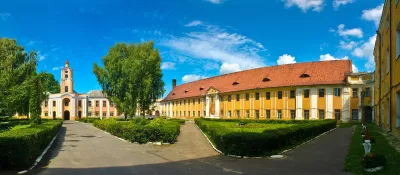
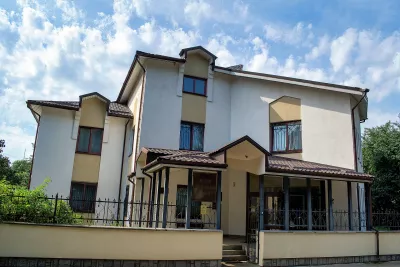
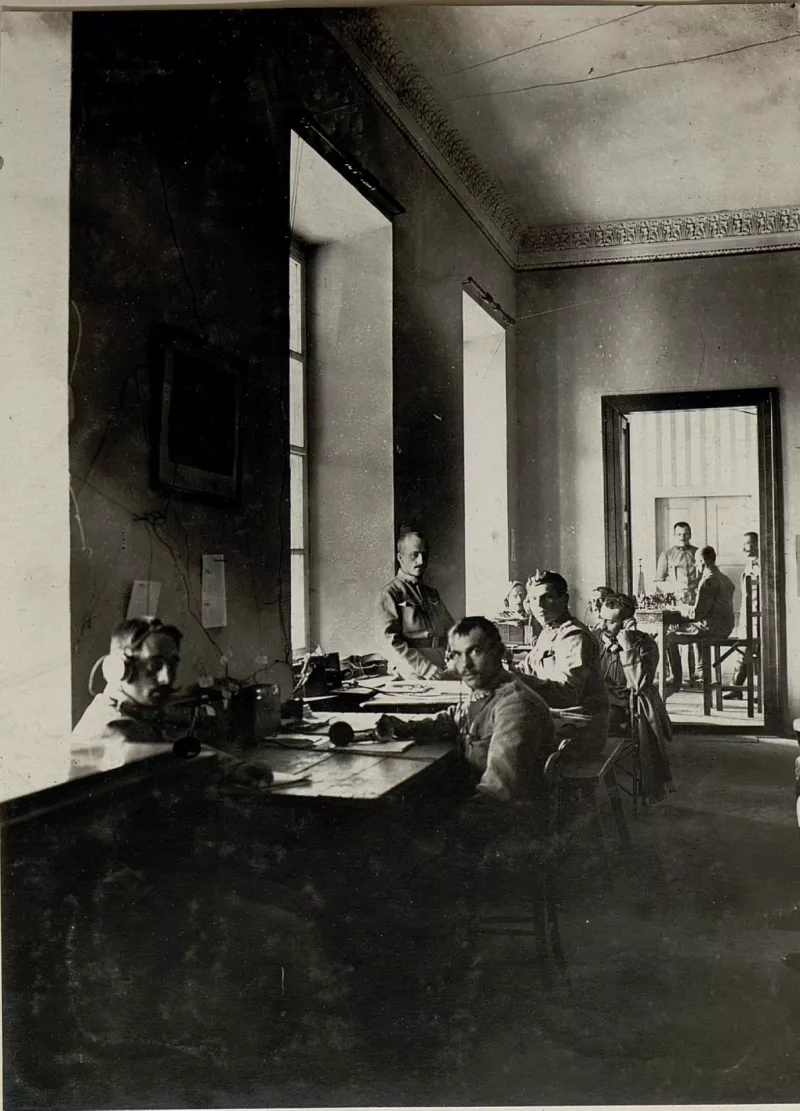
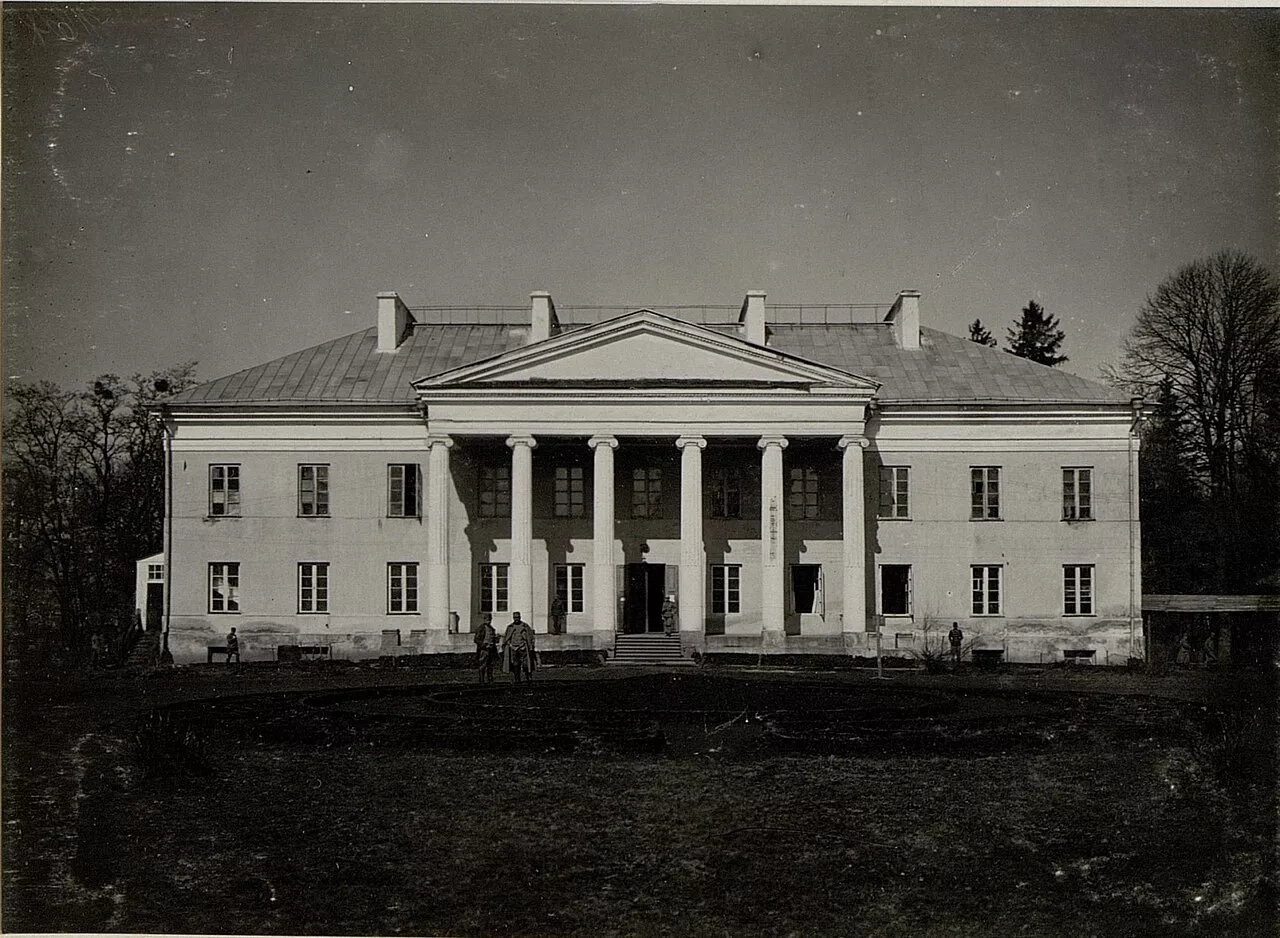
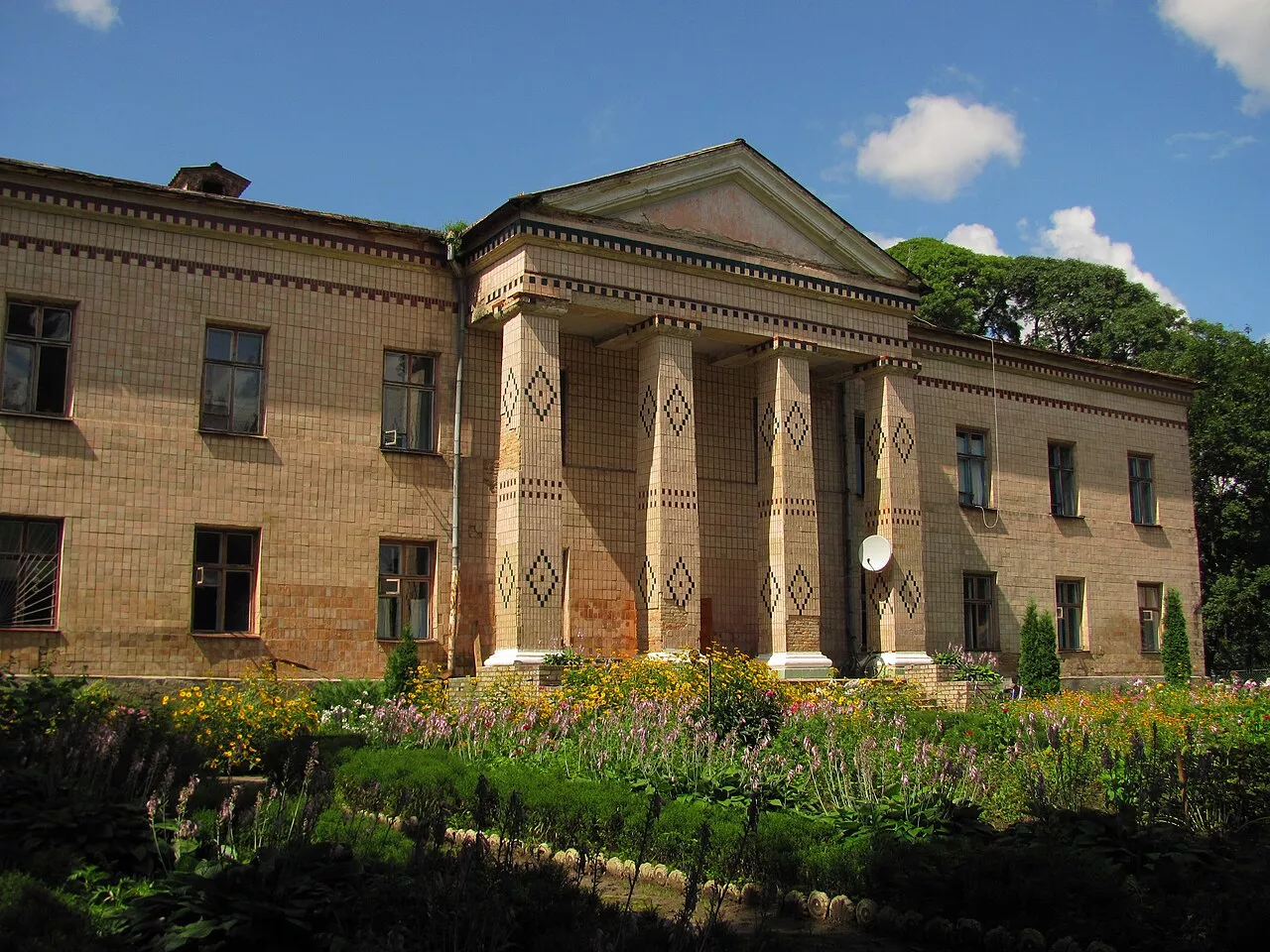
In the southern part of the village, in an area called Kuty, there was a summer castle and a huge park with an area of 16 hectares, laid out in 1840. The last major landowner of Ostrozhets was Count August Leduchowski, who in the 1920s and 1930s owned over two thousand hectares of land. During the First World War, the headquarters of the Austro-Hungarian corps was located in the Leduchowski palace. Today, a hospital is housed in the former residence.
The Town
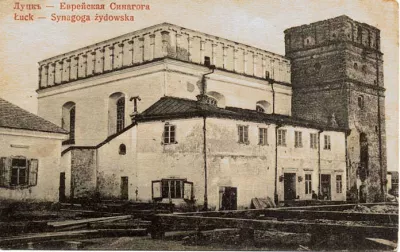
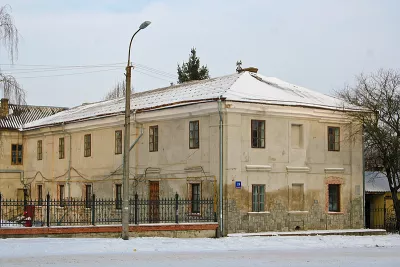
In 1886, Ostrozhets had 130 houses and nearly a thousand residents, a church, a Catholic chapel, a Jewish house of prayer, a school, and a brewery. In 1929, urban development regulations were extended to Ostrozhets. Between 1940 and 1959, it was a district center. During the war, the Nazis created a ghetto here, where they gathered Jews from the surrounding villages, and on October 9, 1942, they shot its prisoners.
Ostrozhets on video
When to go
Ostrozhets is convenient to visit from Lutsk: the journey takes half an hour. The best time is in late spring and summer, when the park is green.
Nearby
Lutsk is about 20 kilometers away, and Mlyniv is to the southeast. More details can be found in the article Dubno Raion.
How to get there
Ostrozhets lies 6 kilometers from the M19 highway Lutsk — Dubno. Buses run from Lutsk and Mlyniv.