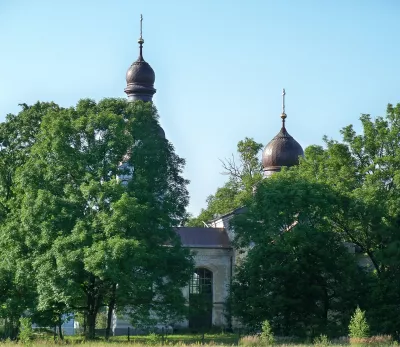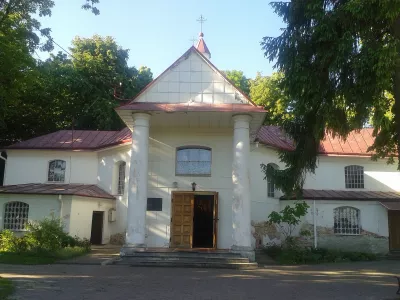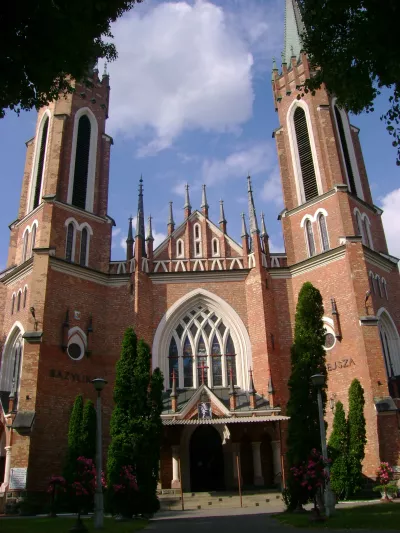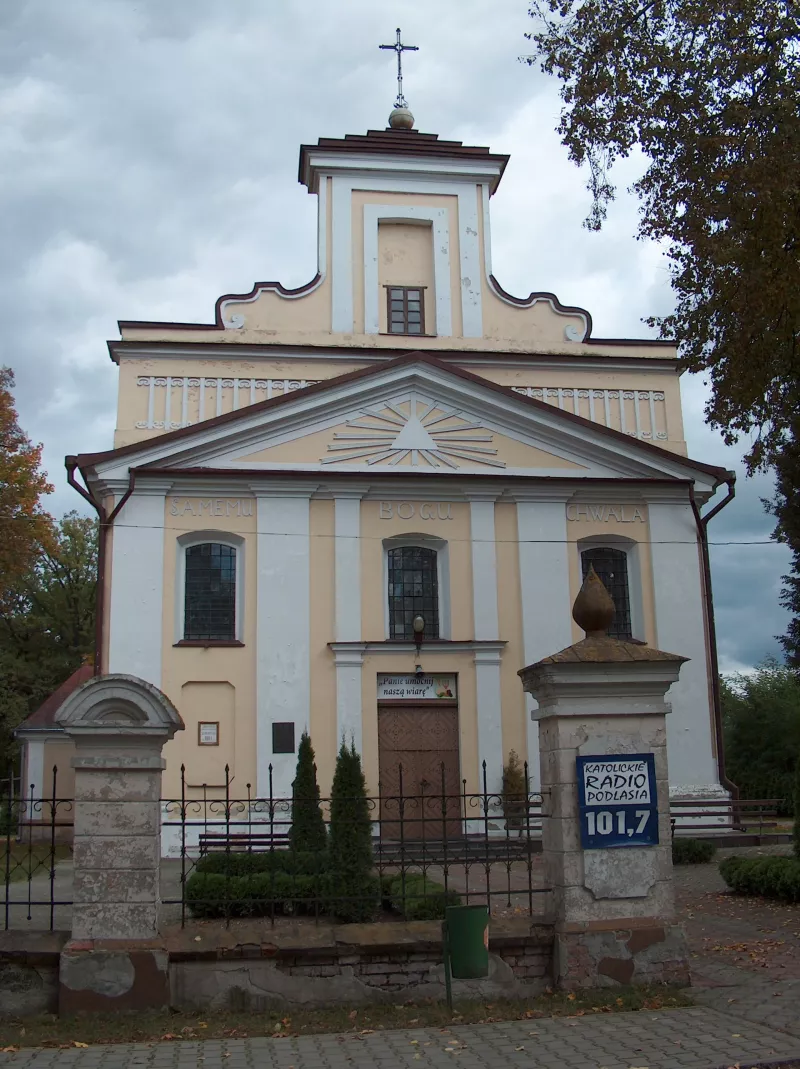
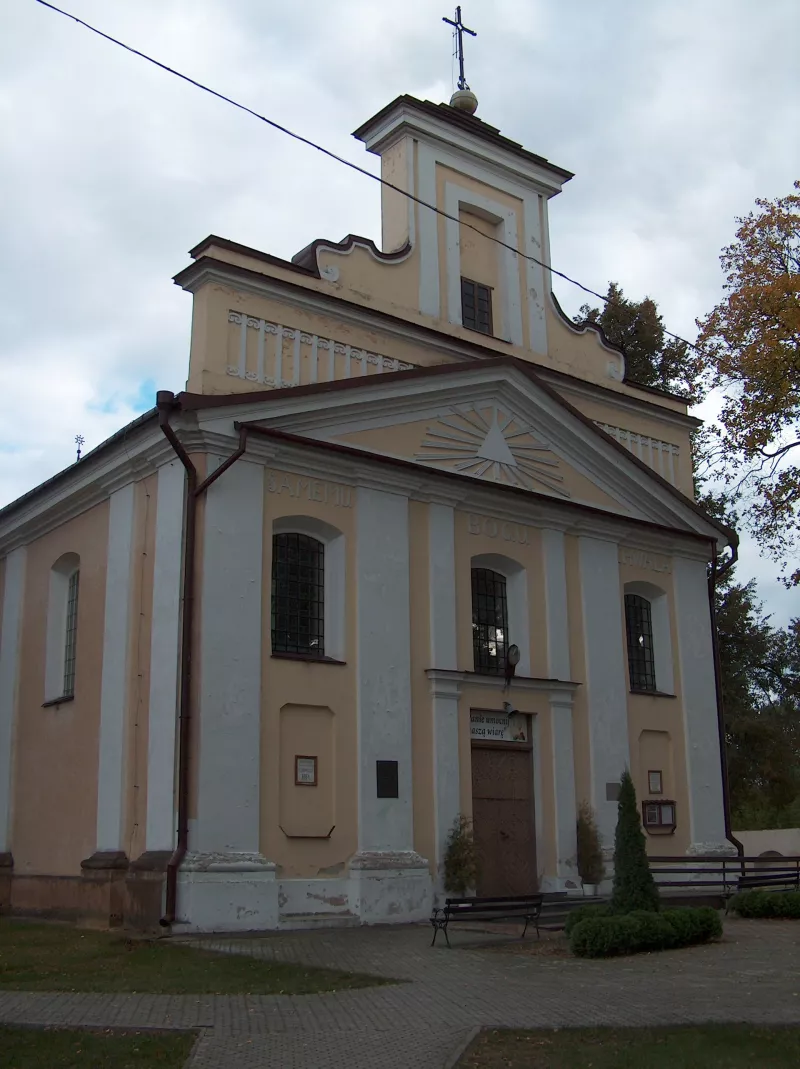
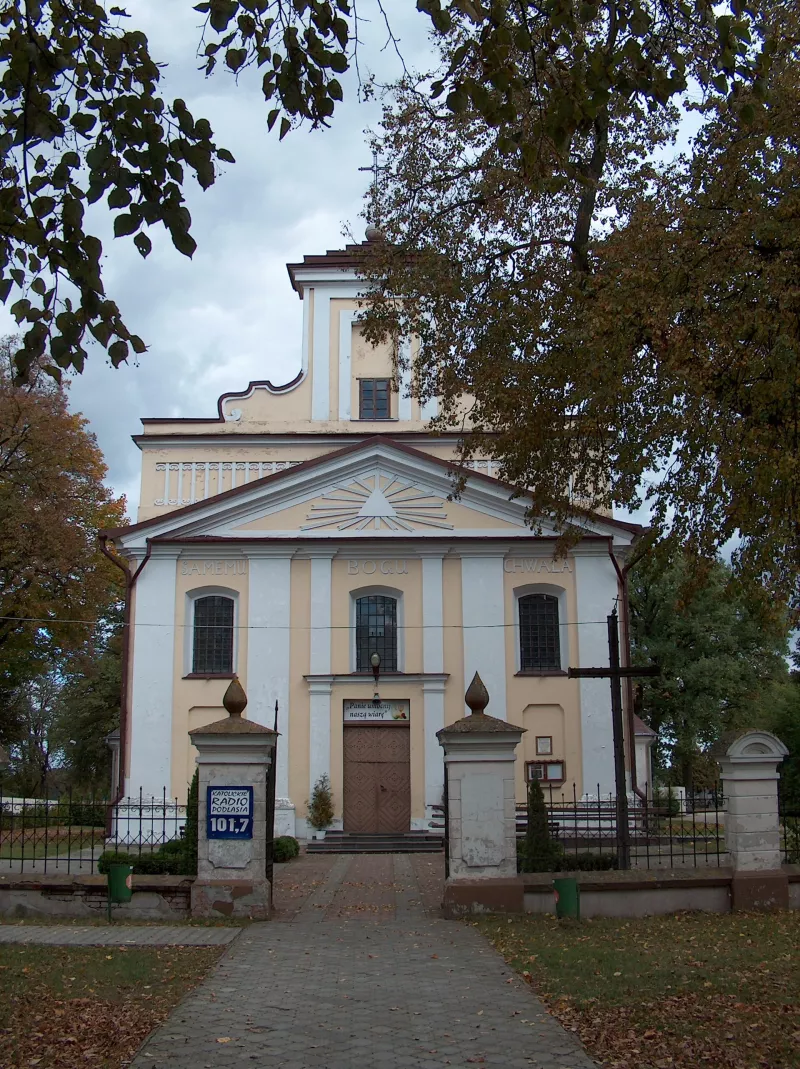
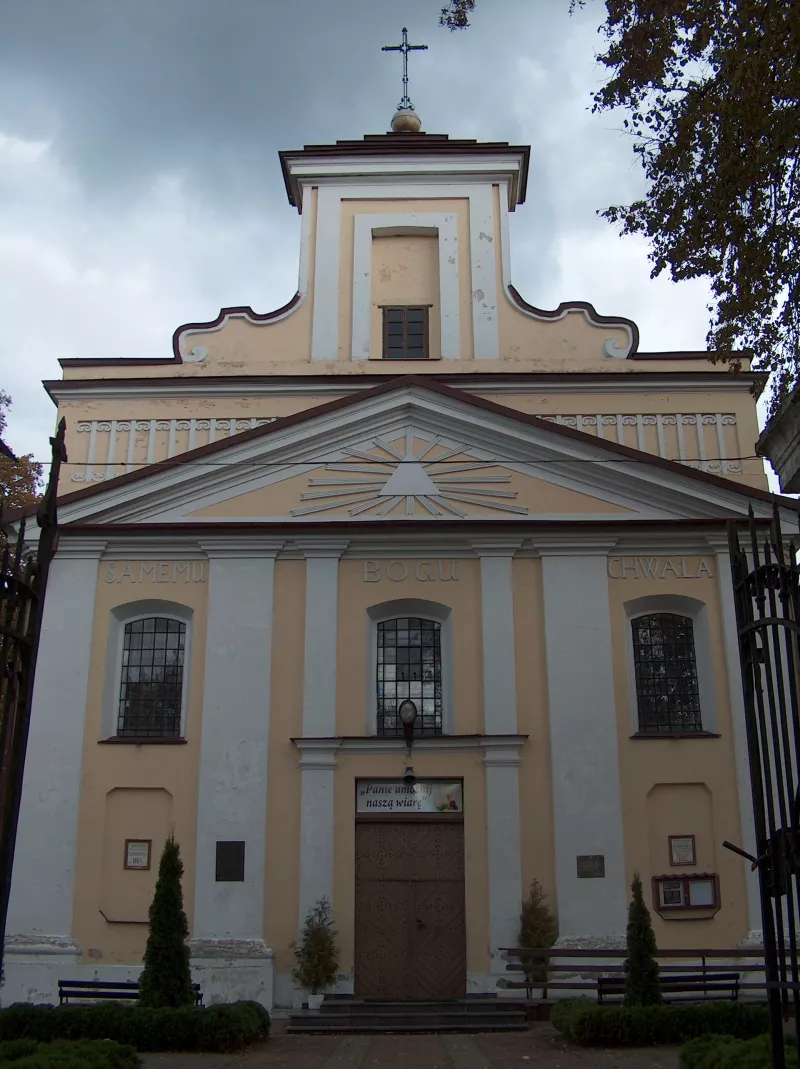
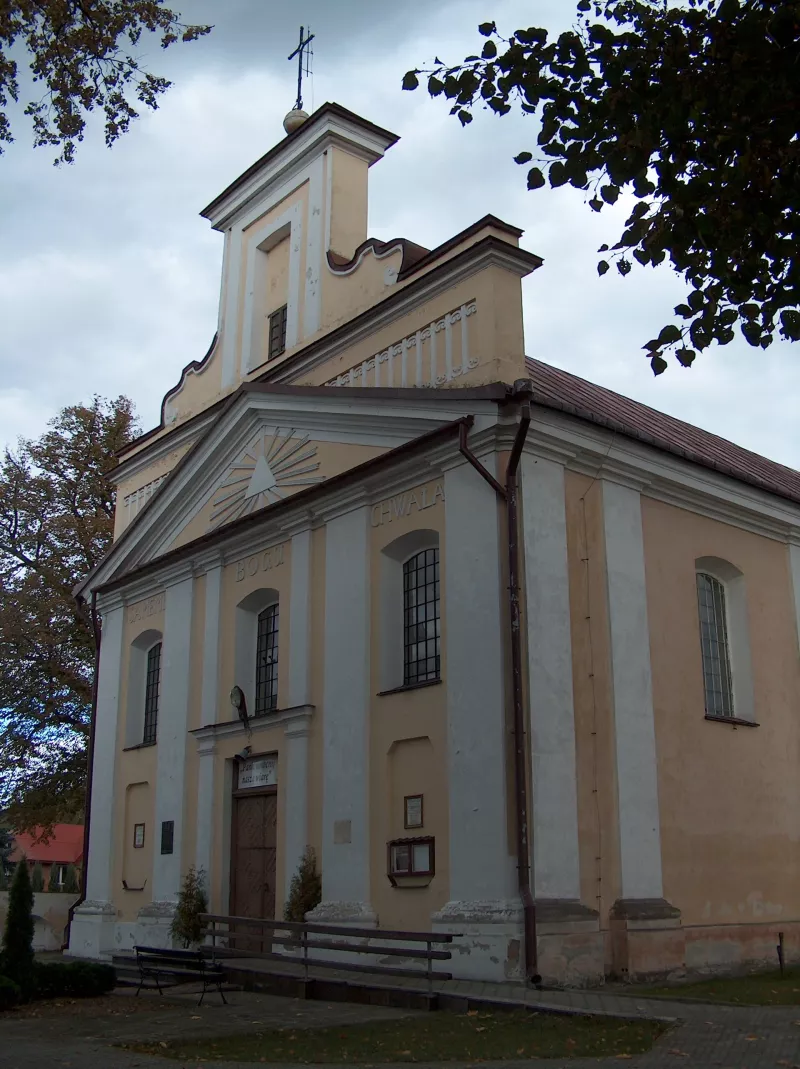

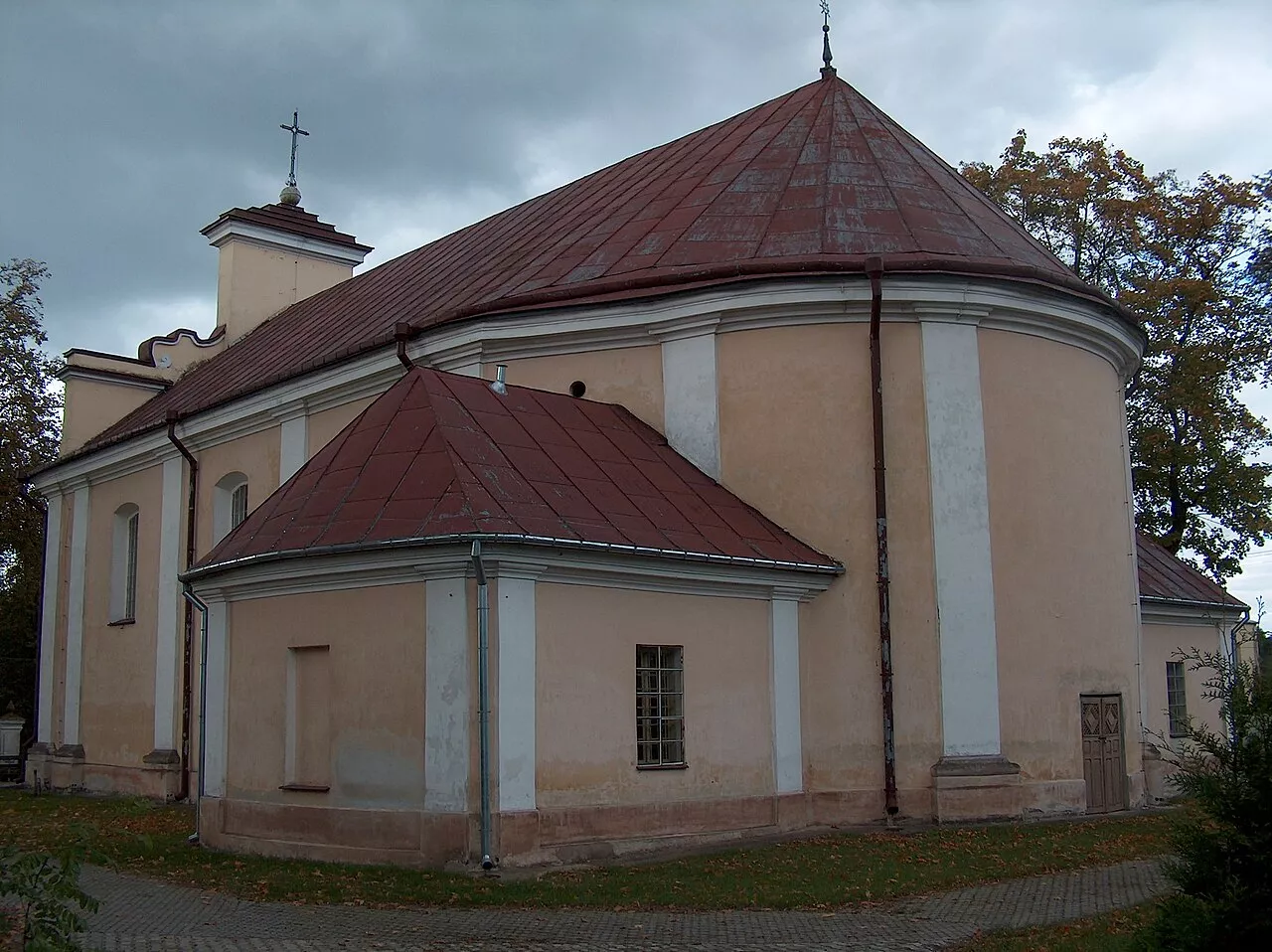
The Holy Trinity Church is a Roman Catholic parish church in Sosnovytsia, a former town in the Parczew County on the Pivonia River. Built at the end of the 18th century at the expense of Tekla Sosnovska, it has preserved almost unchanged the classicist decoration of that time: masonry altars, paintings by the Warsaw artist Józef Wall, a pulpit and a baptismal font held by angels. This is the same Sosnovski estate where the young Tadeusz Kościuszko taught in 1775.
The Sosnovski Foundation
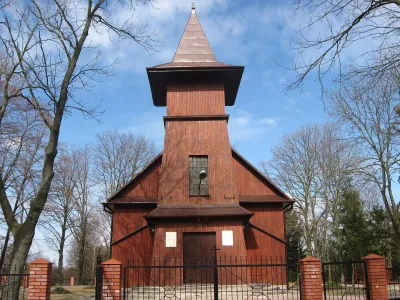
The parish in Sosnovytsia was founded in 1685—the same year King Jan III Sobieski granted the settlement city rights at the request of the sword-bearer Oktavian Sosnovski of the Nalench coat of arms. The current masonry church was built by the widow of the Lithuanian Field Hetman Józef Sosnovski, Voivode of Polotsk, Tekla Sosnovska: it was completed in 1797, most likely with damp walls, and in 1804 it was consecrated by the Lublin bishop Wojciech Skarszewski. After 1876, when the tsarist authorities closed the parish in nearby Opole, priests from Sosnovytsia also served the local faithful there—this is mentioned in the article about the red church in Podedwuzhe.
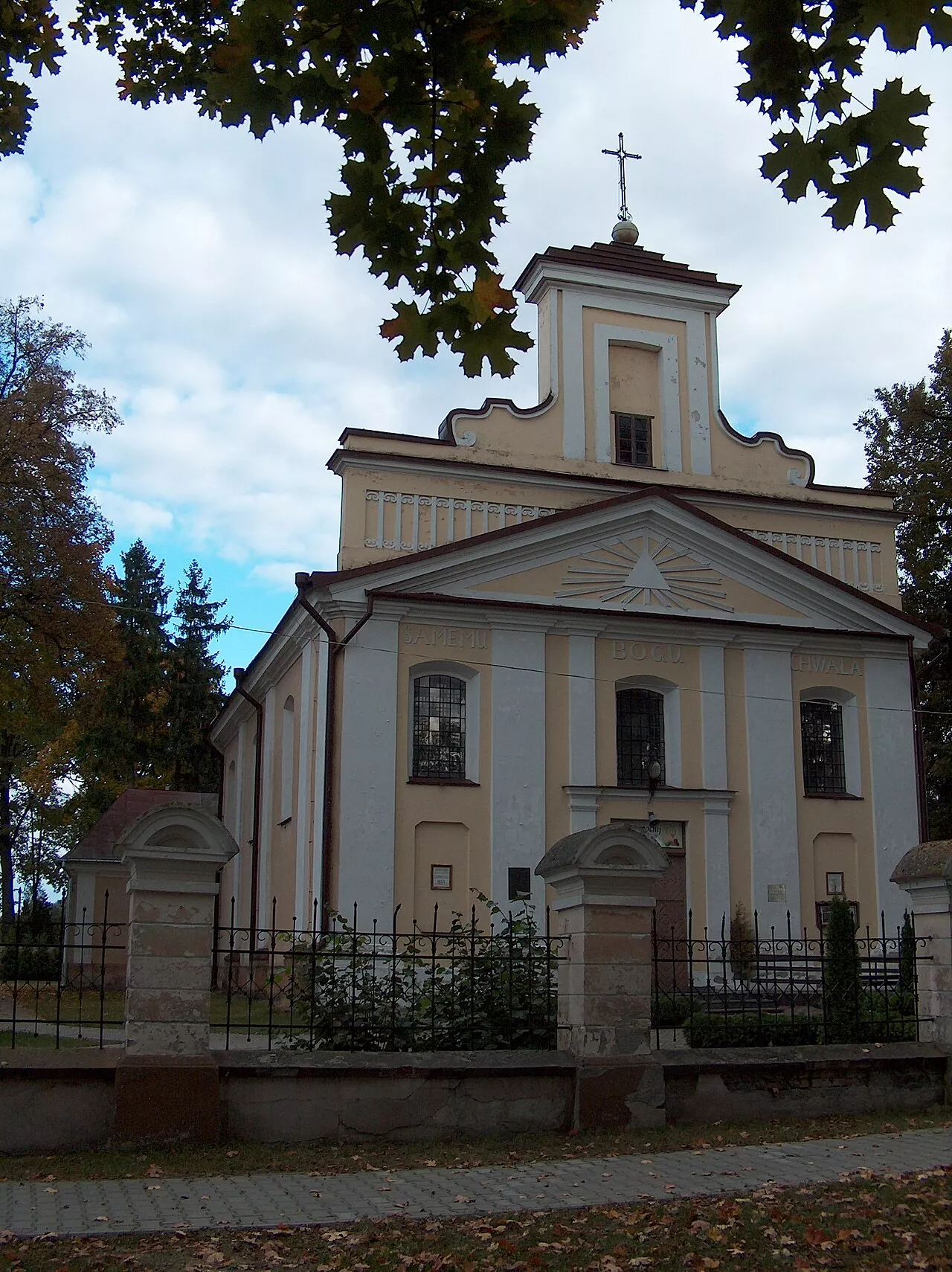
Classicism with Baroque Notes
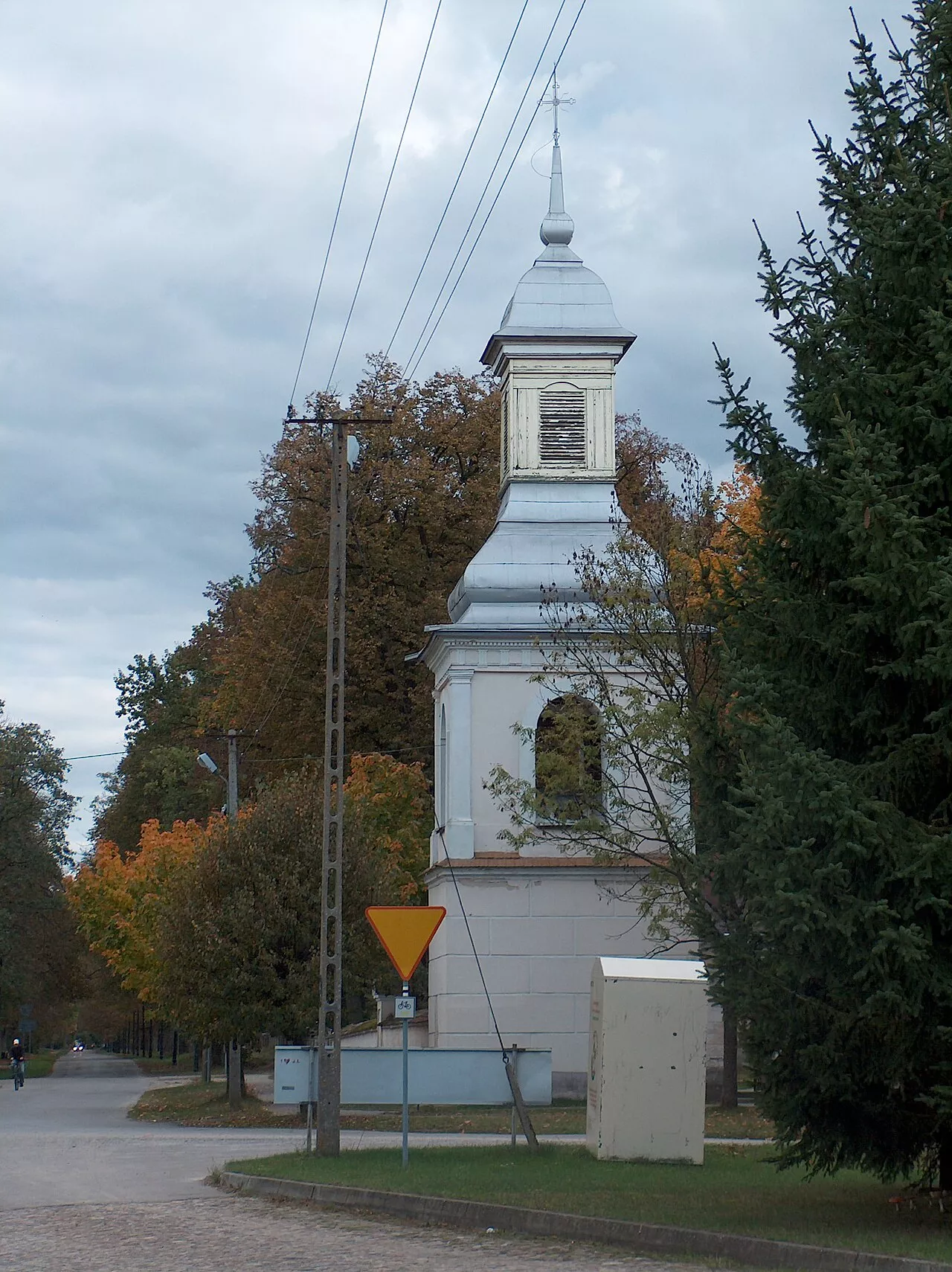
The single-nave oriented church ends with a semicircular apse. The walls outside and inside are articulated by simplified pilasters supporting a profiled cornice. The most complex is the three-bay facade: above the large order pilasters stands a triangular pediment with the Eye of Providence in a glow, and above it, set slightly back, is a tall attic with a stepped finish and volutes. The church courtyard is closed off by two masonry bell towers-gates from the same period.
Inside there are five masonry altars. The main one features the image of the Holy Trinity, painted by Józef Wall in 1795; he is also the author of the images in the side altars—“Saint Joseph with the Child and Saint John the Baptist” (1790) and “Our Lady of the Rosary” (1794). Above all altars is repeated the Eye of Providence. The wooden pulpit’s body is supported by a figure of an angel kneeling, above it a canopy with a vase, and the baptismal font in the form of a classicist vase is also held by an angel. The confessionals are late Baroque, the pews Rococo, and among the furnishings is a classicist monstrance of Warsaw workmanship.
In Kościuszko’s Footsteps
Behind the church stretches a Catholic cemetery, and nearby stands a memorial to the love of Tadeusz Kościuszko and Ludwika Sosnovska: the hetman did not consent to the marriage, and a failed escape attempt became a legend. Nearby grow an oak and a pine that until recently were entwined, and a 400-year-old oak called “Rybak.” All these places are passed by the trail “Nalench” from Sosnovytsia to Yamnyky.
How to Get There
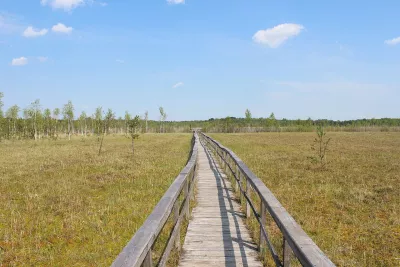
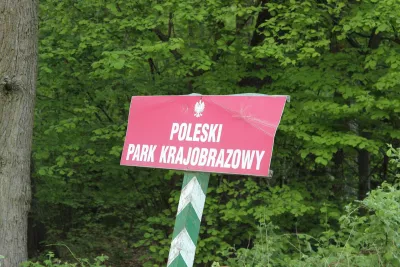
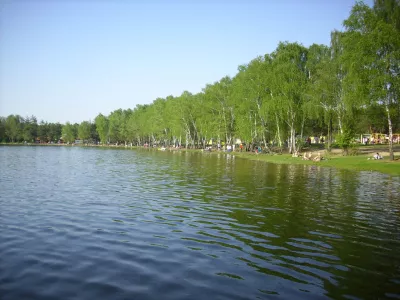
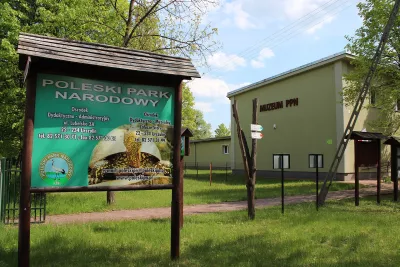
Sosnovytsia lies on voivodeship road No. 819, about 18 km southeast of Parczew and 55 km from Lublin; buses run infrequently, so it is more convenient by car. The church stands at 24 Adam Mickiewicz Street, near Kostiushko Square; the easiest way to get inside is before the Sunday service. A few hundred meters away is the Orthodox Church of Saints Peter and Paul, Sosnovytsia is the starting point of the Southern Lakes Trail to Urszulin, and a few kilometers to the south is the Polissia National Park. This is Poland: Ukrainian citizens need a foreign passport.