
Brest is a regional center in the southwest of Belarus, the ancient Berestia on the right bank of the Western Bug, where the Mukhavets flows into it. The city is first mentioned in the Primary Chronicle under the year 1019, and according to the Novgorod First Chronicle, its name appears as early as 1017. Today, more than 340,000 people live in Brest, making it the sixth largest city in Belarus. It lies on the border of Polissia and Podlachia, opposite the Polish town of Terespol.
In the 16th century, a printing house operated here that published the Brest Bible; in 1596, the church council of the Union of Brest took place, and in 1918, the Brest Peace was signed. However, the city where all this happened disappeared in the 1830s: it was demolished to make way for a fortress, and the inhabitants were relocated eastward. The modern city of Brest grew on the site of the former Kobryn forestadt.
Berestia in the chronicles and the ancient posad
In the Primary Chronicle, Berestia appears in the story about the struggle of Vladimir Sviatoslavich’s sons: Sviatopolk, defeated by Yaroslav, flees through Berestia to Poland. Polish historian Henryk Łowmiański believed that the city existed before 1016 and was part of Sviatopolk’s domain. Border Berestia changed hands many times: Bolesław the Brave captured it in 1016 or 1020 (sources vary), and Yaroslav regained it in 1022. The year 1074 is mentioned in Vladimir Monomakh’s “Instruction”: his brothers sent him “to the ruins” of Berestia, burned by the Poles.
The name is derived from berestok, meaning elm, or from beresta — birch bark. The legend of the city’s founding was recorded in Polissia by ethnographer Pavlo Shpilevskyi: a merchant laid birch trunks across a swamp, then built a sanctuary of Veles on an island and founded the city. This is a legend, not a historical fact.
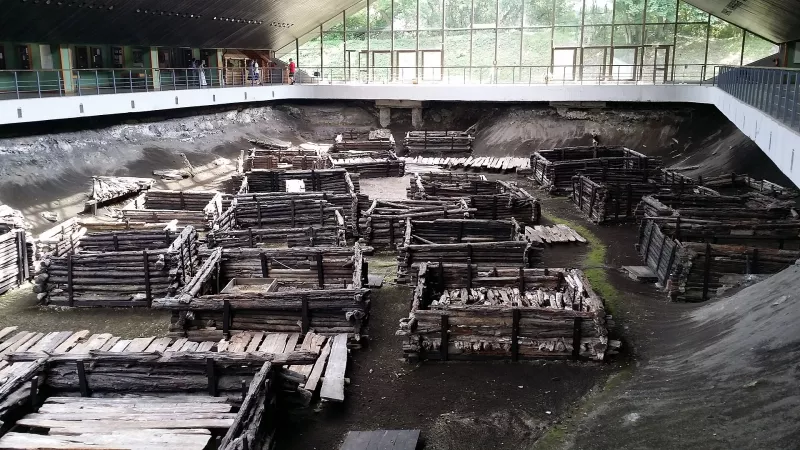
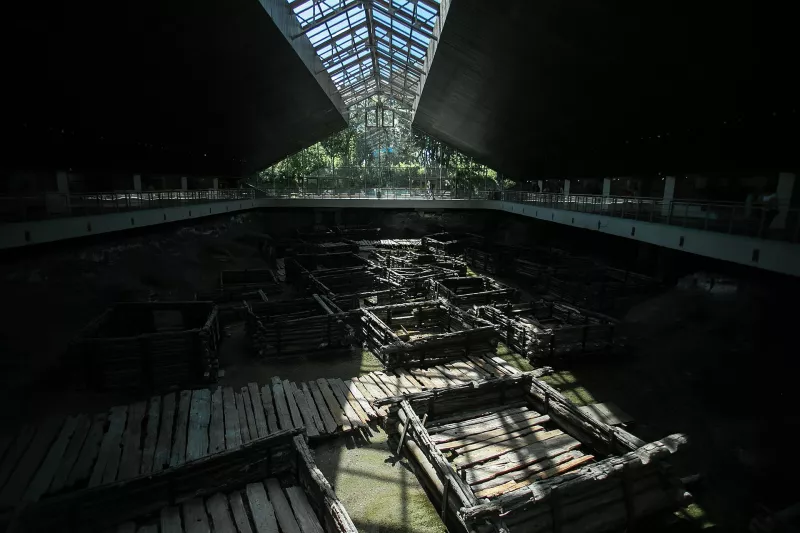
The ancient settlement lay on a cape between the Bug and the left branch of the Mukhavets. Excavations led by Petro Lysenko took place in 1969–1981 and 1988. Over 220 wooden buildings from the 11th–13th centuries were discovered here, along with three wooden-paved streets and a palisade, and the uncovered area exceeded 1,800 square meters. The log structures were preserved to five to nine tiers, and some up to twelve, which is rare in Slavic archaeology. Since 1982, a pavilion of the archaeological museum “Berestye” has stood over part of the excavated posad: it displays 28 log buildings at a depth of about four meters, and the collection numbers over 45,000 items. Among the finds is a boxwood comb with carved Cyrillic letters. The wood was conserved with phenol alcohols directly on site — this method was applied for the first time to such a large wooden monument.
Magdeburg rights and Brest Voivodeship
From the 1320s, Berestia belonged to the Grand Duchy of Lithuania. In 1379, the city was burned by the Teutonic Knights. In 1390, Prince Vytautas granted Berestia Magdeburg rights — the first city on the lands of present-day Belarus to receive them. The city council consisted of elders, councilors, and two burgomasters, one Catholic and one Orthodox. In December 1409, King Jogaila and Vytautas met in Berestia to develop a plan for war against the Crusaders, and the Berestia banner later fought at Grunwald.
In the 15th century, the city burned several times due to Tatar raids: in 1463 it was burned by Mengli Giray, and in 1500 it was devastated again, although the castle withstood the siege. In 1554, Sigismund Augustus allowed Berestia to use a seal featuring a tower at the confluence of two rivers. In 1566, the city became the capital of Brest Voivodeship, which included Brest and Pinsk counties — that is, a significant part of Polissia including Pinsk and Turov. According to a 1566 description, Berestia consisted of a castle on the site of the ancient citadel, a “city” on the island between the Bug and the branches of the Mukhavets, and Zamukhavyechchya on the right bank. The population was 6–7 thousand people.
Radziwiłł printing house and the Union of Brest
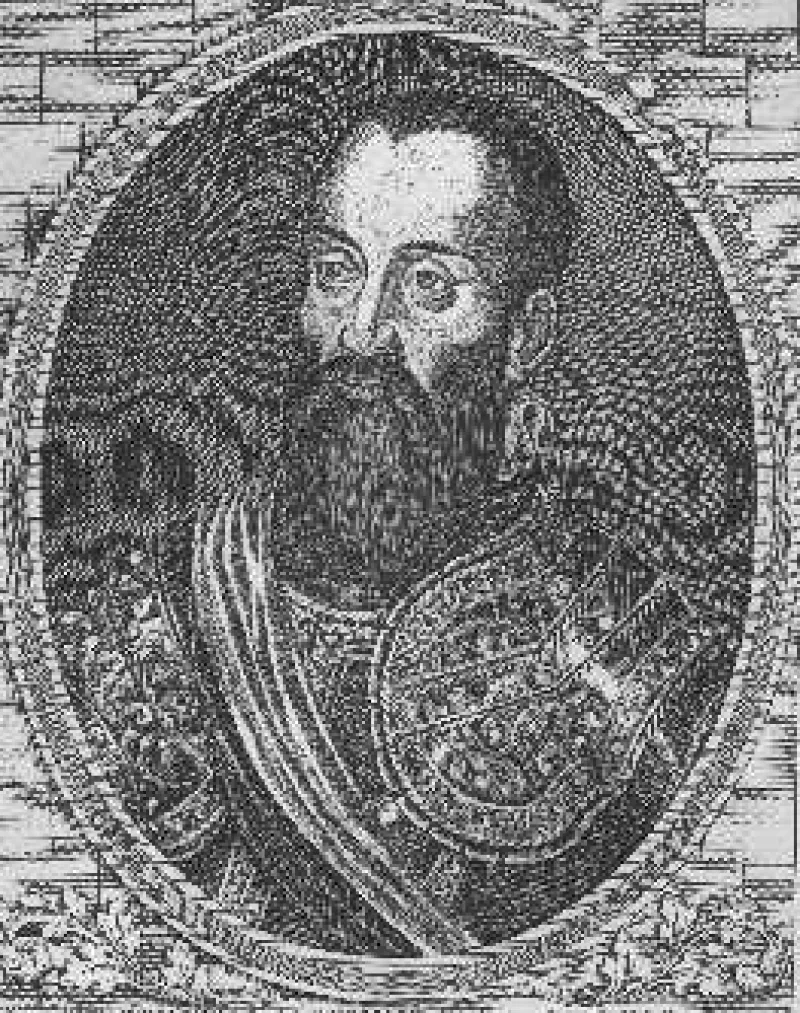
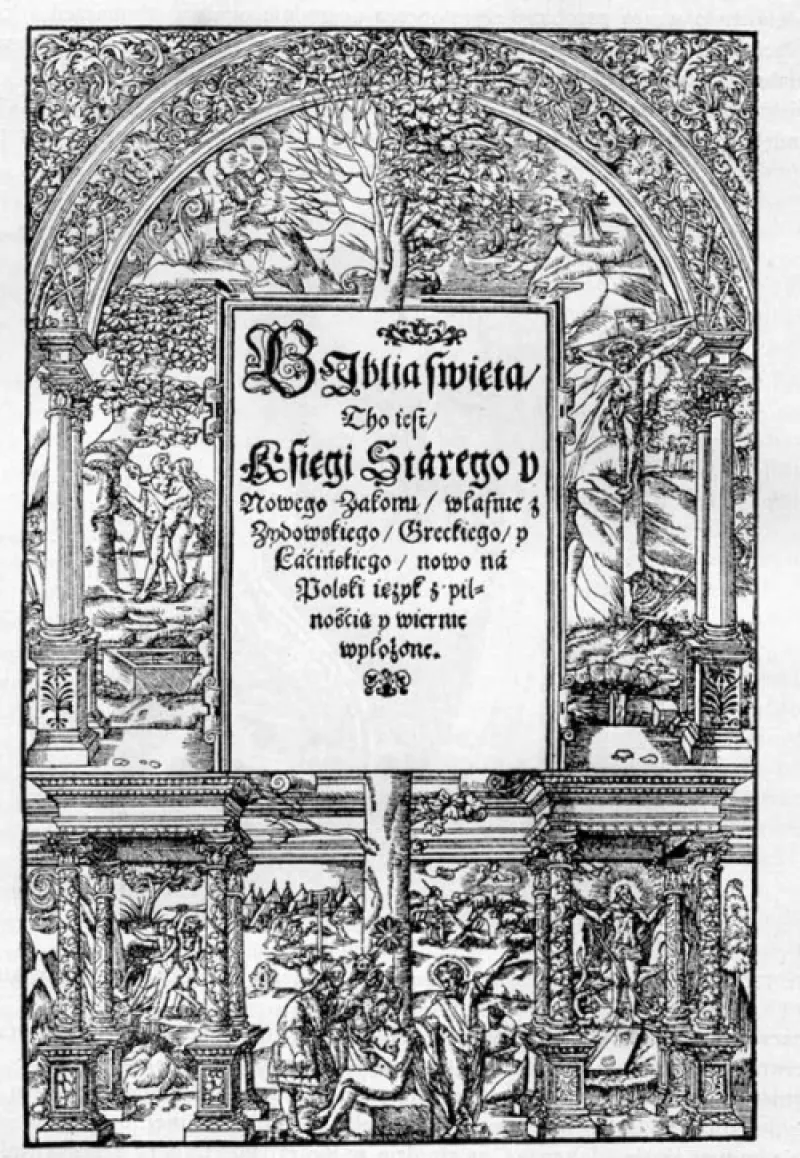
The starosta of Brest, Mikołaj Radziwiłł Czarny, founded a printing house in the city — the first on the lands of modern Belarus. From 1553, it published about forty books in Polish, and by the mid-century it became the printing center for Polish-Lithuanian Protestants. Its most famous publication is the Brest Bible of 1563. The translation was made in Pińczów by Polish Protestants (Calvinists and Antitrinitarians), and from 1560 it was funded by Radziwiłł. It cost about three thousand red gold coins. The book is dedicated to Sigismund Augustus and was the first in the Polish tradition to include verse numbering. The publishers called it a translation from the original languages, but researchers show it also relied on Latin and French translations. Several dozen copies have survived to this day.
In October 1596, by order of Pope Clement VIII, a council of the Kyiv Metropolis was held in Brest. Most bishops accepted the union with Rome: preserving the Byzantine rite and their own church structure, they recognized the supremacy of the pope. This laid the foundation for the Ruthenian Uniate Church, later the Greek Catholic Church. Some Orthodox, including Prince Konstanty Ostrogski and the Kyiv archimandrite Nykyfor Tur, did not accept the union, and the dispute lasted for decades. The cathedral of St. Nicholas, where the meeting took place, has not survived to the present day.
Wars of the 17th Century
In September 1648, an uprising against the nobility broke out in Brest, suppressed in January 1649 by the troops of Janusz Radziwiłł; during another uprising in 1649, according to Wikipedia, about two thousand townspeople died. In 1657, the city surrendered to the Swedes of Charles Gustav and the troops of Rákóczi. The worst blow came in January 1660: the Moscow army of Ivan Khovansky stormed the city and massacred, according to various estimates, 1,700–1,900 residents. Polish troops retook Brest in 1660 or 1661 — sources give different dates. Before the wars, the city had about 11,000 inhabitants, a town hall, a castle, a stone church, and a mint (which operated from 1659). It did not have time to fully recover: in 1706 Brest was captured by the Swedes, and the 18th century was marked by economic decline and gradual revival. After 1795, it passed to the Russian Empire.
Fortress on the Site of the City
The project of the Russian fortress was approved in 1830. Work began in 1833 (the start date varies in sources: 1836 is also mentioned, when the first stone was laid), and on April 26, 1842, the fortress became operational. The author was military engineer Karl Opperman. The citadel was built on an island between the Bug and Mukhavets rivers, where the old city with its town hall, castle, and monasteries once stood. Almost everything was demolished except for a few stone buildings: the Jesuit college was adapted for the chancery, and the Basilian monastery of 1629, later called the White Palace, was converted into an officers’ casino. The Great Synagogue was also demolished. The Orthodox Simeon Monastery was abolished as early as 1823, and the last city Orthodox church was dismantled in 1834.
The residents were relocated about two versts east, to three suburbs — Kobrynskyi, Volynskyi, and Zabuzkyi. According to some sources, the relocation took place in 1831, according to others — in 1835. Boundary posts were placed between the lands of the city and the fortress, one of which is preserved at the corner of Lenina and Hohol streets. The new territory was several times larger than the destroyed city. However, the life of Brest-Litovsk, as it was then called, depended on the garrison, and it developed slowly until the second half of the 19th century, when it was transformed by the railway.
Railway Hub
In 1869, a railway line to Warsaw passed through Brest, in 1871 — to Moscow, in 1873 — to Kyiv, and in 1886 — to Homel. The station built in 1886 was already electrified by 1888. In 1895, a large fire destroyed most of the city, including the station. Due to the fortress, only wooden houses were allowed in the city for a long time; brick buildings appeared later. By 1897, Brest had 46,568 inhabitants — the third largest city in Grodno Governorate. To this day, a technical border runs from Brest: here the track gauge changes, so passenger carriages from Poland are transferred onto different bogies.
Jewish Brisk
The Jewish community in Brest has been known at least since 1388, when Vytautas granted it a privilege. The city was called Brisk in Yiddish. In the 14th–17th centuries, it was one of the main centers of Jews in the Grand Duchy of Lithuania. Fires in 1802 and 1828 destroyed a significant part of the Jewish quarter, and in 1842 the synagogue in the fortress zone was dismantled; a new one was built in 1862. By 1897, over 30,000 of the 46,000 inhabitants were Jews. In 1939, there were 21,518 Jews, 41.3% of the population. One of the famous rabbis of Brest was Yehoshua-Leib Diskin, who emigrated to Jerusalem in 1878.
In May 1937, a pogrom took place in the city: according to various sources, several people were killed, over fifty were wounded, and the Jewish quarter was devastated. It lasted 16 hours, with the police and army not intervening. After the Germans arrived in 1941, Jews were forced into a ghetto, and in October 1942 about 17,000 were taken to the Bronna Hora station and shot.
The Brest Peace and the Second Polish Republic
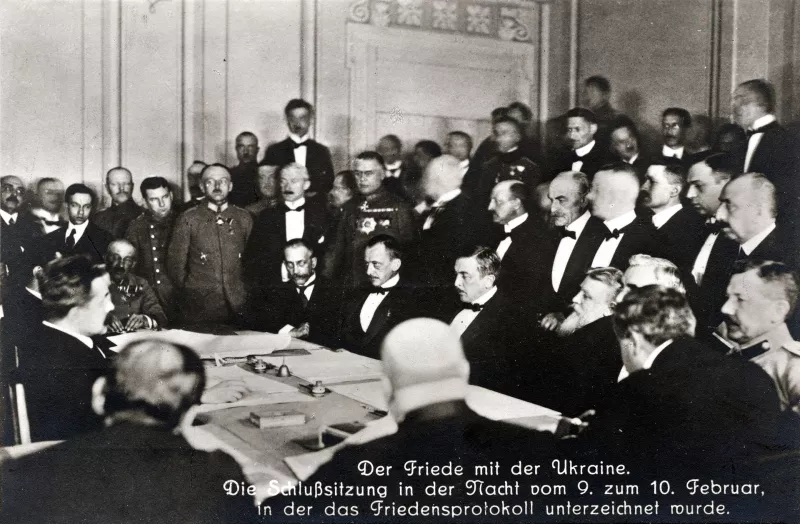
In August 1915, the Russian army, retreating, set fire to the city: according to Russian sources, about 70% of the housing stock was destroyed (Polish Wikipedia gives 80%). Peace negotiations began in Brest on 22 December 1917. On 9 February 1918, the Central Powers signed a treaty here with the Ukrainian People's Republic, by which Chełm Land and Podlasie were ceded to the UPR, and on 3 March in the White Palace of the fortress — a separate peace with Soviet Russia. Russia lost Ukraine, Poland, Belarus, Lithuania, Latvia, and Estonia, along with 34% of the population and 89% of the empire’s coal mines. After Germany’s defeat, the armistice on 11 November 1918 annulled this treaty.
On 9 February 1919, Brest was taken by a Polish volunteer detachment of the Vilnius Self-Defense led by Jerzy Dąbrowski. According to the Treaty of Riga in 1921, the city remained in Poland and became the capital of Polesie Voivodeship (Polish sources differ between 1921 and 1923). In 1923, it was named Brest nad Bugiem. In 1931, the population was 48,431. Ukrainians revived the Prosvita society (1923) and opened a private seven-year school named after Oleksa Storozhenko (1924). In the summer of 1930, leaders of the Centrolew opposition — Wincenty Witos, Wojciech Korfanty, and others — were held in the fortress. They were tried in Warsaw (1931–1932), but the trial is still called the Brest Trial.
War and Soviet Years
From 14 to 17 September 1939, the German corps fought for the fortress, and on 22 September a joint parade of German and Soviet troops took place on Unii Lubelskiej Street. Brest, along with the Brest region, became part of the BSSR, and from December 1939 it became a regional center. On 28 July 1944, the city was liberated by Soviet troops; this date is celebrated as City Day. During the Soviet period, Brest turned into a large industrial and border hub: it was the most important of the three crossings between the USSR and Poland. In the 1940s–1950s, Poles moved to the territories within the new borders of Poland: 70.1% of those registered willing to leave Brest emigrated, the highest among cities of the BSSR.
Mukhavets and Bug
The Mukhavets flows through Brest from west to east, dividing it into northern and southern parts, and flows into the Bug near the citadel. Its floodplain is 2–3 kilometers wide, and the largest recorded flood occurred in 1974. In the 1980s, sand dredging from the riverbed raised the banks, and sports facilities and new neighborhoods appeared in these areas. The Dnipro-Bug Canal connects the Bug with the Pina, a tributary of the Prypiat, opening a waterway to the Dnipro. The M1 highway, part of the European route E30, runs through the city.
What Has Survived from Old Brest
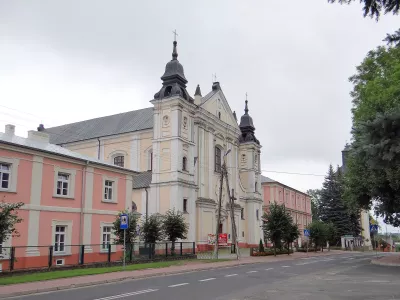
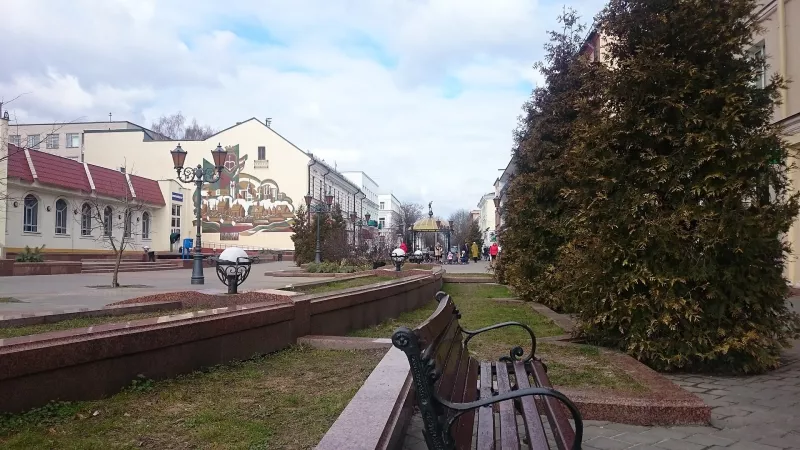
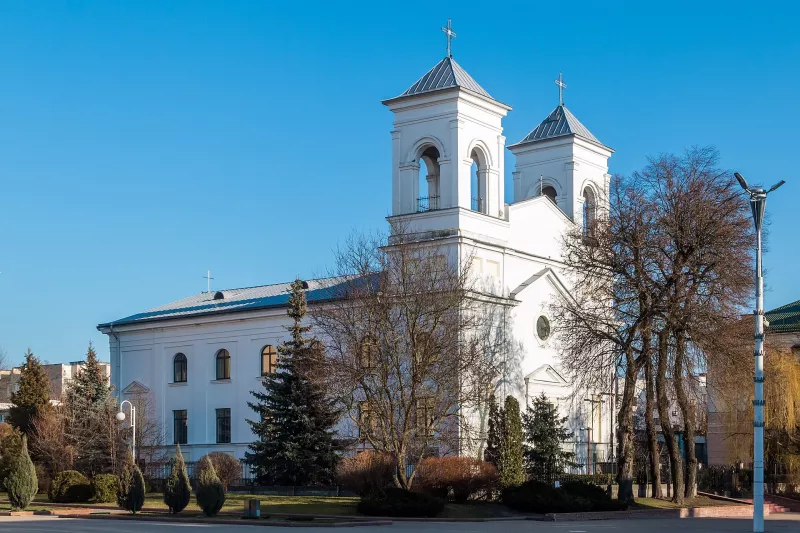
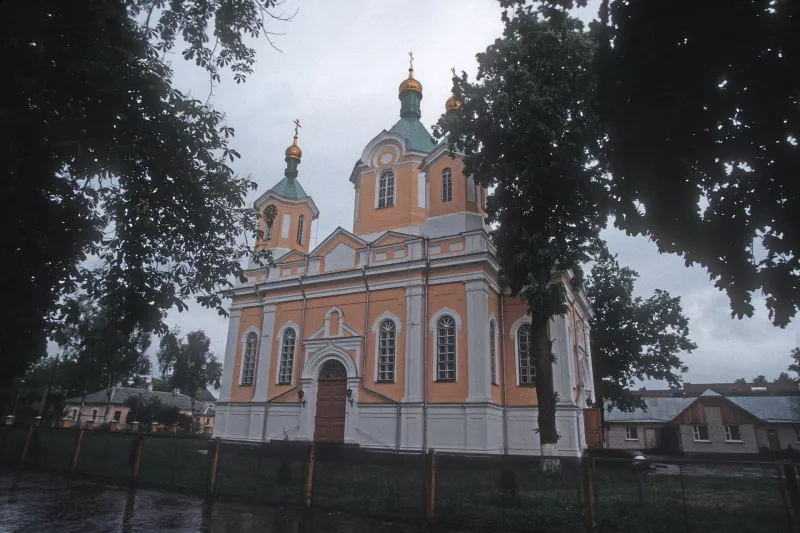
The ancient city on the island has left almost no visible traces, except for the excavated posad in the Berestye Museum. A boundary stone from the 1830s has survived at the corner of Lenina and Hohol streets, as well as the Church of the Exaltation of the Holy Cross from 1856 and the Orthodox Simeon Cathedral. The city developed east of the fortress, so most of the historic center dates from the 19th–20th centuries: the regular street grid of the former Kobryn suburb, part of which is protected as an urban planning monument. From interwar Poland, modernist-style buildings remain: the voivodeship administration building from 1938 (architect Stanisław Pąpiewski), the Polish Bank from 1926, the Scout House from 1932 (Józef Rybiński), and the Narutowicz residential colony. The city park was established in 1906. The city hosts the Museum of Rescued Art Treasures and the Railway Equipment Museum.
Famous Natives
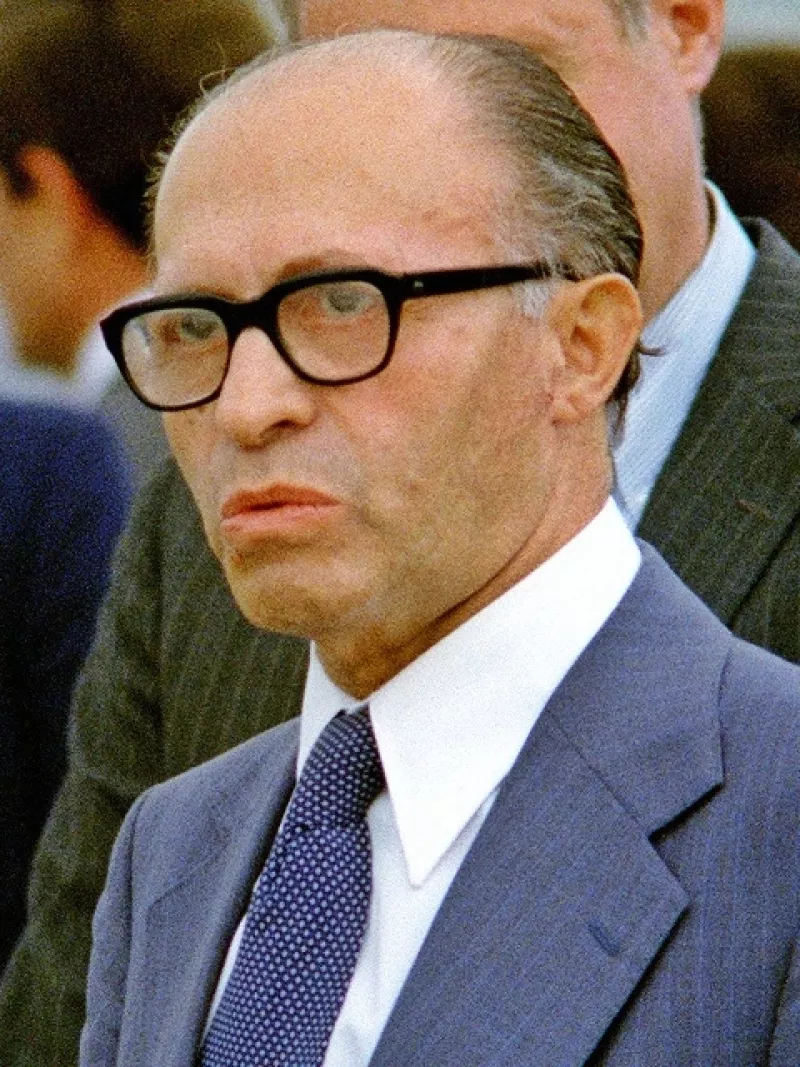
Menachem Begin was born in Brest in 1913: founder of the Likud party, Prime Minister of Israel from 1977 to 1983, and Nobel Peace Prize laureate in 1978. Belarusian historian and politician Alexander Tsvikiev (1888–1937), who was executed during Stalin's repressions, was also born here.