
White stork in Polissia
Ciconia ciconia
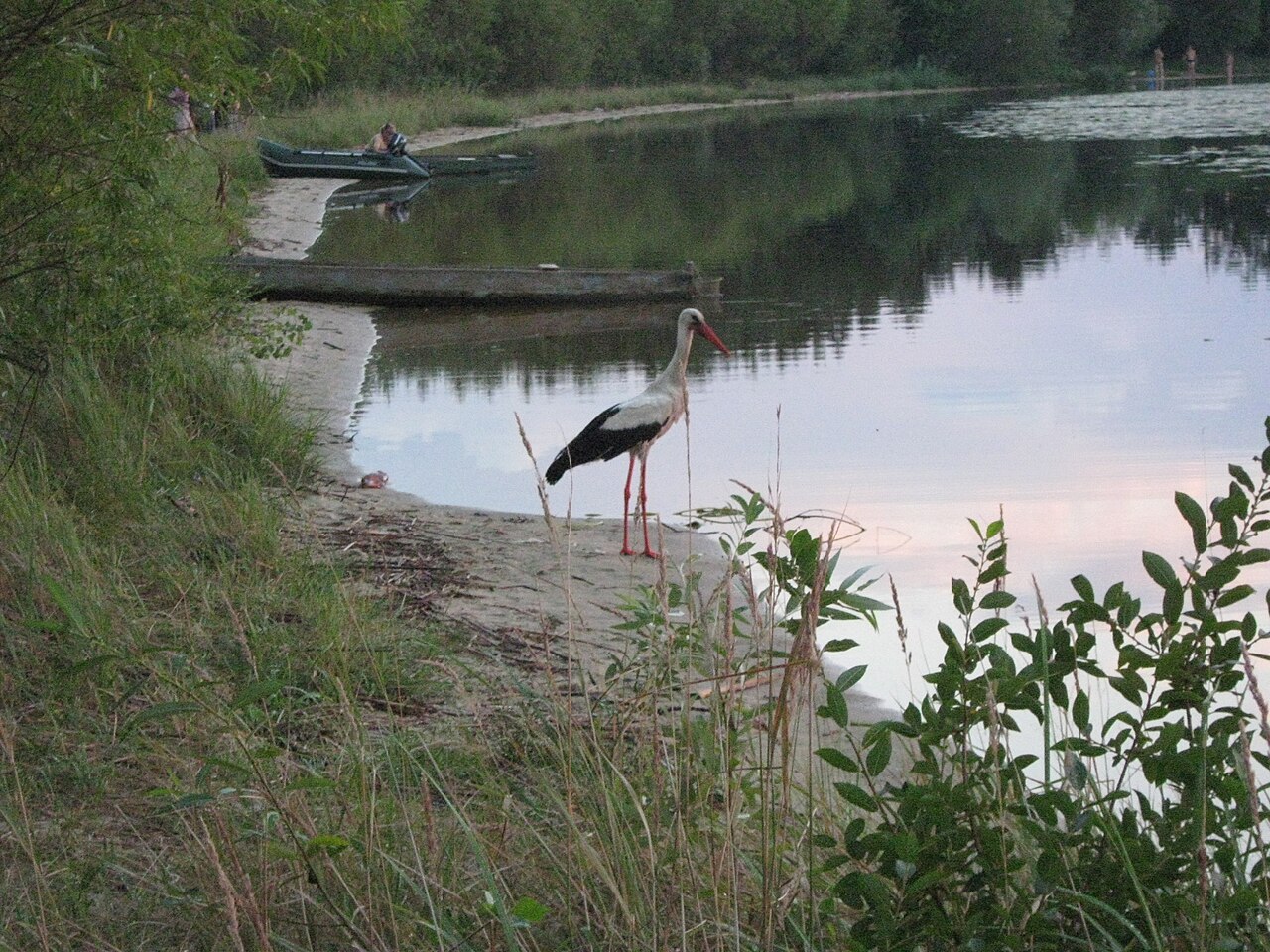
The white stork is a large white bird with black flight feathers and a long red bill and legs. In flight it stretches its neck forward and its legs back, and soars for long periods with hardly a wingbeat. It has almost no voice and communicates by clattering its bill.
Polissia is one of the parts of Ukraine where white storks are especially numerous. They nest in villages next to meadows, floodplains and bogs, where they hunt frogs, mice, insects and grass snakes. The massive nests of branches are used for many years in a row and built higher every year.
Storks return from Africa from late March into April. In June chicks can be seen in the nest, and at the end of August young and adult birds gather in flocks and leave. On mown meadows in July–August you can see dozens of storks together.
Stork nests are protected by law and may not be destroyed, even on poles. If a nest threatens a power line, the utility installs special platforms. Do not approach young birds that are learning to fly and sitting on the ground.
When to see: late March – August; departure at the end of August
Where it was seen in Polissia
Observations from the open scientific database GBIF since 1990.
More in “Birds”
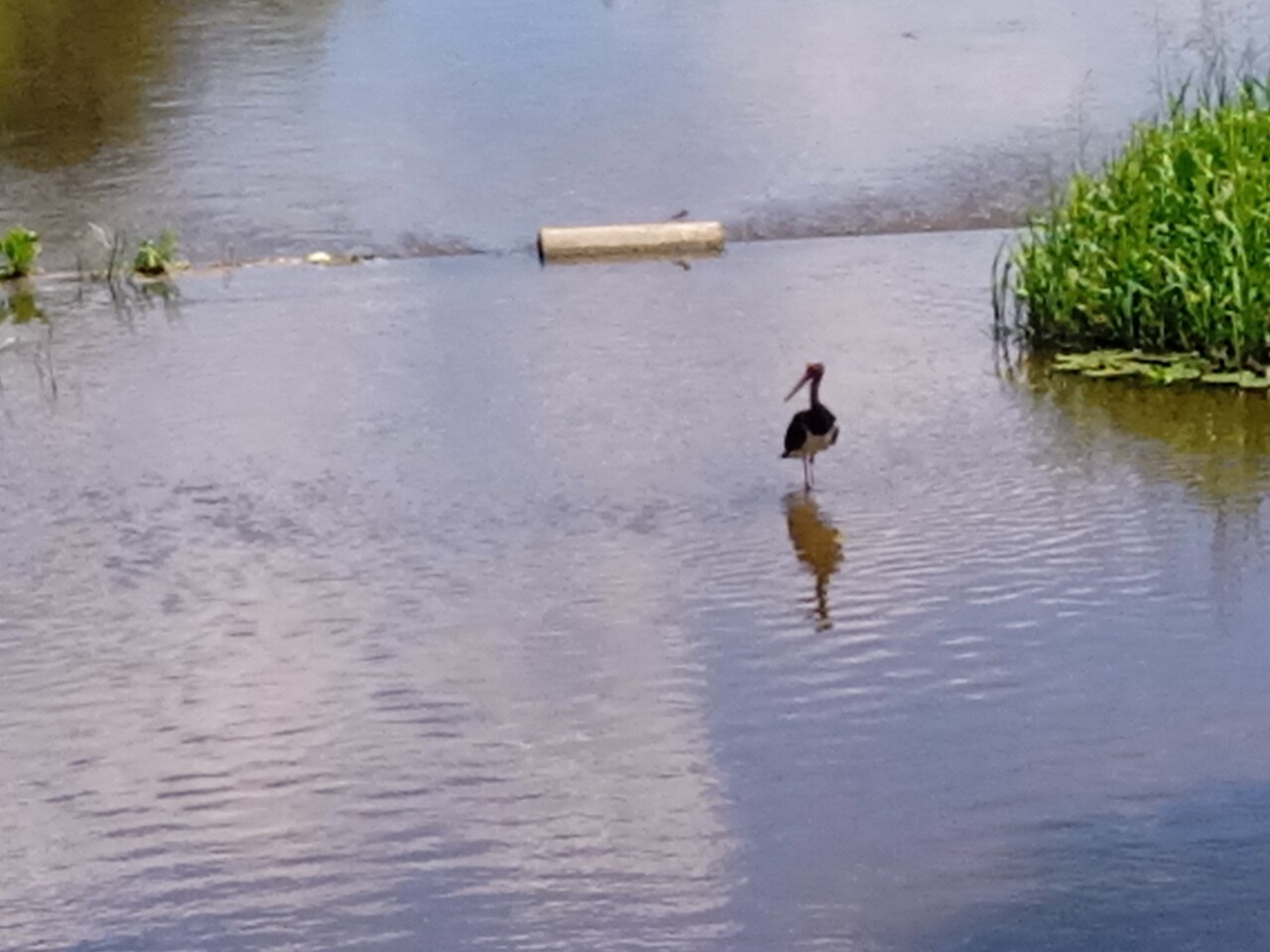 Black stork
A secretive relative of the white stork that nests in Polissia's remote old forests near bogs and forest rivers.
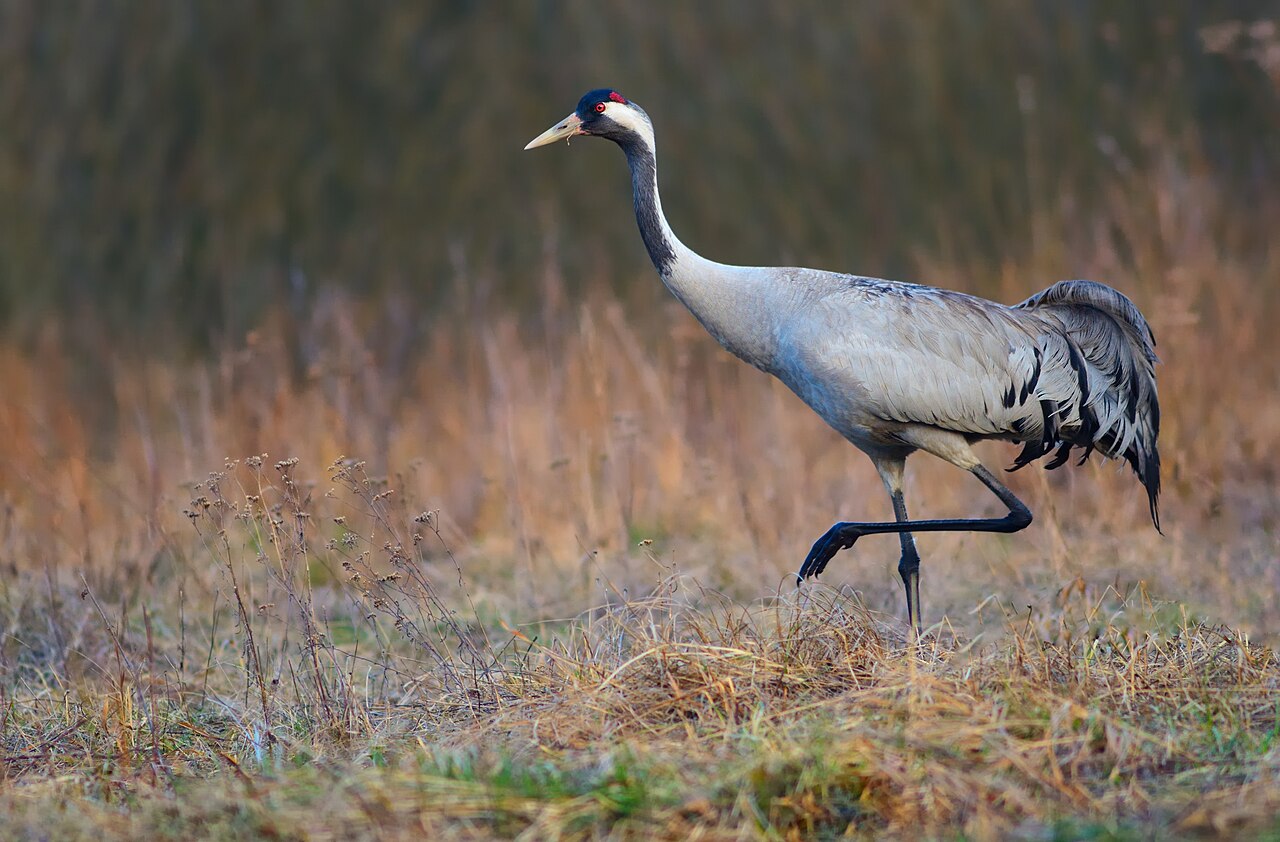 Common crane
A large bird of Polissia's bogs, whose trumpeting call in spring is one of the most distinctive sounds of Polissia.
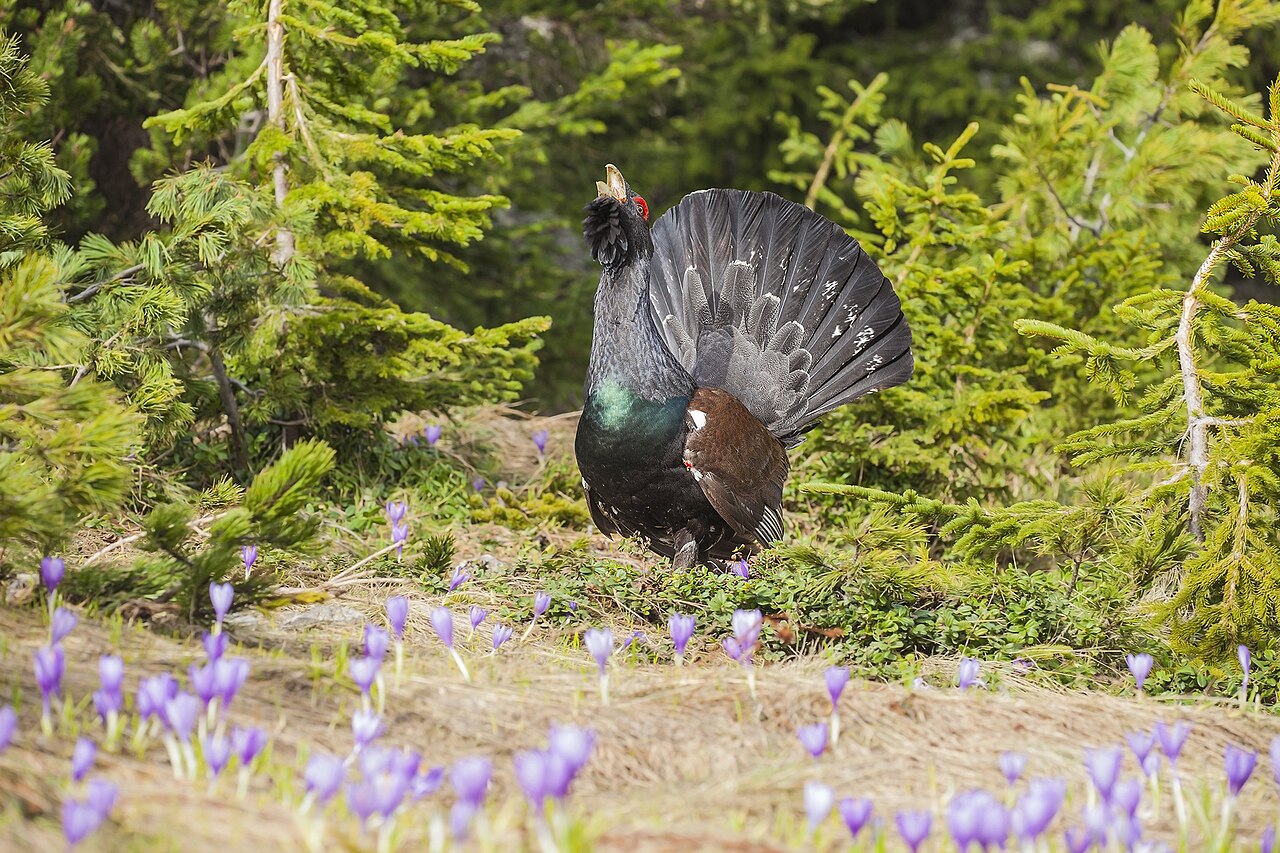 Western capercaillie
Europe's largest forest grouse, a dweller of the old pine forests with bogs in Polissia.
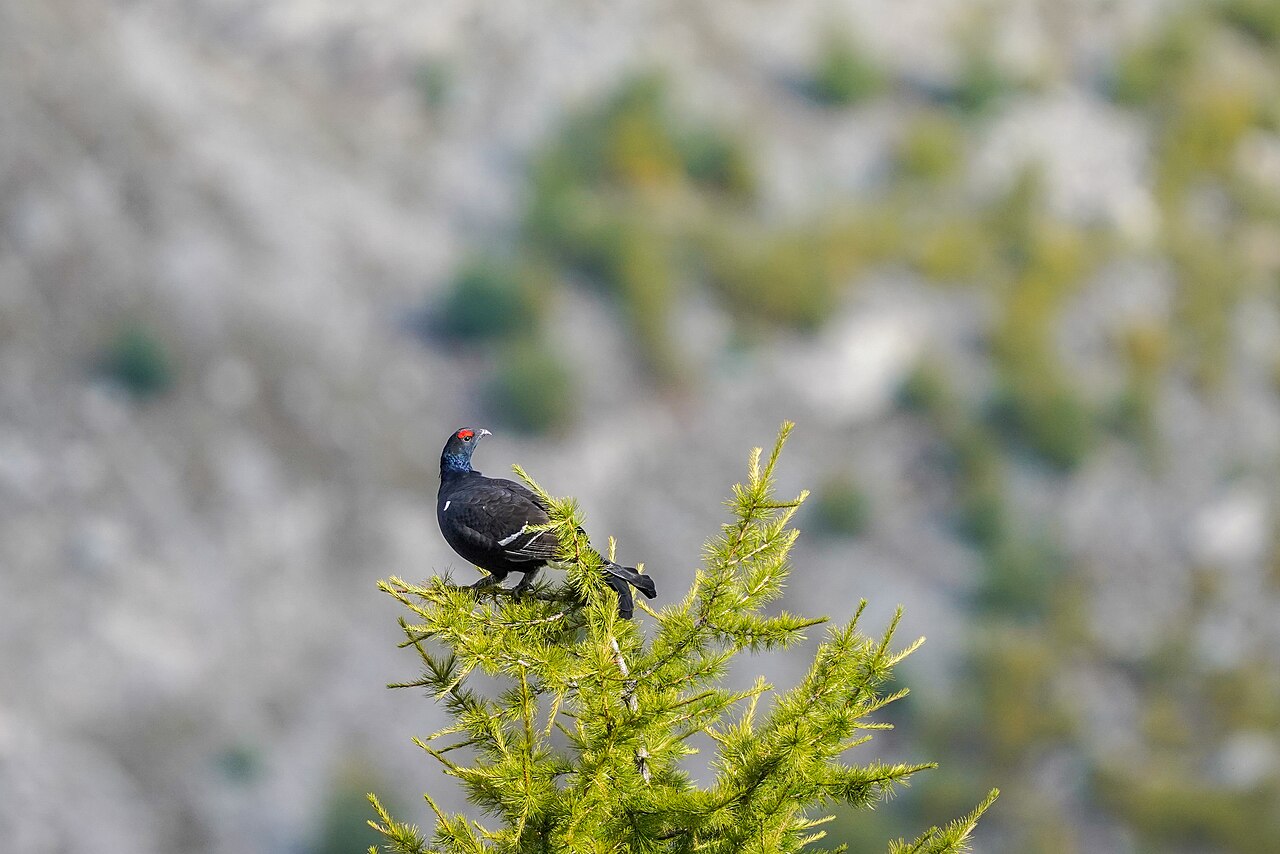 Black grouse
A forest grouse of Polissia's bogs and clearings; the black grouse's spring leks can be heard from afar at dawn.