
Black stork in Polissia
Ciconia nigra
Red Data Book of Ukraine: rare
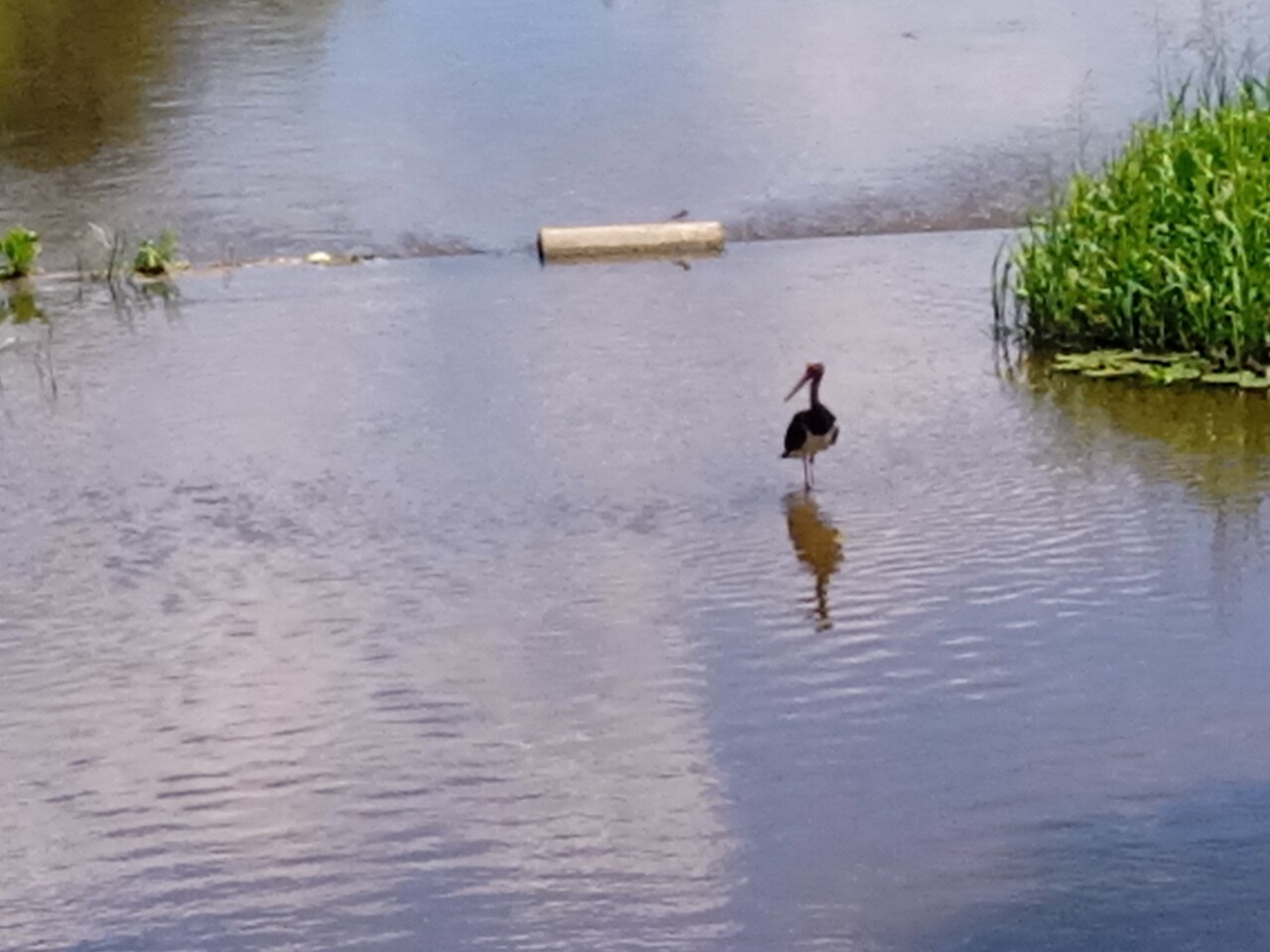
The black stork is slightly smaller than the white one. Its head, neck, back and wings are black with a metallic green and purple sheen, its belly white, its bill and legs red. Unlike its white relative, it avoids people.
The black stork nests in large old trees deep within forest tracts, near bogs, forest streams and floodplains where it catches fish and frogs. In Polissia it occurs in the Polissia and Rivne nature reserves, in Shatsk National Park and in the Chornobyl zone.
The black stork is most often seen feeding in the shallows of a forest river or beaver pond, or soaring high above the forest. Its nest is a large structure of branches that the birds may use for several years.
The black stork is listed in the Red Data Book of Ukraine. Logging and any noise near nests are unacceptable, so if you happen to come across a nest, quietly walk away and do not show anyone its location on a map.
When to see: April–August; most often on forest rivers and bogs
Where it was seen in Polissia
Observations from the open scientific database GBIF since 1990. Locations are shown approximately, to within 10 km.
More in “Birds”
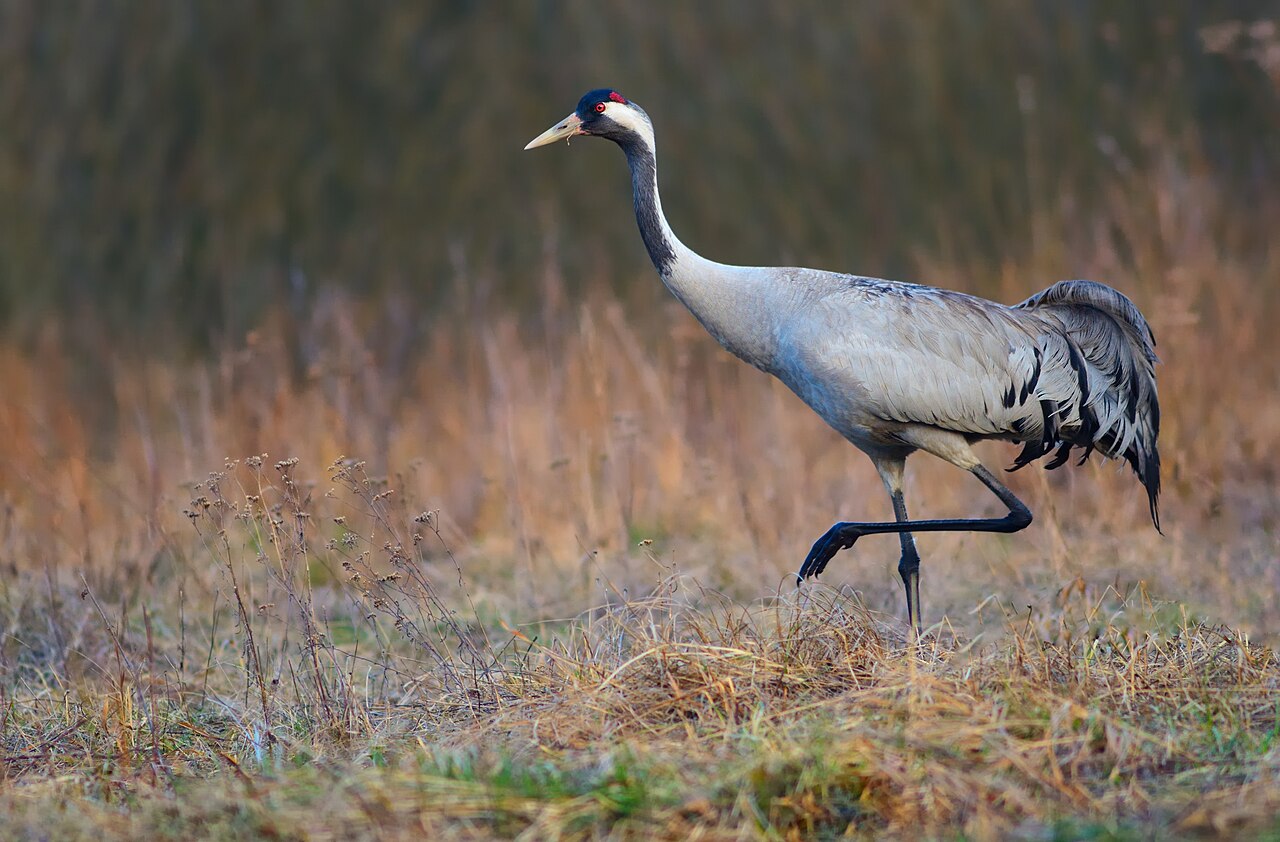 Common crane
A large bird of Polissia's bogs, whose trumpeting call in spring is one of the most distinctive sounds of Polissia.
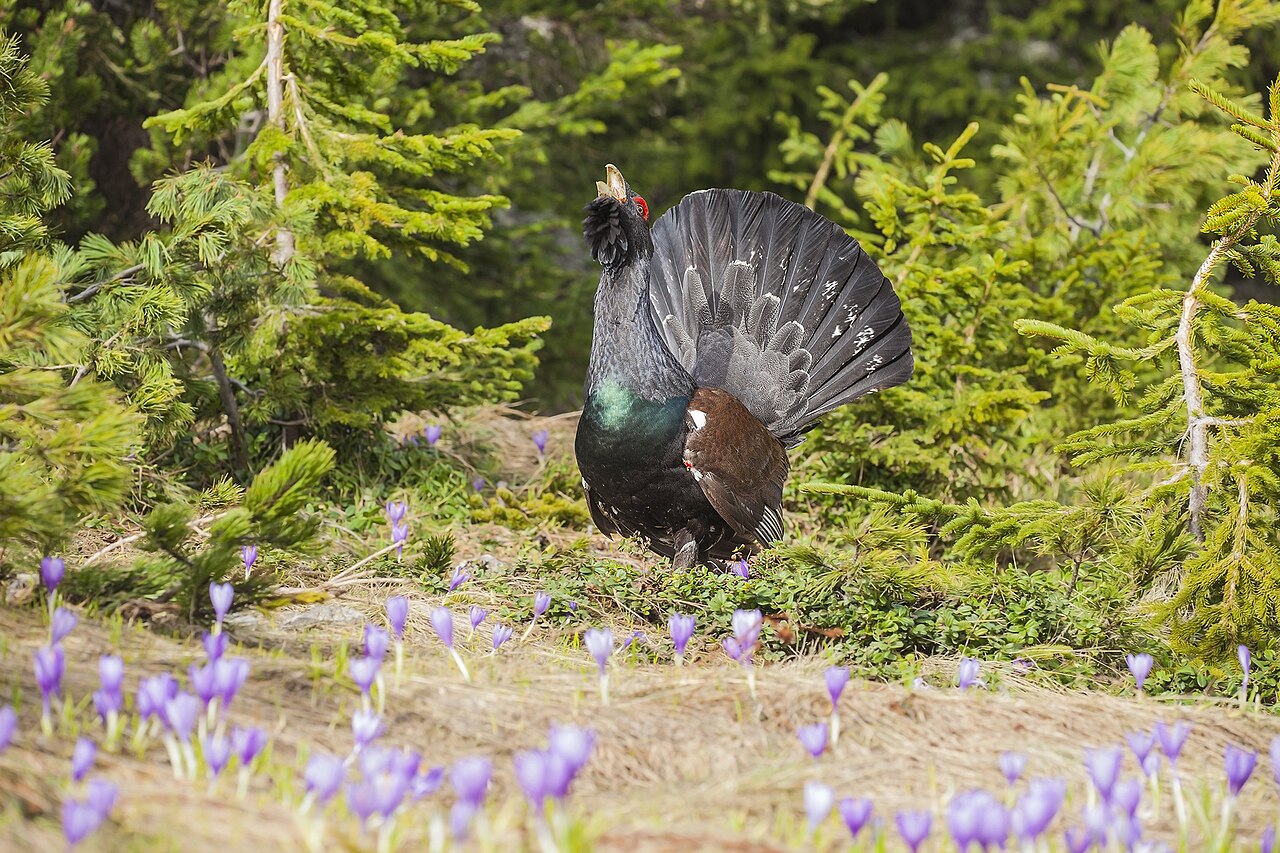 Western capercaillie
Europe's largest forest grouse, a dweller of the old pine forests with bogs in Polissia.
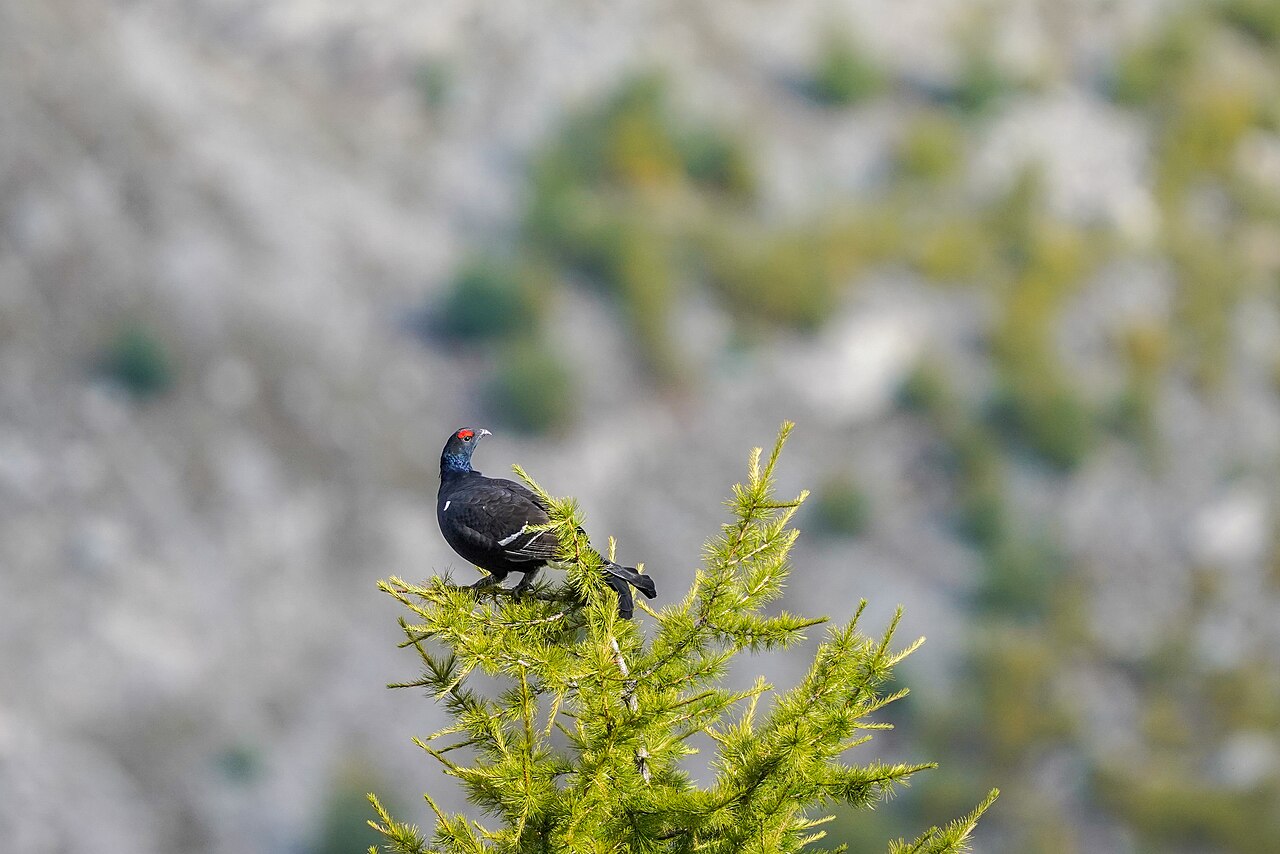 Black grouse
A forest grouse of Polissia's bogs and clearings; the black grouse's spring leks can be heard from afar at dawn.
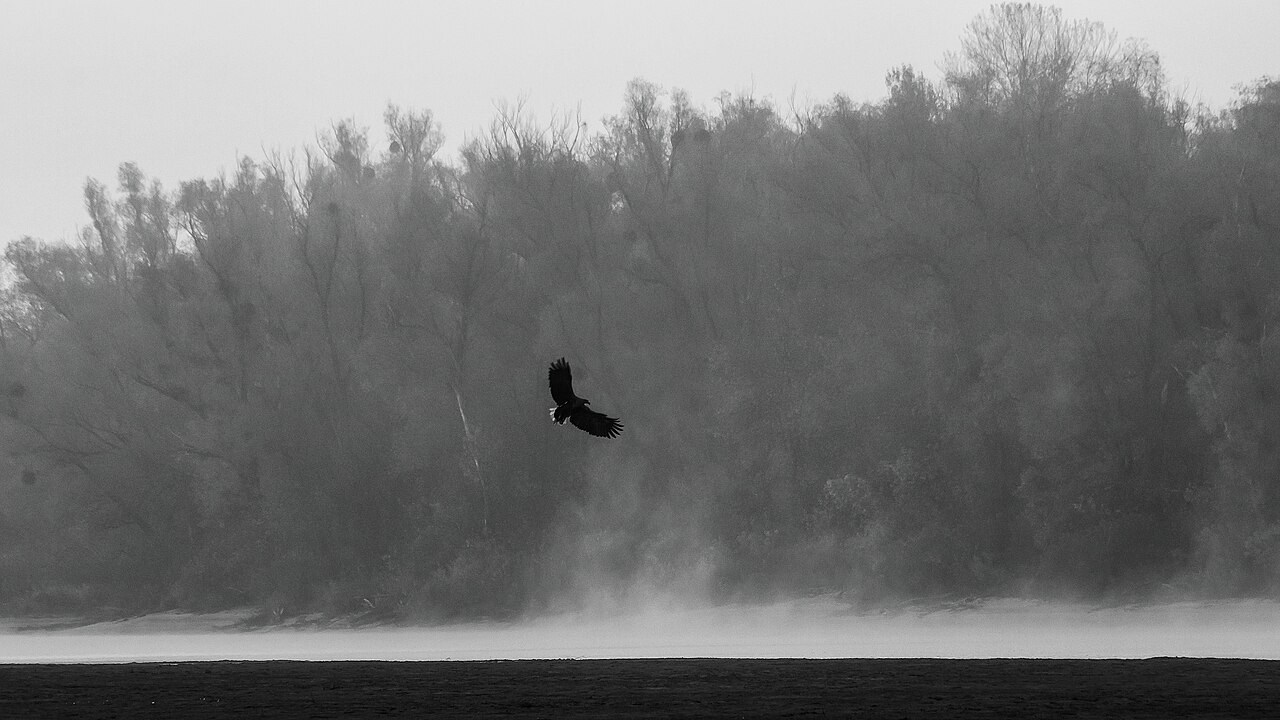 White-tailed eagle
Polissia's largest bird of prey, with a white wedge-shaped tail, keeping to large rivers and lakes.