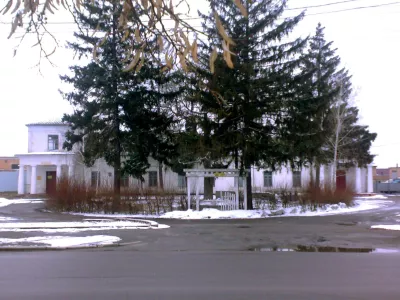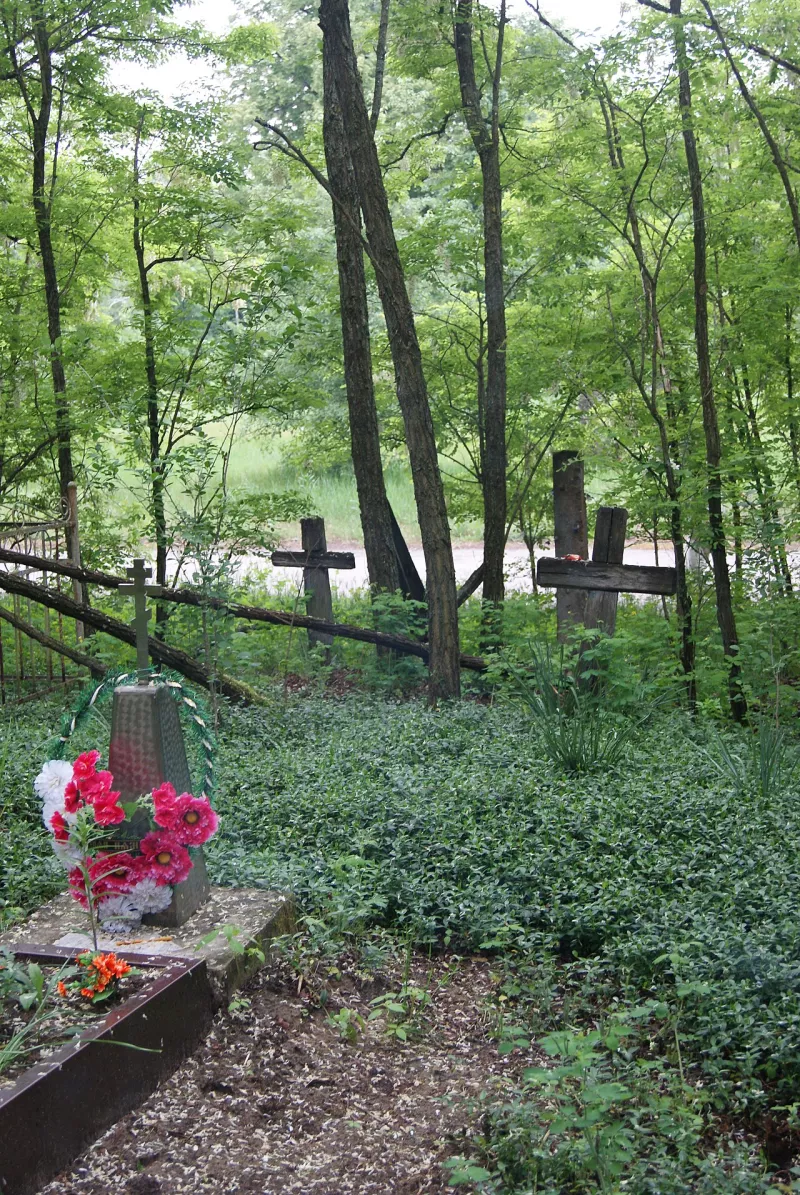

After the accident at the Chornobyl Nuclear Power Plant, people from dozens of Polissia villages were evacuated, and their cemeteries suddenly were left without the usual care. Over forty years, these quiet places have turned into true islands of nature. Scientists surveyed 24 old cemeteries in the exclusion zone and found over 400 plant species there, centuries-old oaks and pines, as well as traces of Polissia’s ancient history.
Who and why studies the cemeteries
The idea belongs to scientists from the Askania-Nova Biosphere Reserve named after F. E. Falz-Fein — Doctor of Philosophy Nadiia Skobel and Professor Ivan Moisienko. Previously, they studied old cemeteries in southern Ukraine, where among the plowed fields, the cemeteries preserved the last patches of steppe with feather grass, Adonis, and tulips. In the Chornobyl zone, specialists from the Chornobyl Radiation-Ecological Biosphere Reserve joined the field research, including the head of the scientific department, Denys Vyshnevskyi.
The Chornobyl cemeteries are interesting because they ceased to operate not gradually, as in dying villages, but suddenly — along with the evacuation of people. This allows us to see how nature reclaims places that people used to frequent constantly. However, some graves are dated 2019–2020: relatives of the deceased continued to visit here on memorial days.
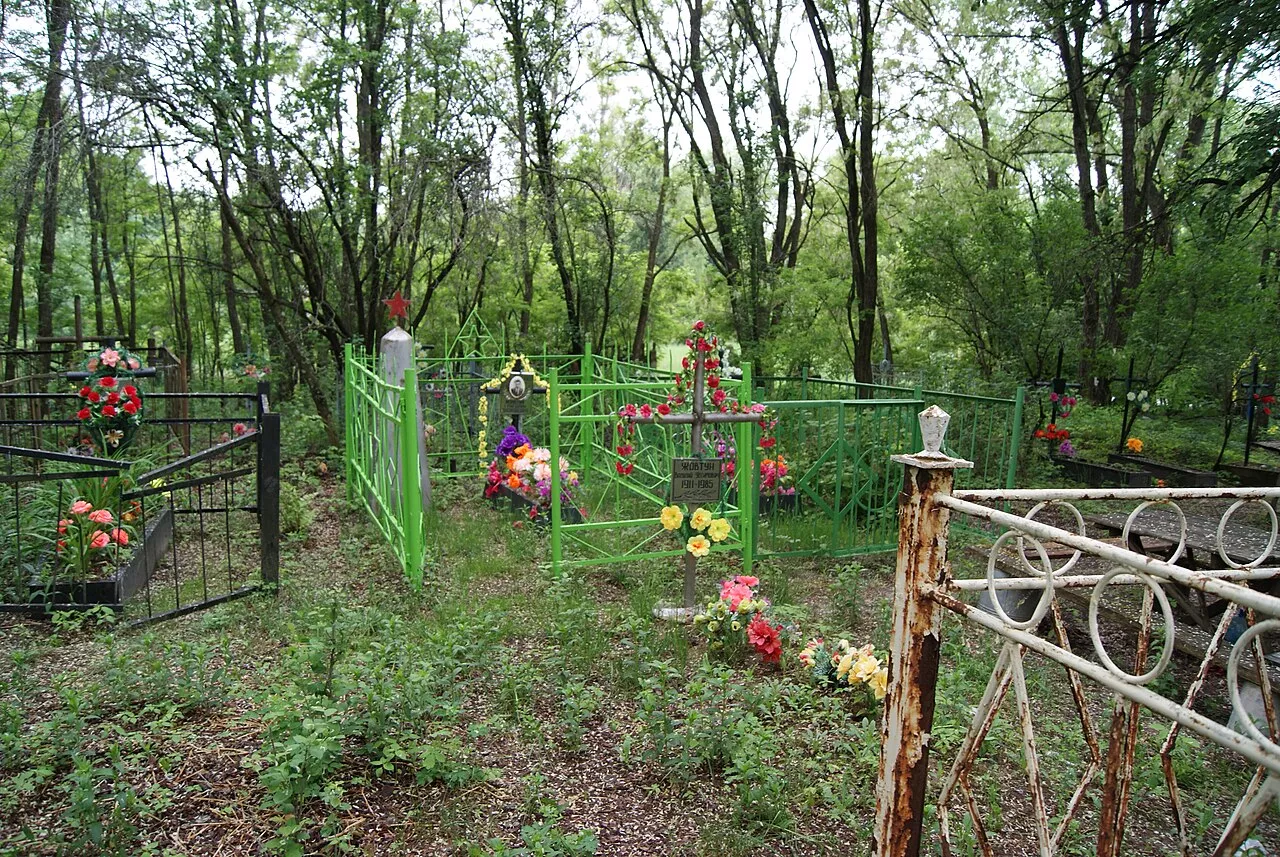
Over 400 plant species
More than 400 plant species were recorded at 24 cemeteries, of which over 350 are wild or feral. Among the finds are Centaurea cyanus, a plant protected by the Bern Convention, as well as rare for Kyiv region spring primrose and common juniper.
Unlike southern cemeteries, where invasive plants spread, in the zone new flowers and shrubs are rarely planted on graves. Thus, it is clearly visible here how the local Polissia flora gradually colonizes the abandoned burials.
Oaks older than the villages themselves
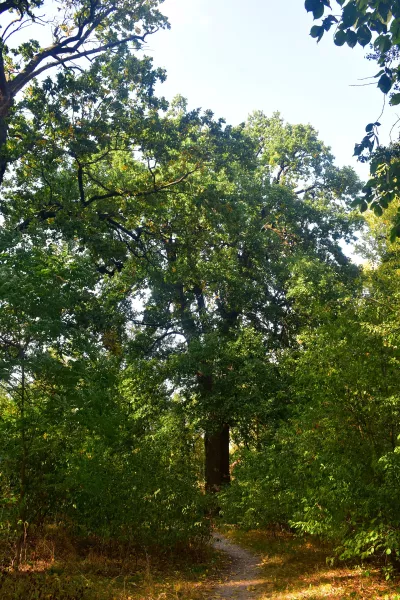
The most impressive are the trees. In the zone’s cemeteries, there are oaks with trunk circumferences over 4 meters — the thickest living oak has a circumference of 446 centimeters, and one dead giant — 510 centimeters. According to scientists’ estimates, such trees are at least 200 years old. There are also old pines with circumferences up to 259 centimeters, as well as ancient pear trees.
The secret of their longevity lies in Polissia traditions. Around villages, trees were cut for firewood and construction, but cemeteries were left untouched: the place was considered sacred and people feared damaging the graves. So, while old oaks disappeared from the surrounding forests, they continued to grow in the cemeteries.
Burial mounds, bee trees, and Old Believers’ huts
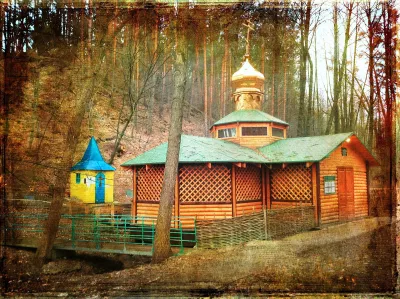
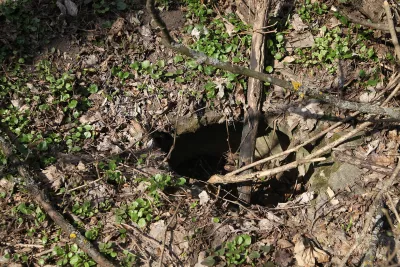
The cemeteries also preserved pages of Polissia’s history. At one of them, researchers counted about a dozen small burial mounds up to 10 meters in diameter — presumably Slavic, from the times of Kyivan Rus: later the village arranged a cemetery directly on the ancient burial ground. On old trees, there are bee trees — hollowed-out trunks where bees were once kept, and on several cemeteries, wooden burial structures of Old Believers have been preserved, resembling small huts or chapels above graves.
Spring will reveal more
One visit does not reveal all the diversity: many plants bloom only a few weeks a year. Therefore, scientists survey the cemeteries in different seasons. Special hopes are placed on spring, when early-blooming ephemeroids awaken and orchids may appear.
Some cemeteries and villages in the zone suffered from fires and military actions, so such research helps document and preserve the memory of them. About what abandoned villages look like — in the article about Korohod, and about the region’s landmarks — in the material “Landmarks, Churches, and Cemeteries of Chornobyl Region.”
Can These Cemeteries Be Visited?
The cemeteries are located within the exclusion zone, which can only be accessed with permission and accompaniment. On memorial days, former residents and their relatives are allowed to visit the graves of their loved ones — in an organized manner, according to prior lists. During martial law, tourist trips to the zone are restricted.